Putri Inara
The digital landscape has evolved into an attention economy where the success of online content is determined within milliseconds of a user’s first encounter. In this competitive environment, the headline of a blog post serves as the primary gatekeeper of engagement, functioning as the decisive factor between a viral sensation and a forgotten archive entry. Industry data suggests that while eight out of ten people will read a headline, only two out of ten will proceed to read the rest of the content. This statistical reality underscores the critical importance of headline optimization in modern digital journalism and content marketing. As platforms like Google, Facebook, and X (formerly Twitter) continue to refine their algorithms to prioritize user engagement, the "crafting" of titles has moved from a creative afterthought to a rigorous discipline rooted in psychology, data science, and search engine optimization (SEO).
The Strategic Importance of the Digital Headline
A headline is no longer merely a label for a story; it is a multi-functional tool that operates across various digital ecosystems. In search engine results pages (SERPs), the title tag is the first point of contact for a potential reader. In RSS feeds and social media timelines, it is often the only piece of information available to prompt a click. Professional copywriters, echoing the principles established by advertising pioneer David Ogilvy, maintain that the sole purpose of a title is to compel the reader to engage with the first sentence of the body text. If the title fails to intrigue, the quality of the subsequent 2,000 words becomes irrelevant.
The transformation of the headline from a print-based summary to a digital-first engagement hook has been driven by the sheer volume of content produced daily. With millions of blog posts published every 24 hours, the title must cut through significant digital "noise." This requires a balance of clarity, emotional resonance, and technical precision.
Historical Context and the Evolution of Headline Strategy
The methodology behind headline writing has undergone several distinct phases since the inception of the World Wide Web. Understanding this chronology provides necessary context for current best practices.
1. The Early Web and Directory Era (1990s–2000s)
In the early days of blogging, titles were often literal and descriptive. Because discovery was driven by directories and simple search engines, titles focused on categorization. A post might be titled "My Thoughts on Photography," with little regard for click-through rates (CTR).
2. The SEO Dominance Phase (2005–2012)
As Google became the primary arbiter of web traffic, titles became heavily optimized for crawlers. This led to "keyword stuffing," where titles were often awkward strings of high-volume search terms. The primary audience during this era was the algorithm rather than the human reader.

3. The Clickbait Revolution (2013–2017)
Platforms like BuzzFeed and Upworthy pioneered the "curiosity gap" headline, often using phrases like "You Won’t Believe What Happened Next." While these titles generated massive traffic, they eventually led to "clickbait fatigue" and platform-level penalties as social media giants began prioritizing "time on page" over raw clicks.
4. The Value-Driven Era (2018–Present)
Modern headline strategy focuses on "User Intent." Current best practices prioritize titles that promise a specific benefit, answer a question, or solve a problem. The emphasis has shifted toward building trust and ensuring the content delivers on the headline’s promise.
Supporting Data: The Quantitative Impact of Headline Choice
Data from various content marketing studies highlights the tangible impact of specific headline structures. According to a study by Backlinko, which analyzed 912 million blog posts, headlines that are between 14 and 17 words in length generate 76.7% more social shares than shorter titles. Furthermore, headlines ending with a question mark receive 23.3% more social shares than those that do not.
The placement of keywords also remains a critical factor for SEO performance. Search engines typically give more weight to words appearing at the beginning of a title tag. Additionally, titles that include numbers—particularly odd numbers—have been shown to increase CTR by up to 36%, as they provide a clear structure and promise of "snackable" information.
The Eight Strategic Pillars of Headline Crafting
To maximize the reach of a blog post, writers must employ specific psychological and technical triggers. The following eight strategies represent the core of modern headline architecture.
1. The Communication of Tangible Benefits
The most effective headlines answer the reader’s internal question: "What is in it for me?" Titles that clearly state a solution to a problem or a method for improvement—such as "How to Increase Your ROI by 20%"—perform consistently well because they address a specific need. In the context of a photography blog, a title like "10 Ways to Take Stunning Portraits" identifies a goal and promises a roadmap to achieve it.
2. The Use of Controversy and Debate
Conflict is a natural magnet for human attention. Headlines that challenge conventional wisdom or take a firm stance on a polarizing topic can spark immediate engagement. However, industry analysts warn that this strategy requires the content to be robust; if a controversial title is used as a "bait-and-switch" without a reasoned argument, it can permanently damage a brand’s reputation.

3. The Interrogative Approach
Questions create an "open loop" in the human brain, which the reader feels compelled to close by clicking the link. This is particularly effective when the question is directed toward the reader’s personal experience or challenges. Questions foster a sense of dialogue rather than a one-way broadcast.
4. Personalization Through Language
The use of the word "You" or "Your" transforms a general statement into a personal invitation. This technique, known as "addressing the reader," makes the content feel bespoke. For example, changing "Tips for Better Blogging" to "How You Can Write Better Blog Posts" creates a direct connection between the author and the individual reader.
5. Strategic Keyword Integration
While the "keyword stuffing" of the mid-2000s is obsolete, keywords remain essential for discoverability. Using high-value terms at the start of the title helps search engines categorize the content and assists users in quickly identifying the relevance of the post. This is especially vital for product reviews or technical guides where the specific name of the subject is the primary search term.
6. The Deployment of Power Words
Psychology-backed "power words" evoke strong emotional responses. Words such as "Ultimate," "Secret," "Proven," "Shocking," or "Essential" can increase the perceived value of a post. However, experts caution that overusing these terms can lead to skepticism. The "power" of the word must be proportional to the value of the content.
7. Big Claims and Guarantees
Making a bold promise can drive high engagement, provided the claim is credible. This strategy leverages the reader’s desire for rapid results or "insider" knowledge. The risk associated with this method is high; failing to deliver on a "big claim" results in high bounce rates, which negatively impacts SEO rankings.
8. The Implementation of Humor
A humorous title can humanize a brand and make a post stand out in a sea of dry, professional content. However, humor is subjective and culturally dependent. What is perceived as a clever pun in one region may be confusing in another. Furthermore, humorous titles often sacrifice SEO keywords for the sake of the joke, making them more suitable for social media than for search-driven traffic.
Technical Considerations: Length and Punctuation
Beyond the psychological triggers, technical constraints play a significant role in headline success. Google typically displays the first 50 to 60 characters of a title tag. If a title exceeds this limit, it will be truncated with ellipses, potentially hiding the most important part of the message. Therefore, brevity is not just a stylistic choice but a technical requirement.
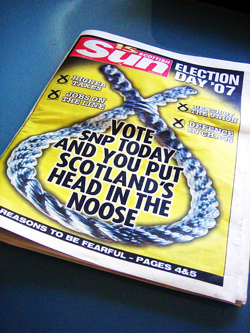
Moreover, the use of punctuation can affect readability. Many copywriters advise against using periods at the end of headlines. A period acts as a visual and psychological "stop" sign, which can subtly discourage the reader from moving into the first paragraph of the post. Commas, colons, and dashes are preferred for creating a sense of momentum.
Broader Impact and Industry Implications
The shift toward highly optimized headlines has broader implications for the media industry. As publishers compete for clicks, there is a constant tension between engagement and accuracy. The rise of "clickbait" led to a crisis of trust in digital media, prompting platforms like Meta and Google to introduce "quality signals" into their algorithms.
Today, a "good" title is defined not just by its ability to generate a click, but by its ability to attract the right reader—one who will stay on the page, interact with the content, and return to the site. In this context, headline writing is a critical component of brand building. A title is a promise, and the content is the fulfillment of that promise. In the long term, the most successful digital publishers are those who master the art of the headline without sacrificing the integrity of the information.
The synthesis of creative writing and data-driven optimization remains the hallmark of successful digital communication. As AI-driven search and voice-activated devices change how users interact with headlines, the core principle remains unchanged: a title’s primary destiny is to serve as the bridge between a creator’s idea and a reader’s attention. Mastering this bridge is the secret to setting the internet ablaze.