Putri Inara
The digital publishing landscape is currently defined by the "attention economy," a state where the sheer volume of content makes the initial point of contact—the headline—the most significant variable in a post’s success or failure. In a medium where thousands of articles are published every minute, the title of a blog post serves as the primary gatekeeper of traffic, determining whether a piece of content achieves viral distribution or remains unnoticed in digital archives. Industry experts and veteran copywriters assert that the headline is the most powerful sequence of words a writer can produce, as it serves as the sole factor in a reader’s decision-to-click process across search engines, social media feeds, and email newsletters.
The Strategic Imperative of the Digital Headline
The primary objective of a blog post title, as famously articulated by advertising pioneer David Ogilvy, is to compel the audience to read the first line of the content. In the modern context, this objective has expanded to encompass technical requirements for search engine algorithms and social sharing mechanics. A title is no longer merely a label; it is a functional tool that appears in browser tabs, RSS readers, social media metadata, and Search Engine Results Pages (SERPs).
Market research indicates that while eight out of ten people will read headline copy, only two out of ten will read the rest of the article. This 80/20 rule underscores the necessity of treating the headline not as an afterthought, but as a core component of the content’s structural integrity. When a title is confusing, overly complex, or lacks a clear value proposition, the quality of the underlying writing becomes irrelevant because the audience never reaches the body text.
Chronology of Headline Evolution: From Print to Artificial Intelligence
The art of the headline has undergone a significant transformation over the last century, reflecting changes in how humans consume information.

- The Golden Age of Advertising (1950s–1970s): Led by figures like David Ogilvy and Leo Burnett, headlines were designed for print media. The focus was on long-form clarity and "reason-why" advertising.
- The Early Digital Era (1990s–2000s): With the birth of blogging and early search engines, titles became functional. Meta-titles were often literal and keyword-heavy to satisfy primitive search algorithms.
- The Social Media Revolution (2010s): The rise of platforms like Facebook and Twitter birthed the "clickbait" era. Titles began to leverage the "curiosity gap," often prioritizing sensationalism over accuracy to drive social shares.
- The Modern Semantic Era (2020s–Present): Search engines like Google now utilize Natural Language Processing (NLP) and AI to understand user intent. Headlines must now balance emotional resonance with high-level technical optimization, focusing on "Helpful Content" as defined by modern algorithm updates.
Eight Pillars of Effective Headline Construction
Professional content strategists utilize a specific set of psychological and technical levers to increase the efficacy of their titles. While not every title can incorporate all these elements, the most successful ones leverage at least two or three.
1. The Utility-First Approach
Communicating a direct benefit is the most reliable method for securing clicks. Titles that promise to solve a specific problem or fulfill a need—such as "How to Secure Your Home Network" or "10 Ways to Reduce Operational Costs"—provide an immediate value proposition. Data from digital marketing firms suggest that "How-to" headlines consistently outperform purely descriptive titles by approximately 18% in terms of click-through rates (CTR).
2. Strategic Controversy and Opinion
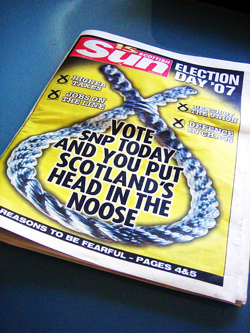
Setting the stage for debate can pique interest by challenging the status quo. However, journalistic integrity requires that such titles be backed by substantive arguments within the post. Controversy attracts engagement but also invites scrutiny; therefore, it is used most effectively when a writer has a well-researched, non-consensus view on a trending topic.
3. The Interrogative Method
Asking a question engages the reader’s cognitive processes. Questions that use the second-person "you" are particularly effective at personalizing the experience. For instance, "Is Your Retirement Plan at Risk?" creates an immediate sense of urgency and personal relevance that a statement like "Risks in Retirement Planning" lacks.
4. Language Personalization
The use of the word "you" or "your" creates a direct link between the content and the reader’s identity. This technique, known in psychology as the "Self-Reference Effect," suggests that individuals are more likely to remember and engage with information that they perceive as being related to themselves.

5. Algorithmic Optimization through Keywords
From a technical standpoint, keywords are essential for discoverability. Including primary keywords at the beginning of a title—front-loading—can improve SEO performance. This is particularly vital for product reviews or news reports where users are searching for specific names or entities.
6. The Deployment of Power Words
Certain adjectives and verbs carry more emotional weight than others. Words such as "Essential," "Critical," "Proven," or "Surprising" can increase the perceived value of a post. However, analysts warn that overusing these terms can lead to "hyperbole fatigue," where readers become skeptical of exaggerated claims.
7. High-Stakes Promises and Guarantees
Making a significant claim—such as "The Only Guide You Need for 2024"—can be a powerful draw. The risk inherent in this strategy is the "disappointment gap." If the content fails to live up to the "big promise" of the title, the site’s bounce rate will increase, and brand authority will diminish.
8. Wit and Humor
Humorous titles can humanize a brand and encourage social sharing. However, this is considered a high-risk strategy in a journalistic context. Humor is subjective and often fails to translate across different cultures or demographics. Furthermore, puns and jokes rarely align with the keywords users enter into search engines, potentially hampering organic reach.
Supporting Data: The Metrics of Success
Recent studies in digital behavior provide a factual basis for these headline strategies:
- Length Matters: Headlines between 6 and 12 words tend to receive the highest engagement. Furthermore, Google typically truncates titles in search results after 60–70 characters, making brevity a technical requirement.
- The Power of Numbers: "Listicles" or titles containing numbers (e.g., "7 Secrets") have been shown to generate up to 73% more social shares and engagement. Odd numbers, specifically, are often perceived as more authentic and less "packaged" than even numbers.
- Punctuation Impact: The use of a colon or hyphen to add a subtitle can increase CTR by 9%. Conversely, ending a title with a period (full stop) is often discouraged by copywriters as it creates a psychological "stop" in the reader’s flow, potentially discouraging the click.
Expert Analysis and Professional Responses
Digital marketing analysts suggest that the "headline-first" approach is no longer optional. "In an era of infinite scroll, your title is the only thing standing between your content and oblivion," states one senior SEO strategist. "We are seeing a shift toward ‘clear over clever.’ Readers don’t want to guess what an article is about; they want to know exactly what they are getting before they commit their time."
Furthermore, the rise of AI-driven tools like ChatGPT and Jasper has democratized headline generation. This has led to a saturation of "perfectly optimized" but often soul-less titles. Professional journalists are now finding that the most effective way to stand out is to combine algorithmic optimization with a unique human voice—something AI still struggles to replicate consistently.
Broader Implications for Content Creators
The mastery of headline crafting has implications far beyond blogging. It is a fundamental skill in the digital economy, applicable to YouTube thumbnails, email subject lines, and white paper titles. However, the industry is currently facing a "trust deficit" caused by decades of clickbait.
The future of digital titling likely lies in "Radical Transparency"—titles that are catchy but 100% accurate to the content provided. As search engines continue to prioritize user satisfaction metrics (like time-on-page) over simple clicks, the era of the deceptive headline is drawing to a close. Content creators who invest time in crafting titles that are both alluring and honest will see the greatest long-term returns in audience loyalty and search engine authority.
Ultimately, the "destiny" of a post is indeed decided by its title. By pausing to refine these few words, writers ensure that their investment in the body of the work is not wasted, transforming a static archive entry into a dynamic piece of the global conversation.