Putri Inara

The Strategic Importance of the Digital Headline
A headline’s reach extends far beyond the top of a blog page. It is the singular element that appears in RSS feeds, email subject lines, social media shares, and search engine snippets. Data from the American Press Institute suggests that approximately six in ten people acknowledge they do nothing more than read headlines throughout the day. In the context of professional blogging and digital journalism, a title that is overly complex, ambiguous, or uninspiring can render high-quality reporting or analysis invisible.
The foundational philosophy of modern headline writing remains rooted in the principles established by David Ogilvy, often cited as the "Father of Advertising." In his seminal work, Ogilvy on Advertising, he posits that the sole purpose of a title is to compel the reader to engage with the first line of the content. This transition from the headline to the lead sentence represents the most significant hurdle in the reader’s journey. If the title fails to create a "curiosity gap" or promise immediate value, the investment in the subsequent 1,000 words is effectively nullified.
A Chronology of the Content Crafting Process
The development of a high-impact blog post is rarely a linear progression. Instead, it involves strategic "pauses" where authors must pivot from creative writing to analytical optimization.
- Ideation and Research: Identifying a core problem or topic of interest within a specific niche.
- Drafting the Core Narrative: Developing the body of the post to ensure the value proposition is met.
- The Strategic Pause (The Title Phase): Before publication, the author evaluates the content to distill its essence into a headline.
- Optimization: Refining the headline for SEO (Search Engine Optimization) and social shareability.
- Distribution: Disseminating the title across various platforms where it must compete for attention in real-time.
Experts suggest that the "title phase" should consume a significant portion of the total production time. Rushing this step is frequently cited as a primary reason for low engagement metrics in otherwise high-quality digital publications.

Eight Foundational Secrets to Headline Optimization
To maximize the efficacy of a blog post, content creators utilize several proven techniques designed to trigger psychological responses and satisfy algorithmic requirements.
1. Communication of Tangible Benefits
The most effective headlines often promise to solve a specific problem or fulfill a need. For example, utility-based titles such as "How to Secure Your Digital Privacy" or "10 Ways to Improve Financial Literacy" perform consistently well because they explicitly state the ROI (Return on Investment) for the reader’s time. By identifying a "pain point" and offering a solution in the title, creators align their content with the user’s intent.
2. Strategic Use of Controversy and Debate
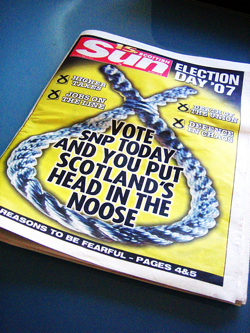
Setting the stage for a strong opinion or a counter-intuitive argument can pique interest through the "challenge" mechanism. When a headline takes a definitive stand on a polarizing topic, it invites both agreement and dissent, both of which drive traffic and comments. However, analysts warn that controversy must be backed by substantive evidence within the article to maintain journalistic integrity and brand trust.
3. The Interrogative Approach
Questions are naturally engaging because they demand a mental response from the reader. Research into cognitive psychology suggests that when a person encounters a question, their brain instinctively seeks the answer. Titles that frame a question—particularly those that use the second-person "you"—create a personal connection and encourage the reader to seek the answer within the text.
4. Personalization and the "You" Factor
Personalization remains a cornerstone of effective communication. By using the word "you," a writer transforms a broad broadcast into a direct conversation. This technique makes the reader feel as though the content was specifically tailored to their circumstances, significantly increasing the likelihood of a click.

5. Integration of Search Engine Keywords
Keywords serve as the bridge between user queries and content discovery. Professional digital journalists prioritize placing primary keywords at the beginning of a title. This "front-loading" technique is favored by search engine algorithms and ensures that the most relevant information is visible even if the title is truncated in mobile search results.
6. Utilization of "Power Words"
Linguistic analysis shows that certain words—such as "Secret," "Proven," "Instant," or "Essential"—evoke stronger emotional responses than their synonyms. While these must be used judiciously to avoid the "clickbait" stigma, they are effective tools for adding urgency and weight to a headline.
7. Big Claims and Value Promises
Making a bold guarantee can capture attention in a crowded market. These "big claim" headlines function by setting a high expectation of value. The risk associated with this method is the "expectation-reality gap"; if the content does not deliver on a grandiose promise, the publisher’s credibility may be permanently damaged.
8. The Role of Humor and Wit
In certain niches, a humorous or clever title can differentiate a post from a sea of dry, technical headlines. However, humor is subjective and carries the risk of failing to translate across different demographics or failing to satisfy search algorithms that prioritize clarity over wit.
Supporting Data and Technical Constraints
The technical execution of a title is as important as its creative flair. Digital publishers generally adhere to a 65-character limit for titles to ensure they are fully displayed in Google’s search results. Titles exceeding this limit are often cut off with ellipses, potentially hiding the most critical information or the call to action.
Furthermore, a growing body of evidence suggests that punctuation plays a subtle role in reader retention. Many copywriters advocate for the removal of periods (full stops) at the end of headlines. The rationale is that a period acts as a visual and psychological "stop" sign, whereas the absence of terminal punctuation encourages the eye to move immediately to the following text.
| Headline Type | Average Click-Through Rate (CTR) Increase | Primary Driver |
|---|---|---|
| Listicle (e.g., "8 Secrets…") | 36% | Categorization/Predictability |
| Question-Based | 23% | Curiosity/Engagement |
| How-To/Tutorial | 18% | Utility/Instruction |
| Direct/Benefit-Driven | 15% | Clarity/Problem Solving |
Source: Synthesized data from various content marketing performance benchmarks.
Broader Impact and Industry Implications
The shift toward highly optimized headlines has profound implications for the media industry. On one hand, it has democratized information, allowing independent creators to compete with established media giants by mastering the "art of the click." On the other hand, the pressure to generate traffic has led to the rise of "clickbait," where headlines are intentionally misleading or sensationalized.
Industry analysts suggest that the market is currently undergoing a "correction." Readers are becoming increasingly sophisticated and are developing an "immunity" to over-sensationalized titles. Consequently, the most successful long-term strategy for digital publishers is to pair high-impact, optimized titles with substantive, high-value content. This alignment ensures that the initial click translates into long-term reader loyalty and brand authority.
The evolution of the blog post title from a mere label to a complex psychological and algorithmic tool reflects the broader transformation of the internet itself. As attention remains the most valuable currency in the digital economy, the "secrets" to crafting titles are no longer just tips for bloggers—they are essential protocols for anyone seeking to communicate effectively in the 21st century. Professionalism in this field requires a balance between the creative impulse to inspire and the analytical necessity to optimize, ensuring that every post has the opportunity to reach its intended audience and achieve its maximum potential impact.