Gilang Muhammad
The United States economy finds itself at a critical juncture, facing an escalating threat of recession as a protracted conflict in Iran exacerbates global oil supply concerns, fuels inflationary pressures, and strains an already fragile labor market. While Federal Reserve Chair Jerome Powell recently downplayed the immediate specter of stagflation, a growing consensus among Wall Street’s leading forecasters suggests that the nation’s economic resilience is being severely tested, potentially paving the way for a downturn that could challenge his successor significantly.
In recent days, a palpable shift in sentiment has swept through economic forecasting institutions, with analysts rapidly recalibrating their risk assessments for a U.S. economic contraction. Heightened geopolitical uncertainty stemming from the ongoing Middle East conflict, coupled with persistent inflationary trends and a labor market showing increasing signs of fatigue, are collectively contributing to this darkening outlook. This confluence of factors presents a formidable challenge for policymakers tasked with navigating a delicate balance between containing price growth and safeguarding employment.
Rising Tides of Recession Probability
The statistical models and expert analyses from prominent financial institutions paint a stark picture of elevated risk. Moody’s Analytics’ sophisticated model, for instance, has surged its recession outlook for the next 12 months to a concerning 48.6%. Goldman Sachs, a bellwether for market sentiment, has similarly boosted its estimate to 30%, a significant jump from previous, more optimistic projections. Wilmington Trust now pegs the odds at 45%, while EY Parthenon places them at 40%, albeit with a crucial caveat: "those odds could rapidly rise in the event of a more prolonged or severe Middle East conflict."
To contextualize these figures, economists typically consider the baseline risk for a recession in any given 12-month period to hover around 20%. The current predictions, while not guarantees, signify an undeniable and substantial increase in economic vulnerability. Mark Zandi, chief economist at Moody’s Analytics, articulated the prevailing concern, stating, "I’m concerned recession risks are uncomfortably high and on the rise. Recession is a real threat here." This sentiment underscores a broad unease that is permeating economic discourse.

The Geopolitical Catalyst: War Drives Fears
At the heart of this accelerating apprehension is the ongoing conflict with Iran. The escalation of hostilities, which has regrettably dragged on for several weeks, has directly triggered a critical economic vulnerability: an oil shock. Historically, a significant surge in oil prices has preceded virtually every U.S. recession since the Great Depression, with the notable exception of the unique demand shock caused by the Covid-19 pandemic. This historical correlation is not merely anecdotal; it reflects a deep economic sensitivity to energy costs.
The immediate impact of the conflict on energy markets has been dramatic and swift. Data from AAA reveals that prices at the pump have soared by an alarming $1.02 per gallon over the past month, representing a staggering 35% increase. This rapid ascent in fuel costs directly impacts consumer purchasing power and corporate operating expenses, acting as a potent inflationary force and a drag on economic activity. The Strait of Hormuz, a critical maritime chokepoint through which a significant portion of the world’s oil supply transits, remains a focal point of global concern, with any disruption having immediate and severe repercussions on global energy prices.
While economists continue to meticulously debate the precise pass-through impact of higher energy costs across various sectors, the historical trend linking oil shocks to economic downturns remains a powerful indicator. "The negative consequences of higher oil prices happen first and fast," Zandi cautioned. He further elaborated on the critical threshold: "If oil prices stay kind of where they are through Memorial Day, certainly through the end of the second quarter, that’ll push us into recession." This stark warning highlights the immediate and tangible threat posed by sustained high energy prices.
The Specter of Stagflation: A Powell Rebuttal
The combination of persistent inflation and stagnating growth has inevitably resurrected discussions about "stagflation," a term that evokes the challenging economic landscape of the 1970s and early 1980s. During that period, the U.S. grappled with a potent mix of soaring inflation, high unemployment, and stagnant economic growth, leading to profound societal and political unease.
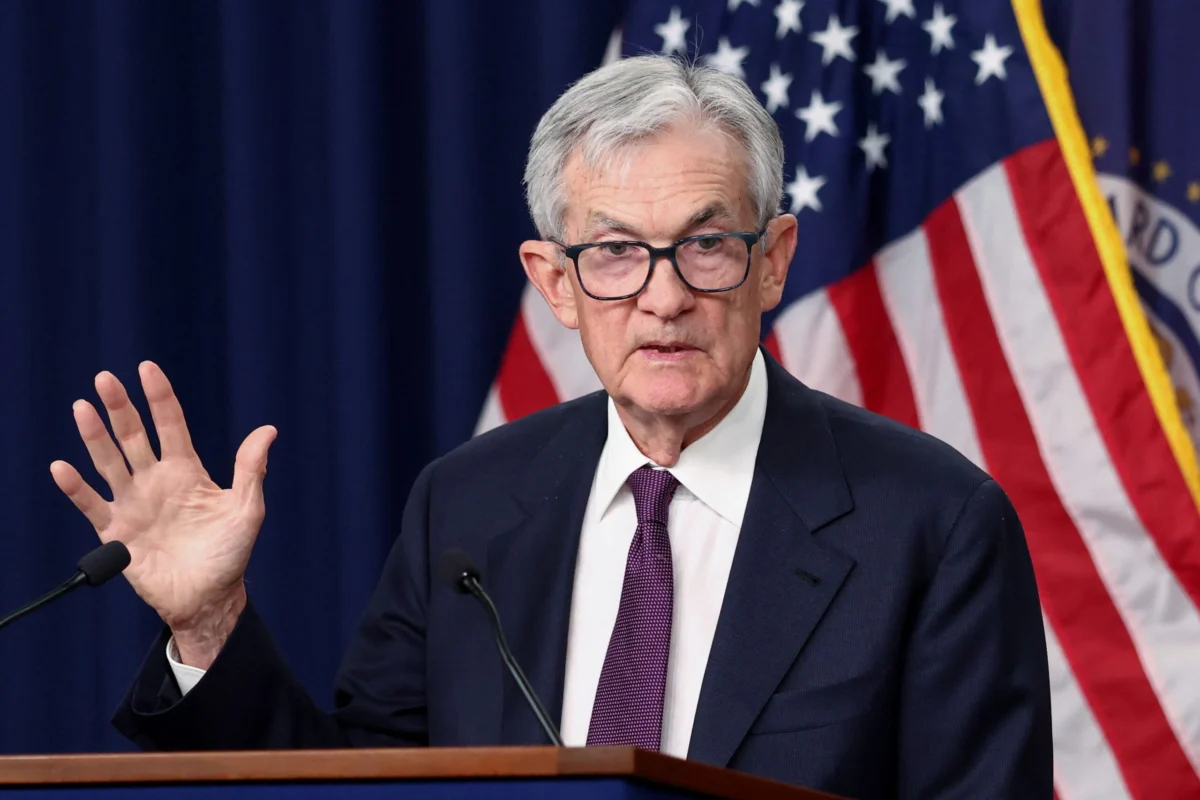
However, Federal Reserve Chair Jerome Powell, in a news conference following the central bank’s recent policy meeting where interest rates were held steady between 3.5% and 3.75%, firmly pushed back against the characterization of the current situation as stagflation. Powell emphasized the historical context of the term: "I always have to point out that that was a 1970s term at a time when unemployment was in double figures, and inflation was really high. That’s not the case right now." He acknowledged the difficulty of the current economic environment but drew a clear distinction. "It’s a very difficult situation, but it’s nothing like what they faced in the 1970s, and… I reserve stagflation for that, the word, for that period. Maybe that’s just me," Powell added, highlighting the qualitative difference in scale and severity.

Despite Powell’s assertion, many analysts are contemplating a "stagflation-lite" scenario – a condition that, while not as extreme as the 1970s, nonetheless presents significant economic risks. This milder form could still entail stubbornly high inflation coexisting with significantly slower, perhaps even negative, economic growth, making the Fed’s dual mandate of price stability and maximum employment exceedingly difficult to achieve.
Labor Market Under Scrutiny: Cracks in the Foundation
Beyond the energy sector, economists are increasingly pointing to the labor market as a key pressure point, exhibiting worrying signs of strain that could undermine broader economic stability. The U.S. economy created a meager 116,000 jobs for the entirety of 2025, a stark contrast to the robust growth seen in preceding years. Adding to the concern, February 2026 saw a net loss of 92,000 jobs, a development that signals a potential weakening in demand for labor.
While the unemployment rate has managed to hold steady at 4.4%, this stability is largely attributable to a dearth of widespread firings rather than a surge in new hiring. A deeper dive into the employment data reveals a troubling lack of breadth in job creation. Excluding the exceptionally strong gains in health care-related fields, which accounted for over 700,000 new positions over the past year, payrolls outside these areas actually declined by more than half a million. This narrowness indicates that economic growth, at least in terms of employment, is not broadly distributed, making the overall economy vulnerable if the few thriving sectors lose momentum.
Luke Tilley, chief economist at Wilmington Trust, expressed concern over the Fed’s assessment of the labor market. "I think there’s much less inflation risk than [Fed officials] think, and more risk to the labor market to the downside than they stated," he noted. Dan North, senior U.S. economist at Allianz, echoed this sentiment, observing the reliance on a single sector. "We’re getting more people who need more health care going into the future. The demand for those jobs is going to be there. But it’s no way to run a railroad if you’re doing it on one engine," he said, highlighting the unsustainable nature of such concentrated growth.
Employment, being a fundamental driver of consumer spending – which accounts for more than two-thirds of all U.S. economic activity – directly influences overall growth prospects. A weakening labor market translates to diminished household incomes, reduced consumer confidence, and ultimately, lower spending, creating a vicious cycle that can accelerate a recessionary spiral.

Consumer Sentiment and Market Volatility
Consumer sentiment, a crucial barometer of future spending, has been generally poor, particularly among lower-income households who are disproportionately affected by surging prices for essential goods and services. NerdWallet’s March survey indicated that 65% of respondents anticipate a recession within the next 12 months, a 6 percentage point increase from the previous month. This growing pessimism is a red flag for an economy heavily reliant on consumer demand.
Wilmington Trust’s Tilley further warned that much of the recent consumer spending strength has been propped up by rising asset prices, a dynamic that may not endure. "We estimate that 20% to 25% of the spending growth has been boosted by the wealth effect coming from the stock market over the past two years," he explained. "If you don’t get that wealth effect boost, then you’re going to lose a lot of the growth."
Indeed, the stock market has experienced a rough patch since the commencement of the Iran conflict. The Dow Jones Industrial Average, a key market indicator, has shed more than 5% during the hostilities. This decline is particularly significant because higher-income households, who often benefit most from rising equity prices, have been a crucial segment supporting consumer spending and overall sentiment. A sustained market downturn could erode this wealth effect, further dampening consumer confidence and spending.
Moreover, the closely watched portion of the yield curve – the spread between various Treasury maturities – has been sending mixed signals. While an inverted yield curve (where short-term yields are higher than long-term yields) has historically been a reliable predictor of recessions, it has also issued repeated false alarms over the past three and a half years, leading some to question its current predictive power. This ambiguity adds another layer of complexity for analysts attempting to discern the economy’s true trajectory.
GDP Slowdown and Policy Dilemmas
Gross Domestic Product (GDP) growth is also showing signs of deceleration. The Atlanta Fed’s GDPNow tracker, which provides a running estimate of real GDP growth, projects a 2% pace for the first quarter. While seemingly positive, this follows a notably weak 0.7% increase in the fourth quarter, a period that was partly impacted by a government shutdown. Economists had anticipated that the drag on growth in Q4 would translate into a rebound in Q1 as the effects dissipated, but the actual boost appears to be modest at best, suggesting underlying weaknesses persist.

The situation presents an unenviable dilemma for monetary policymakers at the Federal Reserve. They are caught between the urgent need to combat sticky inflation, which could require further tightening of monetary policy, and the growing risk of a recession, which typically calls for easing. This balancing act is made even more precarious by the external shock of the Iran conflict and its unpredictable impact on energy markets and global supply chains.
From a fiscal policy perspective, the government’s ability to respond may also be constrained. While the "One Big Beautiful Bill" enacted in 2025 was projected to stimulate growth through lower regulations and boosted tax returns, helping consumers cope with elevated prices, its full impact on the current, geopolitically charged environment remains to be seen. This fiscal stimulus, intended to provide a cushion, might find its efficacy tested by the severity of the emerging economic headwinds.
Outlook and Conclusion
Despite the gathering clouds, some glimmers of resilience remain. A sustained rise in domestic production capacity is cited as a potential factor in the economy’s favor, offering some counter-balance to external shocks. However, the prevailing sentiment among forecasters is one of cautious pessimism.
"There is support underneath," noted Dan North, the Allianz economist. "That makes me real hesitant to use the ‘R’ word. But certainly, I think we’re seeing a slowdown this year." This reflects a broader hope that if global leaders can swiftly find a diplomatic off-ramp to the Iran conflict, allowing oil flows through the Strait of Hormuz to normalize, the economy might yet manage to skirt the gloomiest predictions.
However, as Mark Zandi soberly concluded, the path to avoiding a recession is becoming increasingly narrow. The combination of a prolonged war, relentless pressure on consumers from high prices, and a labor market that has created virtually no net jobs over the past year collectively raises the risk that the current economic expansion could falter. The stakes are exceptionally high, and the coming months will prove crucial in determining whether the U.S. economy can once again defy the odds or succumb to the formidable challenges arrayed against it.