Gilang Muhammad
The U.S. economy concluded 2025 with significantly weaker momentum than initially projected, while inflationary pressures continued to mount at the start of 2026, according to comprehensive reports released by the Commerce Department on Friday. This confluence of decelerating growth and entrenched price increases presents a complex and challenging landscape for policymakers, particularly the Federal Reserve, as they grapple with a potential return of stagflationary concerns. The data paints a picture of an economy entering a period of heightened geopolitical instability from a position of unexpected vulnerability, challenging previous optimistic forecasts.
Deep Dive into Fourth Quarter GDP: A Sharp Deceleration
The Bureau of Economic Analysis (BEA) reported a substantial downward revision to the Gross Domestic Product (GDP) for the fourth quarter of 2025. GDP, the broadest measure of goods and services produced across the vast U.S. economy, rose at a seasonally and inflation-adjusted annual rate of just 0.7%. This figure represents a dramatic reduction from the initial estimate of 1.4% and fell considerably short of the Dow Jones consensus forecast, which had anticipated a more robust 1.5% expansion.
This revised growth rate also marks a stark slowdown from the 4.4% gain recorded in the third quarter of 2025, signaling a significant loss of economic momentum as the year drew to a close. For the entire calendar year 2025, GDP posted a 2.1% increase, a tenth of a percentage point lower than the previous reading and a notable deceleration from the 2.8% pace observed in 2024. This trend suggests a foundational weakening in the economy’s underlying growth trajectory, setting a cautious tone for the new year.
Components of the Slowdown: Unpacking the Revisions
According to the BEA, the primary drivers behind the downward revision were adjustments in key economic components: consumer spending, government expenditures, and exports. While a decline in imports, which technically subtracts from GDP, was also less than previously estimated, it was insufficient to offset the more significant weaknesses elsewhere.
Government Spending’s Plunge: The Shutdown’s Stinging Impact
A significant factor contributing to the economic slowdown was a record-long government shutdown that severely curtailed public sector activity. Government spending tumbled by an astonishing 16.7% in the fourth quarter, reflecting the direct and immediate consequences of the political impasse. Government shutdowns typically freeze non-essential federal operations, furlough hundreds of thousands of employees, and delay contracts, leading to a direct drag on economic output. This particular shutdown, stretching across a significant portion of the quarter, had a profound and measurable impact, acting as a substantial headwind against overall growth. Its effects rippled through various sectors, from federal contractors experiencing payment delays to reduced demand for goods and services in areas heavily reliant on government presence.
Softening Consumer Demand: A Critical Pillar Weakens
Consumer spending, which historically accounts for roughly two-thirds of U.S. economic activity, also showed signs of weakening. It rose by 2% for the quarter, following a 0.4 percentage point downward revision from earlier estimates. This marked a considerable decline from the 3.5% increase observed in the third quarter. The largest contribution to this downward revision came specifically from services, with healthcare spending identified as a key area of deceleration. A slowdown in consumer spending is a critical indicator, suggesting that households may be becoming more cautious, facing inflationary pressures, or experiencing diminished confidence in the economic outlook. This moderation in household expenditure implies a broader cooling of demand across the economy.
Broader Demand Indicators: Private Sales Lose Steam
Beyond the headline GDP figure, a proxy for underlying domestic demand, known as private sales to private domestic purchasers, also reflected the economic deceleration. This metric, which strips out volatile components like government spending, inventories, and net exports, increased by just 1.9% in the fourth quarter. This figure was revised down by half a percentage point and represented a full percentage point lower than the prior quarter’s performance, indicating a broader softening in core economic activity driven by the private sector. The Federal Reserve closely monitors this gauge as it offers a clearer signal of underlying economic strength.
January Inflationary Trends: A Persistent Challenge for the Fed
While the fourth-quarter GDP data highlighted a growth problem, the accompanying reports on January’s inflation figures underscored a persistent challenge on the price stability front. These readings largely aligned with estimates but confirmed that price increases are running well ahead of the Federal Reserve’s target, intensifying the central bank’s dilemma.
PCE Index: The Fed’s Preferred Metric
The personal consumption expenditures (PCE) price index, which the Federal Reserve considers its primary forecasting tool for inflation due to its broader coverage of goods and services and its dynamic weighting of consumer spending, posted a seasonally adjusted gain of 0.3% for the month of January. This pushed the annual rate to 2.8%. Economists surveyed by Dow Jones had largely anticipated similar readings of 0.3% monthly and 2.9% annually, indicating that the inflation figures, while concerning, were within expected parameters for analysts.

Core PCE’s Upward Creep: Beyond Volatile Elements
Even more critical for Fed officials is the core PCE index, which strips out the volatile food and energy components to provide a clearer signal of underlying, longer-run inflationary trends. The core PCE inflation rose by 0.4% in January on a monthly basis and reached 3.1% on a 12-month basis. This annual core reading was 0.1 percentage point higher than that recorded in December, indicating a slight acceleration in underlying price pressures. With the Fed’s long-standing inflation target set at 2%, a core PCE of 3.1% signifies a significant and persistent overshoot, suggesting that inflationary forces are more deeply embedded in the economy than desired. This persistence complicates the Fed’s path toward normalizing monetary policy.
CPI as a Companion Indicator
These PCE figures arrive shortly after the Bureau of Labor Statistics reported its February Consumer Price Index (CPI) data. The headline CPI rate stood at 2.4%, with the core CPI at 2.5%. While the core CPI reading was noted as the lowest since March 2021, offering a glimmer of hope, it nonetheless remains above the Fed’s 2% target. The PCE index is generally preferred by the Fed because it accounts for substitutions consumers make in response to price changes, and it has a broader scope, including more services. However, the CPI remains a widely watched and influential measure for both the public and policymakers. The fact that both major inflation metrics are still elevated reinforces the ongoing challenge.
Beyond GDP and PCE: Other Key Economic Indicators
The economic reports on Friday also included other vital indicators that shed further light on the state of the U.S. economy, painting a picture of broad-based softening.
Durable Goods Orders: A Lackluster Start to the Year
A separate Commerce Department report revealed that orders for long-lasting goods, which include everything from transportation equipment to appliances and computers, were flat in January. This performance fell well below the estimate for a 1.3% gain and, while an improvement on the 0.9% decline seen in December, indicated a continued lack of robust demand for big-ticket items. Excluding the often-volatile transportation sector, orders did manage to rise by 0.4%, suggesting some underlying resilience in other manufacturing segments, but the overall picture pointed to caution in business investment and consumer purchasing of large items. Durable goods orders are a forward-looking indicator, as they signal future production activity. A flat or declining trend can portend slower manufacturing output and potentially reduced capital expenditures by businesses.
Personal Income and Spending: Mixed Signals
Further data showed that personal income and spending in January both increased by 0.4%. This figure for personal income was slightly below the 0.5% estimate, while personal spending edged above the 0.3% forecast. Notably, the personal saving rate jumped by half a percentage point to 4.5%. An increase in the saving rate can be interpreted in multiple ways: it could reflect a prudent response by consumers to economic uncertainties and persistent inflation, opting to build a financial cushion rather than increase discretionary spending. Alternatively, it could signal a reduction in opportunities or willingness to spend, contributing to the broader demand slowdown observed in GDP figures. This rise in savings could provide a buffer for future consumption, but in the immediate term, it suggests a more restrained consumer.
Geopolitical and Policy Headwinds: Shaping the Economic Landscape
The economic data released on Friday, while providing a snapshot of the economy’s performance at the end of 2025 and beginning of 2026, must be viewed through the lens of significant geopolitical and domestic policy developments that are already reshaping the economic outlook.
The Shadow of Tariffs: A Legal Reversal
The numbers predate a pivotal Supreme Court decision that voided many of President Donald Trump’s tariffs, which he had exercised under provisions in the International Emergency Economic Powers Act (IEEPA). The IEEPA grants the President broad authority to regulate international commerce during a national emergency. Economists had widely assumed that these tariffs had added approximately half a percentage point or more to inflation trends by increasing the cost of imported goods, which businesses then passed on to consumers. The reversal of these tariffs could, in theory, exert downward pressure on import prices and, subsequently, on overall inflation. However, the full economic impact of this legal development is yet to be realized and will unfold over the coming months.
Middle East Instability and Energy Prices: A New Inflationary Shock
Even more immediately impactful is the escalating geopolitical tension in the Middle East. The reports also predate the significant attacks launched by the U.S. and Israel against Iran on February 28. In the nearly two weeks since this conflict began, energy prices have surged dramatically, with the Brent crude international benchmark touching $100 a barrel. This sharp increase in crude oil prices directly translates into higher costs for gasoline, transportation, and energy-intensive industries, subsequently filtering into broader consumer prices. For an economy already battling persistent inflation, a new energy shock poses a formidable challenge, threatening to reignite inflationary pressures and further erode purchasing power. This adds a layer of uncertainty and risk to the inflation outlook that was not fully captured in the January data.
Government Shutdown Revisited: A Costly Political Impasse
The record-long government shutdown in the fourth quarter of 2025, which significantly contributed to the sharp decline in government spending, serves as a stark reminder of how domestic policy decisions can directly impede economic growth. Such shutdowns not only freeze direct federal expenditures but also create uncertainty, disrupt supply chains for government contractors, and can dampen consumer and business confidence, leading to deferred investments and purchases. The magnitude of the spending tumble highlights the tangible economic cost of political gridlock, exacerbating an already weakening growth trajectory.
The Federal Reserve’s Mounting Dilemma
The latest economic reports place the Federal Reserve in an increasingly precarious position, as its dual mandate of achieving maximum employment and stable prices appears more challenged than ever. The combination of slowing growth and persistent, and potentially accelerating, inflation presents a classic stagflationary dilemma.

The Dual Mandate in Conflict
With GDP growth at a mere 0.7% and core PCE inflation running at 3.1% (and potentially higher due to recent energy price spikes), the Fed faces a difficult balancing act. Raising interest rates aggressively to curb inflation risks stifling an already weak economy and pushing it into recession. Conversely, maintaining current rates or cutting them to support growth could allow inflation to become further entrenched, making it even harder to control in the long run.
Analyst Perspectives on Fed Policy
Economic strategists are increasingly vocal about the Fed’s predicament. David Russell, global head of market strategy at TradeStation, articulated the growing concern: "The big downward revision in GDP is a gut check going into this energy crunch, increasing the risk of stagflation. The soft January durable goods data also suggests the economy entered this crisis weaker than hoped. This creates challenges for investors with PCE inflation still running well above the Fed’s target."
Sonu Varghese, chief macro strategist for the Carson Group, further emphasized the inflation side of the challenge: "The inflation data tells us that the inflation picture wasn’t looking good even before the Middle East crisis. An already large headache for the Federal Reserve is going to turn into an even larger one, and it’s likely the Fed will not cut rates in 2026 and may even start talking about rate hikes later this year." These statements underscore the growing sentiment that the path to rate cuts is becoming increasingly difficult, with some even forecasting a potential return to rate hikes if inflation continues its upward trajectory fueled by geopolitical events.
Market Expectations and Forward Guidance
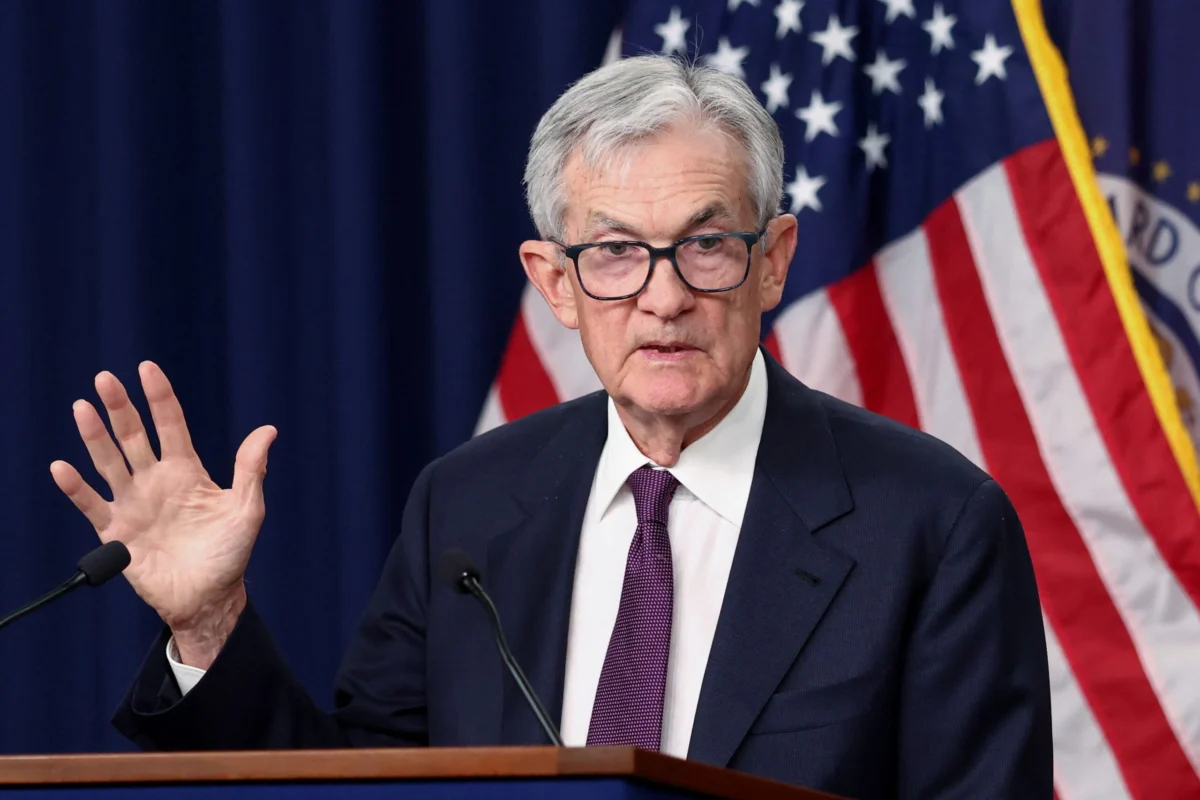
Markets are currently assigning a near 100% probability that the rate-setting Federal Open Market Committee (FOMC) will opt to keep interest rates unchanged at its upcoming decision scheduled for Wednesday. This expectation reflects the complexity of the current economic signals: while growth is weak, inflation remains stubbornly high, making any immediate easing highly unlikely. The focus for investors will now shift to the Fed’s forward guidance – any statements or projections from Chairman Jerome Powell and other FOMC members that could signal their future intentions, their assessment of the stagflation risk, and how they plan to navigate the escalating geopolitical and inflationary headwinds.
Broader Economic Implications and Outlook
The latest economic reports paint a picture of an economy facing significant headwinds, with implications stretching across consumers, businesses, and global markets.
Stagflationary Concerns: A Defining Risk
The term "stagflation," characterized by slow economic growth, high unemployment (though not explicitly mentioned in the provided data, it’s a typical component), and rising prices, is increasingly entering economic discourse. While current labor market data might still show resilience, the combination of meager GDP growth and persistent inflation undeniably raises this specter. If the energy shock from the Middle East conflict proves sustained, and underlying demand continues to weaken, the risk of a more pronounced stagflationary environment will grow significantly. This scenario is particularly challenging for central banks, as conventional monetary tools are less effective in simultaneously addressing both high inflation and low growth.
Consumer and Business Confidence: A Fragile Foundation
Sustained inflation erodes purchasing power, making households feel poorer even if nominal incomes rise. This can lead to reduced discretionary spending and a general decline in consumer confidence, which in turn feeds back into slower economic growth. For businesses, higher input costs due to inflation, coupled with weakening demand and uncertainty from geopolitical events, can lead to deferred investment decisions, hiring freezes, and a more cautious approach to expansion. The rise in the personal saving rate could be an early indication of this increased caution among consumers.
Policy Response Challenges: Limited Tools
The current economic environment severely constrains the options available to policymakers. Fiscal policy, which could stimulate demand, might exacerbate inflation if not carefully targeted. Monetary policy, as discussed, faces a difficult trade-off between fighting inflation and supporting growth. This limited policy space means that navigating the current economic challenges will require careful calibration and potentially unconventional approaches.
Long-Term Outlook: A Period of Heightened Uncertainty
Looking ahead, the U.S. economy appears poised for a period of heightened uncertainty. The interplay between domestic economic fundamentals – particularly the trajectory of consumer spending and business investment – and external shocks, such as geopolitical conflicts and their impact on commodity prices, will dictate the path forward. The Federal Reserve’s response will be critical, as its decisions on interest rates will profoundly influence borrowing costs, investment, and ultimately, the pace of economic activity. The coming months will be a crucial test of the economy’s resilience and policymakers’ ability to steer through a complex and evolving global landscape.