Tari Putri Malika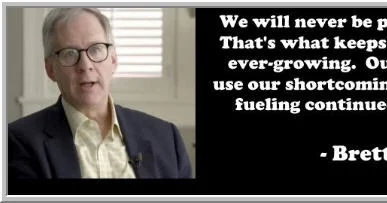
The landscape of financial market participation has undergone a significant transformation, moving beyond purely technical and fundamental analysis to incorporate rigorous psychological frameworks designed to optimize human performance. Dr. Brett Steenbarger, a clinical associate professor of psychiatry and behavioral sciences and a prominent consultant for global hedge funds, has released a comprehensive suite of resources aimed at bridging the gap between clinical psychological theory and active market engagement. These resources emphasize a transition from traditional reactive trading to a proactive "self-coaching" model, utilizing evidence-based techniques to refine trading processes and maintain a sustainable work-life balance. By focusing on solution-focused brief therapy (SFBT) and the identification of cognitive and personality strengths, this framework seeks to institutionalize high-performance habits among both retail and professional market participants.
The Evolution of Behavioral Finance and Trading Psychology
The application of psychology to financial markets is not a new phenomenon, but its methodology has evolved from anecdotal observations to structured, evidence-based interventions. In the late 20th century, trading psychology often focused on the elimination of "fear and greed," treating emotional responses as pathologies to be suppressed. However, the contemporary approach, as championed by Steenbarger and other practitioners in the field of performance psychology, views emotions as data points and focuses on the enhancement of existing strengths rather than the mere correction of flaws.
Historically, the timeline of this evolution can be traced through the shift from behavioral economics—which identifies how humans are irrational—to performance psychology, which identifies how elite performers manage that irrationality. Steenbarger’s work represents a convergence of these fields, drawing on his background in brief therapies to provide a roadmap for "personal evolution." This evolution is characterized by the belief that a trader’s professional development is inextricably linked to their personal growth, a sentiment that has gained traction within institutional environments where human capital is the primary driver of alpha.
The Solution-Focused Approach: A Paradigm Shift in Performance
At the core of the newly highlighted resources is the "solution-focused" approach. Unlike traditional psychotherapy, which often delves into the origins of problems and past failures, SFBT is future-oriented and competency-based. In a trading context, this means identifying "exceptions"—times when a trader performed at their peak or adhered strictly to their risk management protocols—and deconstructing the conditions that allowed for that success.
The methodology suggests that growth is most efficient when individuals focus on what they do well and attempt to replicate those specific behaviors. This involves a granular analysis of three key areas:
- Cognitive Strengths: How a trader processes information, identifies patterns, and makes decisions under pressure.
- Interpersonal Strengths: How a trader interacts with team members, mentors, or the broader market sentiment.
- Personality Strengths: Inherent traits such as resilience, conscientiousness, and risk tolerance that can be leveraged to fit specific trading styles (e.g., scalping versus long-term trend following).
By leveraging these strengths, traders can move away from the "one-size-fits-all" education models that dominate the retail sector and instead develop a bespoke "trading identity" that aligns with their natural psychological makeup.
Supporting Data: The Impact of Psychological Resilience on Market Returns
Quantitative research in the field of behavioral finance supports the necessity of the psychological frameworks discussed in Steenbarger’s resources. A study by the Financial Industry Regulatory Authority (FINRA) and various academic institutions has consistently shown that overconfidence bias and the "disposition effect"—the tendency to sell winning positions too early while holding losing positions too long—are the leading causes of underperformance among active traders.
Data from proprietary trading firms suggests that traders who engage in regular "structured reflection" or self-coaching protocols experience a 15% to 20% reduction in "drawdown duration" (the time it takes to recover from a loss). Furthermore, a 2022 survey of professional portfolio managers indicated that 78% of top-tier performers utilized some form of performance coaching or psychological monitoring to maintain cognitive clarity during periods of high market volatility. These statistics underscore the practical utility of the evidence-based techniques mentioned in the TraderFeed archives, which provide the tools necessary for such structured reflection.

Chronology of the Professionalization of Trading Psychology
The professionalization of this field has followed a distinct chronology over the past two decades:
- 2000–2005: The emergence of "The Psychology of Trading," where the focus was on identifying cognitive biases.
- 2006–2012: The introduction of the "Daily Trading Coach" concept, emphasizing the need for traders to internalize coaching techniques to ensure daily consistency.
- 2013–2019: The integration of "Brief Therapy" and SFBT into institutional hiring and training, focusing on "grit" and resilience.
- 2020–Present: The democratization of these institutional tools for the retail public, as high-frequency trading and algorithmic environments demand greater human adaptability.
This timeline reflects a broader trend in the financial industry: as technology levels the playing field in terms of data access and execution speed, the "human element"—psychological discipline and creative idea generation—has become the ultimate competitive advantage.
Institutional Responses and Broader Industry Implications
The institutional response to the integration of psychology has been overwhelmingly positive. Leading proprietary trading firms and hedge funds have increasingly hired "In-House Performance Coaches." These professionals do not give trade recommendations; instead, they focus on "hiring best practices" and "teamwork optimization."
Industry analysts suggest that the implications of these resources extend beyond individual P&L (Profit and Loss) statements. By fostering a culture of self-coaching and work-life balance, firms can reduce burnout and high turnover rates, which are historically prevalent in the financial sector. Furthermore, the emphasis on "evidence-based" techniques provides a level of rigor that appeals to the increasingly quantitative nature of the industry.
One senior executive at a New York-based hedge fund noted, "We no longer look for the smartest person in the room; we look for the person with the most robust psychological process. Intelligence is a commodity, but the ability to coach oneself through a losing streak is a rare and valuable asset." This sentiment is echoed in Steenbarger’s assertion that becoming a better trader is synonymous with becoming a better version of oneself.
The Role of Creativity and Idea Generation
A unique aspect of the resources provided by Dr. Steenbarger is the focus on creativity and idea generation. In an era where many market inefficiencies are exploited by algorithms, human traders must rely on "discretionary alpha"—the ability to see connections and themes that machines might overlook.
Psychological techniques derived from "Flow State" research and cognitive psychology are employed to help traders enter a state of "relaxed alertness," which is conducive to creative problem-solving. By managing stress and maintaining a positive work-life balance, traders can avoid the "tunnel vision" that often accompanies high-pressure environments, thereby remaining open to new market perspectives and innovative strategies.
Conclusion and Future Outlook
The resources highlighted in the TraderFeed archives serve as a critical bridge between the clinical world of psychology and the high-stakes world of financial trading. By advocating for a solution-focused, strengths-based approach, these materials provide a roadmap for traders to transition from being reactive participants to disciplined, self-aware professionals.
As the financial markets continue to evolve with the integration of artificial intelligence and increased volatility, the demand for sophisticated psychological training is expected to grow. The shift toward "self-coaching" represents a significant milestone in this evolution, empowering individuals to take control of their professional development. Ultimately, the synthesis of evidence-based psychology and market practice suggests that the path to financial success is not found in a better indicator or a faster computer, but in the systematic refinement of the human mind. The ongoing evolution of the trader, as Steenbarger suggests, is a journey toward "becoming who we already are when we are at our best," a philosophy that is as much about human excellence as it is about market performance.