Reynand Wu
The Precarious Geopolitical Backdrop: Middle East Uncertainty and Energy Market Ripple Effects
The primary source of immediate market anxiety stems from ongoing geopolitical tensions in the Middle East. While typically a catalyst for safe-haven demand, the conflict’s fluid nature has created an environment of assessment rather than outright flight to safety for Silver. Initial reports, including comments attributed to US President Donald Trump suggesting a potential pause in military strikes or de-escalation efforts, offered a fleeting moment of improved market sentiment. However, these positive signals were swiftly undermined by subsequent denials from Iranian officials regarding any ongoing negotiations or imminent de-escalation, effectively reinstating and elevating the prevailing uncertainty. This back-and-forth narrative prevents a clear directional impulse for Silver, as investors remain hesitant to commit decisively to either a risk-on or risk-off posture.
The Middle East, a historically volatile region, has witnessed a series of escalations over recent months, ranging from proxy conflicts to direct confrontations, particularly impacting maritime routes critical for global energy supply. The Strait of Hormuz, a narrow sea lane connecting the Persian Gulf to the open ocean, remains a focal point of these tensions. Any disruption or perceived threat to shipping through this vital chokepoint has immediate and significant implications for global energy prices. Elevated crude oil benchmarks, such as Brent and WTI, are a direct consequence of these supply chain anxieties. These higher energy costs, in turn, contribute to inflationary pressures across major economies. While inflation is often cited as a supportive factor for precious metals, as they are perceived as a hedge against currency debasement, the current inflationary impulse is intertwined with another dominant narrative: the "higher-for-longer" interest rate environment.
Macroeconomic Headwinds: The Dominant "Higher-for-Longer" Rate Narrative
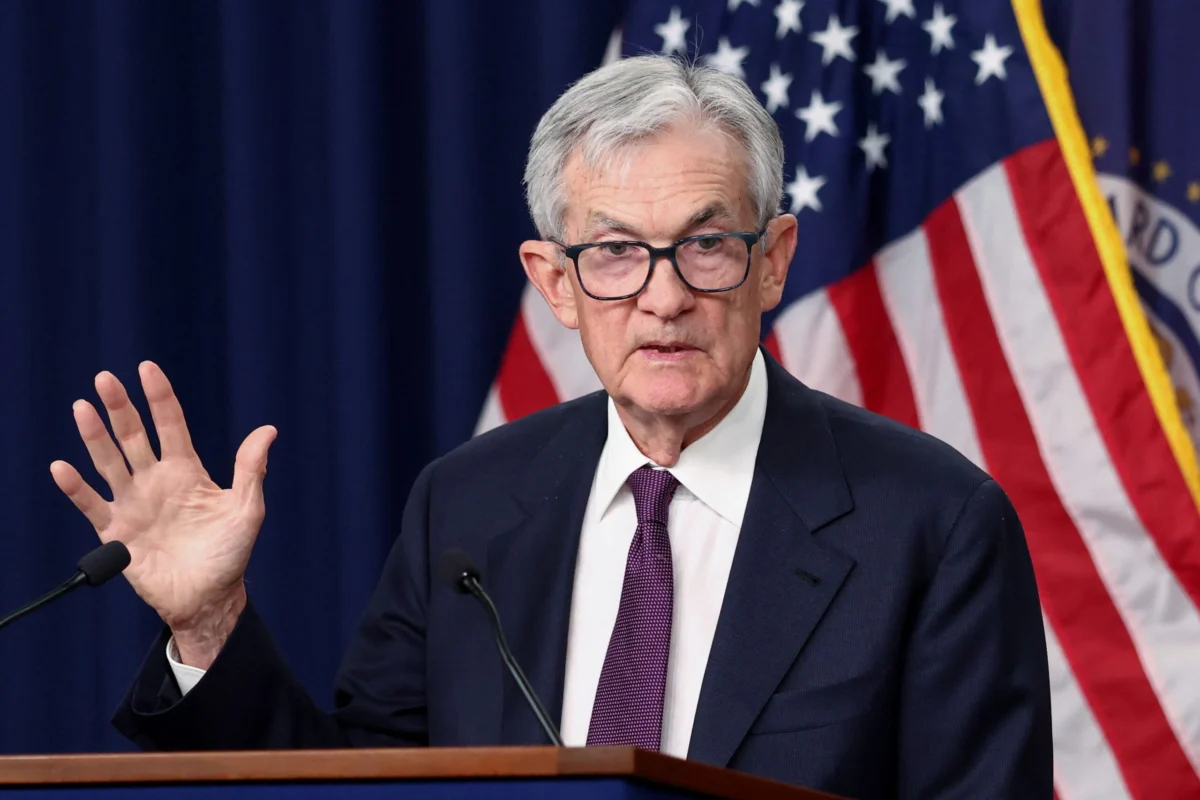
The most significant headwind for non-yielding assets like Silver is the prevailing macroeconomic environment, specifically the aggressive stance of major central banks, particularly the U.S. Federal Reserve. Markets have undergone a significant repricing of expectations for Federal Reserve policy, moving away from earlier forecasts of multiple rate cuts in 2024 towards a consensus that interest rates will remain elevated through much of the year, possibly even into early 2025. This "higher-for-longer" narrative is reinforced by persistent inflationary pressures, robust labor market data, and resilient economic activity in the United States, which collectively suggest that the Fed has more room to maintain its restrictive monetary policy without immediately tipping the economy into recession.
Statements from various Federal Open Market Committee (FOMC) members, often emphasizing a data-dependent approach and a commitment to bringing inflation sustainably down to the 2% target, have cemented this outlook. The latest Consumer Price Index (CPI) and Producer Price Index (PPI) reports, which showed inflation remaining sticky above desired levels, further solidified the market’s conviction. For instance, while core CPI may have moderated slightly, the overall inflation picture, particularly with energy and services components, suggests that the disinflationary trend is not as swift as previously hoped. This implies that the opportunity cost of holding non-yielding assets like Silver, which do not offer interest payments or dividends, increases significantly when Treasury yields are high. The 10-year US Treasury yield, a benchmark for global borrowing costs, has consistently hovered around or above 4.5%, reaching levels not seen in years, making interest-bearing government bonds a more attractive alternative for capital preservation and returns.
Furthermore, a broadly stronger US Dollar (USD) acts as a persistent drag on dollar-denominated commodities, including Silver. The US Dollar Index (DXY), which measures the dollar’s strength against a basket of major currencies, has remained resilient, often trading above the 105 level. This strength is underpinned by the interest rate differentials favoring the U.S. and the dollar’s own safe-haven status amidst global uncertainties. A stronger dollar makes Silver more expensive for investors holding other currencies, thereby dampening international demand.
Market Dynamics: Liquidity Preference and De-risking
In an environment characterized by heightened volatility and economic uncertainty, investors are increasingly prioritizing liquidity. This strategic shift has led to broad-based selling across various asset classes, as market participants seek to de-risk portfolios and preserve capital. Precious metals, including Silver, are not immune to this trend. Instances of "margin calls," where investors are required to deposit additional funds to cover potential losses in their leveraged positions, can force the sale of liquid assets, including holdings in precious metals, irrespective of their intrinsic value or long-term appeal. This forced selling can create downward pressure on prices, limiting any near-term upside potential for Silver despite the lingering geopolitical risks that would otherwise be supportive.
The flight to liquidity often means a preference for cash or highly liquid government bonds, further diverting capital away from commodities. This dynamic highlights Silver’s position within the broader financial ecosystem; while it possesses safe-haven characteristics, its price movements are deeply intertwined with the prevailing risk appetite and liquidity needs of the wider market.
Silver’s Dual Nature: Industrial Demand vs. Safe Haven Status
Silver, unlike Gold, possesses a significant dual identity: it is both a precious metal revered for its safe-haven and monetary properties, and a critical industrial metal with extensive applications. This dual nature often contributes to its higher volatility compared to Gold. Approximately 50-60% of annual Silver demand comes from industrial applications, particularly in sectors such as electronics, solar energy, and medical technologies, where its unparalleled electrical and thermal conductivity is highly valued – surpassing even copper and gold.
The robust demand from the burgeoning solar energy sector, for instance, has been a significant driver in recent years. Solar photovoltaic (PV) cells rely heavily on Silver paste for conductivity. As global initiatives push for greater renewable energy adoption, the demand for Silver in this segment is projected to continue its upward trajectory. Similarly, the electronics industry, from smartphones to electric vehicles, consumes substantial amounts of Silver.
However, this industrial demand makes Silver prices susceptible to global economic cycles. A slowdown in major industrial economies like China, the United States, or India can directly impact demand for manufactured goods, subsequently reducing the need for industrial Silver. For instance, if China’s manufacturing output falters, or if consumer demand for electronics in the US weakens, the industrial component of Silver’s demand profile could suffer. In India, consumer demand for Silver, particularly for jewelry and ceremonial purposes, also plays a crucial role, and this can be sensitive to local economic conditions and cultural trends.
When economic growth is strong, industrial demand for Silver tends to support prices. Conversely, during periods of economic contraction or uncertainty, industrial demand can wane, counteracting its safe-haven appeal. In the current environment, where concerns about global economic growth persist alongside high interest rates, the industrial demand component offers mixed signals, preventing a clear bullish outlook solely based on its utility.
The Gold/Silver Ratio: A Measure of Relative Value
The relationship between Gold and Silver is often analyzed through the Gold/Silver ratio, which indicates how many ounces of Silver are needed to purchase one ounce of Gold. Historically, this ratio has fluctuated significantly, reflecting the relative valuations and perceived roles of the two metals in different economic cycles. When Gold prices rise, Silver typically follows suit, given their shared status as precious metals and store-of-value assets, albeit with Silver often exhibiting higher beta (greater percentage moves) due to its smaller market capitalization and industrial demand component.
Currently, the Gold/Silver ratio has been observed to be relatively high, often hovering in the 80s (e.g., 85:1 or higher), meaning it takes 85 ounces of Silver to buy one ounce of Gold. Some investors interpret a high ratio as an indicator that Silver may be undervalued relative to Gold, suggesting a potential for Silver to outperform Gold in the future should the ratio normalize. Conversely, a low ratio might imply that Gold is undervalued. The persistent high ratio reflects the market’s preference for Gold’s purer safe-haven characteristics during times of extreme uncertainty and its less significant industrial demand component, which makes it less susceptible to economic downturns than Silver. This divergence highlights the market’s current assessment, where Gold is seen as the premier safe-haven asset, while Silver faces additional pressures from its industrial ties and the broader macroeconomic environment.
Outlook and Expert Perspectives
The immediate outlook for Silver remains cautiously optimistic at best, with significant resistance levels around the $70-$71 mark proving difficult to breach convincingly. Analysts suggest that a sustained break above these levels would require a fundamental shift in either the geopolitical landscape, leading to definitive de-escalation, or a clear pivot in central bank policy, signaling an end to the "higher-for-longer" narrative. Conversely, key support levels around $68.50 and then $67.80 are being watched closely, with a break below potentially inviting further downside pressure.
Market participants are closely monitoring upcoming economic data releases, particularly inflation metrics and employment figures from major economies, as these will directly influence central bank decisions. Any unexpected dovish tilt from the Federal Reserve, perhaps triggered by a significant deterioration in economic indicators or a rapid decline in inflation, could provide a much-needed tailwind for Silver by reducing the opportunity cost of holding non-yielding assets and potentially weakening the US Dollar.
Conversely, a further escalation of geopolitical tensions, particularly those impacting critical trade routes, could provide a short-term boost to Silver’s safe-haven appeal, although its impact may be muted by the prevailing macroeconomic pressures. The ongoing re-evaluation of global supply chains and the push for domestic production in various strategic industries could also, over the longer term, influence industrial demand for Silver, potentially offering structural support.
In conclusion, Silver’s performance in the near term is likely to remain dictated by the tug-of-war between its intrinsic safe-haven allure, which is currently restrained by the ambiguity of geopolitical events, and the powerful macroeconomic forces of high interest rates, a strong US Dollar, and liquidity preference. While its vital role in industrial applications, particularly in green technologies, offers long-term promise, the immediate path for the white metal appears fraught with complex and often conflicting signals, necessitating a cautious approach from investors.