Lina Wu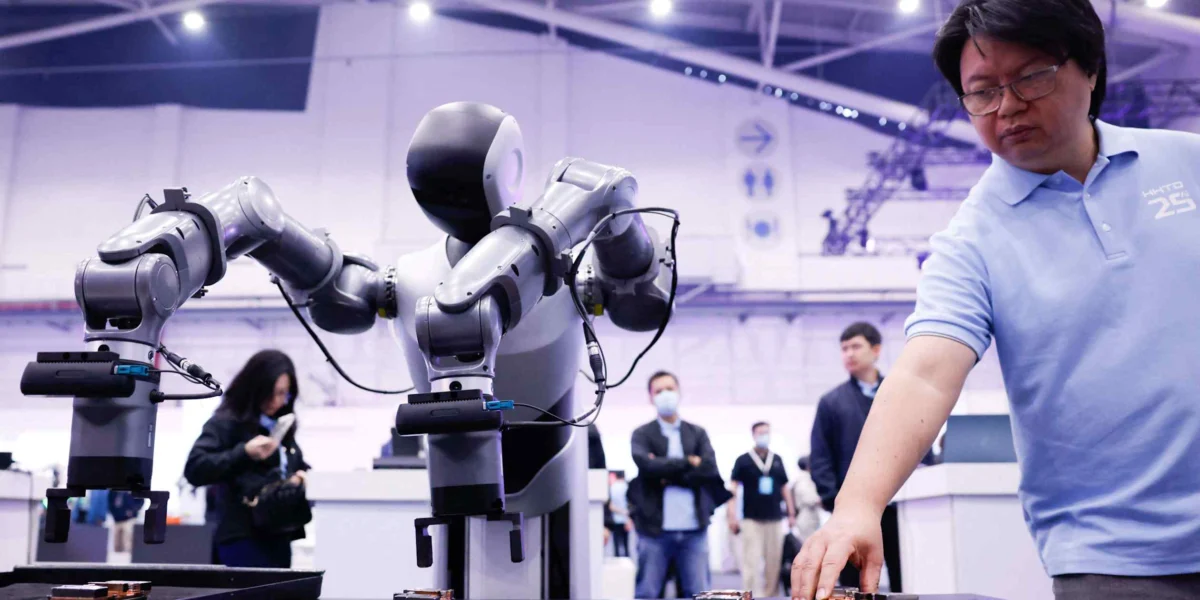
The nascent stage of physical artificial intelligence integration into corporate operations, despite widespread industry excitement, was starkly illuminated in a white paper published by Deloitte on Wednesday, March 18, 2026. While the concept of robots and machines imbued with advanced AI capabilities is generating significant anticipation, actual adoption rates remain remarkably low. The survey, which polled a broad spectrum of companies, revealed that a mere 3% have achieved extensive integration of physical AI into their core business processes. This figure underscores the significant hurdles and the lengthy development cycles involved in deploying sophisticated AI-powered hardware.
However, the report also highlighted a palpable sense of future impact among business leaders. A substantial 40% of surveyed companies expressed a strong belief that physical AI will fundamentally transform their respective industries within the next three years. This dichotomy – low current adoption versus high future expectation – paints a complex picture of the current landscape for physical AI. It suggests a market poised for rapid growth, but one still in its formative stages, characterized by significant investment in research and development, pilot programs, and the gradual scaling of initial deployments.
The backdrop for this revelation is a period of intense innovation and public discourse surrounding physical AI. Throughout 2025 and into early 2026, major technology firms and industrial conglomerates have been showcasing increasingly sophisticated robotic systems capable of performing complex tasks, learning from their environment, and interacting with humans in more nuanced ways. Events like Foxconn’s annual tech day in Taipei, which featured the public display of a wheeled AI industrial humanoid robot in November 2025, served as high-profile examples of this technological advancement. These demonstrations, while impressive, often represent the cutting edge of research and development, not yet widely available or cost-effective for mass industrial adoption.
The Genesis of the Physical AI Revolution
The concept of physical AI, also known as embodied AI or robotic AI, represents the convergence of artificial intelligence with physical systems. Unlike purely software-based AI that operates within digital realms, physical AI involves machines that can perceive, reason, and act within the physical world. This encompasses a wide range of applications, from autonomous vehicles and advanced manufacturing robots to sophisticated domestic assistants and medical exoskeletons. The underlying technology often combines advanced machine learning algorithms, sophisticated sensor arrays, dexterous manipulators, and robust locomotion systems.
The current surge in interest is fueled by breakthroughs in several key areas. Deep learning algorithms have enabled AI systems to process vast amounts of data and make increasingly accurate predictions and decisions. Advances in computer vision allow robots to "see" and interpret their surroundings with remarkable clarity. Reinforcement learning provides machines with the ability to learn through trial and error, optimizing their performance over time. Furthermore, the miniaturization and increased affordability of powerful computing hardware and advanced sensors have made the development of sophisticated physical AI systems more feasible.
The journey towards widespread physical AI integration is not a sudden leap but a gradual evolution. Early forms of industrial automation have existed for decades, primarily focused on repetitive and dangerous tasks in controlled environments. However, the advent of AI has begun to imbue these machines with a level of adaptability and intelligence previously confined to science fiction. The Deloitte survey’s findings suggest that while many companies are aware of this transformative potential, they are still in the early phases of understanding how to effectively implement and leverage these advanced technologies within their specific operational contexts.
A Timeline of Emerging Integration
The findings released on March 18, 2026, reflect a culmination of trends observed over the preceding years.
- 2023-2024: Heightened R&D and Public Awareness: This period saw significant investments from major tech giants and venture capitalists into AI robotics companies. Public demonstrations of increasingly capable humanoid robots and advanced industrial automation systems gained considerable media attention. Companies began to explore pilot programs and proof-of-concept projects.
- November 2025: High-Profile Demonstrations: Events like Foxconn’s annual tech day, showcasing advanced wheeled AI industrial humanoid robots, exemplified the technological strides being made. These events served to raise the profile of physical AI and stimulate industry discussion.
- Early 2026: Surveying the Landscape: Deloitte’s research, conducted in late 2025 and early 2026, aimed to quantify the actual adoption rates and future outlook of physical AI integration across various industries. The white paper, released in March 2026, provides a snapshot of the current state.
The low integration rate of 3% can be attributed to several factors. The cost of developing and deploying advanced physical AI systems remains a significant barrier for many businesses. The complexity of integrating these systems into existing workflows and infrastructure requires substantial technical expertise and investment. Furthermore, concerns around data security, ethical considerations, and the potential impact on the workforce are areas that companies are still actively navigating.
Supporting Data and Industry Perspectives
Deloitte’s white paper, titled "The Dawn of Embodied Intelligence: Navigating the Landscape of Physical AI," draws upon survey data from over 1,000 executives across diverse sectors, including manufacturing, logistics, healthcare, and retail. The survey was conducted between December 2025 and February 2026.
Key supporting data points from the report include:
- Primary Drivers for Adoption: Companies that are actively exploring or implementing physical AI cite increased efficiency (65%), enhanced productivity (58%), improved safety in hazardous environments (52%), and the potential for new product or service development (45%) as their primary motivations.
- Barriers to Adoption: The most commonly cited obstacles include high initial investment costs (72%), lack of in-house expertise (68%), integration challenges with existing systems (62%), and concerns about return on investment (55%).
- Industry-Specific Outlook: The manufacturing and automotive sectors show the highest current adoption rates, with approximately 8% of companies having extensive integration. These sectors are followed by logistics and warehousing (6%) and healthcare (4%). Industries such as retail and financial services are largely in the exploratory phase.
- Future Projections: Beyond the 40% who anticipate industry transformation within three years, an additional 35% believe this transformation will occur within five to seven years. Only 10% foresee minimal impact within the next decade.
The survey also highlighted a significant talent gap. A considerable majority of respondents (78%) indicated that they are struggling to find skilled personnel with the necessary expertise in AI, robotics, and automation to support their physical AI initiatives. This underscores the need for increased investment in education and training programs to build a future-ready workforce.
Official Responses and Industry Reactions
While Deloitte’s report itself represents an official release of data, the implications have already begun to elicit reactions from industry leaders and analysts.
A spokesperson for a leading industrial robotics manufacturer, speaking anonymously due to ongoing strategic planning, commented, "We are not surprised by these figures. The development and deployment of truly intelligent, adaptable physical AI is a marathon, not a sprint. Our focus remains on providing robust, scalable solutions that address the immediate needs of our clients while paving the way for more advanced capabilities in the future. The enthusiasm for physical AI is undeniable, and our pipeline of interest from businesses exploring pilot projects is very strong."
Dr. Anya Sharma, a leading AI ethicist and researcher at the Global Institute for AI Studies, noted, "The low integration rate is a critical signal. It suggests that the hype cycle is outstripping practical implementation. While innovation is essential, we must also ensure that companies are developing responsible deployment strategies. The ethical implications of physical AI, from job displacement to autonomous decision-making in critical scenarios, require careful consideration and proactive policy development. The 40% who see transformation within three years should be encouraged to temper that enthusiasm with rigorous planning and ethical frameworks."
On the investment front, venture capital firms that have been heavily backing AI robotics startups are watching these trends closely. "We are seeing a bifurcation in the market," stated Mark Jenkins, a partner at TechFront Ventures. "On one hand, there are companies focused on incremental improvements to existing industrial automation, which are seeing steady adoption. On the other, there are those pushing the boundaries of general-purpose humanoid robots. While the latter is where the true long-term potential lies, the integration challenges are immense. Our investment thesis accounts for these longer development cycles, but the Deloitte report confirms that the path to widespread adoption for the most advanced forms of physical AI will require sustained effort and innovation beyond the hardware itself."
Broader Impact and Implications
The findings of the Deloitte white paper have significant implications for businesses, policymakers, and the workforce.
For businesses, the low integration rate presents both a challenge and an opportunity. Companies that can successfully navigate the complexities of integrating physical AI into their operations stand to gain a significant competitive advantage. This requires a strategic approach that includes investing in talent development, modernizing infrastructure, and fostering a culture of innovation. The projected transformation within three years for a substantial portion of the market suggests that companies delaying their adoption strategies may find themselves at a disadvantage.
Policymakers face the task of creating an environment that fosters responsible innovation while mitigating potential risks. This includes developing regulations around AI safety, data privacy, and the ethical use of autonomous systems. Furthermore, there is a growing need for policies that support workforce retraining and adaptation to the changing nature of work. The talent gap highlighted in the report underscores the urgency of investing in STEM education and lifelong learning initiatives.
For the workforce, the rise of physical AI signals a significant shift in the job market. While some jobs may be automated, new roles will emerge in areas such as AI development, robotics maintenance, data analysis, and human-robot collaboration. The key will be to equip the current and future workforce with the skills needed to thrive in this evolving landscape. The Deloitte report’s emphasis on the need for in-house expertise further reinforces this point.
The current state of physical AI integration, characterized by low adoption but high future expectations, is a testament to the disruptive potential of this technology. As companies continue to invest in research and development, and as the technology matures and becomes more accessible, the coming years are likely to witness a significant acceleration in its adoption. The "buzz" surrounding physical AI is well-founded, but translating that excitement into tangible, widespread operational impact will require careful planning, strategic investment, and a commitment to responsible innovation. The next few years will be critical in determining whether the optimistic projections of industry transformation materialize into reality.