Farhan Pambudi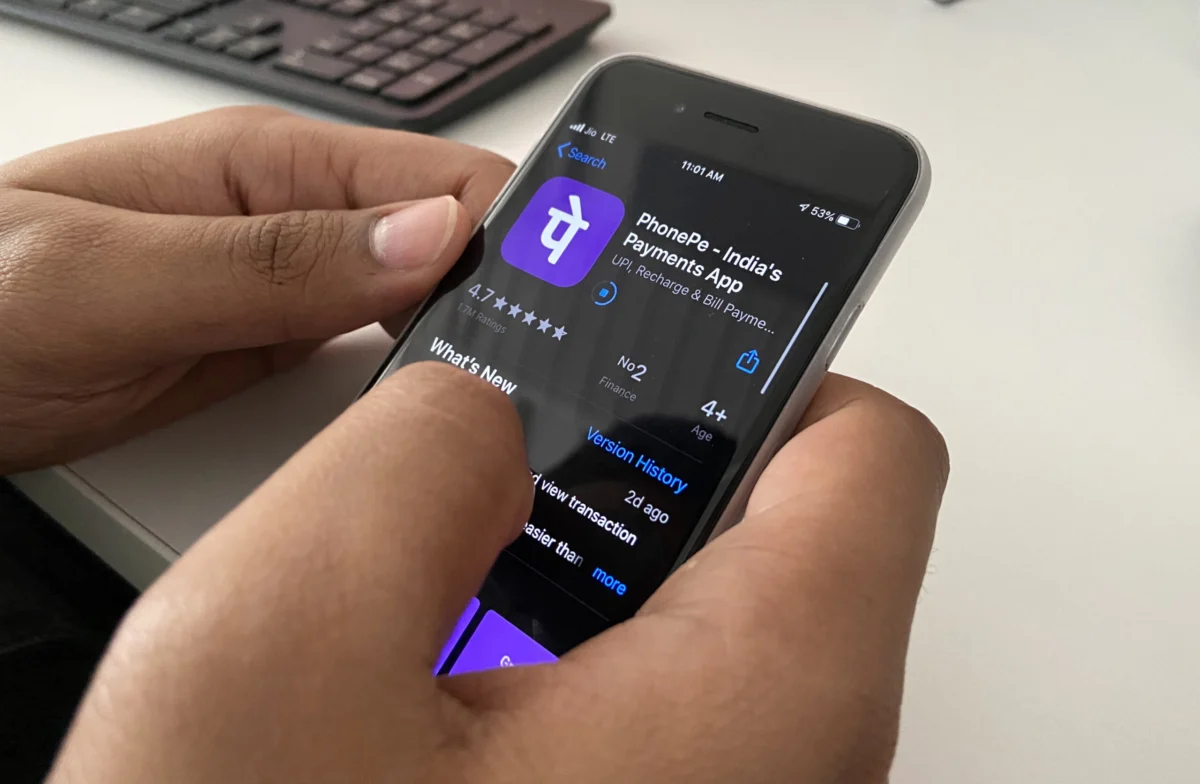
PhonePe, the Bengaluru-headquartered digital payments leader and India’s most valuable fintech entity, has officially suspended its plans for a highly anticipated initial public offering on Indian exchanges, citing a confluence of geopolitical instability and extreme volatility in global financial markets. The decision, announced on Monday, represents a significant shift in strategy for the Walmart-backed company, which had filed an updated IPO prospectus less than two months ago with the intent of listing before the end of the current calendar year. While the company remains committed to a public debut in the long term, the current macroeconomic climate has forced a tactical retreat as investors grow increasingly cautious regarding high-growth, high-valuation technology stocks.
The suspension of the IPO process comes at a time when the Indian equity markets are grappling with external shocks. Escalating tensions in the Middle East have reverberated through global supply chains and financial hubs, leading to a sharp spike in crude oil prices—a critical metric for the energy-dependent Indian economy. Over the past thirty days, India’s benchmark indexes, the Nifty 50 and the BSE Sensex, have both recorded declines of approximately 9%. The broader market has felt even greater pressure, with more than 400 Indian stocks witnessing double-digit percentage drops since the onset of the regional conflict in late February. For a company of PhonePe’s scale, which was targeting a market capitalization of approximately $15 billion, such a volatile environment presents a significant risk to price discovery and post-listing performance.
The Valuation Deadlock and Market Realities
Central to the discussions surrounding the IPO pause is the sensitive issue of valuation. In January 2023, PhonePe was valued at roughly $12 billion following a successful funding round. For its public debut, the company had set its sights on a $15 billion valuation, aiming to raise as much as $1.5 billion in fresh capital and secondary share sales. However, the appetite for premium valuations in the fintech sector has cooled significantly. Reports from sources familiar with the matter suggest that investment bankers advising PhonePe had recommended a more conservative valuation target of approximately $9 billion to ensure a successful subscription and to avoid the "listing day blues" that have plagued other high-profile Indian tech IPOs in recent years.
PhonePe has moved quickly to dismiss claims that valuation concerns played a role in the delay. In an official statement, a company spokesperson characterized such assertions as "baseless," maintaining that the decision was driven exclusively by external market conditions. "We paused the process only because of the current market conditions, which are unrelated to PhonePe," the spokesperson stated via email. Despite this denial, analysts suggest that the gap between founder expectations and market reality is a common hurdle in the current high-interest-rate environment, where profitability is being prioritized over raw transaction volume.
A Chronology of PhonePe’s Evolution
To understand the weight of this IPO delay, one must look at the meteoric rise of PhonePe within the Indian digital infrastructure. Founded in 2015 by former Flipkart executives Sameer Nigam, Rahul Chari, and Burzin Engineer, the company was envisioned as a solution to the friction inherent in traditional Indian payment systems.
- 2016: Within a year of its inception, PhonePe was acquired by the e-commerce giant Flipkart, providing it with the capital and user base needed to scale rapidly.
- 2016-2021: The company became a pioneer in the Unified Payments Interface (UPI) ecosystem, a government-backed real-time payment system that transformed the Indian economy.
- 2022: In a landmark corporate restructuring, Flipkart and PhonePe completed a full separation. This "spin-off" was designed to allow PhonePe to pursue its own capital-raising efforts and eventually go public, though Walmart remained the majority shareholder of both entities.
- 2023: The company successfully raised significant capital at a $12 billion valuation, cementing its status as the leader in the Indian fintech space.
- 2026 (January-February): PhonePe filed an updated prospectus and reported record-breaking transaction volumes, signaling its readiness for the public markets before the current geopolitical crisis prompted a reconsideration.
Dominance in the UPI Ecosystem and Financial Performance
PhonePe’s market position remains its strongest asset. According to the latest data from the National Payments Corporation of India (NPCI), the company continues to outperform its nearest rival, Google Pay, by a substantial margin. In February 2026, PhonePe processed approximately 9.3 billion transactions with a cumulative value of ₹13.1 trillion (roughly $141.9 billion). In comparison, Google Pay handled 6.8 billion transactions valued at ₹9 trillion ($97.8 billion). This dominance gives PhonePe a nearly 50% market share in the UPI volume category, a position that is both a competitive advantage and a point of regulatory scrutiny regarding market-share caps.
However, the company’s financial health presents a more complex picture. For the six-month period ending September 2025, PhonePe reported a 22% year-on-year increase in revenue from operations, reaching ₹39.19 billion ($424.4 million). While revenue growth remains robust, the company’s losses have also expanded. During the same period, net losses widened to ₹14.44 billion ($156.4 million), up from ₹12.03 billion the previous year. This widening deficit is largely attributed to aggressive spending on diversification. PhonePe is no longer just a payments app; it has expanded into stockbroking, mutual fund distribution, and insurance. Furthermore, its launch of the Indus Appstore—an Android-based alternative to the Google Play Store—represents a high-stakes attempt to break Google’s platform monopoly in India, requiring significant long-term investment.
Investor Exits and Governance Structure
The IPO was intended to serve as a major liquidity event for several of PhonePe’s early and institutional backers. The prospectus indicated that Tiger Global Management and Microsoft were prepared to exit their positions entirely, capitalizing on the growth the company has seen since their initial investments. Walmart, which holds the majority stake, intended to offload approximately 45.9 million shares, representing about 9% of the company’s equity. Despite this planned sale, Walmart intended to retain controlling interest, viewing PhonePe as a cornerstone of its long-term strategy in the Indian market alongside Flipkart.
The decision to pause the IPO delays these exits, forcing private equity and venture capital partners to hold their positions longer than anticipated. This trend is becoming increasingly common in the Indian startup ecosystem, where "unicorns" are finding the transition to public markets fraught with regulatory hurdles and investor skepticism regarding path-to-profitability timelines.
Broader Implications for the Indian Tech Sector
The postponement of PhonePe’s listing is expected to have a chilling effect on other Indian startups planning to go public in 2026. As the largest and most successful fintech in the country, PhonePe was seen as a bellwether for the sector. Its inability to proceed due to market conditions suggests that other companies may face even steeper challenges in securing favorable valuations.
Market analysts point to several factors that could influence the timeline for PhonePe’s return to the IPO path:
- Stabilization of Oil Prices: As a major importer, India’s market sentiment is tied to energy costs. A de-escalation in the Middle East is likely a prerequisite for a sustained market recovery.
- Foreign Institutional Investor (FII) Flows: Recent months have seen a net outflow of foreign capital from Indian equities as investors move toward "safe-haven" assets like gold and U.S. Treasuries.
- Monetary Policy: Anticipated shifts in interest rate cycles by the Reserve Bank of India (RBI) and the U.S. Federal Reserve will play a crucial role in determining the cost of capital and the attractiveness of growth-oriented tech stocks.
Future Outlook
Despite the setback, PhonePe’s long-term fundamentals remain anchored in India’s digital-first economy. The company’s move to diversify into wealth management and its ambitious play with the Indus Appstore suggest a vision that extends far beyond simple peer-to-peer transfers. By building a comprehensive financial services ecosystem, PhonePe aims to increase its "average revenue per user" (ARPU), eventually offsetting the high costs of customer acquisition and transaction processing.
For now, the company returns to a "wait-and-watch" mode. The internal infrastructure for the IPO—including the legal frameworks, audited financials, and merchant bank appointments—remains in place. When the "geopolitical clouds clear," as one analyst noted, PhonePe will likely be the first in line to test the public markets again. Until then, the Bengaluru fintech giant must navigate a period of consolidation, focusing on narrowing its losses and defending its market lead in an increasingly competitive and regulated landscape.