Tama Aditya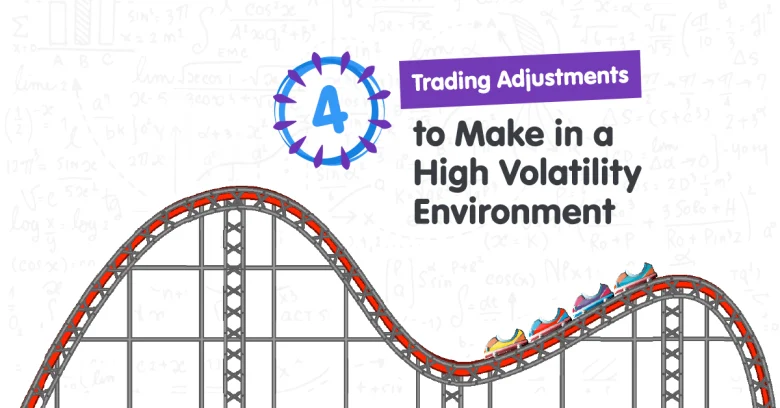
The financial markets are currently experiencing a heightened period of volatility, characterized by rapid and unpredictable price swings that are challenging even seasoned traders. This environment, where market sentiment can shift dramatically and without warning, necessitates a strategic recalibration of trading approaches. Understanding the nature of volatility and implementing specific adjustments to trading plans are crucial for mitigating risk and capitalizing on potential opportunities during these turbulent times.
Understanding Market Volatility: More Than Just Price Swings
Volatility, in its simplest definition, quantifies the degree of price fluctuation of an asset over a specified period. Technically, it is measured using statistical metrics such as standard deviation or variance of price changes. However, for traders, volatility represents the "moodiness" of the market. In a low-volatility environment, news releases often have a predictable and contained impact on prices, akin to a routine weather report. Conversely, high volatility amplifies both positive and negative price reactions, leading to significant and swift market movements.
The current surge in volatility can be attributed to a confluence of global economic and geopolitical factors. For instance, persistent inflation concerns, coupled with aggressive monetary policy tightening by central banks like the U.S. Federal Reserve and the European Central Bank, have created an atmosphere of uncertainty. Geopolitical tensions, such as ongoing conflicts and trade disputes, further exacerbate this uncertainty, leading to investor apprehension and a flight to safety, which can trigger sharp market corrections or rallies. The rapid dissemination of information through digital channels also contributes to the speed at which sentiment can shift, making markets more reactive.
Strategic Adjustments for Navigating Volatility
To effectively navigate these choppy market seas, traders are advised to consider several strategic adjustments to their existing trading plans. These adjustments focus on maintaining a disciplined approach, adapting risk parameters, and potentially altering trading styles.
1. Sharpening Trading Focus and Emotional Discipline
One of the most critical aspects of trading in a volatile market is maintaining a calm and focused mindset. The temptation to react impulsively to sudden price movements can lead to significant losses. As seasoned traders often emphasize, emotional discipline is paramount. This involves reminding oneself to stay composed even when price action becomes erratic, concentrating on the pre-defined trading plan rather than succumbing to panic.
This disciplined approach allows for a clearer evaluation of emerging catalysts and their potential impact. Instead of reacting to every tick, traders can step back, assess the new information against their existing strategy, and make informed decisions about adjusting positions or holding steady. For example, if a major economic data release significantly deviates from expectations, a focused trader will analyze the implications for their current trades rather than immediately exiting or entering new positions based on initial knee-jerk reactions. This can involve reassessing the strength of an existing trend or identifying potential reversals with greater clarity.
2. Adapting Stop-Loss Orders and Profit Targets
In a highly volatile environment, using overly tight stop-loss orders can be counterproductive. Price spikes, even if temporary, can trigger these stops prematurely, leading to losses just before the market reverses and moves in the intended direction of the trade. This can be a source of significant frustration for traders.
To mitigate this, traders should adjust their stop-loss levels and profit targets to accommodate wider price swings. A practical approach involves analyzing recent price action to understand the typical range of daily price movements for the specific assets being traded. Historical data, readily available through various financial data platforms, can provide valuable insights into average pip movements and volatility patterns for different currency pairs or asset classes. For instance, platforms like BabyPips’ MarketMilk offer historical volatility data that can inform these adjustments. If a currency pair typically experiences daily ranges of 100 pips, a trader might widen their stop-loss to 120-150 pips to allow for greater flexibility and avoid being stopped out by normal market noise. Similarly, profit targets may need to be adjusted to account for the potential for larger, albeit less frequent, moves.
3. Shifting Trading Styles to Match Market Conditions
The efficacy of a particular trading strategy often depends on the prevailing market environment. Strategies designed for range-bound markets with low volatility may not perform well during trending or highly volatile periods, and vice-versa. Therefore, traders need to be adaptable and willing to shift their trading style.
During periods of heightened volatility, a shift from longer-term, buy-and-hold strategies to shorter-term trading approaches might be more suitable. This is because rapid price movements can quickly erode the value of positions held for extended periods. Day trading or swing trading strategies that focus on capturing smaller, more frequent gains can be more effective. The key is to recognize when a market is transitioning from one environment to another and to adjust the strategy accordingly. For example, a trader who typically favors trend-following strategies during calm periods might switch to mean-reversion strategies during volatile, choppy markets, looking to profit from price swings within defined ranges. This adaptability is crucial for maintaining profitability across different market regimes.
4. The Prudent Decision to Sit on the Sidelines
Perhaps the most underutilized, yet highly effective, strategy during periods of extreme volatility is to simply refrain from trading. There is no inherent obligation to be in the market at all times. Deciding against taking a particular trade setup or abstaining from trading altogether is a valid and often wise risk management decision.
This approach acknowledges that not every market move presents a profitable opportunity, and forcing trades can lead to unnecessary losses. By stepping aside, traders can conserve capital, avoid emotional decision-making, and wait for clearer, more favorable trading conditions to emerge. It is important to remember that the market will continue to offer trading opportunities, and chasing volatile price action without a well-defined plan can be detrimental. If a trader lacks confidence in their ability to navigate a volatile scenario or if their intuition suggests caution, remaining on the sidelines can be the most prudent course of action, potentially saving them from significant financial setbacks. This is akin to a seasoned sailor waiting out a storm rather than attempting to navigate through treacherous seas unprepared.
Broader Implications and Expert Insights
The current market environment underscores the importance of robust risk management and psychological preparedness. Many financial educators and seasoned traders emphasize that trading success is not solely dependent on technical analysis but equally, if not more so, on mental fortitude.
Mark Douglas, a renowned trading psychologist, in his seminal work "Trading in the Zone," highlights how most trading mistakes stem from psychological biases rather than technical shortcomings. He advocates for developing a detached and objective mindset, enabling traders to execute their plans consistently, regardless of market conditions. For those concerned about weathering extreme volatility, understanding and internalizing the principles of such works can provide a crucial framework for consistent execution.
Furthermore, for traders who find it challenging to manage risk with their own capital during such turbulent periods, exploring simulated trading environments offered by proprietary trading firms can be a valuable alternative. Companies like FundedNext allow traders to test their strategies and execute trades with substantial simulated capital, such as up to $300,000, without the immediate risk of personal financial loss. These platforms often have no time limits on evaluations, enabling traders to patiently wait for market conditions to stabilize or for optimal setups to emerge. This not only helps in refining strategies but also in building confidence and discipline without the pressure of risking real money.
In conclusion, periods of high market volatility are an inherent part of financial markets. While they present challenges, they also offer opportunities for well-prepared and disciplined traders. By understanding volatility, sharpening focus, adjusting risk parameters, adapting trading styles, and knowing when to step back, traders can better navigate these turbulent times and emerge resilient. The emphasis on psychological preparedness and strategic flexibility remains paramount in achieving consistent success in the dynamic world of financial trading.