Lina Wu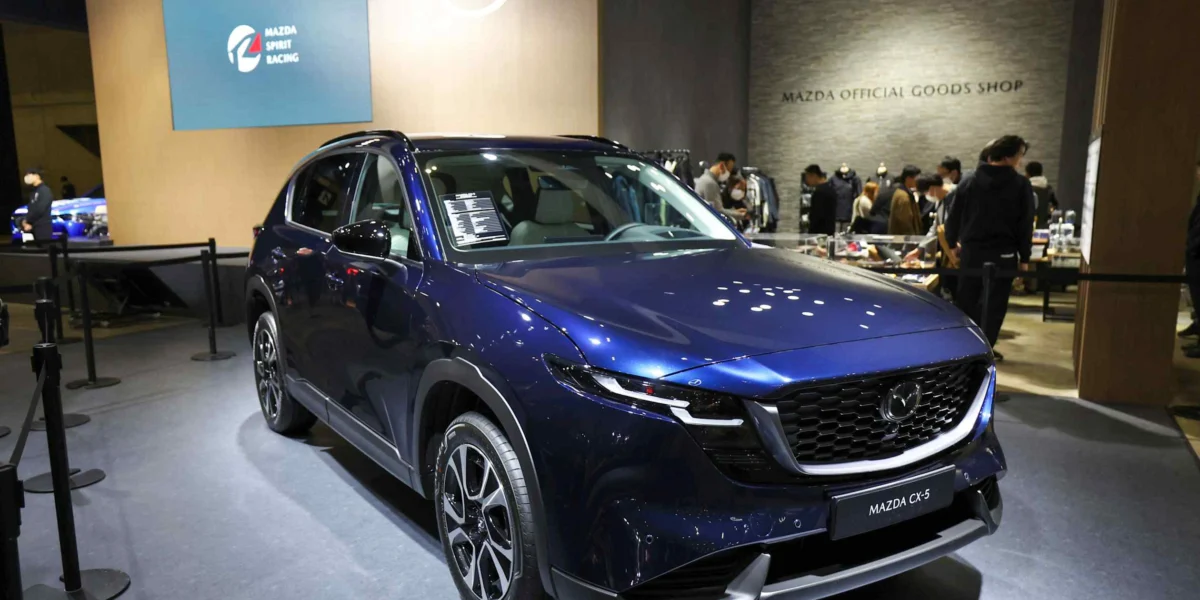
TOKYO – Mazda Motor is poised to commence production of its redesigned CX-5 for the Japanese domestic market next month, a strategic move aimed at invigorating sales for the midsize automaker. This domestic rollout follows the CX-5’s successful introduction in Europe, where initial order volumes have surpassed company expectations, signaling a positive reception for the refreshed model. Concurrently, Mazda is reportedly intensifying its efforts to develop its own hybrid drivetrain technology, a crucial component for its forthcoming flagship vehicle, underscoring a broader commitment to electrification and enhanced performance.

Domestic Launch of Redesigned CX-5 Signals Strategic Sales Push
The impending production launch of the redesigned CX-5 in Japan marks a significant moment for Mazda, especially as the automotive industry navigates evolving consumer preferences and increasingly stringent environmental regulations. The CX-5, a cornerstone of Mazda’s global portfolio, has consistently been a strong performer, lauded for its stylish design, engaging driving dynamics, and practical utility. The latest iteration is expected to build upon these strengths, incorporating updated styling, advanced safety features, and improved interior comfort.
Sources indicate that the domestic production will commence in April, with the vehicles expected to reach dealerships shortly thereafter. This timing is critical, allowing Mazda to capitalize on the spring sales season and leverage the positive momentum generated by the European market. In Europe, the updated CX-5, which began rolling out earlier this year, has seen orders exceed initial projections. This strong European uptake is attributed to a combination of factors, including Mazda’s reputation for premium quality, the CX-5’s enduring appeal, and perhaps a timely refresh that aligns with market demands. The success in Europe provides a crucial confidence boost and valuable market feedback as Mazda prepares for its home market launch.

The CX-5 has been a vital contributor to Mazda’s global sales figures, consistently ranking among the top-selling compact SUVs. Its success is a testament to Mazda’s "Kodo – Soul of Motion" design philosophy and its driver-centric engineering approach, often referred to as the "Jinba Ittai" or "horse and rider as one" concept. The redesigned model aims to further solidify its position in a highly competitive segment, which includes formidable rivals from Japanese and international manufacturers.
In-House Hybrid Drivetrain Development: A Strategic Imperative
Beyond the CX-5’s immediate market debut, Mazda’s long-term strategy appears increasingly focused on in-house development of its own hybrid drivetrain technology. This initiative is reportedly being prioritized for its next-generation flagship model, a move that signifies a substantial investment and a clear declaration of intent to control key aspects of its future powertrain offerings.

The development of proprietary hybrid technology is a complex and capital-intensive undertaking. It requires significant expertise in battery management, electric motor integration, internal combustion engine optimization, and the sophisticated control systems that orchestrate their interplay. For Mazda, a company that has historically prided itself on its engineering prowess and distinctive approach to vehicle dynamics, developing its own hybrid system offers several strategic advantages:
- Enhanced Performance and Driving Experience: By controlling the entire drivetrain architecture, Mazda can more effectively tune the hybrid system to deliver its signature engaging driving experience. This means ensuring seamless power delivery, responsive acceleration, and a refined ride that aligns with the brand’s premium aspirations.
- Cost Control and Supply Chain Resilience: Relying less on external suppliers for critical hybrid components can offer greater control over production costs and mitigate risks associated with supply chain disruptions. This is particularly relevant in an era of global component shortages and geopolitical uncertainties.
- Differentiation in a Crowded Market: While many automakers are adopting off-the-shelf hybrid solutions, developing a unique in-house system allows Mazda to differentiate its products and offer a distinct technological edge. This can be a powerful marketing tool and a key factor in attracting discerning customers.
- Future-Proofing and Scalability: A robust in-house hybrid platform can serve as a foundation for future electrification efforts, including plug-in hybrids and potentially fully electric powertrains. This investment in core technology ensures Mazda’s long-term competitiveness.
The decision to focus this advanced hybrid development on a flagship model suggests that Mazda intends to showcase its technological capabilities at the highest tier of its product line. This flagship vehicle will likely be a larger, more premium offering, designed to compete with established luxury SUVs and sedans, where advanced powertrains are increasingly becoming a standard expectation.

Contextualizing Mazda’s Electrification Journey
Mazda’s approach to electrification has been characterized by a degree of prudence and a focus on multi-solution strategies. Unlike some rivals who have aggressively pursued a purely electric future, Mazda has maintained a more nuanced stance, advocating for a mix of technologies that best suit diverse market needs and infrastructure realities. This includes continuing to refine its Skyactiv-X gasoline engines, which feature unique compression ignition technology, and offering mild-hybrid systems.
The development of a full hybrid system represents a significant step forward in this strategy, bridging the gap between its current offerings and a fully electric future. It acknowledges the continued demand for hybrid vehicles, which offer improved fuel efficiency and reduced emissions compared to traditional internal combustion engines, without the range anxiety or charging infrastructure dependency associated with pure electric vehicles.

This strategic shift also reflects the broader automotive industry’s trajectory. Hybrid technology has proven to be a highly effective transitional technology, allowing automakers to meet increasingly stringent emissions standards while providing consumers with a practical and accessible form of electrification. Global sales of hybrid vehicles have seen consistent growth, driven by consumer demand for fuel savings and environmental consciousness. For instance, data from the International Energy Agency (IEA) indicates a steady upward trend in hybrid electric vehicle sales globally over the past decade, outperforming even some early projections.
Potential Implications and Market Analysis
The successful implementation of Mazda’s in-house hybrid drivetrain could have several significant implications:

- Enhanced Brand Perception: A cutting-edge, proprietary hybrid system would bolster Mazda’s image as an innovative and technologically advanced automaker, potentially attracting a new segment of environmentally conscious and performance-oriented buyers.
- Competitive Advantage: If Mazda can deliver a hybrid system that offers superior performance, efficiency, and driving dynamics compared to its competitors, it could carve out a distinct niche in the premium segment.
- Financial Performance: Increased sales of popular models like the CX-5, coupled with the successful launch of a flagship vehicle with advanced technology, could lead to improved financial performance for the company.
- Future Product Planning: The success of this hybrid initiative could pave the way for wider adoption of the technology across Mazda’s model range, accelerating its transition towards a more electrified future.
However, the path to developing and deploying a new hybrid drivetrain is not without its challenges. The automotive industry is in a constant state of flux, with rapid advancements in battery technology, software integration, and autonomous driving systems. Mazda will need to ensure its hybrid system is not only competitive at launch but also adaptable to future technological evolutions. Furthermore, the cost of developing such technology must be balanced against market pricing and consumer willingness to pay for these advancements.
Looking Ahead: A Balanced Approach to Electrification
The dual focus on revitalizing sales with the redesigned CX-5 and investing in future powertrain technology highlights Mazda’s strategic approach to navigating the complex automotive landscape. By ensuring the continued success of its core models while simultaneously pushing the boundaries of its technological development, Mazda aims to maintain its unique brand identity and secure its position in the evolving automotive market. The domestic production of the CX-5 represents an immediate step to strengthen its market presence, while the development of its own hybrid drivetrain signifies a forward-looking commitment to innovation and long-term sustainability. The automotive world will be watching closely to see how these initiatives shape Mazda’s future.