Tari Putri Malika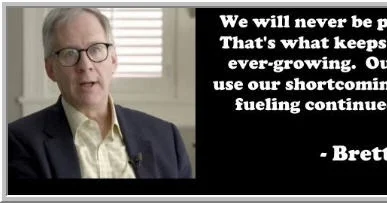
The discipline of trading psychology has evolved from a niche subset of behavioral finance into a cornerstone of institutional and retail investment strategies, driven by the recognition that cognitive architecture is as critical as algorithmic precision. Dr. Brett Steenbarger, a clinical associate professor of psychiatry and behavioral sciences, has emerged as a pivotal figure in this transition, advocating for a shift from traditional pathological models of psychology toward a performance-based, solution-focused framework. This methodology, rooted in evidence-based psychological techniques, posits that traders can achieve sustainable success by becoming their own coaches, focusing on the amplification of existing strengths rather than the mere eradication of weaknesses. By integrating the principles of brief psychotherapy with the rigors of financial market participation, this approach seeks to harmonize professional productivity with personal evolution, suggesting that a trader’s performance is an extension of their holistic psychological state.
The Paradigm Shift in Performance Psychology
The traditional view of trading psychology often focused on "fixing" the trader—addressing fear, greed, and the emotional volatility that leads to impulsive decision-making. However, contemporary frameworks, such as those championed by Steenbarger, utilize solution-focused brief therapy (SFBT). This approach operates on the premise that individuals already possess the internal resources necessary for success; the objective of coaching is to identify periods of peak performance and deconstruct the specific behaviors and mindsets present during those "solution" states.
In a professional trading environment, this means moving away from a deficit-based model. Instead of asking why a trader lost money on a specific day, a solution-focused coach asks what was happening differently on the days when the trader followed their process perfectly. By identifying these "exceptions" to failure, traders can build a repeatable blueprint for success. This transition reflects a broader trend in high-performance fields, from professional sports to surgical medicine, where the emphasis has shifted toward "deliberate practice" and the optimization of cognitive strengths.
A Chronology of Trading Psychology and Market Evolution
The integration of psychology into trading has followed a distinct historical timeline, mirroring the evolution of market structure and data availability.
- The Intuitive Era (Pre-1980s): Trading was largely viewed as an art form or a test of raw "gut instinct." Psychological support was virtually non-existent, and failure was attributed to a lack of character or discipline.
- The Behavioral Revolution (1980s–1990s): The work of Daniel Kahneman and Amos Tversky began to permeate the financial world, introducing the concept of cognitive biases such as loss aversion and overconfidence. This era highlighted why traders consistently made irrational choices.
- The Professionalization of Coaching (2000s–2010s): As proprietary trading firms and hedge funds grew in scale, the "performance coach" became a formal role. Dr. Steenbarger and others began applying clinical techniques to the trading floor, focusing on the intersection of mental health and P&L (Profit and Loss).
- The Data-Driven Era (2015–Present): Modern trading psychology now incorporates biometric data, such as heart-rate variability (HRV), and advanced psychometric testing. Coaching is no longer just about conversation; it is about leveraging data to understand the physiological and psychological precursors to high-performance states.
Supporting Data: The Quantitative Impact of Psychological Resilience
While the "soft skills" of psychology are often difficult to quantify, industry data suggests a strong correlation between psychological intervention and long-term trader survival. Statistics from retail brokerage firms consistently indicate that over 80% of active day traders lose money over a one-year period, with a significant portion of these losses attributed to "tilt"—a poker term for emotional breakdown leading to irrational betting.
In contrast, institutional programs that incorporate structured psychological training report higher retention rates. For instance, proprietary trading firms that utilize "psychological capital" (PsyCap) assessments—measuring hope, efficacy, resilience, and optimism—find that traders scoring in the top quartile of these metrics tend to manage drawdowns with 30% less equity volatility than their peers. Furthermore, research into "cognitive load" suggests that traders who maintain a disciplined work-life balance and utilize stress-reduction techniques exhibit 15-20% faster reaction times during periods of high market volatility, as their prefrontal cortex remains engaged rather than being hijacked by the amygdala’s "fight or flight" response.
The Mechanics of Self-Coaching: Cognitive and Interpersonal Strengths
The core of the self-coaching manual involves a deep dive into three primary domains: cognitive, interpersonal, and personality strengths.
Cognitive Strengths
These involve the trader’s ability to process information, recognize patterns, and maintain focus. A trader with high "pattern recognition" capabilities might excel in fast-paced scalping, while one with high "analytical depth" might be better suited for long-term macro-thematic trading. Self-coaching requires the trader to align their trading style with their innate cognitive architecture.
Interpersonal Strengths
Trading is often perceived as a solitary endeavor, but in an institutional context, it is highly social. The ability to communicate ideas, receive feedback from risk managers, and collaborate with researchers is vital. Traders who understand their interpersonal dynamics can better navigate the "groupthink" of a trading floor and maintain independent conviction.

Personality Strengths
Using frameworks like the "Big Five" personality traits (Openness, Conscientiousness, Extraversion, Agreeableness, and Neuroticism), traders can identify their risk tolerance. For example, a trader high in conscientiousness is likely to be meticulous with record-keeping and risk limits, whereas a trader high in openness may be better at identifying non-linear market opportunities.
Industry Perspectives and Official Responses
The adoption of these psychological resources has seen widespread endorsement from the leaders of top-tier financial institutions. Managers at firms such as Point72 Asset Management and SMB Capital have frequently noted that the "mental edge" is the final frontier of competitive advantage in an era where technology and information are largely commoditized.
"The goal is not to eliminate emotion, but to use it as data," noted one senior risk manager at a London-based hedge fund. "When a trader understands their own psychological triggers, they become a more stable asset for the firm. We view psychological resources not as a luxury, but as a fundamental component of our risk management framework."
Professional traders who have adopted the "trader-as-coach" model report that it reduces the sense of isolation often felt during losing streaks. By viewing themselves as both the athlete and the coach, they can maintain an objective distance from their performance, treating losses as data points for improvement rather than indictments of their self-worth.
Broader Impact: Implications for Leadership and Creativity
The implications of Steenbarger’s work extend beyond the trading desk. The "solution-focused" approach is increasingly being applied to corporate leadership and creative industries. The core tenet—that productivity is a byproduct of leveraging strengths—challenges the traditional corporate focus on "gap analysis" and "remediation."
In the context of hiring best practices, firms are moving away from purely technical interviews toward behavioral assessments that gauge a candidate’s self-awareness and ability to self-correct. This shift suggests a future where professional development is intrinsically linked to personal growth. The "evolution" mentioned by Steenbarger—becoming who we are at our best—becomes a metric for organizational health.
Furthermore, the emphasis on work-life balance as a performance enhancer is reshaping the culture of high-finance. The "burnout" model of the 1980s is being replaced by a "sustainability" model, recognizing that creativity and idea generation require cognitive rest. This holistic view of the professional as a "human performance machine" is likely to influence labor trends across all high-pressure sectors, from technology to emergency medicine.
Conclusion: The Synthesis of Performance and Evolution
The resources provided for self-coaching represent a significant advancement in how we conceptualize professional mastery. By focusing on evidence-based techniques and the amplification of personal strengths, traders can navigate the complexities of the global markets with greater resilience and clarity. The journey of the trader is ultimately a microcosm of the human experience: a constant oscillation between challenge and growth, requiring a disciplined mind and a structured process.
As the financial landscape continues to be reshaped by artificial intelligence and high-frequency algorithms, the "human element"—the ability to maintain perspective, manage emotion, and evolve through self-reflection—remains the most valuable asset in the marketplace. The path to becoming a successful trader, as outlined in this framework, is synonymous with the path to personal excellence, proving that in the high-stakes world of finance, the most important investment one can make is in the development of the self.