Putri Inara
The Evolution of the Digital Lead: A Chronological Shift
The art of the opening line, traditionally known in journalism as the "lead" or "lede," has undergone a significant evolution since the advent of the internet. In the mid-20th century, print journalism relied heavily on the "inverted pyramid" structure, where the most crucial facts—who, what, where, when, and why—were packed into the first paragraph to accommodate readers who might stop at any moment. This style was born from the telegraph era, where transmission costs were high and brevity was mandatory.
By the early 2000s, as blogging emerged as a mainstream medium, the "personal lead" gained traction. Writers began utilizing anecdotal evidence and personal stories to build rapport with a growing global audience. This era marked a shift from objective reporting to subjective engagement. As social media platforms proliferated in the 2010s, the "curiosity gap" became a dominant strategy, popularized by viral content sites. Today, in the 2020s, the strategy has matured into a sophisticated blend of psychological triggers and data-driven insights. Professional content creators now view the opening line as a strategic gateway that must balance immediate value with emotional resonance to combat the "goldfish effect"—the widely cited (though debated) statistic that human attention spans have dropped to approximately eight seconds.
Data-Driven Insights into Reader Retention
Research conducted by the Nielsen Norman Group consistently indicates that users follow an "F-shaped" pattern when reading web content. They read the first few lines horizontally, then move down the page, scanning for keywords. If the initial lines fail to provide relevance or intrigue, the user is statistically likely to exit the page within 10 to 20 seconds.
Furthermore, data from content marketing platforms like HubSpot suggests that posts with high initial engagement are 40% more likely to be shared on social media. This underscores the reality that the opening line is not merely a stylistic choice but a functional component of a post’s viral potential and SEO performance. High bounce rates in the first few seconds signal to search engine algorithms that the content may not be meeting user intent, potentially harming the site’s overall ranking.
11 Methodologies for Optimizing Engagement
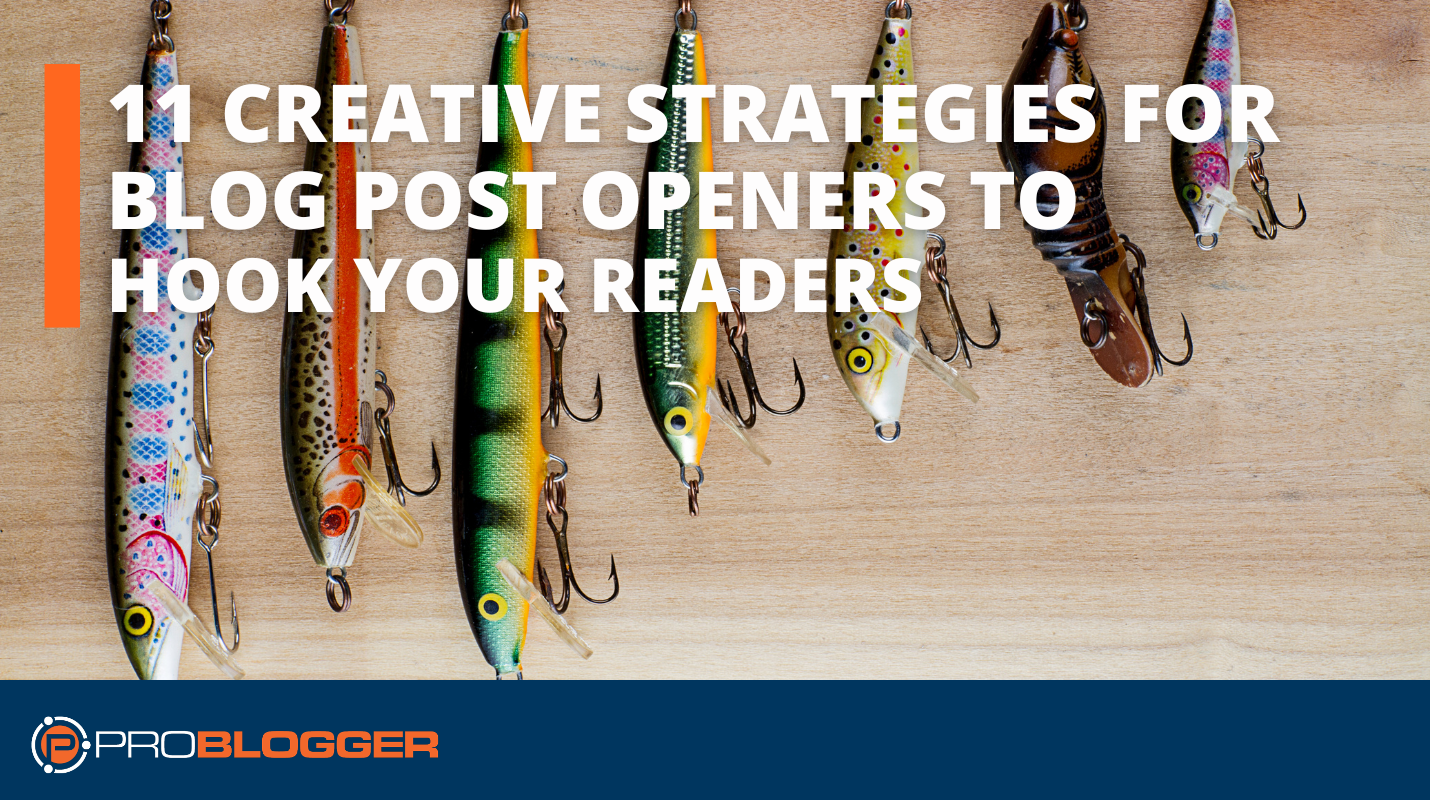
To address these challenges, industry experts have identified eleven distinct strategies designed to capture and hold reader attention from the outset.
1. Identifying and Validating Reader Needs
The most direct approach involves identifying a specific problem or need the reader is facing. By articulating the reader’s pain point in the very first sentence, the author establishes immediate relevance. This strategy leverages the "Problem-Agitation-Solution" (PAS) framework. When a reader sees their problem reflected in the opening, they feel understood, which fosters an immediate psychological connection with the content.
2. The Binary "Yes" Question
Copywriters have long utilized the "one-answer question" to create a "yes-ladder." By asking a question where the answer is an obvious "yes" (e.g., "Do you want to increase your blog’s traffic?"), the writer secures an initial agreement. This micro-conversion primes the reader’s brain to remain receptive to the arguments and solutions presented later in the text.
3. Exploiting the Curiosity Gap
Posing an intriguing or mysterious question creates what psychologists call "cognitive dissonance." The human brain is naturally inclined to seek closure. When a writer asks a question that promises a surprising or valuable revelation, the reader is compelled to continue through the text to find the "missing piece" of the puzzle.
4. The Element of Pattern Interruption
Using a surprise or an unexpected fact can "snap" a reader out of their passive scrolling state. Sharing a personal anecdote that seems initially off-topic or counter-intuitive serves as a pattern interrupt. This technique forces the brain to pay closer attention to process the new, unexpected information, thereby breaking the "eyes-glazed-over" state common in digital browsing.
5. Narrative Transport through Storytelling
Stories and analogies are powerful tools because they trigger "narrative transport," a state where the reader becomes so engrossed in the story that they lose track of their surroundings. Starting with a brief, punchy anecdote—whether personal, historical, or fictional—can make abstract concepts tangible and emotionally resonant.
6. The Bold Assertion
Leading with a strong, authoritative claim or a significant promise sets high expectations. This "authority-first" approach is particularly effective in the B2B and educational sectors. By stating a bold truth or a guaranteed outcome, the author positions themselves as an expert, though this strategy requires that the subsequent content rigorously supports the initial claim to maintain credibility.
7. Strategic Controversy
Stirring controversy is a high-risk, high-reward strategy. By taking a firm stand on a divisive issue or challenging a common industry myth, a writer can grab immediate attention. Readers are often driven by the desire to see how the author defends their position or to find points of disagreement, both of which keep them on the page longer.
8. Evoking Sensory Imagery
Vivid descriptions that engage the five senses help the reader visualize a scenario. This technique bypasses purely logical processing and taps into the reader’s imagination and emotions. Visualizing a positive outcome or a negative consequence can provide the necessary motivation for a reader to engage with the full post.
9. The Authority of Startling Statistics
Hard data carries significant weight in establishing trust. An opening line that features a shocking or highly relevant statistic provides immediate proof of the post’s importance. For example, stating that "90% of blog posts receive zero traffic from Google" immediately highlights a problem that many readers will want to solve.
10. Leveraging Established Authority through Quotes
Starting with a quote from a well-known figure allows the writer to "borrow" that person’s authority. A well-chosen quote can encapsulate the theme of the post and resonate with the reader’s existing values, providing a sophisticated and thoughtful entry point into the discussion.
11. Visual Hierarchy and Impactful Imagery
In visual-heavy mediums, the "opening line" may actually be an image. A striking, relevant photograph or infographic can communicate a message faster than text. Studies in neuro-marketing show that the brain processes images 60,000 times faster than text, making the lead image a critical component of the overall "hook."
Industry Responses and Expert Perspectives
Digital strategists and content editors emphasize that these strategies should not be used in isolation. "The most effective content often layers these techniques," says one senior editor at a leading marketing firm. "You might start with a bold claim followed immediately by a ‘yes’ question. The goal is to create a seamless slide that carries the reader from the headline to the call to action."
However, experts also warn against the overuse of "clickbait" tactics. While a controversial or shocking opening may get a click, if the content fails to deliver on the promise of the opening line, it results in "pogo-sticking"—where a user quickly returns to the search results. This behavior is a negative signal to search engines and can damage a brand’s long-term reputation. The consensus among professional publishers is that the opening must be an honest representation of the value provided in the body of the text.
Broader Impact and Implications for Digital Communication
The focus on mastering opening lines reflects a broader trend in digital communication: the shift toward "user-centric" design. As AI-generated content becomes more prevalent, the "human element"—personal stories, unique analogies, and strategic controversy—will likely become the primary differentiator for successful human writers.
Furthermore, the rise of voice search and mobile browsing has further compressed the window for engagement. On mobile devices, where screen real estate is limited, the opening line often takes up the entire initial view. This makes the first 20 to 30 words the "make-or-break" zone for mobile content strategy.
In conclusion, the opening line of a blog post is far more than a greeting; it is a critical piece of psychological engineering. By utilizing these eleven strategies, content creators can navigate the challenges of the attention economy, foster deeper connections with their audience, and improve the measurable performance of their digital assets. As the digital space continues to evolve, the ability to "hook" a reader in a matter of seconds will remain a foundational skill for anyone seeking to influence, educate, or entertain in the online world.