Clara Shinta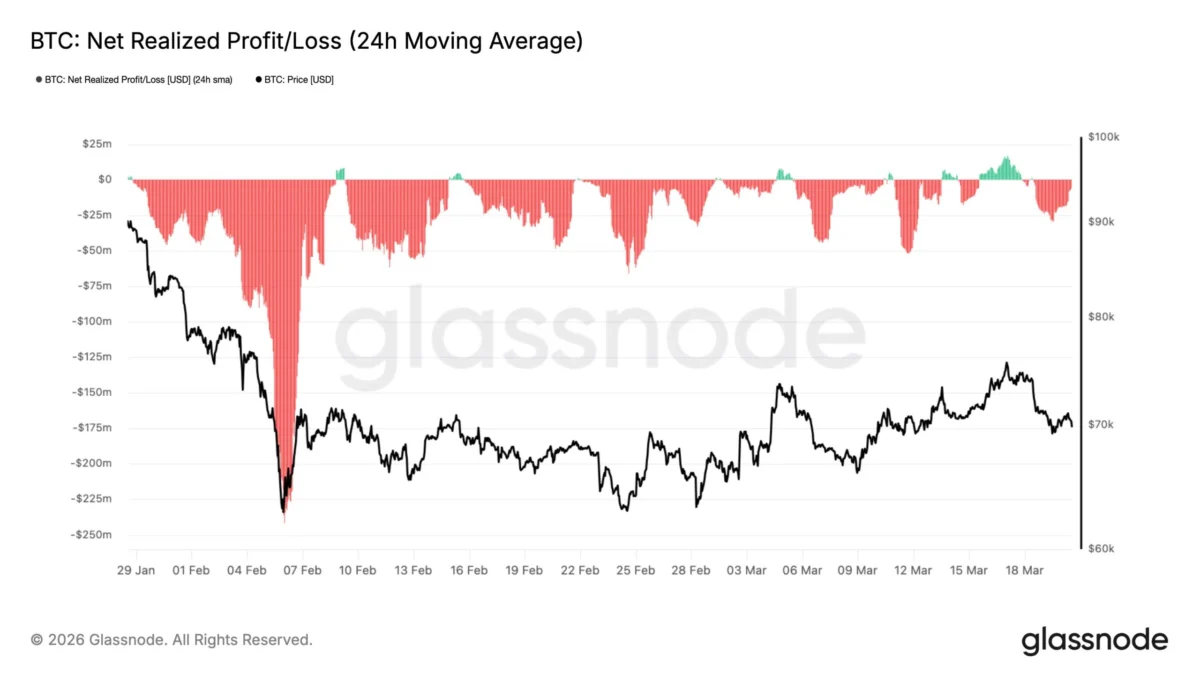
Following a brief period of optimism earlier in the week, global financial markets have experienced a significant downturn, with Bitcoin (BTC) plummeting nearly 5% amidst a broader retreat across traditional assets including the S&P 500, Dow Jones Industrial Average, Nasdaq Composite, and Gold. This widespread decline stands in stark contrast to the robust performance of crude oil, which surged an impressive 7.30% in recent trading sessions, marking a staggering 53% increase since the onset of the US and Israel-Iran conflict on February 28. This coordinated shift in capital flows underscores a pronounced "risk-off" sentiment permeating investment landscapes, largely driven by escalating geopolitical uncertainties in the Middle East, compelling traders to aggressively cut exposure to perceived risk assets.
The collective market weakness observed across diverse asset classes highlights a profound recalibration of investor sentiment in response to an increasingly volatile global geopolitical environment. Major equity indices, traditionally seen as barometers of economic health and corporate profitability, have registered significant losses, signaling a pervasive apprehension among investors. The S&P 500, a bellwether for the broader U.S. economy, along with the technology-heavy Nasdaq and the industrials-focused Dow, have each recorded notable declines, reflecting a comprehensive divestment strategy. Even Gold, often considered a traditional safe-haven asset, has surprisingly dipped, suggesting that the current market dynamics are driven by factors beyond conventional inflation concerns or general economic uncertainty. Instead, the focus has unequivocally shifted towards the geopolitical premium associated with the Middle Eastern conflict.
Conversely, the remarkable surge in crude oil prices serves as a stark indicator of market participants’ deep-seated concerns regarding potential supply disruptions and inflationary pressures emanating from the conflict. The 7.30% single-day rise, compounding a 53% gain since late February, positions crude oil as the primary beneficiary of this geopolitical upheaval. This divergence clearly illustrates a flight to commodities perceived as essential and directly impacted by regional instability, signaling a prioritization of tangible assets over financial instruments in times of severe global stress.
Geopolitical Tensions Spark Broad Market Retreat
The current market volatility is directly attributed to the escalating tensions in the Middle East, specifically involving the United States, Israel, and Iran. While the specific spark for the reported conflict on February 28 is subject to ongoing analysis, the broader context involves a long history of regional proxy conflicts, maritime security concerns in vital shipping lanes, and strategic competition for influence. Any direct or indirect confrontation among these powers carries significant implications for global energy markets, trade routes, and diplomatic stability. The market’s immediate reaction reflects an assessment that this conflict, unlike localized skirmishes, possesses the potential for broader regional destabilization, affecting critical economic arteries.
The initial days following February 28 saw a cautious market response, as investors attempted to gauge the conflict’s potential trajectory. However, as the situation has evolved, with reports of heightened military postures and diplomatic rhetoric, the market’s initial caution has morphed into widespread apprehension. The "risk-off" mentality has become dominant, leading to a scramble for liquidity and a general reduction in exposure to assets sensitive to economic uncertainty or geopolitical shocks. This collective behavior underscores how quickly macro-level events can override fundamental economic indicators, dictating market direction.

Unprecedented Capital Exodus from Equity Markets
The magnitude of this market shift is further illuminated by an unprecedented outflow of capital from major U.S. equity exchange-traded funds (ETFs). According to a recent report by The Kobeissi Letter, the S&P 500 (SPX) ETF and Nasdaq 100 (QQQ) ETF have together experienced a staggering combined outflow of $64 billion over the past three months. This figure represents the largest recorded capital exodus of its kind, underscoring the severity of the market’s response to prevailing uncertainties. This record outflow effectively reverses a substantial $50 billion inflow witnessed in November, pushing the total outflows to approximately 5% of the combined assets under management for these two prominent ETFs.
Such a significant and rapid reversal of capital flows from benchmark equity funds indicates a profound shift in institutional and retail investor strategies. The November inflows were largely attributed to expectations of a dovish pivot from central banks and a potential "soft landing" for the global economy. Investors were positioning for a period of lower interest rates and renewed economic growth, driving capital into growth-oriented sectors and broad market indices. However, the resurgence of geopolitical risks has decisively overshadowed these positive sentiments, forcing a dramatic re-evaluation of risk-reward profiles. Market strategists widely interpret this capital flight as a clear signal of de-risking, where investors are actively reducing their exposure to equities due to heightened uncertainty regarding future corporate earnings, economic stability, and the broader geopolitical landscape. The sheer scale of these outflows suggests that this is not merely a tactical adjustment but potentially a more systemic recalibration of portfolio allocations in anticipation of prolonged volatility.
The implications of such a massive capital exodus extend beyond immediate price declines. It can lead to reduced liquidity in equity markets, making them more susceptible to sharp movements and increasing the cost of capital for corporations. Furthermore, it reflects a growing apprehension about the sustainability of current market valuations, particularly in the technology sector which often leads during periods of growth but can be particularly vulnerable during risk-off phases. The historical precedent of such large-scale outflows suggests a period of extended consolidation or potential further downside for equity markets as investors seek safer havens or simply hold cash awaiting greater clarity. This movement signals a palpable shift away from growth-oriented strategies towards more defensive postures, as capital preservation becomes the paramount concern for a broad spectrum of investors.
Bitcoin’s Vulnerability Amidst Broader Market Weakness
The cryptocurrency market, and specifically Bitcoin, has not been immune to this pervasive market weakness. Spot Bitcoin ETFs, which had seen significant institutional interest since their launch, recorded $253 million in outflows over just the past two days. While the monthly ETF flows for Bitcoin remain positive at $1.48 billion, this figure must be viewed against the backdrop of a substantial $6.3 billion in cumulative outflows experienced between November and February. This dynamic highlights a fragile recovery in investor demand for Bitcoin, suggesting that recent positive flows were not robust enough to withstand renewed market pressures.
Bitcoin’s performance during this period further challenges its narrative as a reliable "digital gold" or an uncorrelated safe-haven asset. While some proponents argue for its independence from traditional financial markets, its recent correlation with major equity indices during this downturn suggests it is still largely perceived as a risk asset by institutional investors. When the broader market experiences a "risk-off" event, Bitcoin often follows suit, indicating that its price action is heavily influenced by global liquidity conditions and investor appetite for risk. This behavior contrasts with the traditional safe-haven status of assets like gold, which often appreciates during periods of geopolitical uncertainty, though even gold has shown unusual weakness in this particular cycle. The evolving perception of Bitcoin as a speculative growth asset rather than a true hedge against systemic risk appears to be solidifying among institutional players.
Data from Glassnode, a leading on-chain analytics firm, further corroborates the market’s struggle to absorb selling pressure. Net realized profit-taking, which briefly accelerated to approximately $17 million per hour (on a 24-hour average), quickly lost momentum as the Bitcoin price slipped back below the critical $70,000 psychological threshold. Glassnode analysts emphasized that "Broader geopolitical uncertainty appears to be compressing demand depth, limiting the market’s capacity to absorb even moderate realization events." This observation is crucial, as it suggests that even relatively modest selling by long-term holders or those taking profits is sufficient to trigger significant price depreciation in the current environment, indicating a lack of strong buying interest to counterbalance the selling pressure. The demand side of the market appears to be thin, making Bitcoin particularly susceptible to downward movements during periods of heightened fear and uncertainty. The inability of the market to absorb even moderate selling indicates a fundamental shift in buying conviction, signaling that new capital inflows are insufficient to offset existing selling pressure.

Crude Oil’s Ascent: A Geopolitical Barometer
In stark contrast to the widespread decline in equities, cryptocurrencies, and even gold, crude oil has emerged as a clear outlier, experiencing a significant upward trajectory. The 7.30% single-day rally and the remarkable 53% increase since the US and Israel-Iran conflict began on February 28 underscore crude oil’s role as a critical geopolitical commodity. The Middle East is a pivotal region for global oil production and transportation, accounting for a substantial portion of the world’s proven oil reserves and daily output. Any instability there immediately translates into fears of supply disruptions. The Strait of Hormuz, a narrow waterway connecting the Persian Gulf to the open sea, is particularly sensitive to regional tensions, as roughly one-fifth of the world’s total oil consumption passes through it daily.
The escalating conflict directly impacts investor perceptions of supply security. Even without immediate physical disruptions, the increased risk premium associated with potential future disruptions drives up prices. Market participants factor in the possibility of blockades, attacks on shipping, or direct assaults on oil infrastructure, which would severely constrain global supply. Furthermore, higher oil prices feed directly into inflationary pressures globally, affecting everything from transportation costs to manufacturing expenses. This phenomenon can exacerbate existing economic challenges and complicate central banks’ efforts to manage inflation, potentially leading to a stagflationary environment where economic growth slows while prices continue to rise.
Economists and energy market analysts are closely monitoring the situation, with some speculating on the possibility of oil prices reaching even higher thresholds, potentially $100 or even $120 per barrel, if the conflict intensifies or broadens to directly impact production facilities or major shipping routes. A sustained surge in oil prices can act as a significant drag on global economic growth, reducing consumer purchasing power and increasing operational costs for businesses worldwide. For investors, crude oil’s performance during this period exemplifies a classic flight to hard assets and commodities that are directly tied to geopolitical stability and essential global supply chains. Its current strength highlights the market’s assessment that the economic impact of the conflict will be primarily channeled through energy markets, making it a critical barometer of global risk.
Historical Parallels: Lessons from Past Geopolitical Conflicts
Market participants and crypto commentators are increasingly drawing parallels between the current market dynamics and past geopolitical events, particularly the Russia-Ukraine war in 2022. These comparisons offer valuable insights into potential future trajectories for Bitcoin and other risk assets. Crypto commentator Carlitosway noted a striking coincidence: both conflicts, in their respective contexts, saw significant escalation around February, albeit four years apart. This temporal alignment provides a compelling framework for comparative analysis of market reactions.
Following Russia’s invasion of Ukraine on February 24, 2022, Bitcoin initially experienced a sharp sell-off, reflecting immediate market panic and a flight from risk. The cryptocurrency market, then still reeling from the aftermath of a bull run, saw significant liquidation events. However, this initial decline was followed by a notable 24% relief bounce over the subsequent four weeks. This recovery, fueled by short-term optimism or a perceived overselling, proved to be fleeting. The momentum soon faded, and Bitcoin entered a prolonged bear market, eventually dropping another 64% by November 2022. This trajectory illustrated that while initial reactions can be volatile, sustained geopolitical instability tends to exert long-term downward pressure on speculative assets like cryptocurrencies. The initial bounce often represents short-covering or opportunistic buying, rather than a fundamental shift in sentiment.
A similar sequence of events appears to be unfolding in the current scenario. Since the beginning of the US and Israel-Iran conflict, Bitcoin initially rallied nearly 10% at one point last week, mirroring the short-lived relief bounce observed in 2022. This initial recovery might have been driven by similar factors: short-term traders betting on a quick resolution or a belief in Bitcoin’s resilience. However, this upward momentum is now visibly slowing, and the price has begun to retrace. Carlitosway attributed this renewed weakness to several factors: sustained pressure on global liquidity (as capital flows out of risk assets), rising energy costs (which act as a tax on the global economy), and continued forced selling during periods of market stress (such as margin calls or deleveraging). All these factors collectively reduce the follow-through demand for Bitcoin, preventing a sustained recovery.

This pattern suggests that the market may be entering a more extended stabilization phase. In such a phase, a quick "V-shaped" recovery is unlikely. Instead, the market needs time for capital to rebuild, for investor confidence to return, and for the selling pressure to fully clear. This process can be protracted, particularly if the geopolitical situation remains unresolved or escalates further. The current environment calls for patience from investors and a recognition that macro-level events can dictate market trends for extended periods, overriding short-term technical indicators.
Expert Perspectives and Market Outlook
The consensus among many crypto analysts and financial strategists leans towards a cautious outlook for Bitcoin in the immediate term. Crypto analyst Finish, for instance, believes that a sustained recovery for Bitcoin might only materialize after a price bottom around $55,000 is established. This perspective implies that the current downturn may not have fully run its course and that further price discovery to the downside is possible before a durable foundation for recovery can be built. Such a bottom would likely coincide with either a significant de-escalation of geopolitical tensions or a broader market capitulation event that clears out weak hands.
Finish explicitly linked Bitcoin’s struggle to the ongoing geopolitical tensions: "I frankly think that until the Iran war is settled, it’s gonna be hard for $BTC to rise. The environment is risk off, the SPX lost trillions in capitalisation, which leads me to a more neutral stance." This statement succinctly captures the prevailing sentiment: the overarching "risk-off" environment, characterized by significant capital losses in traditional equity markets, is the primary impediment to Bitcoin’s ascent. Until there is a de-escalation or resolution of the conflict, the market is likely to remain highly sensitive to geopolitical headlines, with investors prioritizing capital preservation over speculative gains.
The "neutral stance" adopted by analysts like Finish reflects a pragmatic approach in uncertain times. Rather than predicting aggressive upside or downside, it acknowledges the dominant influence of external, non-financial factors on market movements. This perspective suggests that traditional technical analysis or on-chain metrics might be less effective in predicting short-term price action when geopolitical events dictate market sentiment. Instead, a broader understanding of macroeconomic and geopolitical developments becomes paramount for investors navigating this complex environment. Institutional analysts from major financial houses have echoed similar sentiments, advising clients to brace for continued volatility and to reassess their risk exposures, particularly in highly correlated assets.
Broader Implications for Global Economy and Investment Strategies
The ongoing geopolitical instability and the resulting capital shifts have profound implications for the global economy and long-term investment strategies. The exodus from risk assets and the flight to commodities like crude oil signify a recalibration of portfolios across institutional and retail investors alike. Asset managers are likely to increase allocations to assets perceived as truly uncorrelated or defensive, such as certain inflation-indexed securities, specific commodities, or even cash, awaiting greater clarity. This defensive posture is a natural response to the increased uncertainty, as preserving capital takes precedence over generating aggressive returns.
The inflationary pressures stemming from rising energy costs could force central banks globally to reconsider their monetary policy trajectories. If inflation proves more persistent due to supply-side shocks from the Middle East, central banks might be compelled to maintain higher interest rates for longer or even contemplate further tightening, potentially stifling economic growth. This scenario could lead to a global economic slowdown or even recessionary pressures, further dampening investor appetite for risk. The delicate balance central banks have tried to strike between combating inflation and supporting growth becomes significantly more challenging under these circumstances.

Furthermore, the prolonged "risk-off" environment could impact technological innovation and venture capital funding, as investors become more risk-averse. Projects and startups, particularly in nascent sectors like blockchain and artificial intelligence, might find it harder to secure funding, potentially slowing down their development and adoption. The interconnectedness of global financial markets means that instability in one region or asset class can quickly cascade, creating ripple effects that touch every corner of the investment world. Supply chains, already strained by recent global events, could face renewed disruptions, impacting manufacturing and logistics worldwide. Investors are therefore urged to conduct thorough due diligence, diversify their portfolios strategically, and remain agile in adapting their investment theses to an evolving global landscape dominated by geopolitical realities. The current market turmoil serves as a potent reminder of the fragility of financial stability in the face of international conflict and the critical importance of understanding macro-level forces beyond traditional market metrics.
This article does not contain investment advice or recommendations. Every investment and trading move involves risk, and readers should conduct their own research when making a decision. While we strive to provide accurate and timely information, Cointelegraph does not guarantee the accuracy, completeness, or reliability of any information in this article. This article may contain forward-looking statements that are subject to risks and uncertainties. Cointelegraph will not be liable for any loss or damage arising from your reliance on this information.