Gilang Muhammad
Kevin Warsh, the former governor of the US Federal Reserve, is poised to inherit one of the most formidable economic challenges in recent memory when he assumes the chairmanship of the nation’s central bank. Set to take office in May, Warsh faces what analysts are describing as a "buzzsaw"—a dire Hobson’s choice between aggressively combating persistent inflation and safeguarding a fragile labor market. This precarious balancing act directly confronts the Federal Reserve’s bedrock dual mandate: maintaining stable prices while fostering maximum sustainable employment. The brewing economic conditions suggest that Warsh’s tenure will begin amidst a unique confluence of a softening jobs picture and stubbornly high inflation, exacerbated significantly by spiraling energy costs stemming from ongoing geopolitical instability.
The Looming Crisis: Stagflationary Headwinds
Economists and market strategists are increasingly vocal about the stagflationary pressures that could define Warsh’s initial months. Stagflation, a dreaded scenario characterized by high inflation coupled with low economic growth and rising unemployment, represents a central banker’s worst nightmare. Troy Ludtka, senior U.S. economist at SMBC Nikko Securities, articulated this grim outlook succinctly: "He’s got a perfect storm awaiting him here. We’ve got some significant stagflationary pressures, particularly from the manufacturing and goods sectors of the economy. This is coming at a time when it seems like we’re really beginning to see the consumer—I don’t want to say break—but maybe begin to break."
The latest economic indicators paint a concerning picture. The February 2026 jobs report revealed a "wobbly" labor market, with job growth decelerating more than anticipated and the unemployment rate showing signs of a creeping increase, signaling a potential softening after a period of robust expansion. Concurrently, the December 2025 Personal Consumption Expenditures (PCE) inflation data, the Fed’s preferred inflation gauge, indicated "sticky inflation" that had not receded as quickly as policymakers had hoped. The core PCE, which excludes volatile food and energy prices, remained stubbornly above the Fed’s 2% target, while headline inflation was pushed significantly higher by external factors.
Geopolitical Turmoil and Economic Fallout
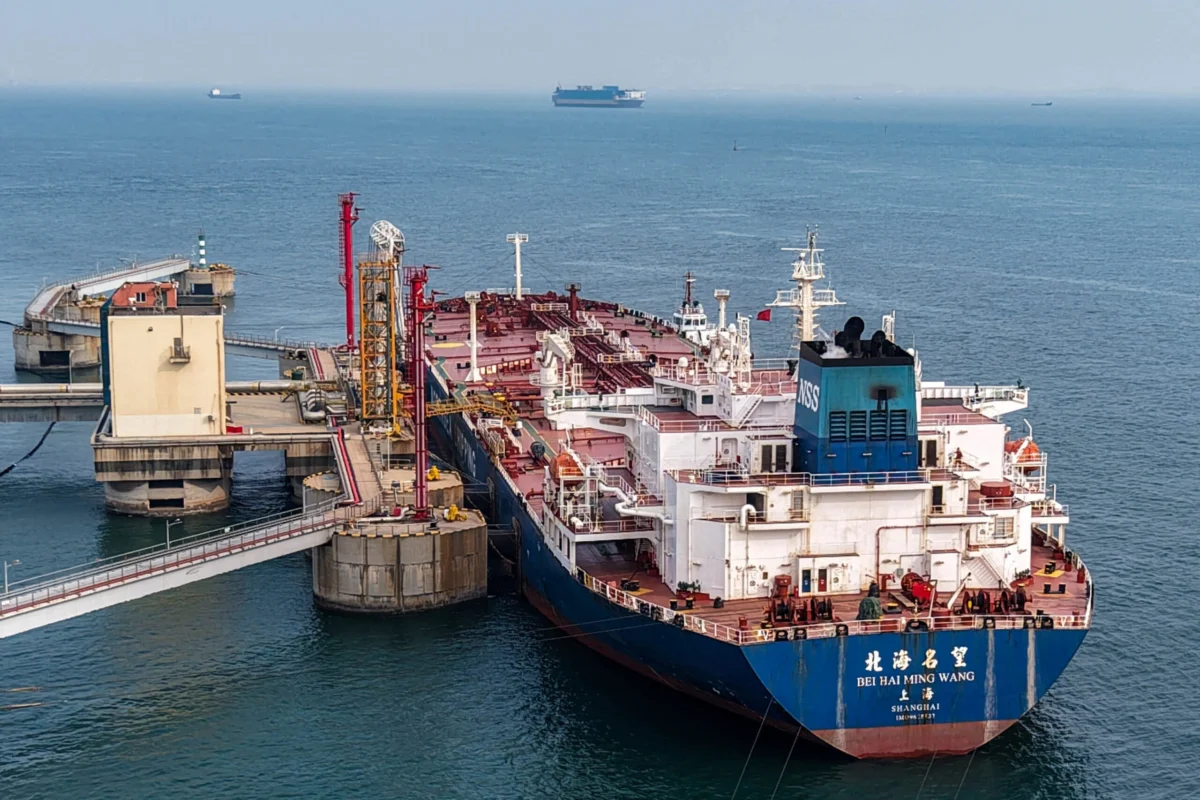
A primary driver of the current inflationary spike is the escalating Iran war. The conflict has sent shockwaves through global energy markets, propelling crude oil prices sharply upward. On Monday, U.S. crude oil benchmarks briefly surged past $100 a barrel, a psychological and economic threshold not seen in years, before slightly receding after President Donald Trump issued assurances about the conflict’s imminent resolution. However, the volatility underscores the fragility of global supply chains and the profound impact geopolitical events can have on domestic economies.
The ripple effects extend beyond direct energy costs. The price of urea fertilizer, a critical agricultural input, has soared by 15% since the fighting began. Such increases invariably translate into higher food production costs, threatening to reignite food inflation and further erode household purchasing power. This scenario presents a particularly acute challenge for the Fed, as monetary policy is often less effective in combating supply-side inflation driven by external shocks like war or commodity price spikes.
The Federal Reserve’s Dual Mandate and Policy Dilemma
The Federal Reserve operates under a dual mandate from Congress: to achieve maximum employment and stable prices. Traditionally, the central bank employs three primary mechanisms to fulfill this mandate:
- Raising interest rates: To cool an overheating economy, dampen demand, and combat inflation.
- Lowering interest rates: To stimulate economic growth, encourage borrowing and investment, and support job creation.
- Maintaining current rates: The most preferable option, allowing the economy to find a natural equilibrium between inflation and employment.
Warsh’s predicament is that the "most preferable" option of maintaining rates may be untenable. The current environment forces a difficult choice: raising rates to fight inflation could further weaken the labor market and stifle growth, potentially tipping the economy into recession. Conversely, lowering rates to support employment risks entrenching inflationary expectations and eroding price stability. This "Hobson’s choice"—a situation where there is seemingly a choice, but only one option is realistically available, and it’s often undesirable—highlights the immense pressure on the incoming chair.
Political Pressures and Presidential Expectations
Adding another layer of complexity to Warsh’s challenge are the explicit political pressures emanating from the White House. President Trump has consistently advocated for substantially lower interest rates, arguing—at least prior to the onset of the Iran war—that inflation was no longer a significant threat and that the Fed should continue the rate cuts it initiated last September. The president and his administration have frequently emphasized the need for monetary policy to actively support economic growth, often expressing frustration with the Fed’s perceived hawkishness.
However, pleasing the president might prove exceedingly difficult under current circumstances. Even before the surge in energy prices, manufacturing costs had been on an upward trajectory. The Institute for Supply Management (ISM) manufacturing price gauge hit a nearly four-year high in February, with purchasing managers across U.S. factories reporting persistent cost increases. These increases were partly fueled by the administration’s own tariff policies, which have imposed additional costs on imported goods and components, creating a domestic inflationary impulse independent of global energy markets. This confluence of factors creates a scenario where the Fed’s independence in setting monetary policy faces scrutiny from both economic realities and political expectations.
A Divided Committee and Shifting Market Expectations

Warsh will also inherit a Federal Open Market Committee (FOMC) already divided over the future trajectory of monetary policy. Minutes from the January 2026 FOMC meeting revealed a distinct divergence of opinions among central bankers regarding the appropriate path for interest rates. While central bankers typically tend to "look through" temporary oil shocks, viewing them as transient drivers rather than indicators of longer-term economic trends, the scale and persistence of current disruptions may leave them with little choice but to address the broader implications.
"He’s running into an environment where the committee is extremely divided. That division is only going to increase from here," Ludtka commented. "If oil prices remain high, and inflation is likely to remain well-supported in the face of a weak labor market, it’s going to force them to move to one side or the other." This internal discord could complicate decision-making, potentially leading to less cohesive policy actions or increased market uncertainty.
Financial markets have already begun to recalibrate their expectations in response to the evolving economic landscape. Traders have notably pulled back their forecasts for aggressive rate cuts, with many now anticipating the first cut not until September and pushing subsequent cuts into 2027. This shift reflects a more "hawkish" market sentiment, where investors believe the Fed will prioritize inflation control over growth. However, Aditya Bhave, an economist at Bank of America, suggested this market response "could be a mistake," implying that the Fed might yet surprise by leaning towards supporting the labor market if conditions deteriorate significantly.
The Consumer Conundrum: Spending Amidst Strain
One element that might still be in the Fed’s favor, and Warsh’s, is the continued resilience of consumer spending. Data from Bank of America indicates that consumer spending rose 3.2% in February from a year earlier, marking the biggest increase in over three years. This sustained spending has been a critical pillar of economic activity.
However, a deeper dive into the data reveals a significant stratification. The strength in consumer spending is heavily concentrated among higher-income households. After-tax wage growth for top earners rose 4.2% annually, compared with a meager 0.6% for lower earners. This widening gap, the largest recorded in Bank of America’s data series going back to 2015, highlights a critical challenge: monetary policy has proven to be an ineffective weapon against income inequality.
This disparity creates a dilemma. While overall spending might appear robust, widespread struggles among lower-income households—who are disproportionately affected by higher prices for necessities like food and energy—could become a significant drag on future economic growth. If further signs emerge that these segments of the population are battling both escalating costs and a softening labor market, Fed officials might be more inclined to prioritize the employment side of their mandate, potentially "looking through" a temporary oil spike to prevent a broader economic downturn.
Historical Parallels and the Specter of the 1970s
The current economic environment evokes uncomfortable parallels with the 1970s, a decade infamous for its "Great Stagflation." During that period, a combination of oil shocks, expansionary fiscal policies, and entrenched inflationary expectations led to persistently high inflation and sluggish economic growth, profoundly challenging policymakers. The then-Fed Chair Paul Volcker ultimately had to implement drastic interest rate hikes, inducing a recession, to break the back of inflation and restore price stability.
While the structural differences between today’s economy and that of the 1970s are significant—including a more services-oriented economy, less union power, and more independent central banks—the sudden surge in energy prices amidst a slowing growth environment carries a chilling resonance. Warsh’s challenge will be to navigate these contemporary pressures without repeating the policy errors of the past, seeking to achieve stability without triggering undue economic pain.
Warsh’s Leadership: Navigating the "Buzzsaw"
Kevin Warsh brings a wealth of experience to the role, having served as a Fed governor during the tumultuous 2008 financial crisis. His background suggests a pragmatic approach, but the sheer complexity of the current economic landscape will test even the most seasoned policymaker. The stakes are particularly high for Warsh. His initial decisions will not only shape the trajectory of the U.S. economy but also define his legacy and potentially impact the Fed’s credibility and independence for years to come.
The incoming Fed chair will face immense pressure to articulate a clear strategy that addresses both sides of the dual mandate without sacrificing one for the other. This could involve a nuanced approach, potentially emphasizing targeted measures or communication strategies to manage expectations, rather than relying solely on blunt interest rate adjustments. His ability to build consensus within a divided FOMC will be crucial, as will his communication with the public and political leaders.
Ultimately, Warsh’s tenure begins at a critical juncture for the U.S. and global economies. The "perfect storm" of sticky inflation, a wobbly labor market, and geopolitical instability demands a delicate balance of policy tools and a firm resolve. How he navigates this "buzzsaw" will determine not only the immediate economic future but also the long-term health and stability of the American financial system.