Lina Wu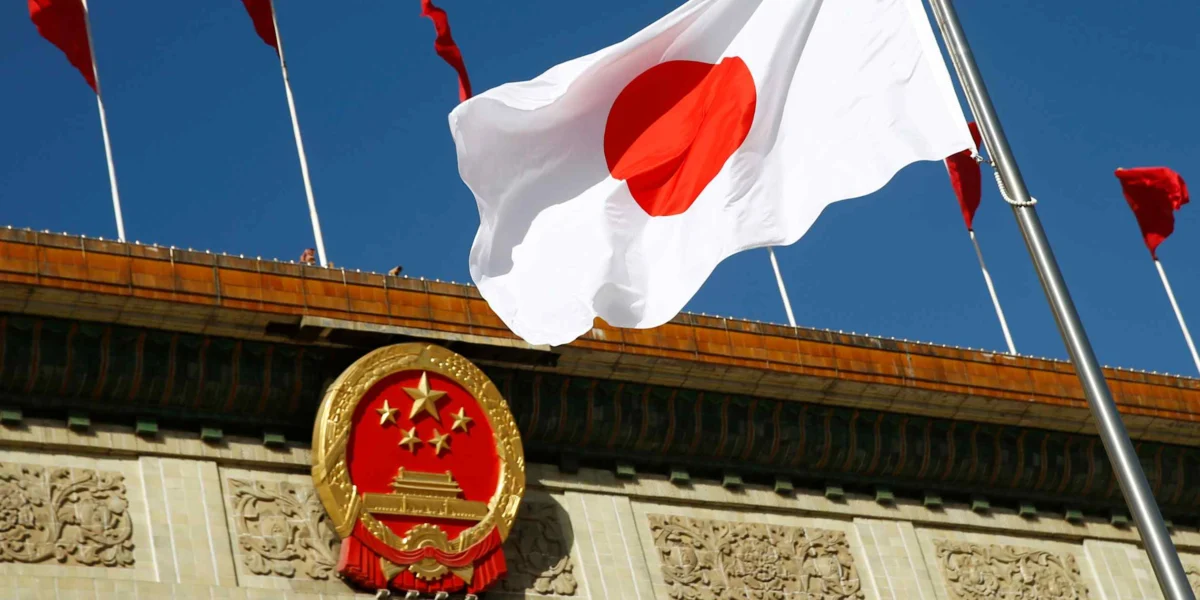
Japan has officially reclassified its relationship with China, designating the East Asian superpower as an "important neighbor" in a draft version of its key foreign policy document, the Diplomatic Bluebook. This subtle yet significant alteration marks a departure from the previous characterization of the relationship as "one of Japan’s most important bilateral relations," signaling a recalibration of Tokyo’s approach amidst a backdrop of escalating regional and global complexities. The shift, unveiled by the Japanese government on Tuesday, comes as Tokyo seeks to navigate an increasingly challenging geopolitical landscape, particularly concerning China’s assertive foreign policy and its impact on regional stability.
The revised wording, while seemingly understated, carries considerable weight in diplomatic circles. The term "important neighbor" suggests a recognition of geographical proximity and the inherent need for continued engagement, even as underlying tensions persist. This contrasts with the stronger, more strategically focused language of "most important bilateral relations," which implied a deeper, more integrated partnership. The change reflects a nuanced acknowledgment of China’s pervasive influence while also subtly signaling a potential recalibration of expectations and priorities for Japan.
This reclassification is occurring against a backdrop of heightened friction between the two Asian giants. Recent years have witnessed a series of diplomatic spats and underlying strategic concerns that have strained ties. A notable flashpoint emerged following remarks made by Japanese Prime Minister Sanae Takaichi concerning Taiwan. While the specifics of these remarks were not detailed in the initial report, such statements are often viewed by Beijing as a challenge to its sovereignty and territorial claims, leading to predictable diplomatic repercussions. China views Taiwan as a renegade province and has vowed to reunify it with the mainland, by force if necessary. Japan, while adhering to the "one China" policy, maintains strong unofficial ties with Taiwan and shares concerns about regional stability, particularly regarding potential Chinese military action.
Beyond the immediate diplomatic exchanges, the Japanese government’s draft Bluebook also explicitly cites Beijing’s imposition of export restrictions on dual-use goods targeting Japan. This particular concern highlights a growing trend of China leveraging its economic power as a geopolitical tool. Dual-use goods are items that can be used for both civilian and military purposes, making their export control a sensitive issue with national security implications. Japan’s inclusion of this point in its foreign policy document suggests a direct response to perceived economic coercion by China, indicating that Tokyo is increasingly wary of its reliance on Chinese supply chains and Beijing’s willingness to weaponize trade.
The implications of these export restrictions are far-reaching. For Japanese industries that rely on these goods, it could lead to supply chain disruptions, increased production costs, and a need to seek alternative sourcing. This could accelerate Japan’s ongoing efforts to diversify its supply chains and reduce its dependence on China, a trend that has been gaining momentum globally in response to geopolitical uncertainties and the COVID-19 pandemic. Furthermore, it underscores a growing strategic competition where economic leverage is a key weapon.
A timeline of recent events can shed light on the escalating tensions that likely prompted this diplomatic reclassification. While the specific date of Prime Minister Takaichi’s remarks on Taiwan was not provided, such pronouncements often trigger swift and sharp reactions from Beijing. China’s response typically involves strong verbal condemnations, potential retaliatory measures, and a reinforcement of its territorial claims. The imposition of export restrictions, if implemented recently, would represent a more concrete and economically impactful response. These actions, taken together, would paint a picture of a deteriorating bilateral relationship, necessitating a formal adjustment in Japan’s diplomatic language.
Background Context: A Shifting Regional Order
The reclassification of China as an "important neighbor" is not an isolated event but rather a product of broader shifts in the Indo-Pacific region. For years, Japan has been navigating a complex security environment characterized by China’s rapid military modernization and its increasingly assertive posture in the East and South China Seas. Beijing’s territorial claims in these waters, often enforced through maritime militia and coast guard patrols, have raised significant concerns among Japan and its regional partners.
Japan’s own defense posture has also been evolving. Under Prime Minister Shinzo Abe and his successors, Tokyo has steadily increased its defense spending and reinterpreted its pacifist constitution to allow for a more robust Self-Defense Forces. This has included acquiring new capabilities, strengthening alliances, particularly with the United States, and engaging in joint military exercises with regional partners. These moves are largely seen as a response to the perceived threat posed by China.
The economic dimension of the relationship has also been a source of complexity. While China remains Japan’s largest trading partner, a fact that underscores the "importance" of the bilateral relationship, there have been growing calls within Japan to reduce economic vulnerabilities. The "dual-use goods" issue is a stark illustration of this. Japan’s reliance on Chinese imports for critical components or technologies could be exploited by Beijing for political leverage, as evidenced by the export restrictions.
Supporting Data: Economic Interdependence and Security Concerns
To understand the magnitude of the challenge, it’s crucial to consider the economic interdependence between Japan and China. In 2023, two-way trade between Japan and China reached approximately $315 billion, making China a vital market for Japanese exports and a significant source of imports for Japan. This economic entanglement makes a complete decoupling practically impossible and underscores the delicate balancing act Japan must perform.
However, this economic reliance is juxtaposed with growing security concerns. China’s defense budget has seen consistent double-digit growth for decades, and its naval expansion is a particular point of concern for Japan, given the proximity of maritime borders and the disputed Senkaku Islands (known as the Diaoyu Islands in China). Japan’s Ministry of Defense has repeatedly highlighted China’s increasing military activities, including incursions into Japanese airspace and waters, as a significant threat.
The issue of dual-use goods further complicates this picture. While specific data on the exact dual-use goods targeted by China’s export restrictions against Japan is not readily available in the initial report, such items could range from advanced semiconductors and rare earth minerals to specialized machinery and chemicals. These are often critical inputs for Japan’s high-tech industries, including its automotive, electronics, and defense sectors. The potential impact of these restrictions could manifest as:
- Supply Chain Disruptions: Delays or outright halts in the supply of critical components could disrupt production schedules for Japanese manufacturers.
- Increased Costs: Companies may be forced to find more expensive alternative suppliers, leading to higher production costs and potentially impacting consumer prices.
- Technological Stagnation: Restrictions on certain advanced materials or technologies could hinder Japanese innovation and R&D efforts.
- National Security Risks: If critical defense-related components are targeted, it could impact Japan’s defense capabilities.
Official Responses and Inferred Reactions
While the draft Bluebook itself is an official response, other parties would likely have reacted.
Japan’s Government: The decision to revise the wording in the Diplomatic Bluebook is a clear signal from the Japanese government. It reflects a strategic consensus that the relationship with China requires a more cautious and perhaps less effusive description, given the current realities. This recalibration aims to set more realistic expectations for the bilateral relationship and to inform domestic and international audiences about Japan’s evolving strategic outlook.
China’s Government: Beijing is likely to view this reclassification with a mixture of concern and defiance. While China may welcome any acknowledgment of its "importance" as a neighbor, the shift away from "most important bilateral relations" could be interpreted as a downgrade and a sign of increasing mistrust. China’s foreign ministry would likely issue a statement reiterating its commitment to stable bilateral ties while also criticizing any perceived attempts by Japan to contain its rise or challenge its regional interests. Beijing might also use this as an opportunity to further emphasize its own narrative of Japan’s historical grievances and its ongoing military modernization.
Regional Allies and Partners: Countries that share Japan’s concerns about China’s growing assertiveness, such as the United States, Australia, and South Korea, are likely to view this move as a pragmatic step. It aligns with a broader trend of nations in the Indo-Pacific seeking to diversify their partnerships and build resilience against potential coercion. These allies may see it as an indication of Japan’s continued commitment to regional security and its willingness to engage in collective efforts to maintain a stable order.
Broader Impact and Implications
The reclassification of China as an "important neighbor" by Japan has several significant implications for regional and global dynamics.
1. A More Realistic Partnership: This linguistic shift signifies Japan’s recognition that while China is geographically close and economically significant, the relationship is fraught with strategic divergences. It suggests a move towards a more pragmatic and less idealized approach, acknowledging the complexities and potential frictions inherent in the bilateral ties. This could lead to a more measured and less reactive diplomacy from Tokyo.
2. Enhanced Focus on Security: By explicitly mentioning China’s export restrictions on dual-use goods, Japan is signaling its heightened concern over economic coercion and its commitment to safeguarding its national security and economic interests. This could translate into increased investment in domestic industrial capabilities, diversification of supply chains, and closer security cooperation with allies who share similar concerns.
3. A Precursor to Further Policy Adjustments: The Diplomatic Bluebook often serves as a precursor to more concrete policy shifts. This reclassification may foreshadow future adjustments in Japan’s defense strategy, economic policies, and diplomatic engagements concerning China. It could also influence Japan’s approach to multilateral forums and its engagement with regional security architectures.
4. Impact on Global Supply Chains: As Japan seeks to mitigate risks associated with Chinese export controls, it could accelerate the global trend of supply chain diversification. This might involve encouraging companies to relocate production facilities to other countries or invest in domestic manufacturing, potentially leading to a reshaping of global trade flows and a more resilient, albeit potentially more costly, global economic system.
5. Signaling to Beijing: This diplomatic maneuver serves as a clear signal to Beijing that its assertive policies are having a tangible impact on its neighbors’ strategic calculus. While China may not fundamentally alter its course in response to this single linguistic change, it underscores the growing international scrutiny and the potential for increased strategic alignment among nations concerned about its behavior.
In conclusion, Japan’s redefinition of its relationship with China as an "important neighbor" is a subtle yet profound diplomatic development. It reflects a pragmatic acknowledgment of the complexities and challenges inherent in the bilateral relationship, driven by China’s assertive foreign policy and its willingness to leverage economic tools. This shift signals Japan’s intent to navigate a more uncertain regional landscape with increased caution, a greater focus on national security, and a potentially recalibrated approach to its most significant bilateral relationship. The implications of this diplomatic recalibration will likely unfold in the coming months and years, shaping regional security dynamics and global economic interactions.