Gilang Muhammad
A pivotal global policy group, the Organization for Economic Cooperation and Development (OECD), has issued a stark warning that the ongoing conflict involving Iran and its profound impact on the global energy market are poised to keep headline U.S. inflation significantly above the Federal Reserve’s projections throughout 2026, potentially necessitating decisive policy action from the central bank. In its comprehensive periodic update of global economic conditions, released in March 2026, the OECD dramatically revised its forecast for all-items inflation in the United States, projecting it to reach 4.2% for the current year. This represents a substantial upward adjustment from its prior projection of 2.8% and stands considerably higher than the 2.7% estimated by Federal Reserve officials just last week in their own updated economic outlook.
The significant revision by the OECD is primarily attributed to two powerful macroeconomic forces: the escalating conflict in the Middle East, specifically involving Iran, and the persistent, albeit adjusted, impact of U.S. tariffs. These tariffs, while potentially lower than previous levels, continue to exert upward pressure on prices across global supply chains. The OECD’s report underscored the profound uncertainty surrounding the breadth and duration of the Middle East conflict, cautioning that "a prolonged period of higher energy prices will add markedly to business costs and raise consumer price inflation, with adverse consequences for growth." This assessment highlights the delicate balance central banks face between managing inflation and supporting economic expansion in an increasingly volatile geopolitical landscape.
Despite the near-term inflationary pressures, the agency anticipates a sharp deceleration in U.S. inflation in 2027, projecting a retreat to 1.6%. This figure is notably below the Fed’s own estimate of 2.2% for the same period and falls shy of the central bank’s long-term 2% target. Core inflation, which strategically excludes the more volatile energy and food prices, is estimated to hover at 2.8% this year before easing to 2.4% in 2027. This divergence in short-term and long-term outlooks between the OECD and the Federal Reserve underscores the complexities of forecasting economic trajectories amidst unprecedented global challenges.
In its baseline forecast, the OECD anticipates that the Federal Reserve will maintain its policy rate at current levels throughout 2027. This stance, according to the organization, reflects a confluence of factors: rising headline inflation in the immediate term, core inflation persistently projected to remain above the Fed’s target through 2027, and a robust outlook for U.S. Gross Domestic Product (GDP) growth. However, the OECD did not shy away from issuing a strong caution, urging the Federal Reserve and its international counterparts to "remain vigilant" against the myriad of evolving inflation threats. The report emphasized that while the current surge in global energy prices, largely supply-induced, could potentially be "looked through" if inflation expectations remain firmly anchored, "policy adjustment may be needed if there are signs of broader price pressures or weaker labour market conditions." This nuanced advice highlights the data-dependent nature of monetary policy and the need for flexibility in response to evolving economic indicators.
The OECD’s projections for U.S. economic growth paint a picture of initial acceleration followed by a modest deceleration. The agency sees U.S. GDP expanding at a 2% pace this year, a rebound from the sharply slowed 0.7% rate observed in the fourth quarter of 2025. Growth is then expected to ease slightly to 1.7% in 2027. This forecast suggests a resilient, albeit moderating, U.S. economy grappling with significant inflationary headwinds. The OECD provides its comprehensive economic outlook twice a year, supplemented by periodic interim updates such as this one, offering critical insights into global economic trends for policymakers and market participants alike.
The Geopolitical Crucible: Iran Conflict and Energy Markets
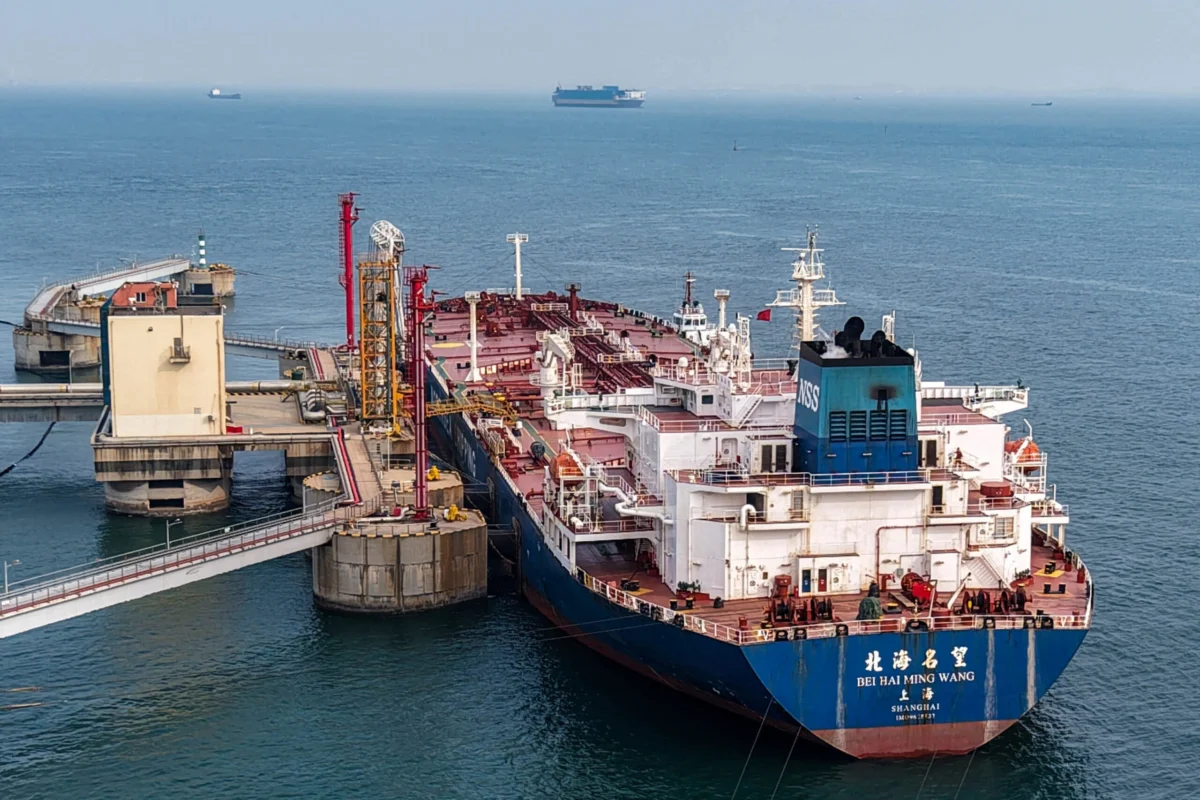
The "Iran war" referenced by the OECD, while not detailed with specific battlefronts, refers to a period of heightened geopolitical instability and direct military engagement in the Middle East, which commenced in late 2025 and escalated significantly by March 2026. This conflict has directly impacted critical energy infrastructure and shipping lanes in the Persian Gulf region, particularly the Strait of Hormuz, a choke point through which approximately one-fifth of the world’s total oil consumption, and a substantial portion of its liquefied natural gas (LNG), passes daily. Disruptions to this vital waterway, whether through direct military action, increased shipping risks, or insurance premium hikes, immediately translate into higher global crude oil prices.
Energy market analysts had been tracking rising tensions in the region for months leading up to the OECD report. Failed diplomatic efforts, including a high-profile attempt at de-escalation by the Trump administration in late 2025, according to earlier reports, had set the stage for a potential escalation. When the conflict materialized, global benchmark crude prices, such as Brent and West Texas Intermediate (WTI), surged by over 20% in a matter of weeks, reaching levels not seen since the early 2010s. For instance, Brent crude, which had been trading around $80 per barrel in late 2025, briefly touched $105 per barrel by mid-March 2026. This rapid increase in energy costs permeates every sector of the global economy, from transportation and manufacturing to agriculture and consumer goods, inevitably feeding into broader inflation metrics. The conflict also sparked concerns about the security of natural gas supplies, particularly to Europe, which remains sensitive to geopolitical disruptions affecting energy flows.
Inflationary Headwinds and Divergent Forecasts
The OECD’s revised U.S. inflation forecast of 4.2% for 2026 starkly contrasts with the Federal Reserve’s more optimistic 2.7%. This 1.5 percentage point difference is not merely statistical; it represents a fundamental disagreement on the persistence and magnitude of inflationary pressures. The OECD’s projection suggests that the confluence of surging energy costs, amplified by the Middle East conflict, and the sustained impact of U.S. tariffs, will exert a more significant and lasting upward force on consumer prices than the Fed currently anticipates.
U.S. tariffs, originally implemented to protect domestic industries and rebalance trade relationships, have been a persistent source of upward price pressure. While some tariffs may have been adjusted or removed, the lingering effects on global supply chains, input costs for manufacturers, and import prices continue to be felt. Businesses often pass these increased costs onto consumers, contributing to broader inflation. The OECD’s emphasis on the "ongoing impact" of these tariffs suggests they are no longer a new shock but a structural component contributing to higher prices globally.

The Federal Reserve, with its dual mandate of maximizing employment and maintaining price stability (typically defined as 2% inflation), faces a difficult path. A higher inflation rate means the purchasing power of the dollar erodes faster, impacting consumers’ real wages and savings. The Fed’s forecast of 2.7% suggests they believe the inflationary pressures, while present, will be more transient or manageable through their existing monetary policy framework. However, the OECD’s 4.2% projection implies a greater risk of inflation becoming entrenched, potentially requiring more aggressive monetary tightening than currently anticipated.
The Fed’s Conundrum: Balancing Growth and Price Stability
The OECD’s recommendation that the Fed keep its policy rate flat through 2027, despite rising headline inflation, highlights the central bank’s challenging predicament. This "hold" strategy, as envisioned by the OECD, is predicated on the belief that core inflation, excluding volatile energy and food, will remain elevated but manageable, and that robust GDP growth will continue. However, the report also contained a crucial caveat: "policy adjustment may be needed if there are signs of broader price pressures or weaker labour market conditions." This implies that while the Fed might initially choose to "look through" energy-driven inflation spikes, a broadening of price pressures beyond energy, or any significant weakening in the resilient U.S. labor market, could force a reconsideration of their current stance.
If the OECD’s higher inflation forecast materializes, the Federal Reserve could face intense pressure to raise interest rates further, even potentially disrupting the projected GDP growth. Raising rates makes borrowing more expensive, which can cool demand and bring down inflation, but it also risks slowing economic activity and increasing unemployment. Conversely, if the Fed maintains rates while inflation soars, it risks losing credibility and allowing inflation expectations to become unanchored, potentially leading to a more persistent inflationary cycle.
Economic analysts are divided on the Fed’s likely response. Some, like Dr. Evelyn Reed, a senior economist at Global Macro Solutions, stated, "The Fed has consistently emphasized its commitment to the 2% target. If headline inflation persists well above 4% for an extended period, it will be extremely difficult for them to justify holding rates. The risk of unanchoring inflation expectations becomes too great." Others, such as Mr. Marcus Thorne of Capital Dynamics, offered a more dovish perspective, suggesting, "The Fed has shown a willingness to tolerate temporary inflation spikes, especially those driven by supply-side shocks like an oil crisis. They will be very wary of tightening into a potential slowdown, especially with GDP growth already showing signs of moderation by 2027."
Broader Economic Implications and Consumer Impact
The implications of sustained higher inflation, particularly at the 4.2% level projected by the OECD, are far-reaching. For American consumers, it means a significant erosion of purchasing power. Everyday necessities, from gasoline and groceries to utility bills, will become more expensive. Real wages, which have seen some gains in recent years, could be effectively cut, leading to a decline in living standards for many households. Consumer confidence could also take a hit, potentially leading to reduced discretionary spending and a broader slowdown in economic activity.
Businesses will face increased operational costs due to higher energy prices and tariffs. Transportation costs for goods will rise, manufacturing expenses will swell, and the overall cost of doing business will climb. Smaller businesses, with less ability to absorb these shocks or pass them on to consumers, may be particularly vulnerable. This could lead to reduced profit margins, delayed investments, and in some cases, business closures or layoffs, despite a robust labor market.
Globally, the Iran conflict and its energy market ramifications could exacerbate existing supply chain vulnerabilities and contribute to inflationary pressures in other economies. Nations heavily reliant on oil imports would see their trade balances worsen, potentially leading to currency depreciation and domestic inflation. This could trigger a domino effect, with central banks worldwide facing similar dilemmas to the Federal Reserve, potentially leading to a synchronized global tightening cycle or, conversely, a period of global stagflation where high inflation coexists with sluggish economic growth.
The OECD’s projection of U.S. GDP growth accelerating to 2% this year, following a sharp slowdown to 0.7% in Q4 2025, offers a glimmer of resilience. The prior quarter’s slowdown was attributed to a combination of factors, including inventory adjustments and some initial impact from rising geopolitical tensions, although not yet the full force of the Iran conflict. The projected 2% growth for 2026 suggests the U.S. economy possesses underlying strength, but this strength will be tested by the inflationary headwinds. The subsequent easing to 1.7% in 2027 could indicate that the cumulative effect of higher prices and potential monetary tightening begins to weigh on economic momentum.
Looking Ahead: The Path Through 2027
The OECD’s periodic updates, released twice annually with interim reports, serve as crucial benchmarks for global economic analysis. The March 2026 report paints a challenging picture for the U.S. economy, caught between geopolitical turmoil, persistent inflationary pressures, and the difficult choices facing its central bank. The divergence between the OECD’s and the Federal Reserve’s inflation forecasts underscores the high degree of uncertainty currently embedded in economic projections.
As the conflict in the Middle East evolves, and its impact on global energy markets continues to unfold, policymakers will be closely monitoring a range of economic indicators. Key among these will be monthly inflation reports, consumer spending data, and labor market statistics. The Federal Reserve’s decisions in the coming months will be critical in shaping the trajectory of the U.S. economy through 2027 and beyond. The balancing act between containing inflation, which could threaten long-term stability, and supporting economic growth, which is essential for prosperity, has rarely been more delicate. The vigilance urged by the OECD will undoubtedly be a defining characteristic of monetary policy in this new era of geopolitical and economic volatility.