Ella Zulfa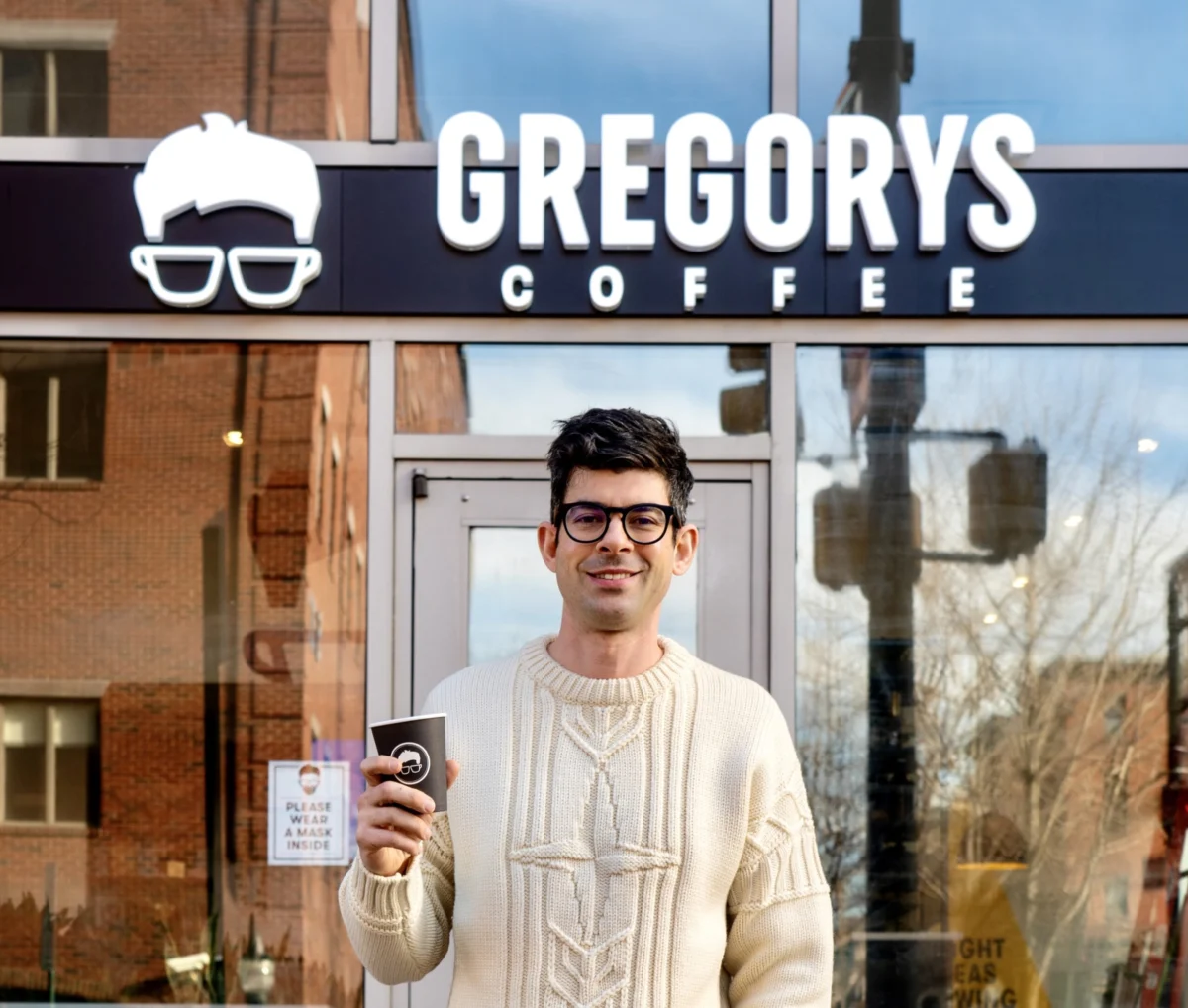
Two decades ago, Gregory Zamfotis stood at a pivotal juncture, weighing a promising legal career against the allure of entrepreneurship. A second-year law student at Brooklyn Law School, he had just received a full-time offer from a prestigious real estate law firm. However, Zamfotis harbored a different ambition: to launch his own business. This decision marked the genesis of what would become Gregorys Coffee, a brand that has now grown into a formidable presence in the specialty coffee market, poised for significant expansion through franchising.
Zamfotis’s entrepreneurial spirit was deeply rooted in his upbringing. "I grew up in the food business," he explained in a recent interview. "My father operated a number of concepts in New York City, so I grew up working with him." This hands-on experience was invaluable, even as he pursued a formal legal education. Throughout his time at law school, Zamfotis worked at his father’s sandwich shop, a role that evolved into effectively managing the establishment by the end of his studies. The experience proved unexpectedly fulfilling, igniting a passion for the industry and solidifying his desire to forge his own path.
Upon graduating from law school at the age of 24, Zamfotis channeled his passion for coffee and his accumulated food service expertise into a new venture. He identified a significant gap in the market, particularly in the bustling Midtown Financial District of New York City. "If you were in the Midtown Financial District, the areas where the majority of New Yorkers are spending their time working, the only options for coffee really were Starbucks or Dunkin’," Zamfotis observed. "I thought that was a huge opportunity because I grew up working there. I wanted to take what I had learned, apply it to the coffee industry, and do it in a part of the city that was extremely underserved at the time."
The Genesis of a Coffee Revolution
Zamfotis’s strategy was straightforward yet ambitious: to open a single coffee bar on Park Avenue and make it unequivocally superior to any existing offering. His plan centered on an unwavering dedication to the quality of the beverages, the sourcing of ingredients, and the overall ambiance of the space, aiming to embed the establishment into the daily routines of New Yorkers. This meticulous approach began to pay dividends quickly. Day after day, cup after cup, the small shop cultivated a loyal following. Customers were drawn not just to the coffee but to the brand’s distinctive identity, characterized by bold, playful branding and a menu that prioritized quality without compromise.
"We wanted to do a quality specialty coffee operation in a volume setting," Zamfotis stated, recalling the intense early days. He estimates he was working "70 to 80 hours a week" at the store to ensure every detail met his vision. This dedication was crucial in differentiating Gregorys from larger, established chains and local competitors.
The Steep Learning Curve of Specialty Coffee at Scale
While Zamfotis’s initial vision was clear, he soon realized the formidable challenge of consistently delivering exceptional coffee on a large scale. "I guess I was surprised at just how complex doing coffee really well was," he admitted. "The only way we were gonna win is if we could differentiate ourselves from the national players or the other people doing coffee around the block."
This realization propelled Zamfotis into a period of intense self-education and immersion in the coffee world. He embarked on a personal "coffee bootcamp," visiting numerous shops, attending industry conferences, and delving deep into the craft of coffee making. "I had to spend a lot of time and energy not only visiting other coffee shops, traveling, going to conferences, listening to speakers, and just pouring myself literally into all things coffee, to make myself an expert," he shared.
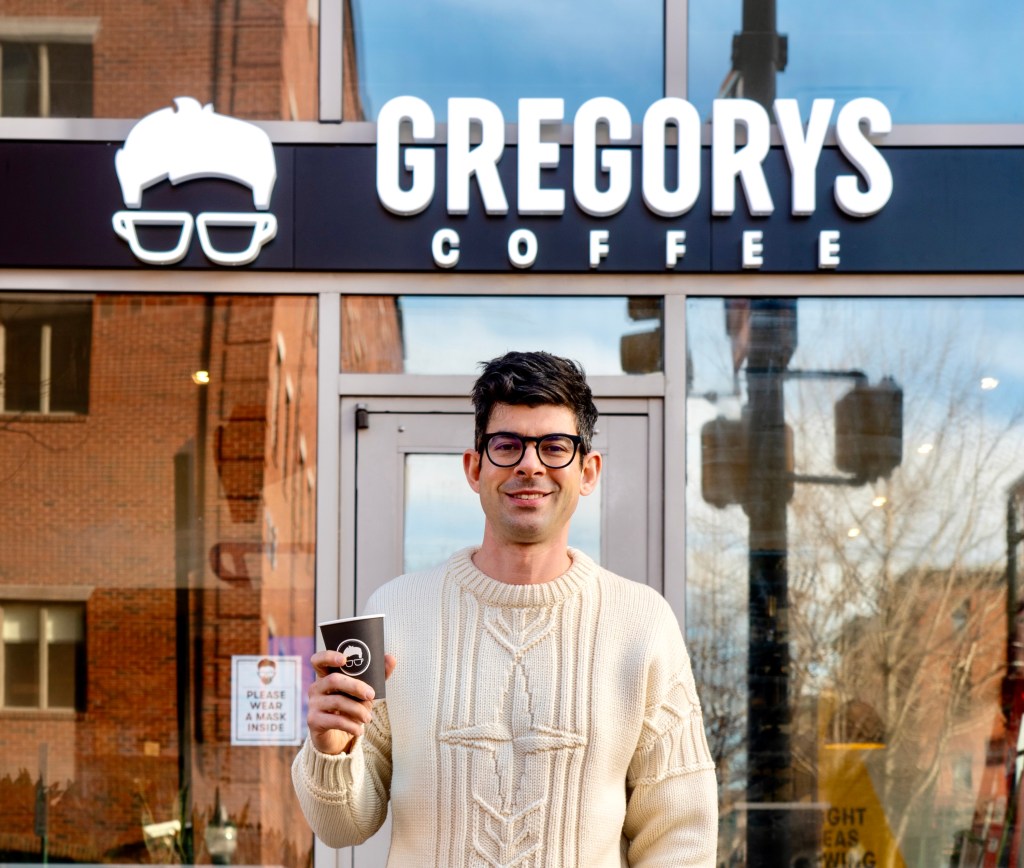
This dedication to mastering the nuances of coffee production and service began to transform both the company’s culture and its product. Zamfotis articulated the distinction: "There’s a difference between doing things well and doing things great." As the coffee program and training standards were elevated, customers took notice. Initially, patrons might have been drawn in by the excellent service, efficient operations, and appealing store design. However, as the quality of the coffee became a primary draw, the brand’s appeal solidified. "Customers, maybe in the beginning, were coming because of all the other things…great service, fast, good-looking store…then once I started to elevate the coffee program higher and higher, while also keeping all those other elements so strong, that’s when we really started to make things better," Zamfotis explained.
Today, Gregorys Coffee has evolved significantly. The company roasts its own beans at its facility in Long Island City, bakes fresh pastries daily, and places a strong emphasis on personalized customer experiences—from milk alternatives to precise syrup customizations—all while maintaining speed and efficiency. The overarching goal, according to Zamfotis, is to ensure that customers feel they are making no compromises, sacrificing neither time, quality, nor choice.
From a Single Location to a National Footprint: The Scaling Journey
The journey from a single, groundbreaking coffee bar to a national franchise network was a testament to strategic growth and operational excellence. Zamfotis estimates that the first Gregorys location took approximately 12 to 18 months to achieve consistent performance and profitability. By its second or third year of operation, the company had surpassed the $1 million annual sales mark. This initial success provided the confidence needed to expand, leading to the opening of a second location about two and a half years after the first. This subsequent store proved to be an immediate success, demonstrating the growing demand for the Gregorys brand.
"When the first location may have taken 12 to 18 months to stabilize, the second location was stable from the get-go…very busy from the day we opened," Zamfotis recalled.
From that point forward, the company’s growth trajectory was largely dictated by the development of robust systems and the cultivation of a strong internal team. "I’ve always said you can only grow as fast as the people [you have] to help execute," Zamfotis emphasized. For over a decade, a cornerstone of Gregorys’ expansion strategy was its commitment to internal promotion. Nearly every individual in a leadership position within the company began their career as a barista, fostering a culture of deep understanding and loyalty.
This people-centric approach facilitated the expansion from two stores to a network of 53 locations spread across New York, New Jersey, Washington, D.C., Florida, California, Arizona, and Tennessee. The financial performance of the company has mirrored this expansive reach. "Last year we did just around $40 million," Zamfotis reported. "This year, I believe the projection is closer to like $45 million." This substantial revenue growth underscores the brand’s established market presence and customer appeal.
Embracing Franchising for Accelerated Growth
At a certain point in its development, Gregorys Coffee faced another critical decision: continue its steady, corporate-led expansion, or leverage its proven business model to scale more rapidly through franchising. The company recognized that the robust operational framework it had meticulously built was robust enough to be shared with external partners. This realization paved the way for a strategic partnership with Craveworthy Brands. In August 2025, Craveworthy Brands, led by CEO Gregg Majewski, stepped in as a managing partner and corporate operator. Craveworthy Brands brings a platform specifically designed for franchising, encompassing comprehensive training programs and shared services essential for a nationwide rollout.
"We knew that if we wanted to continue to grow the brand at the speed that was necessary, the only way was to attach to franchising," Majewski stated in a recent interview.
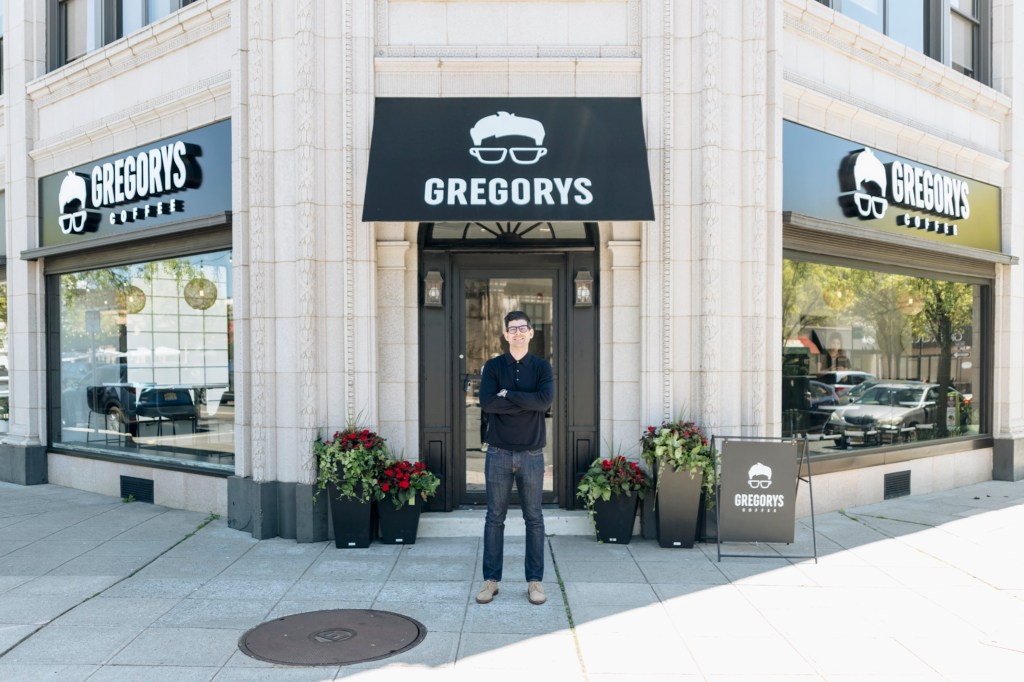
With a 20-year track record of success and individual stores consistently generating approximately $1 million in annual revenue (with top performers reaching around $1.6 million and drive-thru models averaging about $1.4 million), Gregorys is no longer just a New York City underdog. It has evolved into a formidable coffee brand, now prepared to make a significant impact in the franchise arena. The company aims to sell between 50 and 75 franchise locations in its first year of franchising, inviting entrepreneurs to compete directly with America’s largest coffee chains.
"Any brand that’s been around the industry as long as that and has been successful in as many markets as it has over the 20-year timeframe is perfect for franchising – especially when you built your reputation in one of the hardest cities in the world to operate in, New York," Majewski commented. He further highlighted the brand’s strong connection with its customer base: "Gregorys has a group of regulars that absolutely live and die [for] this brand."
Craveworthy Brands’ involvement provides the necessary infrastructure and expertise to support Gregorys’ franchising ambitions. The firm boasts a diverse portfolio of 21 brands, eight of which are already operating under a franchise model. This extensive experience ensures that new franchisees will receive comprehensive support, including training, shared services, construction guidance, and replicable operational systems designed for consistent performance across multiple locations. Craveworthy Brands’ portfolio includes other well-known names such as Big Chicken, Taffer’s Tavern, and Genghis Grill, demonstrating their proficiency in scaling restaurant and hospitality concepts.
For potential franchisees, Gregorys is positioning itself as an accessible entry point into a highly desirable market segment that can often be challenging to penetrate. Majewski noted that "some of the bigger players are sold out or aren’t accepting." Gregorys offers a compelling investment opportunity with estimated build-out costs ranging "anywhere from $200,000 to $700,000."
The Mechanics of Successful Franchising
Gregg Majewski articulated a clear vision for why franchising is a powerful growth engine, not only for Gregorys but for all the brands under the Craveworthy Brands umbrella. From the franchisor’s perspective, success hinges on the establishment of standardized systems and procedures that enable effective training and consistent product execution. This operational blueprint is the bedrock upon which the entire franchise model is built.
On the franchisee’s side, the primary challenge is often psychological: the discipline required to adhere to established systems and procedures. "You bought into a system," Majewski reminded, emphasizing that the inherent promise of franchising is that a well-designed and meticulously followed system is inherently geared towards ensuring the franchisee’s success.
Majewski firmly believes that culture serves as the ultimate differentiator in a successful franchise network. He asserts that true success is achieved through "establishing an incredible culture in the system" and ensuring that operations are streamlined and easily replicable. "If any concept is ever too complicated, you can’t have the consistency," he explained.
The ultimate objective is to guarantee a uniform customer experience, regardless of location. "When you walk into a store in Indiana or a store in California, you get the same experience," Majewski stated. For Gregorys Coffee, this means rigorously protecting not only the quality of its coffee and its menu offerings but also the distinctive ambiance and ethos of a brand that was born on the prestigious Park Avenue and honed through the demanding daily rhythm of New York City. This commitment to consistency, coupled with a proven business model and a strategic franchising approach, positions Gregorys Coffee for a new era of expansive growth and market leadership.