Gilang Muhammad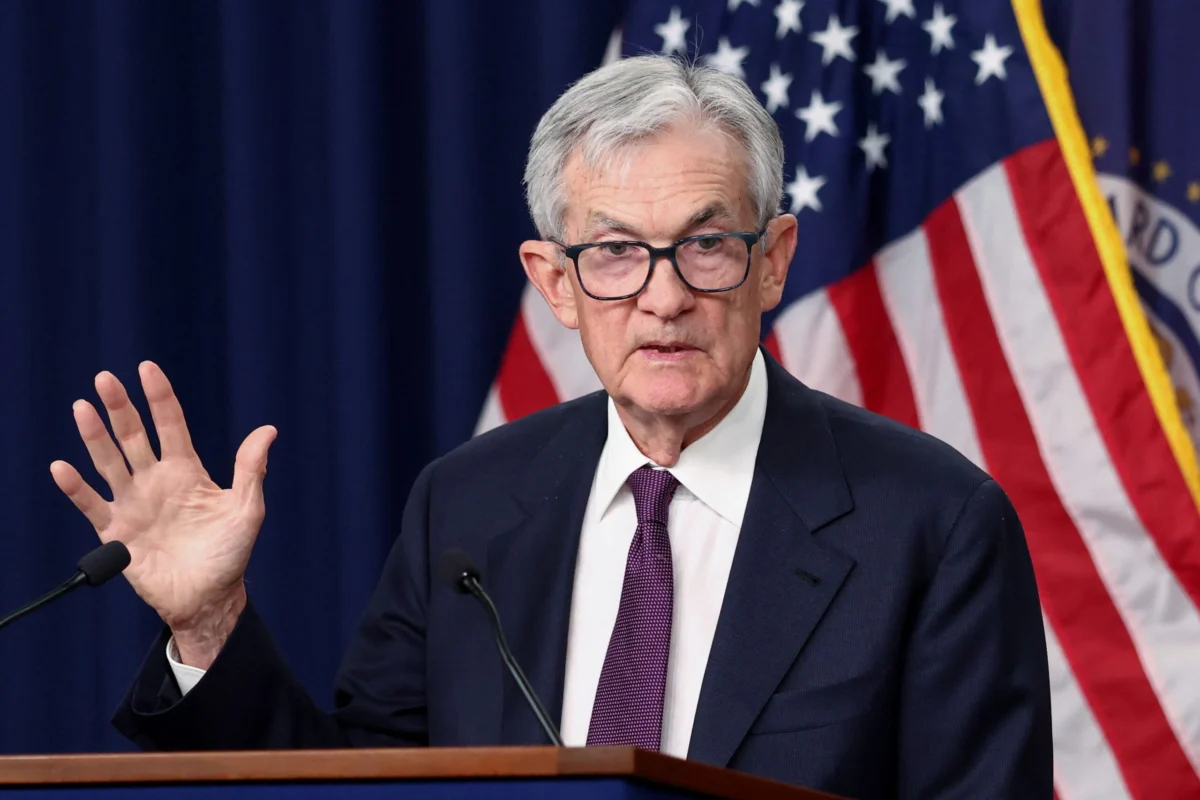
Despite an ostensibly optimistic outlook from the Federal Reserve regarding the nation’s economic resilience, investors reacted sharply this week, completely revising expectations for any interest rate cuts in the current year. The central bank’s latest Federal Open Market Committee (FOMC) meeting concluded with a message of economic strength that, paradoxically, fueled market anxieties, leading to a significant repricing of monetary policy trajectories and a palpable downturn in equity markets. This unexpected divergence between the Fed’s sunny disposition and investor sentiment underscores the profound impact of persistent inflation and escalating geopolitical risks, particularly the simmering tensions in the Middle East.
A Hawkish Twist to an Optimistic Tone
In his post-meeting news conference, Fed Chair Jerome Powell presented a notably upbeat assessment of current economic conditions, characterizing growth as "solid" and unequivocally dismissing notions of "stagflation" taking hold. This confident stance was maintained even as he acknowledged "zero" net job growth – a term that, while perhaps referring to a stabilization after robust gains, still signals a deceleration in labor market momentum – and stubbornly high inflation rates persisting above the central bank’s 2% target. For many market participants, Powell’s steadfast optimism, coupled with a discernible reluctance to address the escalating geopolitical landscape directly, signaled a more hawkish posture than anticipated.
The Federal Reserve operates under a dual mandate from Congress: to achieve maximum employment and maintain price stability. Throughout 2022 and 2023, the primary focus shifted dramatically to combating inflation, which had surged to multi-decade highs, peaking at 9.1% in June 2022 as measured by the Consumer Price Index (CPI). In response, the Fed embarked on an aggressive tightening cycle, raising the federal funds rate from near zero to its current range of 5.25%-5.50%. This rapid succession of hikes was designed to cool aggregate demand and bring inflation back to target. As 2024 began, there was widespread anticipation among investors that the Fed would pivot to rate cuts, with some forecasts predicting as many as six to seven reductions throughout the year, contingent on continued disinflation and signs of labor market weakening. This week’s meeting, however, emphatically challenged those assumptions.
Geopolitical Undercurrents and the Fed’s Silence
A critical element contributing to investor unease was the FOMC statement’s specific, albeit brief, mention of "uncertainty" associated with the Iran war. This reference broadly encapsulates the heightened hostilities and instability across the Middle East, including the ongoing conflict in Gaza, Houthi attacks on shipping in the Red Sea, and the broader network of regional proxies. These developments carry significant implications for global energy markets, supply chains, and, consequently, inflation. Oil prices, for instance, are highly sensitive to Middle East instability, and any major disruption to supply could trigger another inflationary surge, effectively undoing the Fed’s painstaking efforts to bring prices under control.
Despite the explicit acknowledgment in the official statement, Chair Powell conspicuously refrained from directly addressing the geopolitical situation during his press conference. This perceived silence, or perhaps a strategic decision to avoid commenting on non-monetary policy issues, left investors with a distinct impression that the central bank was either underestimating the potential economic fallout or was simply not inclined to factor these exogenous shocks into its immediate policy calculus. In a market already hypersensitive to any signs of persistent inflation, the potential for a fresh, supply-side oil shock—a phenomenon notoriously difficult for central banks to manage with demand-side tools like interest rates—loomed large. The implication for investors was clear: if the Fed would not acknowledge or react to these external pressures, the path to easier monetary policy would become even more protracted.
Market Repercussions: A "Taper Tantrum" Revisited
The immediate market reaction was swift and decidedly negative. Rather than rallying on the central bank’s apparent optimism, major stock indices moved lower, with equity index futures registering declines on Thursday morning. The S&P 500, Dow Jones Industrial Average, and Nasdaq Composite all experienced downward pressure, reflecting broad investor disappointment. This shift was starkly evident in the fed funds futures markets, where traders adjust their probabilities for future rate movements. According to the CME Group’s FedWatch analysis, the odds of even a quarter-percentage-point reduction in the Fed’s benchmark interest rate plummeted to a mere 17.2% by Thursday morning. In a telling sign of the market’s complete reassessment, the probability of a rate hike even sneaked up, rising to 8.4%. This stands in stark contrast to earlier in the year when multiple cuts were priced in with high certainty.

Market veteran Ed Yardeni, a keen observer of Fed policy and market dynamics, succinctly termed the reaction a "taper tantrum." This allusion harks back to 2013, when then-Fed Chair Ben Bernanke signaled a potential tapering of the central bank’s quantitative easing program, triggering a sharp sell-off in bond markets and a broader investor revolt. Yardeni elaborated, "The combination of war and Fed news triggered a taper tantrum in the stock market as investors concluded that monetary policy may be limited in its ability to address the war’s economic consequences." He further noted Powell’s minimal mention of the war, coupled with his assessment of the economy and labor markets being "in good shape" and core inflation likely to moderate, which implied a prolonged "pause" in monetary policy.
The Shifting Sands of the Dot Plot and Dual Mandate
The "dot plot," a quarterly projection of individual FOMC members’ expectations for the federal funds rate, also saw a mild but significant shift. While the exact median forecast for 2024 might not have dramatically changed to zero cuts, the nuanced adjustments within the distribution of dots likely signaled fewer anticipated cuts or a higher terminal rate in the coming years, reinforcing the "higher for longer" narrative. Investors meticulously sifted through Powell’s every word for additional clues, attempting to discern the Federal Open Market Committee’s evolving direction.
The perennial tension between the Fed’s dual mandate of maximum employment and price stability has been a central theme. Heading into this meeting, the question was which side would gain more attention: the "anemic labor market" or inflation stubbornly above target. While the labor market has shown signs of cooling from its frenetic pace, with "zero" net job growth potentially indicating a return to more sustainable, rather than superheated, expansion, the overall picture remains robust. The unemployment rate has remained near historical lows, hovering around 3.7-3.9% in recent months, and wage growth, while moderating, is still strong enough to potentially contribute to services inflation. However, inflation, particularly core inflation (which excludes volatile food and energy prices), has proven stickier than anticipated. The Personal Consumption Expenditures (PCE) price index, the Fed’s preferred inflation gauge, registered 2.7% year-over-year in February, still above the 2% target. Services inflation, driven by factors like housing and wages, remains a particular challenge.
Economic Resilience Meets Persistent Uncertainty
Fundstrat analysts highlighted Powell’s consistent argument that "the economy has absorbed shocks better than expected" over the past two years. This resilience has indeed been a hallmark of the post-pandemic recovery, defying numerous recession predictions. However, markets nonetheless reacted as though Powell had "materially tightened the policy outlook," indicating that this resilience alone was insufficient to assuage concerns about future inflation given the current backdrop.
Powell’s repeated references to "uncertainty" – more than a dozen times during his press conference – underscored the precariousness of the current economic environment. He conditioned much of the future policy path on the impact of potential oil shocks and the inflationary effects of tariffs. The interplay of these factors creates a complex web of variables that the Fed must navigate. Fundstrat’s analysis pointed to the "next catalyst" being whether "incoming inflation data begins to show tariff-sensitive goods easing before higher energy costs spread more broadly." Until then, Powell’s "framework remains intact: cautious, conditional, and still unwilling to move on forecast alone." This implies a data-dependent approach, where the Fed requires concrete evidence of sustained disinflation, rather than mere projections, before contemplating any policy adjustments.
The Road Ahead: A Longer Pause Than Anticipated
The implications of this meeting are far-reaching. For businesses, the "higher for longer" interest rate environment means borrowing costs will remain elevated, potentially dampening investment and expansion plans. For consumers, mortgage rates and other forms of credit will likely stay higher, impacting housing affordability and discretionary spending. Investors, having recalibrated their expectations, will likely favor sectors and companies that are less sensitive to interest rate fluctuations or possess strong pricing power to weather persistent inflation.
The Federal Reserve’s next scheduled meeting is set for April 28-29. Given the current market repricing, traders are now assigning virtually no chance of a rate cut at that meeting, with some models even showing a 10.3% probability of a quarter-point hike. This stark shift reflects a complete overhaul of market sentiment, driven by the Fed’s unwavering focus on inflation, even in the face of geopolitical tremors, and its robust assessment of economic strength. The path forward for monetary policy appears to be one of prolonged patience, with the central bank poised to maintain restrictive conditions until it is unequivocally confident that inflation is on a sustainable trajectory back to its 2% target, irrespective of the calls for easing from a disappointed market. The dance between economic data, geopolitical events, and the Fed’s cautious stance will continue to dictate the rhythm of global financial markets in the months to come.