Gilang Muhammad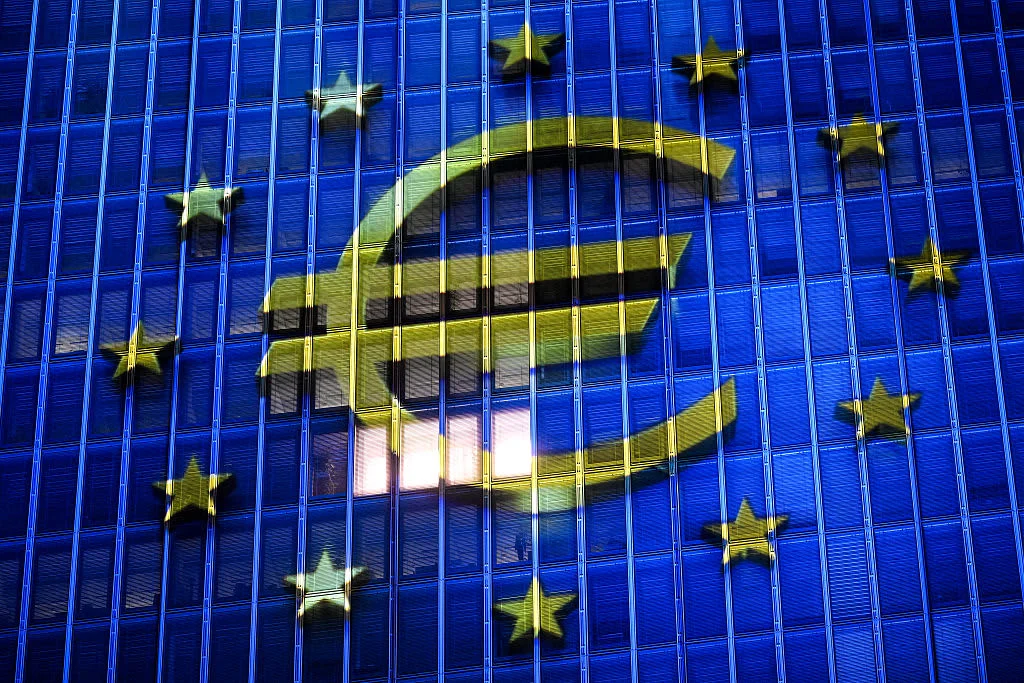
Frankfurt am Main, Germany – The European Central Bank (ECB), alongside several prominent regional central banks including the Bank of England, Sweden’s Riksbank, and the Swiss National Bank, has opted to maintain its benchmark interest rates at their current levels following their latest monetary policy meetings in March 2026. This coordinated caution stems directly from the ongoing conflict in Iran, which policymakers universally describe as having rendered the economic outlook "significantly more uncertain" and creating a precarious balance of "upside risks for inflation and downside risks for economic growth." The decisions mark a dramatic shift from pre-conflict expectations, with financial markets now recalibrating their bets towards potential rate hikes later in the year, rather than the cuts previously anticipated.
The European Central Bank’s Stance Amid Geopolitical Turmoil
The European Central Bank, headquartered in Frankfurt, announced its decision to keep interest rates on hold, with its crucial deposit facility rate remaining at 2%. This move comes as the geopolitical landscape, particularly the conflict that erupted in Iran in late February, casts a long shadow over the Eurozone economy. The ECB’s Governing Council explicitly stated that the conflict is expected to exert a "material impact on near-term inflation through higher energy prices." The medium-term implications, they added, would hinge critically on "both the intensity and duration of the conflict and on how energy prices affect consumer prices and the economy."
Prior to the outbreak of hostilities, the Eurozone had enjoyed a relatively benign inflation outlook, with interest rates largely expected to remain stable or even trend downwards across the region. Indeed, the ECB was not widely anticipated to alter its benchmark interest rate, given that Eurozone inflation data had been hovering near the central bank’s symmetrical 2% target. The latest flash data from Eurostat had shown a modest rise in inflation for the Eurozone, climbing to 1.9% in February 2026 from 1.7% in January. This trajectory had, until recently, supported a more accommodative monetary policy stance.
However, the war in Iran has fundamentally altered this equilibrium. The central bank on Thursday significantly revised its medium-term inflation expectations upwards, signaling a palpable shift in its outlook. Headline inflation is now projected to average 2.6% in 2026, 2% in 2027, and 2.1% in 2028 under the bank’s baseline scenario. This represents a marked increase from its December 2025 projections, which had anticipated headline inflation just shy of 2% in both 2026 and 2027, before reaching its 2% target in 2028. The surge in energy prices, directly attributable to the conflict, was cited as the primary driver for these revisions, underscoring the immediate and profound impact of geopolitical events on economic forecasting.
ECB President Christine Lagarde, addressing reporters at the post-announcement press conference, notably tempered her previously optimistic assessment of the Eurozone’s economic health. Just weeks prior, at the central bank’s February meeting, Lagarde had reiterated her mantra that the Eurozone’s economic outlook was "in a good place," though she had cautioned against complacency. Her prudence now appears prescient. "We are starting from a good base, so I’m not saying we are in a good place," Lagarde clarified to CNBC’s Annette Weisbach. "[I’m saying] we are both well-positioned and well-equipped to deal with the development of a major shock that is unfolding." This measured recalibration of language reflects the profound uncertainty now gripping global financial institutions and signals the ECB’s preparedness for a potentially prolonged period of economic volatility.
Bank of England Navigates "Uniquely British" Challenges
Across the English Channel, the Bank of England’s Monetary Policy Committee (MPC) also voted unanimously to keep its benchmark interest rate, known as Bank Rate, on hold at 3.75%. This decision represents a significant pivot from market expectations just weeks ago, when the BoE had been widely tipped to cut its key interest rate at its March meeting. The eruption of the conflict in the Middle East, however, has sent global energy prices soaring, compelling the MPC to reassess its policy trajectory.
In a statement, the Bank of England highlighted the direct economic fallout: "Conflict in the Middle East has caused a significant increase in global energy and other commodity prices, which will affect households’ fuel and utility prices and have indirect effects via businesses’ costs." The central bank warned that while there had been "continued disinflation in domestic prices and wages" prior to the conflict, "CPI inflation will be higher in the near term as a result of the new shock to the economy."
The MPC expressed particular vigilance regarding the "increased risk of domestic inflationary pressures through second-round effects in wage and price-setting," noting that "the risk of which will be greater the longer higher energy prices persist." These second-round effects refer to the phenomenon where initial price shocks (like energy) feed into broader inflation through wage demands and other input costs, making inflation more entrenched. Prior to the war, the BoE had anticipated inflation declining towards its 2% target, but it is now also assessing the implications of a likely "weakening in economic activity" stemming from elevated energy costs.
London’s FTSE 100 index reacted by extending its losses, dipping 2.5% by midday London time following the announcement. The yield on the benchmark 10-year gilt, a key indicator of borrowing costs, rose by 14 basis points to 4.874%, while the interest rate on the 2-year gilt climbed 20 basis points to 4.31%. These market movements underscore investor apprehension and the perceived tightening of financial conditions.
Madison Faller, Global Investment Strategist at J.P. Morgan Private Bank, encapsulated the unique predicament facing the UK. "Most central banks are facing the same challenging backdrop, but the trade-offs are not equal. The Bank of England’s are uniquely British: stubborn inflation, a weakening jobs market, and little fiscal wiggle room," Faller commented. She contrasted the UK’s situation with the United States, "buoyed by solid growth," and Europe, which "has made real progress on disinflation." Faller concluded that the BoE is "walking a tightrope between supporting a sluggish economy and not letting inflation run amok." Her analysis highlights the dramatic shift in market expectations, noting that just weeks ago, markets were betting on two rate cuts, but are now bracing for potentially two rate hikes this year.
Swiss National Bank Prepares for Franc Appreciation
In Switzerland, the Swiss National Bank (SNB) also maintained its main policy rate at 0.00%. However, the SNB’s statement revealed a distinct focus: its "willingness to intervene in the foreign exchange market has increased" specifically in the context of the Middle East conflict. This proactive stance is aimed at countering any "rapid and excessive appreciation of the Swiss franc, which would jeopardize price stability in Switzerland."

The Swiss franc has historically served as a safe-haven currency during periods of global instability, attracting capital flows that can lead to its rapid appreciation. While a strong franc makes imports cheaper, it also harms Swiss exporters by making their goods more expensive abroad, potentially dampening economic growth and contributing to deflationary pressures.
SNB Chairman Martin Schlegel, when asked by CNBC’s Carolin Roth if there was a specific "trigger point" for FX market intervention, explained the bank’s approach: "We are looking at monetary policy every quarter, and there we decide on the use of our tools, which is the interest rate and also FX interventions." He affirmed that "at this meeting, we came to the conclusion that the heightened willingness to intervene in the FX market is what we need for monetary policy right now." Schlegel emphatically clarified that any intervention would be for monetary policy reasons, not to seek a competitive advantage for Swiss exporters. He echoed concerns about the conflict’s duration, stating that the potential threat to the Swiss economy "really depends on the length of the conflict and on the length of high energy prices. If they stay high for longer, they could have a big impact on the world economy, and hence also on Switzerland."
Sweden’s Riksbank Adopts a "Vigilance" Posture
Sweden’s Riksbank, the world’s oldest central bank, also opted to keep its main policy rate on hold at 1.75% at its meeting. The Riksbank indicated that "the rate is expected to remain at this level for some time to come," but underscored that the Iran war warranted "vigilance." The bank pledged to monitor developments closely and adjust monetary policy if the outlook for inflation and economic activity required it, acknowledging that the war makes forecasting "very uncertain."
Riksbank Governor Erik Thedéen, speaking to CNBC’s Karen Tso, emphasized the complexity of the situation, cautioning against simply "looking through" the oil price shock. "It’s not as easy to just say, ‘look through’ [it]… we don’t know how long-lasting this oil price increase will be," Thedéen stated. He elaborated on the Riksbank’s scenario planning, outlining a "main scenario which is a little bit higher inflation, a touch lower growth, but nothing dramatic. Basically, a policy rate path that’s unchanged." However, he added, "then we have two alternative scenarios and we talk a lot about them, because… it could be a totally different kind of policy rate path going forward depending on what’s happening in the war in Iran."
Despite these concerns, the Riksbank noted fundamentally favorable conditions for the economic recovery to continue in Sweden, with the inflation rate currently at 1.7%, still below its 2% target. Yet, they cautioned that "underlying inflation has been unexpectedly low in recent outcomes. The war in the Middle East is expected to dampen growth somewhat in the near term and push up CPIF inflation as a result of higher energy prices. These are also expected to be passed on to some extent to other prices." CPIF (Consumer Price Index with fixed interest rate) is a key inflation measure used by the Riksbank.
The Geopolitical Quake: Understanding the Iran Conflict’s Economic Ripple Effect
The common thread binding these central bank decisions is the war in Iran, which commenced in late February. While specific details of the conflict’s progression are not explicitly detailed by the central banks, their consistent references point to its profound and immediate impact on global energy markets. Iran, a major oil and gas producer and situated in a strategically vital region for energy transit, plays a critical role in global supply. Any instability there, or disruptions to shipping lanes in the Persian Gulf, immediately triggers a risk premium in oil prices.
The "late February" start date suggests a rapid escalation that caught markets and policymakers by surprise, upending previous economic forecasts. The mechanism of impact is multi-faceted:
- Direct Supply Concerns: Actual or perceived threats to oil production and export capabilities.
- Shipping Disruptions: Increased costs and delays for tankers navigating key chokepoints.
- Geopolitical Risk Premium: Investors demand higher returns for holding assets, pushing up commodity prices.
- Sanctions and Trade Routes: Potential for new sanctions or shifts in trade alliances that further fragment global energy markets.
This immediate jolt to energy prices subsequently cascades through the global economy. Higher oil and gas prices translate directly into increased utility bills for households, elevated transportation costs for goods, and higher input costs for a vast array of industries, from manufacturing to agriculture. This inflationary pressure then poses a significant dilemma for central banks: whether to prioritize taming inflation by raising rates, which risks stifling already fragile economic growth, or to support growth, which could allow inflation to become entrenched.
Broader Economic Implications and the Path Ahead
The synchronized decisions by these major central banks highlight a global economy grappling with a severe and sudden shock. The prevailing uncertainty about the "intensity and duration" of the Iran conflict means that the economic consequences could deepen. The risk of stagflation – a period of high inflation coupled with stagnant economic growth – looms larger than it has in years.
For consumers, the immediate impact will be felt in reduced purchasing power as energy and potentially food prices rise. Businesses face the challenge of absorbing higher costs or passing them on to consumers, risking reduced demand. Investment decisions may be delayed as companies adopt a wait-and-see approach.
Central banks are now navigating a treacherous path. Their mandates typically involve balancing price stability with supporting maximum sustainable employment and growth. The current environment forces them to prioritize inflation control, even if it means accepting slower growth. The shift in market expectations, from anticipating rate cuts to bracing for hikes, underscores the dramatic re-evaluation of economic fundamentals prompted by the conflict.
As the situation in the Middle East evolves, so too will the economic outlook. The central banks have signaled their unwavering vigilance, indicating that monetary policy will remain highly reactive to geopolitical developments. The coming months will test the resilience of economies and the resolve of policymakers as they endeavor to steer their nations through an increasingly complex and unpredictable global landscape.