Farhan Pambudi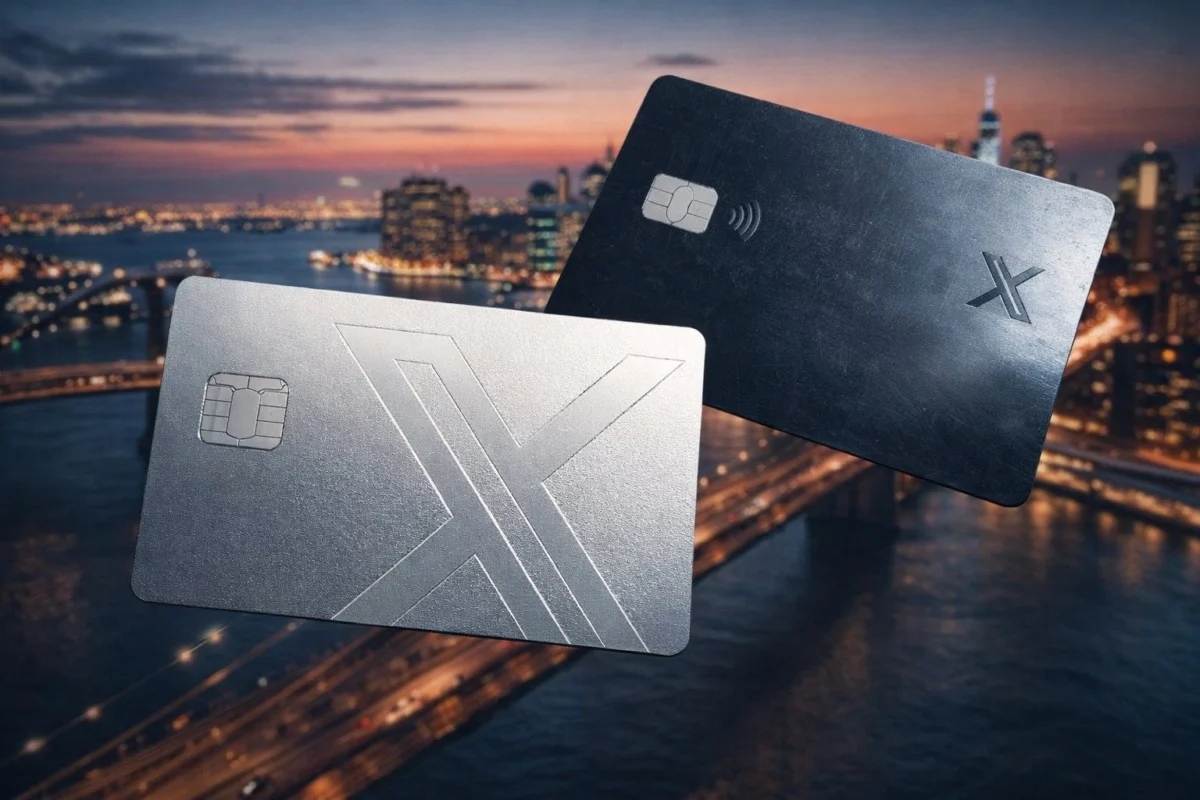
The evolution of X, the social media conglomerate formerly known as Twitter, has reached a significant milestone with the official commencement of external beta testing for its highly anticipated financial services wing, X Money. Following months of internal testing among employees, the platform has transitioned to a limited public phase, utilizing a high-profile charitable partnership to onboard its first wave of external users. This strategic move, orchestrated by X owner Elon Musk in collaboration with legendary actor William Shatner, marks a critical step in Musk’s long-standing ambition to transform the social network into an "everything app" capable of handling global commerce, peer-to-peer payments, and traditional banking functions.
The rollout began with a unique distribution model for beta invites. Rather than a standard registration process, X leveraged the cultural influence of Shatner to auction 42 exclusive invites to the service. To gain early access, participants were required to make a $1,000 donation to the Hollywood Charity Horse Show, an organization founded by Shatner that supports children’s and veterans’ charities. This unconventional launch strategy not only generated significant capital for philanthropic efforts but also reinforced the platform’s focus on high-engagement, high-value users during its nascent stages.
The Shatner Partnership and the Symbolism of 42
The partnership with William Shatner was punctuated by a series of public interactions on the X platform that highlighted the service’s functionality. Shatner confirmed the legitimacy of the auction by sharing screenshots of his own X Money account, noting that he had received an initial payment from Musk himself. In a nod to science fiction culture, Musk transferred $42 to Shatner—a reference to Douglas Adams’ "The Hitchhiker’s Guide to the Galaxy," where the number is famously cited as the "Answer to the Ultimate Question of Life, the Universe, and Everything."
This playfulness masks a serious technological deployment. On March 4, 2026, Shatner confirmed that the 42 winners of the auction had been successfully integrated into the beta system. These users now see a dedicated "Money" link within their profile interface, positioned prominently below the "Premium" subscription tab. Beyond digital access, these early adopters are slated to receive physical manifestations of the service: metal X Money debit cards embossed with their unique usernames. These cards are powered by Visa, X’s primary partner in its bid to bridge the gap between social media interactions and real-world retail transactions.
Technical Infrastructure and Financial Features
The X Money interface, as revealed through beta user screenshots, is designed with a focus on streamlined utility. The application features three primary navigation tabs: Account, Rewards, and Activity. The core functionality mirrors established fintech leaders, offering buttons to deposit funds, send money to other users, and request payments. However, X is positioning itself as more than just a payment processor by integrating features typically reserved for neo-banks and high-yield savings accounts.
One of the most striking revelations from the beta launch is the aggressive interest rate offered to users. Screenshots indicate that X Money intends to offer up to a 6.00% Annual Percentage Yield (APY) on deposits for users who set up direct deposits. This rate significantly outpaces the national average for traditional savings accounts and positions X Money as a formidable competitor to established financial institutions and high-yield fintech products like those offered by Wealthfront or Marcus by Goldman Sachs.
To ensure consumer confidence and regulatory compliance, X has partnered with Cross River Bank, a New Jersey-based financial institution known for its extensive work with fintech startups. Through this partnership, user deposits are held by Cross River Bank and are insured by the Federal Deposit Insurance Corporation (FDIC) up to the standard limit of $250,000 per individual. While X itself is not a chartered bank, this "pass-through" insurance model allows the company to offer banking-like security while focusing on the user interface and social integration aspects of the platform.
Regulatory Milestones and Global Ambitions
The launch of the external beta follows a disciplined regulatory campaign. Over the past year, X has been methodically acquiring money transmitter licenses across the United States. As of early 2026, the company has secured legal authorization to operate in over 40 states. This regulatory foundation is essential for Musk’s goal of making X a global financial hub.
During a public all-hands meeting in February 2026, Musk outlined a roadmap for the service, stating that the limited external beta would precede a worldwide rollout. The current phase, involving the "Shatner 42," serves as a stress test for the system’s peer-to-peer (P2P) capabilities and its integration with the Visa network. Musk has expressed confidence that the service will be ready for a general audience within months, potentially disrupting the dominance of established players like PayPal—a company Musk co-founded in its earliest form as X.com.
A Return to Roots: The X.com Legacy
The introduction of X Money is a full-circle moment for Elon Musk’s career. In 1999, Musk founded X.com as one of the world’s first online financial services startups. The company eventually merged with Confinity to become PayPal, which was later sold to eBay. Musk’s re-acquisition of the X.com domain and the subsequent rebranding of Twitter to X in 2023 were clear signals of his intent to return to the fintech sector.
By integrating payments directly into a social media platform, Musk is attempting to replicate the "super-app" model popularized by WeChat in China. In that ecosystem, users rarely leave the app, using it for everything from messaging and news to hailing taxis and paying utility bills. X Money is the central pillar of this strategy. By controlling the flow of capital between creators and subscribers, and between buyers and sellers, X seeks to create a self-contained economy that reduces reliance on external banking apps and advertising revenue.
Competitive Analysis and Market Impact
The entry of X into the payments space puts it on a collision course with several entrenched industries. In the P2P space, X Money will compete directly with Venmo (owned by PayPal) and Cash App (owned by Block, Inc.). Its advantage lies in its existing user base and the "stickiness" of social media; users may find it more convenient to tip a creator or pay a friend directly within a conversation thread rather than switching to a separate financial application.
Furthermore, the standalone potential of X’s services is becoming apparent. Alongside the X Money beta, the company is testing a standalone X Chat app. Analysts suggest that X Money could eventually follow a similar path, offering a dedicated financial app that competes with traditional mobile banking platforms. The high APY and the prestige of a metal debit card are clear attempts to lure younger, tech-savvy users away from traditional banks.
However, the path forward is not without challenges. X continues to face scrutiny over data privacy and the security of its platform. Convincing users to trust a social media company with their direct deposits and sensitive financial data will require a sustained track record of reliability. The partnership with Cross River Bank and Visa provides a necessary layer of institutional credibility, but the ultimate success of X Money will depend on user adoption and the company’s ability to navigate the complex web of international financial regulations.
Conclusion and Future Outlook
The launch of the X Money beta via a high-stakes charitable auction is a quintessentially Musk-led initiative: part marketing stunt, part technological milestone, and part strategic disruption. By enlisting William Shatner and utilizing sci-fi tropes, X has ensured that its foray into finance remains at the center of the public discourse.
As the 42 initial beta testers begin using their metal cards and earning high-yield interest, the financial industry will be watching closely. If X can successfully scale its payment infrastructure to its hundreds of millions of users, it could fundamentally alter the relationship between social media and personal finance. For now, the "everything app" remains a work in progress, but with the activation of X Money, the "everything" part of that vision has finally begun to take a tangible, spendable form. The transition from a platform for words to a platform for wealth is officially underway.