Farhan Pambudi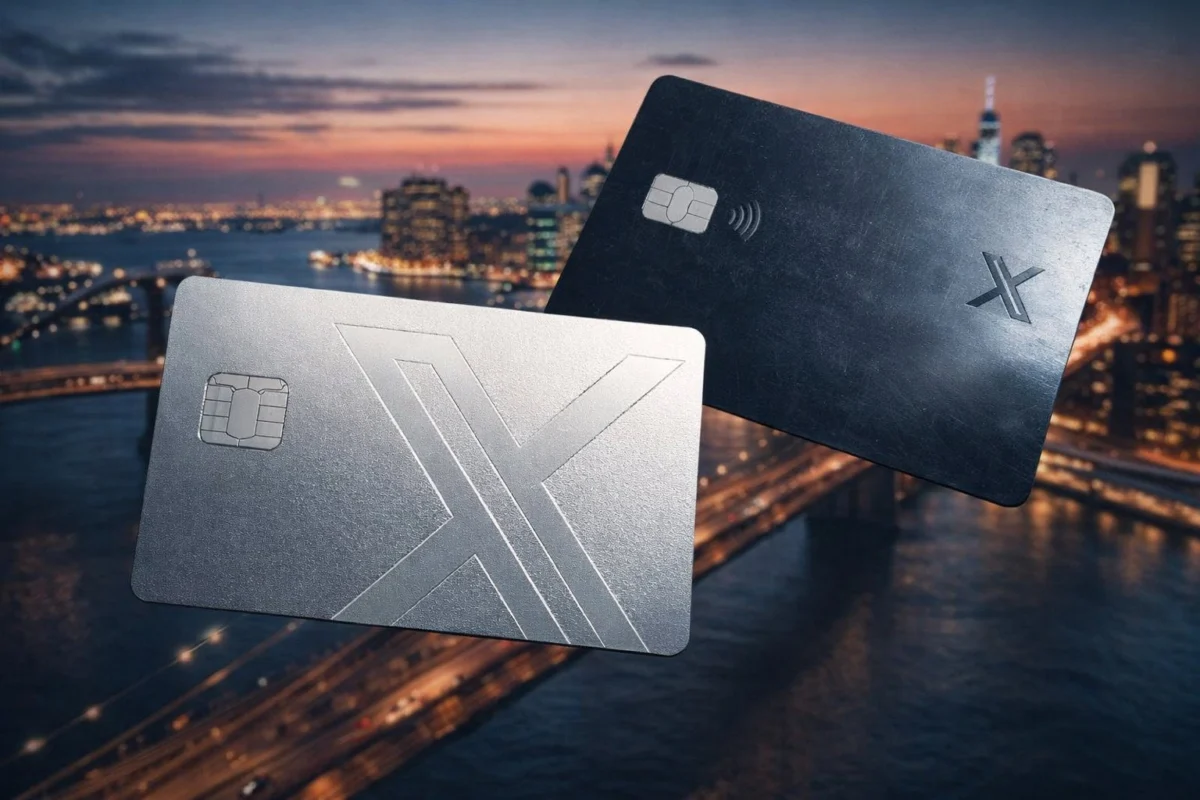
In a strategic move to transform the social media landscape into a comprehensive financial and communication hub, X has officially transitioned its internal payments service into a limited external beta. This week, the company, under the leadership of Elon Musk, began issuing exclusive invitations to its "X Money" platform, marking a significant milestone in Musk’s long-standing ambition to create a Western "everything app." The rollout was characterized by a high-profile collaboration with legendary actor William Shatner, whose involvement served as both a marketing vehicle and a charitable initiative.
The Shatner Auction and the "42" Beta Launch
The public introduction of X Money was facilitated through an unconventional beta entry program involving William Shatner. The Star Trek icon utilized his presence on the X platform to host an online auction, offering 42 exclusive invites to the X Money service. To secure an invite, participants were required to make a $1,000 donation to Shatner’s Hollywood Charity Horse Show, an organization that provides financial support to various children’s and veterans’ charities.
This partnership underscores Musk’s penchant for blending pop culture with corporate milestones. During the testing phase, Musk demonstrated the peer-to-peer (P2P) functionality of the app by sending Shatner a payment of $42. The figure is a deliberate reference to Douglas Adams’ "The Hitchhiker’s Guide to the Galaxy," in which the number 42 is identified as the "Answer to the Ultimate Question of Life, the Universe, and Everything." This playful nod to science fiction has become a hallmark of Musk’s branding across his various ventures, including Tesla, SpaceX, and now X.
Following the auction’s conclusion on Monday, Shatner confirmed that the list of winners had been submitted to X for beta activation. Users who successfully secured an invite will see an "X Money" link appear directly within their profile interface, positioned prominently below the "Premium" subscription tab.
Technical Infrastructure and Financial Features
The X Money interface, as revealed through screenshots shared by early testers and Shatner himself, is designed with a focus on minimalist utility. The application features three primary navigation tabs: Account, Rewards, and Activity. Within these sections, users can access core banking functionalities, including the ability to deposit funds, send P2P payments, and request money from other users.
A standout feature of the service is the integration of a physical metal X Money debit card. Powered by Visa, this card will feature the user’s unique X handle, further blurring the lines between social identity and financial utility. The partnership with Visa is a critical component of X’s strategy, providing the necessary global infrastructure to process transactions at scale while ensuring compatibility with existing point-of-sale systems.
Furthermore, X Money is positioning itself as a competitor to traditional high-yield savings accounts. Initial screenshots indicate that the platform will offer an Annual Percentage Yield (APY) of up to 6.00% on deposits. This aggressive interest rate is likely intended to incentivize users to migrate their primary banking activities to the platform. While X Money is not a chartered bank, it has partnered with Cross River Bank to hold user deposits. This arrangement ensures that funds are FDIC-insured up to the standard limit of $250,000 per individual, providing a layer of security essential for consumer trust.
The Regulatory Roadmap: Licensing and Compliance
For X to function as a legitimate financial services provider, it has had to navigate a complex web of state and federal regulations. Over the past year, the company has been aggressively pursuing money transmitter licenses across the United States. As of early 2026, X has secured licenses in over 40 states, a prerequisite for facilitating the movement of funds between users and across state lines.
During a public all-hands meeting in February 2026, Musk outlined a timeline for the global rollout of X Money. He informed staff that the current limited external beta would precede a wider domestic launch within a month or two, followed by an international expansion. The goal is to establish X as a global financial intermediary, reducing the reliance on traditional banking institutions for everyday transactions.
The acquisition of these licenses is a capital-intensive and time-consuming process, but it is necessary for Musk’s vision of an integrated economy within the app. By controlling the payment rails, X can potentially capture transaction fees, generate interest on held balances, and offer a seamless checkout experience for creators and advertisers within the ecosystem.
Standalone Apps and the "Everything App" Strategy
The launch of the X Money beta coincides with the testing of "X Chat," a standalone messaging application currently being trialed on iOS. The decision to test standalone apps suggests that while Musk wants a unified "everything app" experience, the company is also exploring a decoupled approach to better compete with specialized incumbents.
X Chat is designed to compete directly with dominant messaging platforms such as WhatsApp, Telegram, and Signal. By offering a dedicated interface for private communication, X aims to increase user engagement and retention. Similarly, there is speculation among industry analysts that X Money could eventually see its own standalone release to compete with established fintech giants like PayPal, Venmo, and Block’s Cash App.
The "everything app" model is heavily inspired by Tencent’s WeChat in China, which integrates social media, messaging, mobile payments, and e-commerce into a single platform. In Western markets, this level of consolidation has remained elusive due to regulatory scrutiny, fragmented market competition, and differing consumer habits. Musk’s strategy appears to be a multi-pronged assault on these barriers, using the existing user base of X as a springboard for financial and communication services.
Historical Context: From X.com to the Rebirth of X
Elon Musk’s interest in the financial sector is not a new development; rather, it is a return to his entrepreneurial roots. In 1899, Musk co-founded X.com, an online financial services and e-mail payment company. Following a merger with Confinity, the company became PayPal, which was eventually sold to eBay for $1.5 billion in 2002.
When Musk acquired Twitter for $44 billion in October 2022, he immediately signaled his intent to revive the "X" brand. In July 2023, the platform was officially renamed X, and the iconic blue bird logo was retired. Musk has frequently stated that the acquisition of Twitter was an "accelerant" for the creation of X, providing the social graph necessary to build a comprehensive service ecosystem.
The current trajectory of X Money represents the culmination of this decades-long vision. By reintroducing the "X.com" philosophy into a modern social media framework, Musk is attempting to close the loop on his original goal of disrupting the traditional banking industry.
Market Implications and Competitive Landscape
The entry of X into the fintech space has significant implications for both social media and traditional finance. If successful, X Money could disrupt the P2P payment market, which is currently dominated by PayPal and its subsidiary Venmo. The integration of payments into a social feed allows for "social commerce," where users can tip creators, pay for subscriptions, or purchase goods without leaving the app.
However, the path to dominance is fraught with challenges. Financial analysts point to several hurdles:
- Trust and Security: Transitioning from a platform known for free-speech debates to one trusted with life savings is a significant hurdle in consumer psychology.
- Regulatory Scrutiny: As X becomes a financial entity, it will face increased oversight from the Consumer Financial Protection Bureau (CFPB) and other regulatory bodies, particularly regarding anti-money laundering (AML) and "know your customer" (KYC) requirements.
- Monetization: While a 6% APY is attractive for users, it represents a high cost of capital for X. The company will need to find high-margin avenues to offset these interest payments.
Conclusion and Future Outlook
The X Money beta launch, punctuated by the William Shatner auction, signals a new chapter for X. It is no longer merely a microblogging site but a burgeoning financial platform with global ambitions. By leveraging celebrity partnerships, sci-fi branding, and aggressive financial incentives, Elon Musk is attempting to force a shift in how the public perceives and utilizes social media.
As the beta expands and the standalone X Chat app undergoes further testing, the industry will be watching closely to see if the "everything app" model can truly take root in the West. For now, the 42 auction winners represent the first wave of a potential shift in the digital economy, moving closer to a world where a single app handles the "Answer to Life, the Universe, and Everything"—or at least the user’s daily financial transactions.