Ena Muazin
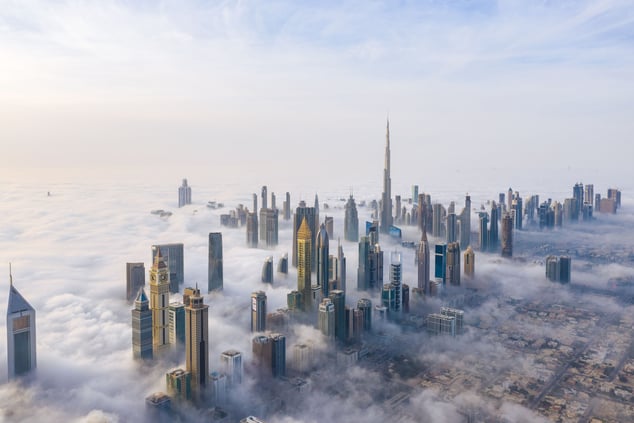
The serene skyline of Dubai, once a symbol of stability and burgeoning global finance, has been dramatically disrupted by the escalating conflict in the Middle East. Images of black smoke billowing over its modern architecture, following the reported impact of drone fragments, have reverberated globally, casting an unwelcome spotlight on the United Arab Emirates (UAE). This unforeseen escalation, stemming from a prolonged conflict initiated by Israel and supported by the United States against Iran, has plunged the region into a state of heightened uncertainty, directly impacting Dubai’s carefully cultivated image as a secure financial hub.
For years, Dubai has meticulously built its reputation as a safe haven, a beacon of stability amidst the volatile geopolitical landscape of the Middle East. Its ambition was clear: to ascend to the ranks of global financial centers like London, New York, and Hong Kong, establishing itself as the world’s fourth-largest financial marketplace. This vision attracted a significant influx of international capital, financial institutions, and a dynamic ecosystem of businesses and professionals. The Dubai International Financial Centre (DIFC), a bustling district typically alive with the energy of bankers and analysts from across the globe, now finds itself in an uncharacteristic state of quietude. Representatives from the financial sector on the ground report a noticeable emptiness in this once-vibrant quarter, a stark visual testament to the disruption.

The immediate aftermath of the attacks has seen major international banking institutions take precautionary measures. Giants like Citigroup and HSBC have, until further notice, closed their branches, signaling a palpable concern among financial leaders. "This crisis will change Dubai forever," remarked one financial expert to Handelsblatt, adding with a somber note, "A portion of the capital will not return." This sentiment underscores a growing apprehension that the economic fallout could be long-lasting, potentially eroding the trust that has been so carefully cultivated over decades.
A Timeline of Disruption and Growing Unease
The current crisis is more than three weeks old, with the initial attacks on the Emirates occurring shortly after the outbreak of hostilities between Iran and the coalition forces. The timeline of events leading to the current financial unease can be traced through several key developments:
- Pre-Conflict Ambitions: Dubai had spent years meticulously positioning itself as a global financial hub, leveraging its strategic location and business-friendly policies to attract foreign investment and talent. The DIFC was established as a special economic zone, offering tax advantages and a robust regulatory framework to international firms.
- Escalation of Conflict: The conflict, initiated by a coalition led by Israel and the United States against Iran, gradually intensified, creating ripple effects across the region. Initial attacks and skirmishes had been ongoing, but the reported direct impacts on UAE territory marked a significant escalation.
- Immediate Precautionary Measures: As the geopolitical situation deteriorated, international financial institutions began reassessing their operational risks in the region. Standard Chartered, HSBC, and Citi were among the first to allow employees to work remotely from other countries for the duration of the conflict.
- Branch Closures and Evacuations: The situation escalated further with the closure of several bank branches. Citi, in particular, has reportedly closed most of its branches in the UAE and other Gulf states indefinitely due to security concerns. This move, coupled with evacuations of offices by other major banks and corporate consultancies, sent a clear signal of growing apprehension.
- Capital Flight Concerns: Reports from within Dubai suggest that significant amounts of capital have already been withdrawn from the emirate. Insiders claim that in the first week alone, asset managers moved billions of dollars out of the UAE. While the government is reportedly implementing measures to prevent further capital flight, the effectiveness of these measures remains to be seen.
- Analyst Projections: Rating agencies and financial analysts have begun to assess the potential impact. S&P, in a report, warned that a prolonged conflict could trigger a broader outflow of external and domestic financial resources from the Gulf states, estimating the risk for banks in the region at $307 billion. However, they noted that a full-blown capital flight has not yet been observed.
The Erosion of the "Safe Haven" Narrative
Dubai’s success as a financial center was built on the bedrock of perceived stability. It offered a sanctuary for capital and businesses seeking refuge from regional instability. This narrative was particularly appealing to international investors and corporations looking for a reliable base from which to operate in the Middle East, Africa, and Asia. The presence of over 50,000 professionals and 8,000 companies officially operating within the DIFC attested to the success of this strategy. Major global financial players, including Blackrock, Morgan Stanley, and JP Morgan, had established significant presences in Dubai, recognizing its potential as a strategic gateway.
Rustum Shah, a partner at the law firm Stephenson Harwood, specializing in global finance, had previously described Dubai as the "financial crossroads of the Gulf region," a place where cross-border business transactions were facilitated. He noted that Dubai had always positioned itself as a safe harbor, and while this might seem counterintuitive given current events, it was historically accurate.
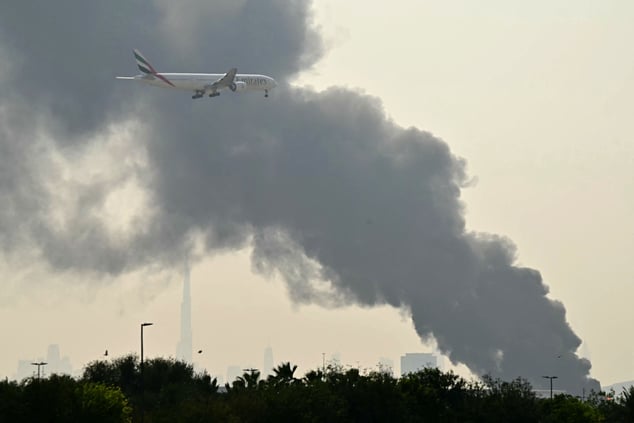
However, the direct impact of the conflict on UAE soil has challenged this long-held perception. Experts on the ground acknowledge that while a certain level of risk associated with the proximity to Iran was always factored into the region’s economic calculus, the directness of the recent attacks represents a "worst-case scenario" that many had not fully anticipated. This breach of perceived security is a critical blow to Dubai’s core value proposition.
The Specter of Capital Flight and Shifting Investments
The immediate concern for Dubai’s financial ecosystem is the potential for capital flight. Reports from within the emirate indicate that individual asset managers began withdrawing billions of dollars within the first week of the escalating conflict. "The government is doing everything it can to prevent capital flight, but this is only partially possible," stated one insider, highlighting the inherent difficulty in stemming such a tide. "Capital disappears faster than you can turn around."

This sentiment is echoed by analysts who observe early signs of asset reallocation and increased transfer requests. Sebastian Weischnur, a corporate consultant, noted that while a widespread exodus hasn’t occurred yet, "we are seeing initial indications of asset reshuffling, transfer requests, and the establishment of alternative security architectures. This early phase is often underestimated." He further elaborated that capital rarely vanishes abruptly; instead, it often begins with discreet "backup" decisions, which, once made, can be difficult to reverse.
Nalin Patel, an analyst at Pitchbook, a global data provider, anticipates a reduction in foreign investment from the US, mirroring potential outflows from the Middle East and North Africa (MENA) region into other markets. This projected decrease in investment is a direct consequence of the heightened geopolitical risk and the subsequent reevaluation of investment strategies by global players.
Impact on Banking and Private Equity

The banking sector is particularly vulnerable. S&P’s assessment of a $307 billion risk for banks in Gulf states underscores the potential magnitude of the fallout from a sustained conflict. While S&P has not yet observed a full-blown capital flight, the underlying risks are significant.
Major banks, including Standard Chartered, HSBC, and Citi, have not only allowed remote work but have also evacuated their offices in the UAE and other Gulf states as a security precaution. Citi’s decision to close most of its branches indefinitely is a strong indicator of the perceived threat and the immediate impact on financial operations. This exodus of banking institutions, even if temporary, represents a tangible shift of capital and financial services away from the region, occurring mere weeks after the conflict’s intensification.
The private equity (PE) sector, which has seen substantial growth in Saudi Arabia and the UAE in recent years, is also feeling the repercussions. Deals, particularly cross-border transactions, had been a driving force behind the region’s M&A activity. While ongoing transactions may continue, "many new initiatives are effectively on hold," according to Rustum Shah. He explains that "no credit committee wants to take on new risks at this time." This cautious approach is understandable, as investors are likely to prioritize capital preservation and de-risking their portfolios in the face of regional instability.

Nalin Patel of Pitchbook corroborates this sentiment, stating that in such uncertain times, countries tend to focus on their domestic markets, including the United States. Large-scale transactions are unlikely to proceed, and "nobody is working on long-term deals right now," he added. This contrasts sharply with the previous year, when private equity giant CVC completed a substantial $5 billion deal to acquire the Turkish game developer Dream Games, illustrating the region’s previous dynamism in cross-border investments. The prolonged nature of the conflict directly correlates with increased uncertainty, impacting investor confidence and the willingness to commit to long-term ventures.
Tech Scene and Venture Capital Reassessment
Dubai’s burgeoning tech scene and its appeal to venture capitalists have also been impacted. Just last autumn, the relocation of Nik Storonsky, CEO of the UK-based fintech Revolut, to the UAE, along with numerous other founders and investors seeking security and potential tax advantages, highlighted Dubai’s growing attractiveness to the tech world. This migration was seen as a significant boost to the region’s innovation ecosystem.

However, the current conflict is expected to bring this trend to an abrupt halt. Analyst Patel predicts that a substantial portion of these individuals and their investments will likely return to Europe. This potential exodus could significantly affect investment flows into the region’s technology startups and venture capital funds. While the exact numbers are difficult to quantify due to the often-gradual and initially temporary nature of such relocations, the trend suggests a significant reassessment of Dubai’s appeal as a tech hub.
The Government’s Response and Long-Term Outlook
In response to the escalating concerns, the UAE government is actively working to mitigate the damage to its reputation and economic stability. The Governor of the Central Bank of the UAE, Khaled Mohamed Balama, has issued statements asserting that the banking sector continues to operate normally. This message aims to reassure both domestic and international stakeholders that the financial infrastructure remains robust. In recent years, UAE banks have benefited from increased credit demand, fueled by substantial government investments in sectors such as tourism and infrastructure, which have contributed to their growth.

However, many experts believe that while the damage may not be irreparable, the consequences will be more severe the longer the conflict persists. For a city whose economic model relies heavily on internationally mobile capital, the erosion of its "safe haven" narrative is a significant concern.
Despite the immediate challenges, there remains a degree of optimism within certain circles. Rustum Shah, the legal expert, expresses long-term confidence in the region’s resilience, stating, "There is never a lack of ambition here." He recalls past crises, such as the 2008 financial crisis, during which Emirates airline placed the largest aircraft order in history. While acknowledging that Dubai’s image will undoubtedly suffer in the short term, he believes that once the situation stabilizes, the region’s long-term trajectory will remain unchanged.
The UAE has a history of navigating crises, including the global financial crisis and the COVID-19 pandemic, emerging stronger and more resilient each time. This past performance provides a basis for hope that Dubai can weather this storm. However, the current conflict presents a unique challenge, directly impacting the core of its economic identity. The ability of the UAE to successfully manage this crisis will depend on its capacity to restore confidence, demonstrate unwavering stability, and adapt its strategies to a rapidly evolving geopolitical landscape. The coming weeks and months will be critical in determining whether Dubai can truly recover its footing as a premier global financial center or if this conflict marks a turning point that permanently alters its economic destiny.