Lina Wu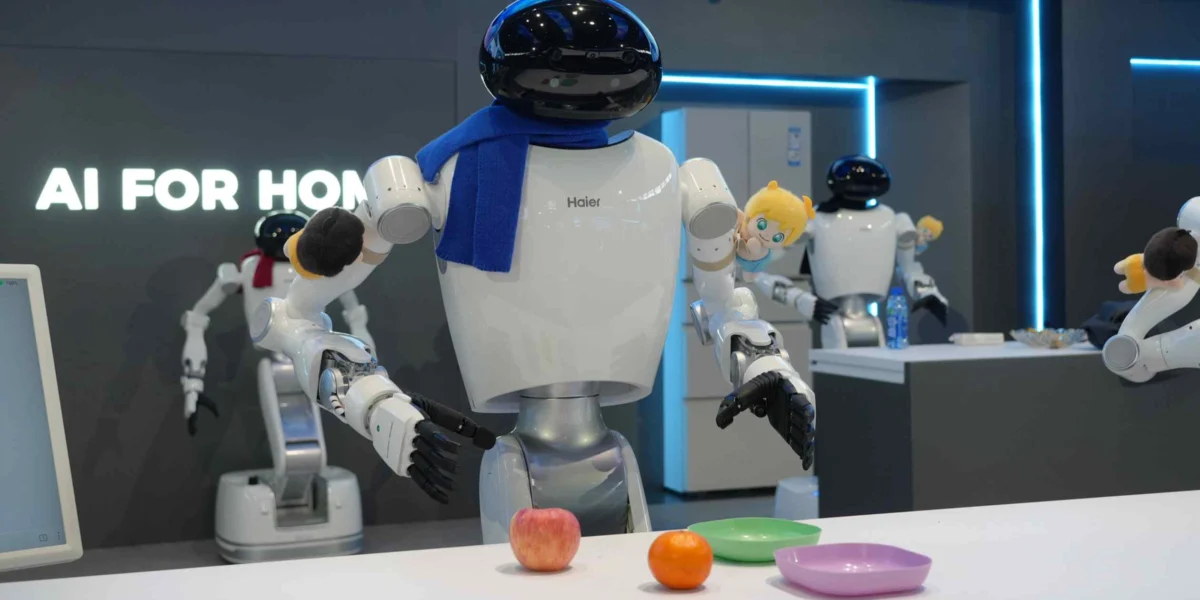
BEIJING – Chinese enterprises across a diverse spectrum of industries are increasingly leveraging artificial intelligence (AI) as a critical engine for innovation, viewing it as a strategic imperative to overcome the challenges posed by subdued domestic demand and intensifying market competition. This sentiment was echoed by business leaders and industry observers at recent technology showcases and economic forums, underscoring a significant shift in corporate strategy within the world’s second-largest economy.

The drive towards AI integration is not merely an opportunistic adoption of new technology; it represents a fundamental recalibration of business models in response to a complex economic landscape. For years, China has relied on a robust export sector and massive domestic consumption fueled by rapid urbanization and infrastructure development. However, recent years have seen a deceleration in these growth drivers, exacerbated by geopolitical tensions, evolving global trade dynamics, and a conscious effort by the Chinese government to transition towards a more sustainable, innovation-led economic model.
The AWE Consumer Electronics Trade Show: A Microcosm of AI Ambition

A prime example of this AI-centric push was evident at the AWE (Appliance & Electronics World) consumer electronics trade show held in Shanghai. The event, a significant fixture in the global tech calendar, showcased a remarkable array of AI-powered products and solutions. From sophisticated household robots designed to assist with daily chores, as demonstrated by industry giant Haier Group, to intelligent appliances that learn user preferences and optimize energy consumption, the pervasive influence of AI was undeniable.
Haier’s display of its latest household robot, capable of tasks ranging from basic cleaning to providing personalized companionship and information, highlights the ambition to integrate AI seamlessly into everyday life. This development is particularly pertinent in a country grappling with an aging population and a desire for increased domestic convenience. The underlying AI technologies powering these robots – including natural language processing, computer vision, and advanced robotics – are rapidly maturing, moving from research labs into tangible consumer products.

Beyond consumer electronics, AI’s transformative potential is being explored in sectors such as manufacturing, healthcare, finance, and agriculture. In manufacturing, AI-powered automation and predictive maintenance are crucial for enhancing efficiency and reducing operational costs, directly addressing the pressures of intense domestic competition. Companies are investing heavily in smart factories, where AI algorithms optimize production lines, monitor quality control with unprecedented precision, and enable flexible manufacturing to meet fluctuating market demands.
Navigating Economic Headwinds: AI as a Strategic Differentiator

The underlying motivation for this accelerated AI adoption is multifaceted. Firstly, weak domestic demand has forced companies to seek new avenues for growth and differentiation. When consumers are more cautious with their spending, businesses must offer compelling value propositions, and AI can be instrumental in creating more personalized, efficient, and innovative products and services.
Secondly, the competitive landscape in China is fierce. With a vast number of domestic players vying for market share, companies that can leverage AI to gain a technological edge are better positioned to survive and thrive. This often involves using AI to understand consumer behavior more deeply, optimize supply chains, and develop entirely new product categories.

Data released by the China Academy of Information and Communications Technology (CAICT) has consistently shown a significant increase in AI-related investment and patent filings over the past few years. While specific figures for 2026 are still being compiled, preliminary reports suggest a continuation of this upward trend, with AI applications in areas like industrial automation, smart city development, and personalized healthcare seeing particularly strong growth.
A Timeline of AI Integration in China

The journey of AI in China has been a gradual but accelerating process. While early AI research dates back decades, the current wave of integration can be traced back to the mid-2010s, when advancements in deep learning and the availability of massive datasets began to unlock practical applications.
- Early 2010s: Initial research and development in deep learning and neural networks gain traction. Government policies begin to signal a strategic interest in AI.
- Mid-2010s: Practical AI applications start emerging in areas like facial recognition, voice assistants, and e-commerce recommendation engines. Major tech companies like Baidu, Alibaba, and Tencent establish dedicated AI research labs.
- Late 2010s: China’s AI industry experiences rapid growth, fueled by venture capital and government support. AI begins to be integrated into various sectors, including autonomous driving, smart cities, and public security. The "New Generation Artificial Intelligence Development Plan" is released in 2017, setting ambitious goals for AI leadership by 2030.
- Early 2020s: The COVID-19 pandemic accelerates the adoption of digital technologies, including AI, in areas like remote work, healthcare diagnostics, and supply chain management. Geopolitical considerations begin to influence AI development and international collaboration.
- 2024-2026: Focus intensifies on AI-driven innovation as a response to economic challenges. Increased investment in fundamental AI research alongside applied AI solutions. AI’s role in enhancing industrial competitiveness and addressing demographic shifts becomes more prominent.
Industry Reactions and Broader Implications

The emphasis on AI innovation is not confined to large corporations. Small and medium-sized enterprises (SMEs) are also exploring ways to adopt AI, often through cloud-based AI services and partnerships with technology providers. This democratization of AI access is crucial for fostering a broad-based innovation ecosystem.
An executive from a leading solar panel manufacturer, speaking anonymously due to company policy, noted, "In the renewable energy sector, efficiency and cost reduction are paramount. AI is helping us optimize our manufacturing processes, predict equipment failures, and even improve the design of our panels for maximum energy capture. Without continuous innovation driven by technologies like AI, it’s difficult to see how we can remain competitive in a global market with fluctuating energy prices and evolving policy landscapes."

The implications of this AI-centric approach are far-reaching. For consumers, it promises a future with more intelligent and responsive products and services, potentially leading to improved quality of life and greater convenience. For the economy, it signifies a potential pathway to higher productivity, new industries, and a more resilient growth model.
However, challenges remain. The development of AI requires significant investment in talent, infrastructure, and data governance. Ethical considerations, data privacy, and the potential impact on employment are also critical issues that need to be addressed as AI becomes more deeply embedded in society.

The Chinese government has continued to support AI development through various initiatives, including funding for research, tax incentives for AI companies, and the establishment of AI industrial parks. The stated objective is to not only boost economic growth but also to enhance national competitiveness and address societal challenges.
As China navigates the complexities of the global economic landscape, its commitment to AI-driven innovation appears to be a defining characteristic of its industrial strategy. The success of this strategy will hinge on its ability to translate technological advancements into tangible economic benefits, while also managing the societal and ethical implications of this transformative technology. The coming years will be crucial in determining whether this AI-powered pivot can indeed propel Chinese companies to new heights of success in an increasingly competitive world.