Gilang Muhammad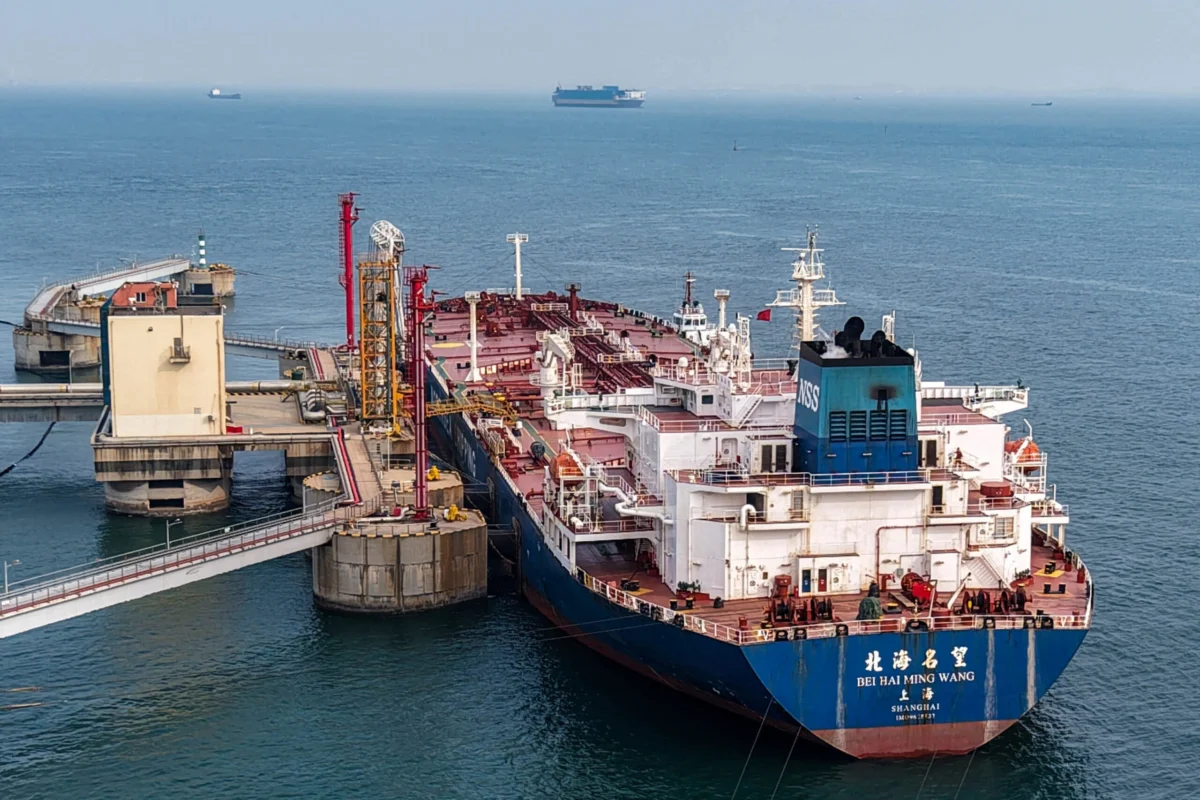
Chinese industrial firms reported a robust surge in profits during the first two months of 2026, marking a significant acceleration in factory activity and product price increases. Data released by the National Bureau of Statistics (NBS) on Friday revealed a 15.2% year-on-year jump in industrial profits for the January-February period, building substantially on the 5.3% growth recorded in December. This resurgence comes as Beijing intensifies its efforts to navigate persistent challenges such as industrial overcapacity and sluggish consumer demand, while simultaneously grappling with the mounting economic risks emanating from escalating geopolitical tensions, particularly in the Middle East.
Detailed Breakdown of Profit Growth and Sectoral Performance
The substantial uptick in industrial profits was primarily attributed to intensified factory operations and a general increase in product prices, according to Yu Weining, Chief Statistician at the NBS. A deeper dive into the data reveals a highly uneven recovery, with certain strategic sectors leading the charge. High-tech manufacturing emerged as the undisputed frontrunner, experiencing a remarkable 58.7% surge in profits from a year earlier. This impressive performance was largely fueled by robust earnings from companies specializing in cutting-edge technologies, including unmanned aerial vehicles (UAVs) and semiconductors—sectors that China has prioritized for indigenous innovation and self-sufficiency under its "new quality productive forces" initiative.
Beyond high-tech, raw material producers also demonstrated strong growth momentum. Non-ferrous metals producers saw an extraordinary profit increase of 148.2%, indicating strong demand and potentially rising global commodity prices. Chemical producers also reported a healthy 35.9% rise in profits. These figures suggest a rebound in upstream industries, often a precursor to broader industrial expansion. However, the disparity between these booming sectors and others, especially those grappling with overcapacity or weak end-user demand, underscores the fragmented nature of China’s economic recovery.
Navigating Economic Headwinds: Overcapacity and Domestic Demand
The reported profit surge offers a glimpse of optimism, but it unfolds against a complex backdrop of structural economic challenges that have long plagued China’s industrial sector. Industrial overcapacity, particularly in traditional heavy industries like steel, cement, and shipbuilding, has been a persistent issue for over a decade. This phenomenon often leads to intense price competition, depressed profit margins, and inefficient resource allocation. Beijing has actively pursued policies to address this, including supply-side reforms aimed at shuttering inefficient plants and promoting consolidation.
Concurrently, lackluster consumer demand has remained a significant drag on overall economic growth following the pandemic. Despite various government initiatives to stimulate consumption, including subsidies for durable goods and efforts to boost confidence, household spending has not rebounded as robustly as anticipated. This subdued domestic demand places a greater reliance on external markets, pushing Chinese firms to double down on exports to tap overseas demand. This strategy, while effective in shoring up industrial profits, also exposes the economy to the vagaries of global trade and geopolitical dynamics.
The 2025 full-year industrial profit figures provide a crucial context. After three consecutive years of declines, China’s industrial profits managed a modest 0.6% increase from a year ago. This turnaround was largely attributed to government efforts to rein in aggressive price competition within domestic markets and the aforementioned pivot towards boosting exports. The acceleration seen in early 2026 suggests that these measures, combined with strategic industrial upgrading, are beginning to yield more tangible results.
Policy Framework and Strategic Imperatives
China’s economic policymakers have been steering the nation through a period of profound transformation, emphasizing technological self-reliance and high-quality development over sheer growth volume. The "new quality productive forces" concept, championed by top leadership, aims to foster innovation-driven growth, particularly in advanced manufacturing, digital economy, and green technologies. The robust performance of high-tech manufacturing, especially in UAVs and semiconductors, directly reflects the fruits of this strategic focus. Significant state investment in research and development, along with preferential policies for high-tech enterprises, has created an environment conducive to their rapid expansion and profitability.
Furthermore, China’s "dual circulation" strategy, which aims to strengthen domestic demand while maintaining robust external trade, is central to its long-term economic resilience. While the recent profit data highlights the continued importance of the "external circulation" (exports), the underlying goal remains to foster a more balanced and self-sustaining economy less reliant on global fluctuations. The challenge lies in stimulating domestic consumption and investment in non-strategic sectors to ensure a more even and sustainable recovery across the entire industrial spectrum.
The Shadow of Geopolitical Tensions: Spillover Risks and Energy Security
Despite the encouraging profit figures, NBS chief statistician Yu Weining delivered a sobering warning regarding the potential impact of "escalating geopolitical tensions" on China’s growth outlook. While refraining from directly naming the Middle East conflict, his comments unmistakably pointed to the significant spillover risks originating from the volatile region. The conflict, specifically the U.S.-Israeli attacks on Iran, has led to a dramatic escalation, culminating in Tehran’s decision to close the Strait of Hormuz to most commercial vessels.
The Strait of Hormuz, a narrow waterway connecting the Persian Gulf to the open ocean, is arguably the world’s most critical chokepoint for global energy flows. Its closure has sent shockwaves through international energy markets, leading to significant disruptions in oil shipments and a sharp increase in global crude oil prices. This geopolitical turbulence directly impacts China, the world’s largest oil importer, by raising input costs for its vast industrial base and potentially fueling domestic inflation.
In response to the rising global oil prices seeping into its domestic economy, China’s economic planners took swift action. Earlier this week, the government raised the ceiling prices for retail gasoline and diesel. However, in a deliberate move to cushion the impact on consumers and businesses, the increase was limited to approximately half the usual adjustment, reflecting Beijing’s cautious approach to managing inflationary pressures while acknowledging market realities. This intervention underscores the government’s dual objective of maintaining economic stability and protecting household purchasing power amidst external shocks.
China’s Resilience in the Face of Energy Shocks
Despite the global upheaval in energy markets, analysts suggest that the world’s second-largest economy may be less vulnerable to the immediate impact of surging energy prices compared to many other nations. Several factors contribute to China’s relative resilience. Firstly, the country maintains massive strategic oil reserves, providing a crucial buffer against supply disruptions and price volatility. These reserves allow China to absorb short-term shocks without immediate and severe economic repercussions.
Secondly, China has significantly invested in and diversified its energy sources. While still heavily reliant on fossil fuels, its rapid expansion of renewable energy capacity, including solar, wind, and hydropower, lessens its overall dependence on imported crude oil. This strategic shift towards a cleaner energy mix not only addresses environmental concerns but also enhances national energy security. Furthermore, China’s extensive network of long-term energy supply agreements with various countries, coupled with its growing domestic production capabilities, further insulates it from immediate market shocks.
Crucially, Iran has continued to supply millions of barrels of crude oil to China since the war began, albeit often through clandestine channels or at discounted rates. This ongoing supply line provides China with an alternative source of oil, mitigating some of the adverse effects of disruptions in other major shipping lanes. This strategic relationship with Iran, though fraught with geopolitical complexities, plays a vital role in China’s energy security calculus, allowing it to circumvent some of the more severe market pressures faced by other nations.
Broader Implications and Future Outlook
The early 2026 industrial profit surge, particularly in high-tech and raw materials, provides a much-needed boost to China’s economic narrative, suggesting that targeted industrial policies and export dynamism are yielding results. It indicates that despite structural headwinds and geopolitical uncertainties, certain segments of the Chinese economy are performing robustly, contributing significantly to the overall economic resilience. This performance will be critical for Beijing as it strives to meet its annual economic growth targets, which often hinge on robust industrial output and investment.
However, the uneven nature of the recovery, as highlighted by Yu Weining, remains a significant concern. While high-tech and upstream sectors thrive, industries facing overcapacity or struggling with weak domestic consumer spending may continue to lag. This disparity could exacerbate regional economic imbalances and social pressures, requiring sustained policy attention. The property sector, for instance, continues to be a major source of economic instability, and its impact on consumer confidence and broader investment cannot be underestimated.
Looking ahead, China’s economic trajectory in 2026 will likely be defined by a delicate balance between leveraging its industrial strengths and navigating external shocks. The continued push for technological innovation, green development, and export diversification will be paramount. Simultaneously, policymakers will need to remain vigilant regarding global geopolitical developments, particularly those affecting energy markets and international trade routes. The Middle East conflict serves as a stark reminder that even with robust domestic performance, the interconnectedness of the global economy means that distant conflicts can cast long shadows over national economic prospects. The challenge for Beijing will be to sustain this industrial momentum while fostering a more balanced and resilient economic structure that can withstand both internal and external pressures in an increasingly unpredictable world.