Reynand Wu
The US Dollar (USD) maintained a robust positive trajectory, trading near 1.3775 against the Canadian Dollar (CAD) during early European trading on Wednesday, as persistent safe-haven demand fueled its ascent. This demand emerged amidst heightened geopolitical uncertainty in the Middle East, exacerbated by a significant escalation involving Iran, and was further underpinned by evolving monetary policy signals from the US Federal Reserve. The confluence of these factors created a complex market environment, with investors flocking to the perceived safety of the Greenback while weighing the implications for global energy markets and central bank strategies.
Geopolitical Undercurrents: Iran’s Retaliatory Strikes and Diplomatic Maneuvering
The immediate catalyst for market apprehension stemmed from a dramatic announcement by Iran’s Revolutionary Guards on Wednesday. They declared that they had launched missile attacks targeting Israel, alongside military bases hosting US forces in Kuwait, Jordan, and Bahrain. This series of strikes marked a significant escalation in regional tensions, which have simmered for years and periodically flared into open confrontation. While the specifics of the targets hit and the extent of any damage or casualties were still emerging, the act itself signaled a decisive shift in Iran’s posture, underscorating the precarious security situation in the region.
This latest volley of attacks follows a protracted period of deteriorating relations between Iran and the United States, particularly since the US withdrawal from the Joint Comprehensive Plan of Action (JCPOA), commonly known as the Iran nuclear deal, in 2018. That decision, made under the previous US administration, led to the re-imposition of stringent sanctions on Iran, severely impacting its economy and escalating a cycle of tit-for-tat actions, including attacks on shipping in the Gulf, drone incidents, and proxy conflicts across the Levant. The current strikes represent a more direct and overt military engagement, raising concerns about potential wider regional destabilization.
Amidst this backdrop of heightened military action, diplomatic efforts, however tenuous, were also in motion. Reports indicated that US President Donald Trump, despite the attacks, appeared determined to pursue a diplomatic resolution aimed at de-escalating hostilities in the Middle East. This stance suggests a preference for a negotiated settlement over further military confrontation, even as the region teetered on the brink. Intriguingly, Iranian officials conveyed a preference for engaging with US Vice President JD Vance in any renewed diplomatic discussions, rather than with established special envoys like Steve Witkoff or Jared Kushner. This preference could signal an Iranian strategy to explore alternative communication channels or to engage with figures perceived to hold different political sway or a more flexible approach within the US administration. Jared Kushner, notably, had a prominent role in the previous administration’s Middle East policy, particularly concerning the Abraham Accords, while Steve Witkoff’s specific diplomatic engagement in this context remains less publicly defined. The overt naming of Vance could be interpreted as a strategic move to bypass traditional diplomatic structures and potentially find a more amenable or impactful interlocutor.
The US Dollar’s Enduring Safe-Haven Appeal
The direct consequence of this geopolitical volatility was a pronounced strengthening of the US Dollar. The Greenback, long considered a premier safe-haven asset, typically benefits during periods of global uncertainty as investors seek stability and liquidity. Its status is rooted in the immense depth and liquidity of US financial markets, the dollar’s role as the world’s primary reserve currency, and the perceived stability of the US political and economic system relative to other global regions.
When geopolitical tensions escalate, global capital tends to flow into US Treasury bonds and dollar-denominated assets, driving up demand for the currency. This flight to quality is a well-established pattern, and the current Middle East crisis serves as a stark reminder of the dollar’s inherent appeal in times of stress. The ongoing uncertainty regarding the trajectory of the US-Iran relationship, coupled with the potential for broader regional conflict, reinforced this demand, contributing significantly to the USD/CAD pair’s upward momentum.
Oil Market Retreat and Canada’s Economic Vulnerability
Paradoxically, despite the significant escalation of tensions in a major oil-producing region, crude oil prices experienced a retreat. This unexpected market reaction underscores the complex interplay of geopolitical risk, supply-demand dynamics, and market sentiment. While initial instinct might suggest a surge in oil prices due to potential supply disruptions from the Middle East, traders appeared to be awaiting further concrete developments surrounding the US-Iran peace talks. This suggests that the market might be factoring in a belief that a full-scale regional conflict that would significantly disrupt oil flows is not yet inevitable, or that diplomatic efforts could still de-escalate the situation. Furthermore, global oil inventories and broader economic growth concerns can also influence prices, preventing a sustained spike even during geopolitical events.
This retreat in crude oil prices carries significant implications for Canada, a nation heavily reliant on oil exports. Canada ranks among the world’s largest producers and exporters of oil, primarily from its vast oil sands reserves in Alberta. The energy sector constitutes a substantial portion of the Canadian economy, contributing significantly to its Gross Domestic Product (GDP) and export revenues. As a result, the Canadian Dollar (CAD) is often referred to as a "commodity currency," meaning its value is highly sensitive to fluctuations in global commodity prices, particularly crude oil.
Lower crude oil prices generally exert downward pressure on the CAD. This is because reduced oil revenues translate into weaker terms of trade for Canada, potentially impacting its current account balance and discouraging foreign investment in its energy sector. For instance, a sustained drop in the price of Western Canadian Select (WCS), a benchmark for Canadian heavy crude, directly affects the profitability of Canadian oil producers and the overall economic outlook. The current retreat in oil prices, therefore, compounded the CAD’s weakness, making it more susceptible to the strength of the US Dollar and contributing to the USD/CAD pair’s upward trend. This dynamic highlights Canada’s economic vulnerability to global energy market shifts, even when the geopolitical events driving those shifts occur far from its borders.
The Federal Reserve’s Hawkish Pivot Amidst Inflationary Pressures
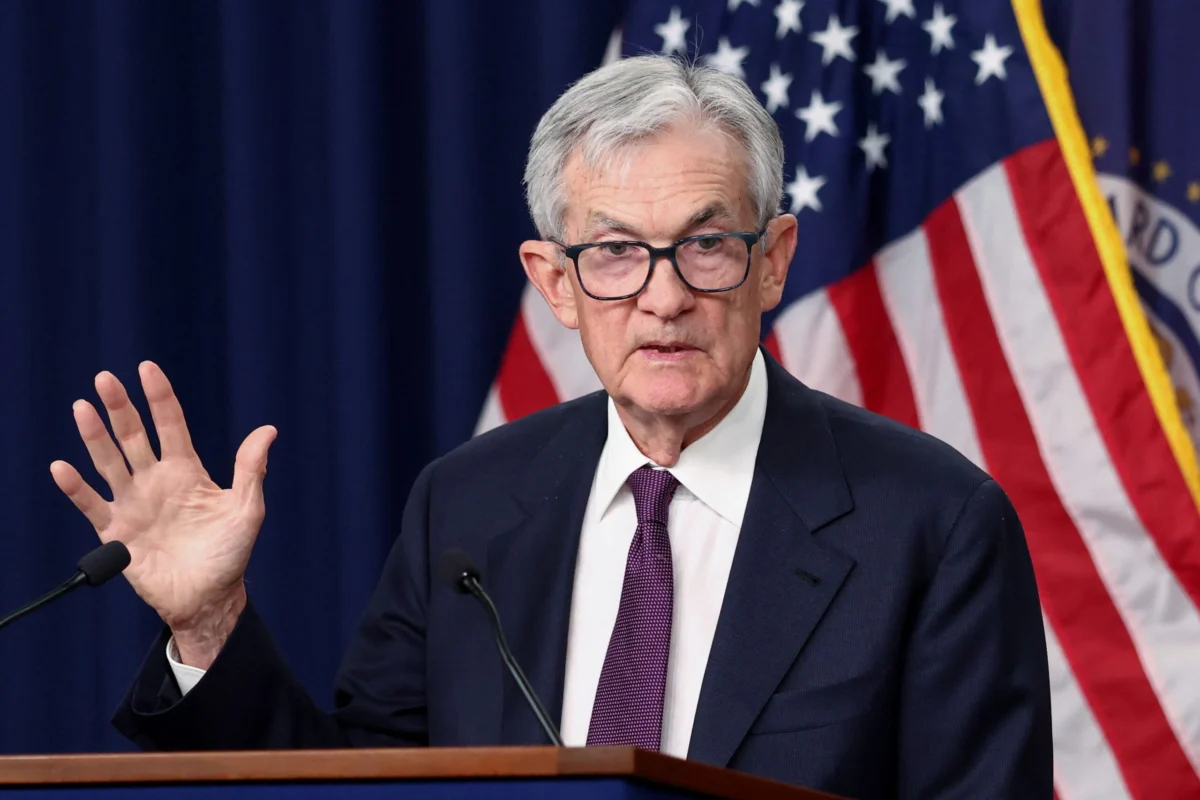
Adding another layer of complexity to the market landscape were the latest signals from the US Federal Reserve regarding its monetary policy. Federal Reserve Governor Michael Barr stated on Tuesday that the central bank might need to maintain interest rates at their current elevated levels "for some time" before any further rate cuts could be justified. Barr’s comments underscored the Fed’s ongoing concern with inflation, which continues to hover above its 2% target, and explicitly cited the economic risks posed by the escalating conflict in the Middle East.
The Fed’s dual mandate tasks it with achieving both price stability and maximum sustainable employment. When inflation remains stubbornly high, the central bank typically employs higher interest rates to cool the economy, making borrowing more expensive and thereby reducing demand. Barr’s remarks indicate that despite some progress, the Fed remains vigilant against inflationary pressures, suggesting a continued cautious approach to monetary easing. The Middle East conflict introduces additional inflationary risks, primarily through potential disruptions to global supply chains and spikes in energy prices, which could feed into broader consumer prices.
Market expectations for the Fed’s future actions shifted dramatically in response to these developments. According to the CME FedWatch tool, which tracks probabilities of interest rate changes based on Fed funds futures pricing, the odds of a 25-basis-point hike at the Fed’s December meeting had climbed to nearly 17.7%. This represents a significant hawkish pivot when compared to just a week prior, when the same tool indicated a 38.6% chance of a rate cut. This stark reversal illustrates how quickly market sentiment can change in response to economic data and geopolitical events. The shift from anticipating a cut to pricing in a non-negligible chance of a hike reflects a market grappling with persistent inflation, a resilient US economy, and the added uncertainty from geopolitical flashpoints.
The Federal Open Market Committee (FOMC), the primary monetary policy-making body of the Federal Reserve, holds eight scheduled meetings per year to assess economic conditions and make decisions on the federal funds rate. This committee comprises twelve Fed officials, including the seven members of the Board of Governors, the president of the Federal Reserve Bank of New York, and four rotating regional Reserve Bank presidents. Their collective decisions are crucial for guiding the direction of the US economy and, by extension, global financial markets. The "steady for some time" narrative from Governor Barr suggests that the FOMC is likely to maintain a restrictive stance, carefully monitoring economic indicators and geopolitical developments before considering any adjustments to its policy rate.
Broader Economic and Market Implications
The combined impact of escalating geopolitical tensions and a hawkish shift in central bank expectations extends beyond currency pairs and oil markets. Global equity markets often react nervously to increased instability, with investors potentially shifting towards less risky assets. Bond markets might see yields fluctuate as safe-haven demand drives prices up for government bonds, while inflation fears stemming from energy price risks could push yields higher in other segments.
For the global economy, sustained conflict in the Middle East poses a threat to supply chains, trade routes, and overall business confidence. Any significant disruption to oil flows through critical chokepoints like the Strait of Hormuz could trigger a severe energy crisis, with far-reaching inflationary consequences. Conversely, a swift de-escalation could alleviate some of these pressures, allowing markets to re-focus on underlying economic fundamentals.
The Canadian economy, while diversified, remains sensitive to both US monetary policy and global commodity prices. A stronger US Dollar makes Canadian exports cheaper for US buyers but also makes imports more expensive for Canadians. Sustained higher US interest rates can also influence capital flows, potentially drawing investment away from Canada if the yield differential becomes too wide. The Bank of Canada, while independent, must also consider these external factors when formulating its own monetary policy, particularly concerning inflation and economic growth targets.
In conclusion, the early European session on Wednesday was dominated by a complex interplay of geopolitical strife in the Middle East, which bolstered the US Dollar’s safe-haven appeal, and a hawkish re-evaluation of US monetary policy by market participants. As Iran’s actions introduced a fresh layer of uncertainty, crude oil prices retreated, exerting pressure on the Canadian Dollar. Simultaneously, the Federal Reserve’s commitment to tackling persistent inflation, underscored by Governor Barr’s remarks and the significant shift in Fed funds futures, reinforced the expectation of a "higher for longer" interest rate environment. These interwoven narratives underscore the profound interconnectedness of global politics, economics, and financial markets, with each development having ripple effects across continents and asset classes. The coming days will be crucial in determining whether diplomatic efforts can temper the escalating regional tensions and how central banks will navigate this volatile landscape.