Clara Shinta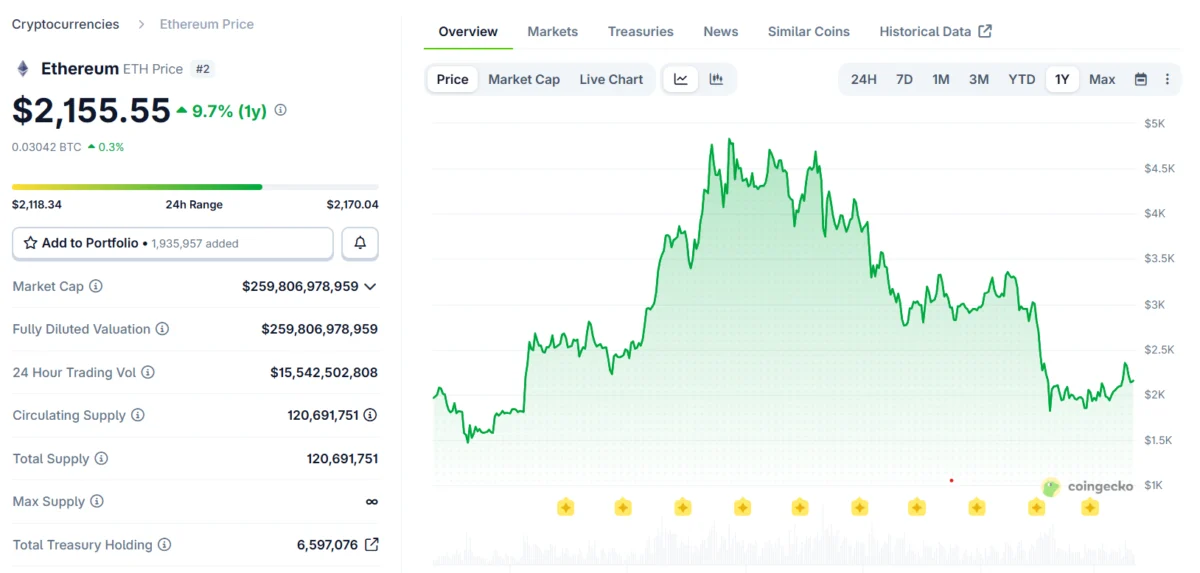
Today’s cryptocurrency market saw a trifecta of significant developments spanning regulatory shifts, institutional investment maneuvers, and on-chain activity. In Brazil, the nation’s new finance minister, Dario Durigan, announced a pause on contentious crypto tax policy discussions until after the October 2026 presidential election, a move that could reshape the country’s approach to digital asset regulation. Concurrently, a prominent early Ethereum whale, identified as "thomasg.eth," has initiated a substantial rebuilding of their Ether (ETH) holdings, acquiring approximately $19.5 million in ETH following a period of reduced exposure since the 2021 market peak. Adding to the institutionalization narrative, crypto asset manager Grayscale has officially filed an S-1 registration statement with the U.S. Securities and Exchange Commission (SEC) for a spot Hyperliquid exchange-traded fund (ETF), signaling a continued push to bring more diverse digital assets into traditional investment vehicles.
Brazil’s Strategic Pause on Crypto Taxation
The decision by Brazil’s Finance Minister, Dario Durigan, to suspend public consultation on crypto tax policies until after the 2026 presidential election marks a pivotal moment for the burgeoning digital asset sector in South America’s largest economy. This strategic hiatus aims to circumvent the introduction of potentially divisive policy issues during a critical election period, effectively deferring major legislative decisions on cryptocurrency taxation until at least 2027.
Brazil has emerged as a significant player in the global cryptocurrency arena, ranking fifth worldwide in terms of crypto adoption, according to data from Chainalysis. With a population exceeding 213 million people, as reported by Worldometer, the widespread embrace of digital assets underscores the importance of a clear and stable regulatory framework. The proposed public consultation, originally slated for later this year, was intended to gather feedback on potential new tax policies for crypto assets. However, sources cited by Reuters indicate that any substantial proposals and subsequent negotiations are now unlikely to be implemented before 2027, granting the industry a temporary reprieve from immediate changes.
Background on Brazil’s Crypto Landscape
Brazil’s journey toward comprehensive cryptocurrency regulation has been progressive, yet cautious. The country passed Law 14.478/2022, which established a regulatory framework for virtual assets, defining them and setting guidelines for service providers. This law aimed to provide legal certainty for crypto operations and prevent illicit activities, laying the groundwork for future tax policies. Prior to this, individual crypto investors faced a somewhat ambiguous tax landscape, often navigating existing capital gains tax rules that weren’t specifically tailored for digital assets. The deferral of a dedicated crypto tax policy consultation comes amidst a global trend where governments are grappling with how to effectively tax digital assets without stifling innovation or driving capital offshore. Nations like the United States, the European Union, and various Asian countries have been actively developing or refining their own crypto tax guidelines, often with varying degrees of complexity and enforcement.

The political calculus behind Minister Durigan’s decision is clear. Presidential election years in Brazil are often characterized by heightened political sensitivity, where controversial economic policies can significantly impact public opinion and electoral outcomes. By postponing the crypto tax discussion, the current administration likely seeks to avoid alienating a growing segment of the population that holds or trades cryptocurrencies, while also buying time to develop a more robust and consensus-driven approach to digital asset taxation. This pause could be viewed positively by local crypto businesses and investors, offering a period of stability and predictability, albeit temporary, in the regulatory environment. It also provides an opportunity for industry stakeholders to further engage with policymakers, advocating for frameworks that balance revenue generation with economic growth and technological advancement.
Ethereum Whale’s Strategic Accumulation Amidst Market Fluctuations
In a notable display of conviction, an early Ethereum wallet, publicly identified as "thomasg.eth," has commenced a significant accumulation phase, acquiring approximately $19.5 million worth of Ether (ETH) over the past week. This move, tracked by on-chain analytics firm Arkham Intelligence, is particularly significant given the wallet’s history as a major player in the Ethereum ecosystem, having held an estimated $537 million in crypto assets at the peak of the 2021 bull market. The latest buying spree was punctuated by a fresh $3 million purchase on March 20, signaling a strong belief in Ethereum’s long-term value proposition.
The accumulation by thomasg.eth encompasses various forms of Ether, including spot ETH, Wrapped Ether (WETH), and Aave-deposited ETH. This diversified approach suggests a sophisticated strategy, utilizing different avenues to gain exposure while potentially optimizing for liquidity or yield opportunities within decentralized finance (DeFi) protocols like Aave. WETH, for instance, allows Ether to be used seamlessly within the broader ERC-20 token standard ecosystem, facilitating its use in various DeFi applications.
Context of ETH’s Market Performance and Whale Behavior
This substantial re-entry into the market by a high-net-worth individual, often referred to as a "whale" in crypto parlance, comes at a time when ETH is trading approximately 56% below its all-time high of $4,946. While the original source indicates an August 24, 2025 date for this ATH, historical market data from CoinGecko confirms that Ethereum’s peak price was reached closer to November 2021. Regardless of the precise date discrepancy, the current price represents a significant discount from its historical zenith, potentially presenting an attractive entry point for long-term investors.
Whale movements are closely watched in the cryptocurrency market as they can often signal shifts in sentiment or provide insights into the convictions of large capital holders. When whales accumulate during periods of price correction or consolidation, it can be interpreted as a bullish signal, suggesting that these experienced investors believe the asset is undervalued and poised for future growth. Conversely, significant sell-offs by whales can trigger market downturns or exacerbate existing FUD (fear, uncertainty, and doubt).

The accumulation by thomasg.eth stands in stark contrast to recent trends observed in the U.S. spot Ether exchange-traded funds (ETFs). These funds have experienced a third consecutive trading day of net outflows, with Farside Investors data showing $55.7 million in net outflows on March 18, $136.4 million on March 19, and $42 million on March 20. This divergence highlights the multifaceted nature of market sentiment, where institutional retail investment via ETFs might be reacting to short-term market dynamics or broader economic concerns, while individual whales with deep pockets and long-term horizons may be seizing opportunities to build positions. The whale’s decision to rebuild their stack could be influenced by a variety of factors, including a bullish outlook on Ethereum’s upcoming network upgrades, increasing utility in the DeFi and NFT sectors, or a general expectation of a broader market recovery.
Grayscale’s Foray into Hyperliquid ETFs: Expanding the Institutional Crypto Horizon
Leading crypto asset manager Grayscale has continued its aggressive push into institutionalizing digital assets by filing an S-1 registration statement with the Securities and Exchange Commission (SEC) for a spot Hyperliquid exchange-traded fund (ETF). This move positions Grayscale alongside other prominent firms like Bitwise and 21Shares, which are also seeking to launch investment products tied to the innovative Hyperliquid perpetual futures protocol and blockchain.
The proposed Grayscale HYPE ETF, if approved, would track the price movements of the native Hyperliquid (HYPE) token and is slated to trade under the ticker GHYP on the Nasdaq stock exchange. This filing underscores a growing trend within the traditional finance (TradFi) sector to offer diversified exposure to a broader array of cryptocurrencies beyond the established giants like Bitcoin and Ethereum.
Understanding Hyperliquid and the Significance of a Spot ETF
Hyperliquid is a relatively new but rapidly growing decentralized perpetual futures protocol built on its own dedicated blockchain. It allows users to trade perpetual futures contracts on a wide range of assets, including cryptocurrencies, and notably, tokenized real-world assets (RWAs) such as oil and gold, offering 24/7 trading capabilities. This round-the-clock availability makes Hyperliquid particularly attractive to both crypto-native traders and TradFi participants looking for continuous market access, especially when traditional markets are closed. The protocol’s focus on high performance, low latency, and deep liquidity has quickly established it as a significant player in the decentralized derivatives space.
A spot ETF, unlike a futures ETF, holds the underlying asset directly. For investors, this means direct exposure to the price performance of the HYPE token without the complexities of direct ownership, self-custody, or navigating decentralized exchanges. The approval of a spot Bitcoin ETF earlier this year by the SEC marked a watershed moment, opening the floodgates for similar applications for other cryptocurrencies. Grayscale, a pioneer in this space, notably championed the conversion of its Grayscale Bitcoin Trust (GBTC) into a spot ETF, setting a precedent for its current filings.

Details of the Grayscale Filing and Broader Implications
According to Grayscale’s S-1 filing submitted on Friday (March 20, 2026), Coinbase has been designated as the custodian for the proposed Hyperliquid ETF, a common choice for institutional crypto products due to its robust security infrastructure and regulatory compliance. Interestingly, Grayscale did not disclose a management fee for the product in its initial filing, a detail that typically emerges later in the approval process and can significantly influence investor interest. Furthermore, Grayscale has indicated that it may consider incorporating staking rewards into its Hyperliquid ETF at a later date, provided specific conditions are met. This potential feature could add an income-generating component to the ETF, making it even more attractive to investors seeking yield from their digital asset holdings.
The filing for a Hyperliquid ETF highlights several key trends. Firstly, it demonstrates the increasing institutional demand for investment vehicles that offer exposure to emerging and innovative decentralized protocols. As the crypto market matures, investors are looking beyond just foundational cryptocurrencies to gain exposure to specific niches like decentralized derivatives and tokenized real-world assets. Secondly, it signals the ongoing efforts by asset managers like Grayscale to expand the menu of regulated crypto investment products available to mainstream investors. By offering an ETF, Grayscale aims to lower the barrier to entry for institutions and retail investors who prefer to invest through traditional brokerage accounts.
The SEC’s review process for such an ETF will be rigorous, focusing on market surveillance, custody arrangements, and the potential for market manipulation. The fact that multiple reputable firms are filing for similar Hyperliquid-related products suggests growing confidence in the protocol’s legitimacy and the market’s readiness for such an offering. Should the Grayscale HYPE ETF receive approval, it would not only validate Hyperliquid as a significant player in the crypto ecosystem but also further diversify the institutional crypto landscape, potentially paving the way for ETFs tracking other specialized decentralized applications and tokens. This continued integration of crypto assets into traditional financial markets represents a pivotal step toward broader adoption and mainstream acceptance of the digital economy.
Cointelegraph is committed to independent, transparent journalism. This news article is produced in accordance with Cointelegraph’s Editorial Policy and aims to provide accurate and timely information. Readers are encouraged to verify information independently. Read our Editorial Policy https://cointelegraph.com/editorial-policy