Farhan Pambudi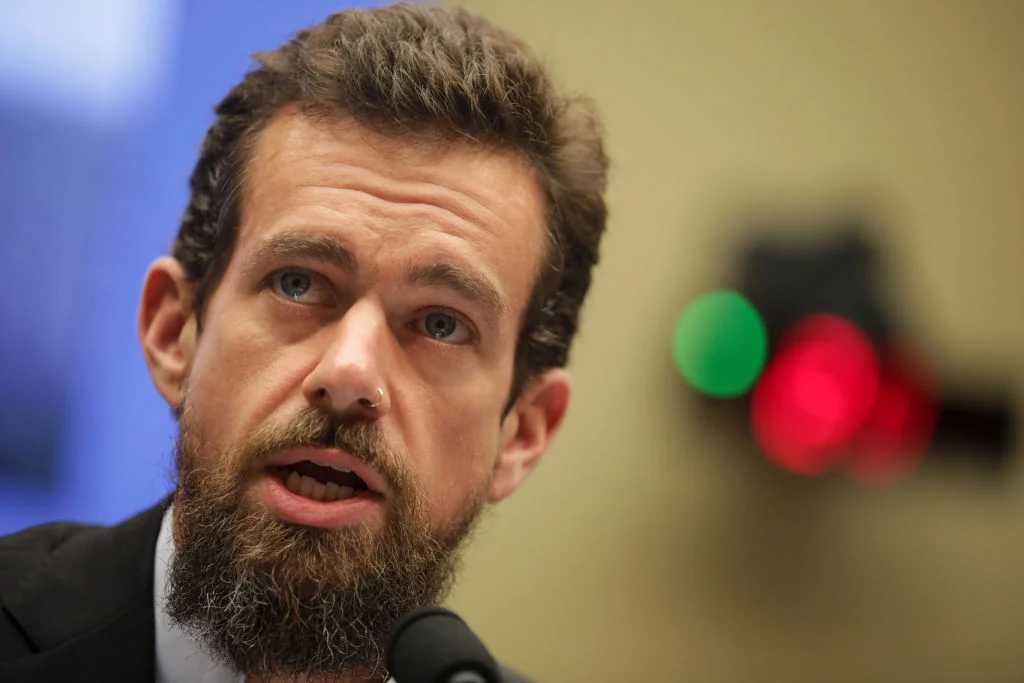
Jack Dorsey, the co-founder and CEO of Block, Inc., announced a massive restructuring of the payments and technology conglomerate on Thursday, revealing that the company will reduce its global workforce by more than 4,000 employees. This reduction represents nearly half of Block’s total headcount, transitioning the organization from a staff of over 10,000 to a leaner operation of just under 6,000. The move, which mirrors aggressive cost-cutting measures seen across the technology sector over the past two years, was met with immediate approval from Wall Street, as Block’s stock price surged by more than 24% in after-hours trading following the disclosure.
The decision marks a significant turning point for the company, which oversees a diverse portfolio of brands including the merchant-focused Square, the consumer-facing Cash App, the music streaming service Tidal, and the Bitcoin-centric TBD. Dorsey framed the layoffs not as a response to a financial crisis, but as a strategic "AI remake" designed to foster a more agile, high-performance culture. However, the scale of the cuts—slashing roughly 40% to 50% of the workforce in a single announcement—has drawn inevitable comparisons to the drastic staffing reductions implemented by Elon Musk at X (formerly Twitter) in late 2022.
The Strategic Pivot to Artificial Intelligence and Automation
The central justification for the layoffs, according to Block leadership, is the rapid advancement of artificial intelligence and its ability to streamline operations. Amrita Ahuja, Chief Financial Officer of Block, emphasized that the reduction in headcount is a calculated move to "move faster with smaller, highly talented teams using AI to automate more work." This sentiment reflects a growing trend among tech giants who are attempting to reconcile massive investments in AI infrastructure with the need to improve operating margins.
By leveraging AI, Block intends to automate repetitive tasks in customer support, software development, and administrative functions. For a company like Block, which processes billions of dollars in transactions and manages complex regulatory compliance across multiple jurisdictions, AI-driven automation offers the promise of reduced overhead and faster iteration cycles. However, the shift also highlights a growing tension in the labor market, where the efficiency gains promised by generative AI are increasingly being used as a rationale for large-scale human labor displacement.
The Influence of the Musk Playbook and the Evolution of Silicon Valley Leadership
The magnitude of Block’s workforce reduction is particularly notable given Jack Dorsey’s long-standing relationship with Elon Musk. In November 2022, shortly after Musk acquired Twitter for $44 billion, he terminated approximately 50% of the staff within days. At the time, the move was widely criticized as reckless and chaotic, yet many industry observers noted that the platform continued to function despite the skeletal staffing.
Dorsey, who rolled his 2.4% stake in Twitter into Musk’s private entity rather than taking a cash payout, had a front-row seat to this experiment in "extreme efficiency." While Dorsey’s relationship with Musk has been characterized by public fluctuations—ranging from calling Musk the "singular solution" for Twitter to later suggesting he "should have walked away"—the influence of the Musk doctrine on Block’s latest move is difficult to ignore.
Dorsey’s announcement suggests that the "unofficial rules" of Silicon Valley leadership have shifted. Where CEOs once feared the reputational damage of mass layoffs, they now increasingly view them as a tool for "resetting" company culture. Dorsey’s public comments on the matter were uncharacteristically blunt, stating that "repeated rounds of cuts are destructive to morale" and that he would rather reach a target staffing level "honestly and on our own terms" rather than through incremental, reactive reductions.
A Comprehensive Timeline of Block’s Expansion and Contraction
To understand the context of these layoffs, it is necessary to examine the trajectory of Block over the last several years:
- 2020–2021: The Pandemic Expansion. Like many fintech companies, Square (now Block) experienced explosive growth during the COVID-19 pandemic as digital payments and Bitcoin trading surged. The company increased its hiring pace significantly to support new ventures.
- December 2021: Rebranding to Block. The company rebranded from Square to Block to signal its focus on blockchain technology and a decentralized future, integrating Square, Cash App, Spiral, and Tidal under one umbrella.
- January 2022: The Afterpay Acquisition. Block completed its $29 billion acquisition of the "Buy Now, Pay Later" giant Afterpay, further expanding its global footprint and headcount.
- Late 2022–2023: Initial Trimmings. As the macroeconomic environment shifted and interest rates rose, Block began implementing smaller, more targeted layoffs and instituting a "hiring cap" to keep the headcount below 12,000.
- Late 2024: The AI Remake. Dorsey announces the reduction of 4,000 roles, signaling a total departure from the growth-at-all-costs model of the previous decade.
Severance Packages and the Human Cost of Efficiency
In his communication to the staff, Dorsey outlined a severance package for U.S.-based employees that is considered relatively robust by industry standards. Those affected will receive 20 weeks of base salary, plus an additional week for every year of tenure. Furthermore, the company is offering equity vesting through the end of May, six months of continued healthcare coverage, and a $5,000 transition stipend. Employees will also be permitted to keep their corporate devices.
Despite these provisions, the human impact is substantial. The loss of 4,000 jobs spans across various departments and global offices. For employees outside the United States, the support packages will be tailored to comply with local labor laws and policies, though Dorsey assured staff that the support would be "similar" in spirit to the U.S. offering.
The psychological impact on the remaining 6,000 employees is also a factor. Dorsey acknowledged that layoffs are "destructive to morale," yet he argued that a single, deep cut is more empathetic than "death by a thousand cuts" through quarterly downsizing. This "rip the Band-Aid off" approach is intended to provide certainty to the remaining workforce, though critics argue it creates an environment of instability and fear.
Market Reaction and Financial Implications
The 24% jump in Block’s stock price during after-hours trading underscores a clear message from the investment community: profitability and efficiency are currently valued far more than headcount or top-line growth. Investors have grown weary of the "bloated" tech companies of the 2010s, and Block’s commitment to reducing its workforce by nearly half suggests a significant improvement in future earnings per share (EPS) and free cash flow.
By reducing its workforce to under 6,000, Block significantly lowers its operating expenses. For a company that reported billions in quarterly revenue but often struggled with GAAP profitability due to high stock-based compensation and administrative costs, this restructuring could fundamentally alter its financial profile. Analysts suggest that if Block can maintain its product roadmap and service quality with 4,000 fewer people, it will set a new benchmark for productivity in the fintech space.
The Broader Industry Context: Is AI-Driven Layoff the New Norm?
Block is not alone in its pursuit of an "AI-first" workforce strategy. In recent months, Salesforce and Amazon have also announced significant staffing cuts, citing the need to reallocate resources toward AI development and the efficiencies gained through automation. Salesforce CEO Marc Benioff recently noted a need for "less heads" in certain departments due to AI gains, while Amazon has continued to trim its "anti-bureaucracy" layers.
However, a recent report from Forrester Research has cast a shadow of skepticism over these claims. The report suggests that while AI is undoubtedly a transformative technology, many companies may be using "AI efficiency" as a convenient narrative to mask layoffs that are primarily driven by cooling consumer demand or a need to satisfy investor pressure for higher margins. The report warns that cutting staff too deeply in anticipation of AI gains that have not yet fully materialized could lead to operational fragility and a decline in customer service quality.
Conclusion: A High-Stakes Gamble on Decentralization and Tech-Minimalism
Jack Dorsey’s decision to cut Block’s workforce by nearly half is one of the most aggressive moves by a major tech CEO since the 2022 market correction. It reflects a dual belief: first, that the "hyper-growth" era of Silicon Valley is over, and second, that artificial intelligence has reached a level of maturity where it can replace vast swaths of middle management and administrative labor.
As Block moves forward with a headcount of 6,000, the company will be under intense scrutiny. The success of this transition will depend on whether the remaining "highly talented teams" can actually deliver the same level of innovation and reliability that the larger workforce provided. If Dorsey’s prediction holds true—that most companies will eventually arrive at the same lean staffing levels—Block may be seen as a pioneer of the "post-AI" corporate structure. If the transition falters, it may serve as a cautionary tale of how the pursuit of efficiency can sometimes undermine the very human capital that built a company’s success.
For now, Block stands as a leaner, more focused entity, with its sights set on a future where Bitcoin, decentralized finance, and artificial intelligence converge. Whether this "AI remake" results in a more robust company or a hollowed-out version of its former self remains the central question for Jack Dorsey and the global fintech industry.