Clara Shinta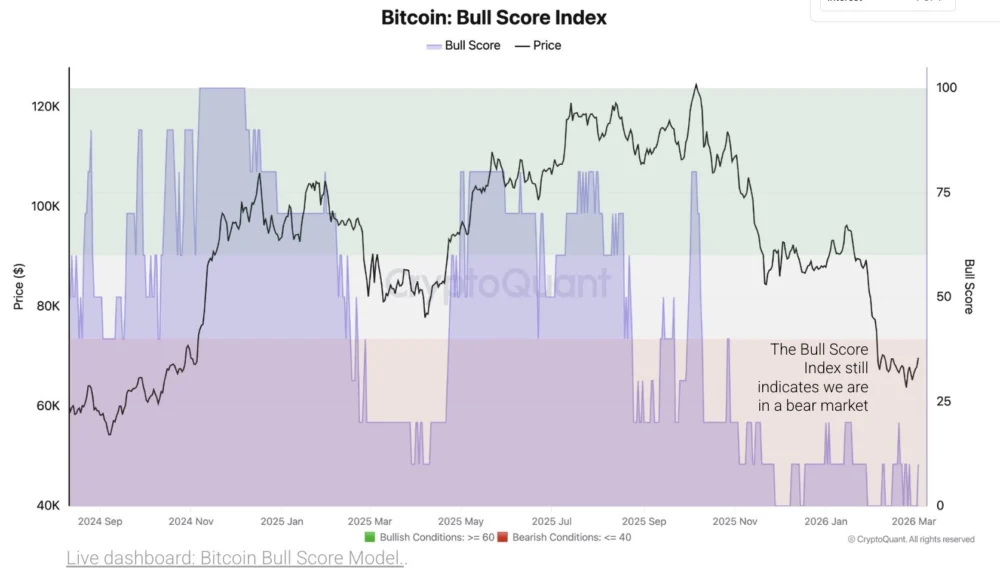
Bitcoin experienced a fleeting ascent above the $74,000 threshold on Thursday, sparking a brief relief rally that hinted at a potential market resurgence. However, this upward momentum proved ephemeral, rapidly dissipating as market analysts and on-chain indicators alike converged on a consensus: the cryptocurrency remains entrenched in a persistent bear market, with subdued momentum expected to prevail. This latest price action underscores the volatile and unpredictable nature of the digital asset landscape, leaving investors grappling with conflicting signals and a cautious outlook.
The Short-Lived Ascent: A Chronology of Price Action
The week commenced with a notable surge in Bitcoin’s value, culminating in a touch of a one-month high at $74,000 on Coinbase, a prominent cryptocurrency exchange, during Thursday’s trading session. This peak momentarily breached a significant technical resistance level, the 50-day exponential moving average (EMA), a widely watched indicator among traders for identifying short-to-medium term trends. The move fueled a flicker of optimism, suggesting that buying pressure might be accumulating. Historically, breaching such EMAs can signal a shift in market sentiment from bearish to bullish, or at least a temporary reprieve. However, the optimism was short-lived. By Friday morning, Bitcoin had already shed more than $3,000 from its peak, retreating below the $71,000 mark. This rapid retracement, a decline of approximately 4.7% from its high, served as a stark reminder of the market’s underlying fragility and the strength of selling pressure lurking just above perceived resistance levels. This pattern of brief rallies followed by swift pullbacks is characteristic of bear markets, where upward movements are often met with profit-taking by short-term traders and those seeking to exit positions at better prices.
Deep Dive into Bearish Indicators: CryptoQuant’s Assessment
The immediate and pronounced reversal of Bitcoin’s rally validated the cautious stance adopted by leading on-chain analytics firms. CryptoQuant, a prominent player in this domain, issued a clear warning on Thursday, stating unequivocally, "Bitcoin is still in a bear market despite the recent rally." This assessment was not merely anecdotal but was underpinned by their proprietary Bull Score Index, a comprehensive composite indicator designed to gauge the overall health and directional momentum of Bitcoin. This index synthesizes a diverse range of fundamental and technical metrics, including network activity, miner behavior, derivatives market data, and investor sentiment across various cohorts.
According to CryptoQuant, their Bull Score Index currently languishes at an alarming 10 out of 100. This score, deep within what the firm terms "bearish territory," indicates a profound lack of underlying strength in the market. To put this into perspective, a score below 30 typically signals a strong bearish bias, while scores above 70 are indicative of robust bullish conditions. A reading of 10 suggests that nearly all measured indicators point towards continued weakness and an unfavorable environment for sustained price appreciation. The firm emphasized, "Even after the recent price rally, fundamental and technical indicators still point to a bear market environment." They concluded that the observed price surge was "likely just a relief rally, not the start of a new bull phase." This distinction is crucial for investors, as relief rallies, while offering temporary gains, do not signify a fundamental shift in market dynamics and are often followed by further declines. The low Bull Score Index implies that while demand may occasionally spike, the structural impediments to a sustained bull run, such as weak on-chain fundamentals or negative macroeconomic pressures, remain firmly in place.
Macroeconomic Headwinds and Fading Momentum
Beyond on-chain analytics, broader macroeconomic factors continue to exert significant influence over the cryptocurrency market. Nick Ruck, Director of LVRG Research, articulated this sentiment to Cointelegraph, attributing the recent relief rally to "renewed risk appetite and ETF inflows." The introduction of spot Bitcoin Exchange-Traded Funds (ETFs) in major markets earlier in the year injected substantial liquidity and institutional interest, initially driving a significant price appreciation. However, Ruck cautioned that this advance "quickly faced headwinds with prices pulling back toward $71,000 amid persistent macro uncertainties and fading momentum."
The "macro uncertainties" he referred to encompass a range of global economic concerns. High inflation rates in key economies, particularly the United States, have led to aggressive monetary tightening by central banks. The Federal Reserve’s stance on interest rates, for instance, has a direct impact on the attractiveness of risk assets like cryptocurrencies. Higher interest rates typically increase the cost of borrowing and make safer assets, such as government bonds, more appealing, diverting capital away from speculative investments. Furthermore, global geopolitical tensions, energy price volatility, and supply chain disruptions contribute to an environment of economic apprehension.
Ruck further elaborated that while the brief push provided a welcome respite, "ongoing bear market dynamics reinforce caution as softer macro signals, like the anticipated slowdown in February nonfarm payrolls, keep cryptocurrencies vulnerable to renewed downside pressure." Nonfarm payroll data is a crucial economic indicator reflecting the health of the labor market. A slowdown or contraction suggests broader economic weakness, which can dampen investor confidence and lead to a flight from riskier assets. This interplay between micro-level market dynamics and macro-level economic trends is a defining characteristic of the current market environment, making a sustained recovery challenging without a clearer resolution to these overarching uncertainties.

Flickers of Optimism: Signs of Renewed Buying Interest
Despite the overarching bearish sentiment, certain indicators suggest that underlying demand for Bitcoin, particularly from specific market segments, may be stirring. CryptoQuant highlighted a "positive Coinbase Premium" as a signal of "renewed US buying interest," which played a role in fueling the recent rally. The Coinbase Premium is a metric that measures the price difference between Bitcoin on Coinbase (a major exchange often favored by US institutional and larger retail investors) and other global exchanges. A positive premium indicates that buyers on Coinbase are willing to pay a higher price, suggesting stronger demand from US-based entities.
According to CryptoQuant’s analysis, Bitcoin spot demand from US-based investors transitioned from a phase of contraction to one of growth. This was evidenced by the Coinbase Bitcoin Premium "switching from deeply negative territory in early February to the most positive since October." A deeply negative premium, seen in early February, suggests stronger selling pressure from US investors. The shift to a positive premium, and specifically the most positive reading since October, implies a significant increase in purchasing activity, potentially signaling a resurgence of confidence among a key demographic of Bitcoin holders.
Complementing this, reports also indicate an easing of selling pressure from both short-term traders and long-term holders. This relief in selling pressure is significant, as it often precedes periods of accumulation or price stability. Analysts observed that "unrealized losses reached levels not seen since July 2022," suggesting that many holders who had accumulated Bitcoin at higher prices were holding onto their assets, possibly anticipating a future recovery rather than capitulating and selling at a loss. July 2022 was a period of intense market distress following the collapse of Terra-Luna and other major crypto entities, where widespread capitulation occurred. The fact that unrealized losses are now comparable to those levels, yet selling pressure has eased, might imply that the market has absorbed much of the potential selling from distressed holders, leaving a more resilient base of investors.
Technical Crossroads: The 50-Day EMA and Beyond
The brief touch of the 50-day exponential moving average (EMA) at $74,000 is a critical technical juncture. While a temporary breach occurred, the swift rejection indicates that this level currently acts as strong resistance. For a sustained upward trend to materialize, Bitcoin would need to consolidate above this EMA, turning it into a support level. Traders often look at the relationship between different EMAs (e.g., 50-day, 100-day, 200-day) to gauge momentum. A "golden cross" (where a shorter-term EMA crosses above a longer-term EMA) is typically seen as a bullish signal, while a "death cross" (the opposite) is bearish. The current configuration suggests that while short-term momentum attempted to shift, it lacked the conviction to sustain a breakthrough.
Further technical analysis would involve examining volume profiles, Relative Strength Index (RSI), and MACD (Moving Average Convergence Divergence) indicators. A lack of significant buying volume accompanying the rally, coupled with an RSI that quickly pulled back from overbought conditions, would reinforce the "relief rally" narrative. Key support levels below $71,000 would now be closely watched, with potential targets around the $68,000-$69,000 range, and then further down towards the psychologically significant $60,000 mark, which has acted as a strong support zone in previous cycles. A decisive break below these levels could signal a deeper retracement.
Momentum Shift or False Dawn? SwissBlock’s Perspective
Adding another layer of complexity to the market narrative, analysts at SwissBlock observed on Friday that "momentum is flashing a critical shift." They elaborated, "We’re exiting peak negative momentum, the kind of transition that often precedes a regime change." This statement, while cautiously optimistic, suggests that while the overall market may still be bearish, the rate of negative price movement could be decelerating, and the intensity of selling pressure might be waning.
"Exiting peak negative momentum" implies that the market has absorbed much of the downside pressure, and the worst of the selling might be behind it, at least for the immediate term. Such a transition, as SwissBlock notes, often "precedes a regime change," which could mean a shift from aggressive selling to sideways consolidation, or even a gradual accumulation phase before a potential new bull market. However, it’s crucial to distinguish between a shift in momentum and an actual trend reversal. A shift in momentum can merely mean that the market is becoming less bearish, not necessarily bullish. This perspective aligns with the idea that selling pressure has eased and that some underlying demand is emerging, even if the fundamental and macroeconomic conditions remain challenging. Investors would need to see sustained higher lows and higher highs, accompanied by strong volume, to confirm a true "regime change" from a bear to a bull market.
The Role of Spot Bitcoin ETFs: A Double-Edged Sword

The highly anticipated launch of spot Bitcoin ETFs in the United States earlier this year was a monumental event, initially fueling a significant rally as institutional money flowed into the asset class. These ETFs provided a regulated and accessible avenue for traditional investors to gain exposure to Bitcoin without directly holding the cryptocurrency. Initial inflows were robust, pushing Bitcoin to new all-time highs. However, the impact of these ETFs has proven to be a double-edged sword.
While they introduced new capital, they also created a more direct link between Bitcoin and traditional financial markets, making it more susceptible to macroeconomic shifts and broader market sentiment. After the initial euphoria, ETF inflows have fluctuated, sometimes even experiencing net outflows on certain days, especially during periods of market uncertainty. This suggests that while institutional interest is present, it is not a monolithic force constantly buying. Institutions, like retail investors, react to economic data, interest rate expectations, and geopolitical events. The ebb and flow of ETF capital, therefore, adds another layer of volatility and complexity to Bitcoin’s price discovery, making it sensitive to risk-on/risk-off sentiment prevalent in global financial markets. Their long-term impact is still unfolding, but in the short term, they contribute to the market’s sensitivity to external factors.
Broader Market Implications and Investor Sentiment
The current market dynamics present a complex picture for various types of investors. For short-term traders, the rapid oscillations between rallies and pullbacks offer opportunities for quick gains but also carry significant risks. The volatility demands precise entry and exit strategies and robust risk management. Long-term holders, often referred to as "HODLers," are likely to view the current price action as noise within a larger trend, potentially using dips as accumulation opportunities, especially if they believe in Bitcoin’s long-term value proposition and its role as digital gold or a hedge against inflation. However, even long-term holders can be tested by prolonged bear markets and significant unrealized losses.
The prevailing sentiment, despite pockets of optimism, remains cautious. The market is keenly awaiting clearer signals from central banks regarding interest rate policies, inflation trends, and overall economic stability. A more dovish stance from central banks, or clear signs of economic recovery without runaway inflation, could significantly boost risk appetite and provide a more fertile ground for a sustained cryptocurrency rally. Conversely, continued hawkishness or economic deterioration could prolong the bear market.
Looking ahead, the upcoming Bitcoin halving event, typically occurring every four years, is a significant supply-side shock that historically has preceded bull runs. The halving reduces the rate at which new Bitcoins are mined, tightening supply. While past performance is not indicative of future results, many in the crypto community view the halving as a structural catalyst. However, in the current macro-sensitive environment, its impact might be tempered or delayed if broader economic conditions remain unfavorable. The market is therefore navigating a period of conflicting forces: internal on-chain signals hinting at potential bottoming, external macroeconomic pressures urging caution, and historical precedents suggesting future upside.
Conclusion and Outlook
Bitcoin’s recent flirtation with $74,000, quickly followed by a retreat, serves as a poignant illustration of the market’s current state: a battleground between lingering bearish sentiment and nascent signs of renewed interest. While on-chain analytics from firms like CryptoQuant emphatically signal a continuation of the bear market, reinforced by a critically low Bull Score Index, other data points such as the positive Coinbase Premium and easing selling pressure suggest a potential recalibration of demand, particularly from US investors.
The interplay of these internal market dynamics with external macroeconomic headwinds—inflation concerns, central bank policies, and global economic uncertainties—creates a volatile and unpredictable environment. Experts like Nick Ruck underscore the continued vulnerability of cryptocurrencies to broader economic signals, urging caution. Meanwhile, observations from SwissBlock about "exiting peak negative momentum" offer a glimmer of hope that the intensity of the downside pressure may be abating, potentially paving the way for a more stable phase, though not necessarily an immediate bull run.
For investors, the current landscape necessitates a strategic approach, balancing the potential for short-term relief rallies with the overarching need for prudence amidst persistent market challenges. The path forward for Bitcoin remains uncertain, with a decisive shift towards a new bull phase requiring not just internal market strength but also a more favorable global economic climate. Until then, caution, comprehensive analysis, and vigilant monitoring of both on-chain and macroeconomic indicators will be paramount.