Reynand Wu
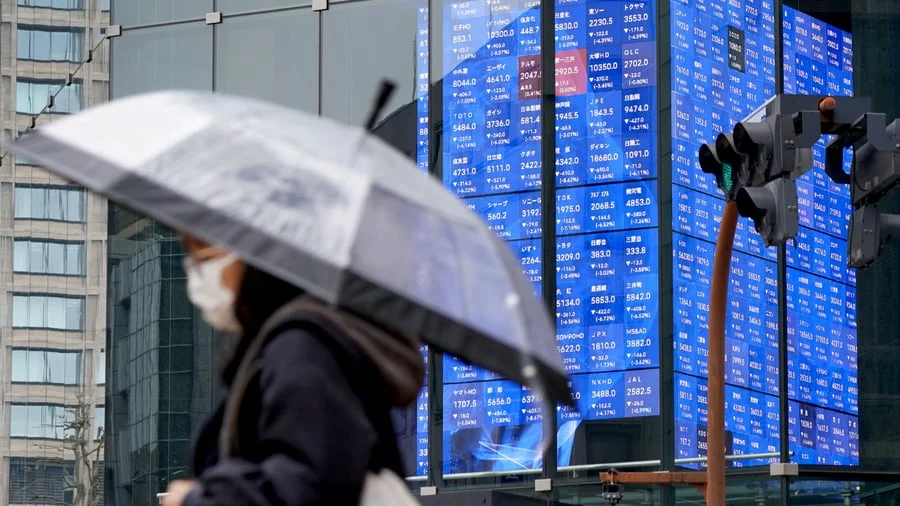
Asian equities experienced a largely sideways trading session as persistent uncertainty surrounding potential peace talks between the United States and Iran significantly dampened global risk appetite. The delicate diplomatic dance, characterized by conflicting statements from Washington and Tehran, underscores the fragility of geopolitical stability and its immediate reverberations across financial markets. At the close of the trading day, Japan’s benchmark Nikkei 225 index registered a marginal gain of 0.03%, settling near 53,623 points, indicating a struggle for direction despite recovering intraday losses. Similarly, Hong Kong’s Hang Seng Index showed a modest uptick of 0.88% to 25,074, while mainland China’s SSE Composite Index advanced by 0.75% to 3,920. In stark contrast, South Korea’s Kospi index bucked the trend, declining by 0.59% to approximately 5,430, highlighting the divergent impact of these global factors on individual regional economies.
The geopolitical landscape remains fraught with tension following a series of conflicting reports regarding a proposed cessation of hostilities. US President Donald Trump had publicly stated that Washington would temporarily halt attacks on Iran’s crucial energy sector for a period of ten days, purportedly at Tehran’s request. However, Iranian officials swiftly denied making any such overture, directly contradicting the US assertion. This diplomatic impasse not only exposes the deep mistrust between the two nations but also severely curtails the likelihood of any near-term ceasefire or significant de-escalation. The immediate market consequence of this prolonged uncertainty has been a notable surge in global oil prices, which in turn has exacerbated existing inflation concerns worldwide. This inflationary pressure is reinforcing a decidedly hawkish outlook among major central banks, who are increasingly signaling a readiness to tighten monetary policy to curb rising prices.
The Geopolitical Undercurrent: US-Iran Tensions & Market Jitters
The current state of US-Iran relations is the culmination of decades of strained diplomacy, punctuated by periods of heightened confrontation. The most recent chapter of this complex relationship saw the US unilaterally withdraw from the Joint Comprehensive Plan of Action (JCPOA), commonly known as the Iran nuclear deal, in 2018. This withdrawal was followed by the re-imposition and expansion of stringent economic sanctions targeting Iran’s vital oil exports, financial sector, and other key industries. Iran responded by gradually scaling back its commitments under the nuclear deal and engaging in actions that Washington deemed provocative, including attacks on oil tankers in the Strait of Hormuz, drone incidents, and support for regional proxy groups.
Throughout late 2023 and early 2024, tensions flared significantly, with sporadic military engagements and cyberattacks exchanged between the two sides or their proxies. Amidst this backdrop, any glimmer of potential diplomatic engagement, such as the rumored "peace talks," becomes a critical market driver. The conflicting statements from President Trump and Iranian authorities on the proposed 10-day pause in attacks on Iran’s energy sector underscore the deep chasm of mistrust. For market participants, this lack of clarity translates directly into a higher risk premium for assets, particularly those sensitive to geopolitical instability and energy supply disruptions. The Strait of Hormuz, a critical chokepoint for global oil shipments, remains a focal point of concern, with any perceived threat to its navigability capable of sending oil prices soaring and triggering broader risk aversion.
Market Performance Across Asia: A Divergent Picture
While the overarching geopolitical narrative influenced all Asian markets, their reactions were not uniform, reflecting unique domestic factors and varying sensitivities to global events. Japan’s Nikkei 225, a bellwether for export-oriented economies, initially dipped following a sharp selloff on Wall Street, driven by skepticism over the Iran negotiations. However, it managed to recover some ground, illustrating the resilience of its corporate sector but remaining vulnerable to downside risks. The Japanese market’s performance is often closely tied to global trade sentiments and currency movements, particularly the Yen’s strength against the US Dollar. A stronger Yen can make Japanese exports more expensive, potentially impacting corporate earnings.
In Greater China, the Hang Seng Index and the SSE Composite Index both posted gains. This could be attributed to a combination of factors, including targeted stimulus measures by the Chinese government to bolster its economy, a potential perception of relative insulation from direct US-Iran conflict effects compared to other regions, or a delayed reaction to global events. However, the Chinese markets remain subject to their own set of domestic challenges, including ongoing property sector woes and regulatory uncertainties, which often counterbalance broader positive sentiment.
South Korea’s Kospi index, on the other hand, experienced a notable decline. As another highly export-dependent economy with significant exposure to global supply chains and technology sectors, South Korea is particularly sensitive to disruptions in global trade and rising input costs from elevated energy prices. The Kospi’s underperformance can be linked to both the general risk-off sentiment driven by geopolitical uncertainty and specific domestic pressures, such as rising bond yields and the broader implications of global hawkish monetary policy on capital flows. The previous session’s sharp selloff on Wall Street, partially fueled by the US-Iran diplomatic doubts, also likely contributed to the negative sentiment in Seoul.
The Oil Price Conundrum and Inflationary Pressures
The immediate and tangible impact of the US-Iran standoff is most evident in the global energy markets. With the specter of supply disruptions looming over the Middle East, a region central to global oil production, crude oil prices have surged. Brent crude futures, the international benchmark, have recently traded above $90 per barrel, while West Texas Intermediate (WTI) crude, the US benchmark, has also seen significant upward movement, pushing past the $85 mark. These elevated prices represent a substantial increase from earlier in the year, and their persistence has profound implications for the global economy.
Higher oil prices act as a direct input cost for a vast array of industries, from transportation and manufacturing to agriculture. This directly translates into higher consumer prices, fueling inflationary pressures across economies already grappling with post-pandemic supply chain issues and robust demand. Central banks globally, including those in the Asia-Pacific region, are under increasing pressure to tame inflation, which has often exceeded their target rates. The continued rise in energy costs intensifies these inflationary concerns, reinforcing expectations for a more hawkish monetary policy stance. This means central banks are more likely to consider further interest rate hikes or maintain existing high rates for longer, potentially slowing economic growth in their efforts to bring inflation under control. For consumers, this translates to higher costs for fuel, utilities, and a wide range of goods and services, eroding purchasing power and potentially dampening overall economic activity. Businesses face increased operational costs, which can squeeze profit margins or force them to pass on costs to consumers, further fueling the inflationary cycle.
Regional Responses to Market Volatility
In response to the mounting economic pressures and market volatility, several Asia-Pacific governments are actively implementing measures to stabilize their financial markets and support liquidity. These proactive steps are crucial in mitigating the broader impact of geopolitical conflicts and elevated commodity prices on regional currencies and overall economic stability.
Japan’s Fiscal Intervention and Monetary Policy Dilemmas
Japan, a major energy importer, is particularly vulnerable to surging oil prices. To alleviate the burden on consumers and businesses, the Japanese government has announced a significant fiscal intervention. It plans to utilize JPY 800 billion (approximately $5 billion) from its reserves to fund gasoline subsidies. These subsidies are estimated to cost up to JPY 300 billion monthly, highlighting the scale of the government’s commitment to cushioning the blow of high energy costs. This measure aims to stabilize consumer spending and prevent a sharp downturn in economic activity that could result from exorbitant fuel prices.
However, this fiscal response introduces complexities for the Bank of Japan (BoJ). The BoJ has long maintained an ultra-loose monetary policy, including negative interest rates and massive asset purchases, to combat deflation and stimulate economic growth. The former BoJ executive, Kazuo Momma, recently indicated that the central bank is expected to highlight potential volatility in underlying inflation in its next quarterly report. The Middle East conflict, by driving up energy prices, significantly complicates the BoJ’s policy decisions. While the BoJ seeks to achieve stable inflation, externally driven price surges like those from oil make it difficult to distinguish between sustainable demand-led inflation and temporary cost-push inflation. This situation puts the BoJ in a precarious position, caught between supporting the economy with continued easing and responding to inflationary pressures that might warrant a shift towards tightening, a move that could jeopardize the fragile economic recovery. The Yen’s performance, often influenced by interest rate differentials, also becomes a critical factor, as a weaker Yen can exacerbate imported inflation while boosting exports.
South Korea’s Liquidity Support and Yield Management
South Korea is also taking decisive action to manage its financial markets. The government has announced plans for a 5 trillion Won bond buyback program. The primary objective of this buyback is to inject liquidity into the financial system and to cap rising government bond yields. Yields on South Korea’s three-year government bonds had recently climbed to their highest level since mid-2024, signaling tightening financial conditions. This rise in yields reflects a global trend driven by hawkish expectations for central banks and concerns over inflation.
A bond buyback program effectively increases the demand for government bonds, pushing their prices up and, consequently, bringing their yields down. Lower government bond yields can translate into lower borrowing costs for corporations and consumers, thereby supporting economic activity. The measure aims to prevent a sharp increase in domestic interest rates, which could otherwise stifle investment, increase the cost of debt for businesses, and potentially lead to capital outflows if domestic rates fall significantly behind global counterparts. This intervention underscores the government’s commitment to maintaining financial stability and supporting its economy amidst global headwinds.
Broader Asia-Pacific Proactive Measures
Beyond Japan and South Korea, a growing number of Asia-Pacific governments are likely considering or implementing similar measures. Many economies in the region are heavily reliant on imported energy and are susceptible to currency depreciation against the US dollar in times of global uncertainty. This can make imports more expensive and contribute to inflationary pressures. Therefore, governments are focused on supporting domestic liquidity, managing currency stability, and providing targeted relief to vulnerable sectors or populations. These efforts are crucial to building resilience against external shocks and ensuring that geopolitical tensions do not derail hard-won economic progress.
Historical Context and Market Precedents
Asian markets have a history of responding acutely to geopolitical shocks and energy crises. Past conflicts in the Middle East, significant oil supply disruptions, or periods of intense US-Iran tensions have often led to increased market volatility, shifts in investor sentiment towards safe-haven assets, and temporary capital outflows from emerging markets. For instance, during the Gulf War in the early 1990s or subsequent periods of tension in the region, global oil prices spiked, leading to inflationary pressures and economic slowdowns in many Asian economies. The interconnectedness of global financial markets means that Asian markets often take their cues from Wall Street’s performance overnight. A significant selloff in US equities, particularly if driven by geopolitical concerns, frequently translates into a cautious or negative opening for Asian bourses the following day, as investors price in similar risks. This mirroring effect underscores the global nature of risk perception and capital flows.
Driving Factors and Regional Vulnerabilities
The performance of Asian stock market indices is influenced by a complex interplay of factors. Foremost among these are the aggregate results of component companies, revealed through their quarterly and annual earnings reports. Robust corporate earnings typically drive market gains. Beyond this, the economic fundamentals of each country—such as GDP growth, employment rates, and industrial output—play a pivotal role. Central bank decisions on interest rates and quantitative easing/tightening, alongside government fiscal policies (e.g., spending, taxation, subsidies), are critical in shaping market sentiment and liquidity.
However, Asian markets also grapple with region-specific vulnerabilities. The political systems across Asia range from full democracies to more authoritarian regimes, leading to considerable divergence in political stability, transparency, rule of law, and corporate governance standards. Geopolitical events beyond the US-Iran conflict, such as trade disputes (e.g., US-China trade tensions) or territorial conflicts in the South China Sea, can trigger significant market volatility. Natural disasters, given the region’s susceptibility to typhoons, earthquakes, and tsunamis, also pose recurring risks to economic activity and market stability. Furthermore, currency fluctuations are a major factor, particularly for export-oriented economies like Japan, South Korea, and China. A stronger local currency can make exports less competitive, while a weaker one can make imports, especially energy, more expensive, contributing to inflation.
Sectoral considerations also play a significant role. Technology companies dominate indices in Japan, South Korea, and increasingly China, making these markets sensitive to global tech cycles and supply chain dynamics. Financial services are prominent in hubs like Hong Kong and Singapore. Manufacturing, particularly in automobiles and electronics, is a cornerstone of China and Japan’s economies. The burgeoning middle class in countries like China and India is also driving growth in retail and e-commerce sectors, creating new investment opportunities but also exposing markets to shifts in consumer spending patterns.
Outlook and Implications for Investors
The immediate outlook for Asian equities remains highly contingent on the evolving US-Iran situation and its impact on global oil prices and inflation. A sustained period of geopolitical tension or further escalation could lead to prolonged market volatility, capital flight from riskier assets, and increased inflationary pressures, prompting more aggressive monetary tightening by central banks. Conversely, any credible signs of de-escalation or a diplomatic breakthrough could provide a significant boost to risk appetite, potentially leading to a rebound in equity markets.
Investors will need to closely monitor a range of indicators: the trajectory of US-Iran relations, global oil price movements, inflation data from major economies, and the pronouncements from central banks regarding their monetary policy stances. The actions taken by regional governments to support their economies and financial markets will also be crucial in shaping investor confidence. For instance, Japan’s ability to manage its energy costs without derailing its recovery, and South Korea’s success in stabilizing its bond market, will be key factors.
In this environment, prudent risk management strategies are paramount. Diversification across different asset classes, geographies, and sectors can help mitigate exposure to concentrated risks. Investors may also consider defensive sectors or companies with strong balance sheets that are better positioned to weather economic headwinds. The long-term growth prospects of Asia remain compelling, driven by demographic trends, technological innovation, and expanding middle classes. However, the short to medium term is likely to be characterized by heightened uncertainty, demanding a cautious yet adaptable approach from market participants.