Lina Wu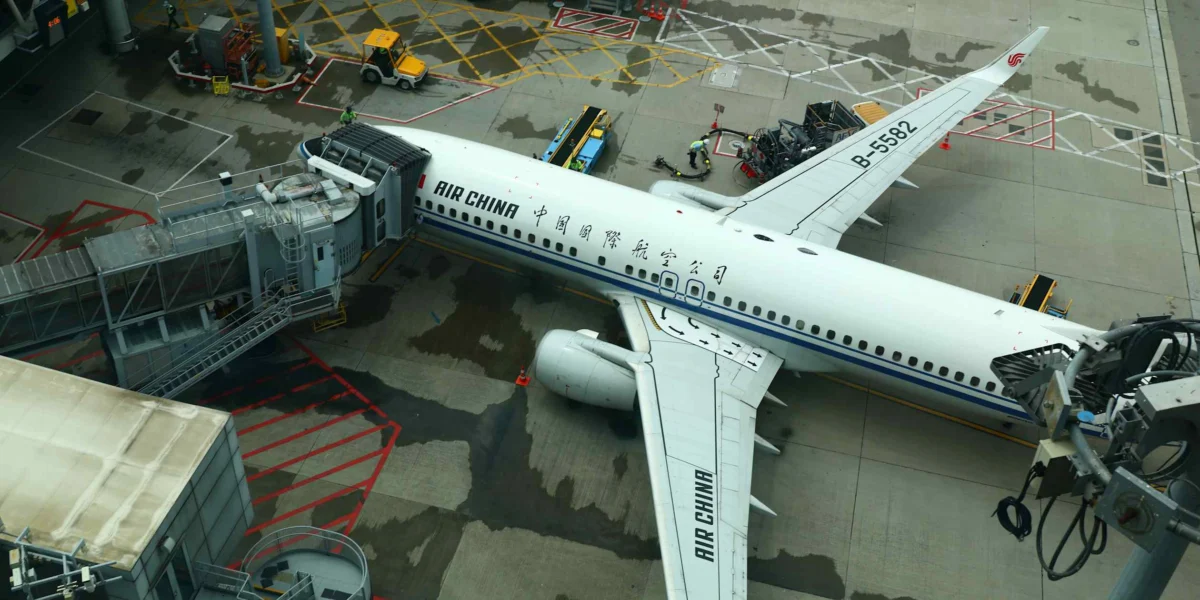
TOKYO — Air China, the People’s Republic of China’s national flag carrier, has announced its sixth consecutive year of net losses, a stark financial performance attributed by the airline to the escalating competition from an expanding network of high-speed railways across the nation, coupled with persistent geopolitical uncertainties that continue to cast a shadow over the global aviation sector. The financial results, released on March 27, 2026, paint a challenging picture for the state-owned enterprise, highlighting a complex interplay of domestic infrastructure development and international market pressures.
The Growing Shadow of High-Speed Rail
The core of Air China’s stated woes lies in the dramatic and rapid expansion of China’s high-speed rail (HSR) network. Over the past decade, China has invested massively in its HSR infrastructure, creating an intricate web of lines connecting major cities and increasingly, secondary urban centers. This has fundamentally altered domestic travel patterns, offering a compelling alternative to air travel for journeys typically ranging from 2 to 6 hours.
The appeal of HSR is multi-faceted. Firstly, its punctuality and reliability are often superior to air travel, which is more susceptible to weather delays and air traffic control congestion. Secondly, HSR stations are frequently located within city centers, reducing the time and cost associated with traveling to and from airports, which are often situated on the outskirts of metropolitan areas. Thirdly, the passenger experience on modern HSR trains is often perceived as more comfortable and spacious than on airplanes, with amenities like ample legroom, power outlets at every seat, and onboard dining services.
Data from the China State Railway Group (CSRG) illustrates the scale of this shift. In 2025 alone, China’s HSR network transported over 3.7 billion passengers, a figure that has steadily climbed year on year. Projections suggest this number will continue to grow, further eroding the market share of domestic airlines. For Air China, which relies heavily on its domestic routes for a significant portion of its revenue, this represents a direct and intensifying competitive threat. Routes between major economic hubs like Beijing and Shanghai, or Guangzhou and Shenzhen, once dominated by air travel, now see a substantial proportion of passengers opting for the high-speed train. The average journey time between Beijing and Shanghai by HSR is now under 4.5 hours, including station access, a stark contrast to the combined travel time of flying, which often exceeds 5-6 hours when accounting for airport procedures and travel to/from terminals.
Geopolitical Tensions and Their Aviation Fallout
Beyond the domestic competitive landscape, Air China, like many global airlines, is navigating a complex and often volatile international geopolitical environment. The ongoing tensions between major global powers, trade disputes, and regional conflicts have tangible impacts on the aviation industry. These impacts manifest in several ways:
- Reduced International Travel Demand: Geopolitical instability can dampen consumer and business confidence, leading to a decrease in discretionary travel. Travelers may postpone or cancel international trips due to safety concerns, visa restrictions, or economic uncertainty.
- Increased Operating Costs: Sanctions, trade wars, and diplomatic disputes can lead to higher fuel costs, increased insurance premiums, and disruptions to supply chains for aircraft parts and maintenance.
- Airspace Restrictions and Route Adjustments: Conflicts and political tensions can result in the closure of certain airspace, forcing airlines to reroute flights. These detours can significantly increase flight times, fuel consumption, and operational costs. For example, ongoing regional conflicts have necessitated longer flight paths over certain parts of Eastern Europe and the Middle East, adding hours to routes between Europe and Asia.
- Impact on International Partnerships: Geopolitical friction can strain or sever alliances between airlines, impacting code-sharing agreements, joint ventures, and loyalty programs, which are crucial for revenue generation and passenger convenience in the international market.
While Air China’s primary focus is its domestic network, its international operations are also subject to these global pressures. The company’s long-haul routes, particularly those connecting China with North America and Europe, are sensitive to shifts in international relations and economic sentiment.
A Chronicle of Financial Struggles
Air China’s current financial predicament is not an isolated incident but rather a continuation of a challenging period for the airline. The company has experienced a persistent downward trend in profitability:
- 2021: The first year of the reported consecutive losses, largely driven by the initial impact of the COVID-19 pandemic on global and domestic travel.
- 2022: Continued disruptions from COVID-19 restrictions in China and the nascent stages of HSR’s impact on domestic routes.
- 2023: A partial recovery in travel demand, but insufficient to offset the growing competition from HSR and ongoing international uncertainties.
- 2024: Further deepening of HSR competition and persistent geopolitical headwinds.
- 2025: The sixth consecutive year of net loss, confirming a structural challenge rather than a temporary downturn.
This prolonged period of losses raises questions about the airline’s long-term strategic adaptation to evolving market dynamics.
Supporting Data and Industry Trends
The financial performance of Air China can be contextualized by broader industry trends and specific data points:
- Domestic Air Traffic vs. HSR Growth: While domestic air passenger numbers in China have seen a rebound post-pandemic, their growth rate has been significantly outpaced by the expansion of HSR ridership. In 2025, domestic air passenger traffic increased by approximately 7% compared to 2024, whereas HSR saw a growth of nearly 10%. This divergence highlights the competitive erosion Air China is facing.
- Yield Management Challenges: The increased competition, particularly on trunk domestic routes, puts downward pressure on airfares. Airlines are forced to compete on price with HSR, which often operates with lower marginal costs per passenger on high-density routes. This makes it harder for Air China to achieve favorable yields (revenue per passenger kilometer).
- Fleet Modernization and Fuel Costs: While Air China has been investing in newer, more fuel-efficient aircraft, global fuel prices, which are subject to geopolitical fluctuations, remain a significant operating cost. For 2025, fuel costs represented approximately 28% of Air China’s total operating expenses, a slight increase from the previous year due to global energy market volatility.
- International Route Profitability: The profitability of Air China’s international routes is increasingly dependent on navigating complex diplomatic relations and ensuring consistent demand. Routes to regions experiencing heightened geopolitical tension have seen a decline in load factors, impacting overall international segment profitability.
Official Responses and Future Outlook
In its financial disclosures, Air China acknowledged the challenges, stating, "The ongoing expansion of high-speed rail infrastructure across China has fundamentally altered the domestic transportation landscape, presenting a formidable competitive challenge to the airline industry. Simultaneously, the global aviation sector continues to be impacted by geopolitical complexities, affecting international travel demand and operational costs."
The airline’s management is reportedly exploring several strategies to mitigate these pressures:
- Network Optimization: A potential focus on developing new, less HSR-competitive routes, such as those to less developed regions or to destinations where HSR is not a viable alternative.
- Enhanced Passenger Experience: Investing in onboard services and cabin upgrades to differentiate its offering from HSR and to attract premium passengers.
- Cost Control Measures: Implementing stricter cost-management protocols across all operational areas, including fleet utilization, maintenance, and administrative expenses.
- Strategic Alliances: Strengthening partnerships with domestic and international carriers to expand reach and offer integrated travel solutions.
However, the sheer scale of HSR investment and the unpredictable nature of geopolitical events present significant hurdles. The Chinese government, which is a major shareholder in Air China, faces a strategic decision regarding the future of its national carrier. Balancing the development of world-class rail infrastructure with the sustainability of its national airline will be a key policy challenge.
Broader Impact and Implications
The financial struggles of Air China have wider implications for the Chinese and global aviation industries:
- Domestic Aviation Market Evolution: The continued dominance of HSR on short-to-medium haul domestic routes could lead to a significant restructuring of the domestic aviation market, with a greater emphasis on long-haul and regional operations.
- State Support and Market Distortion: As a state-owned enterprise, Air China may receive ongoing government support to ensure its survival. This raises questions about fair competition within the broader transport sector and could potentially lead to market distortions if not managed carefully.
- Investment and Innovation: The need to adapt to these challenges could spur innovation in airline business models, customer service, and operational efficiency. However, sustained losses can also deter investment and hinder the ability of airlines to fund much-needed fleet upgrades and technological advancements.
- Global Aviation Landscape: The performance of a major player like Air China is a bellwether for the health of the global aviation industry, particularly in the Asia-Pacific region, which is a critical growth market. The challenges faced by Air China underscore the need for resilience and adaptability in the face of evolving transportation modes and geopolitical instability.
As Air China navigates this challenging period, its ability to innovate, adapt its business model, and effectively manage its costs will be critical in determining its long-term viability and its role within China’s rapidly transforming transportation ecosystem. The coming years will likely see further strategic realignments as the airline grapples with the dual forces of domestic infrastructure evolution and global geopolitical flux.