Ella Zulfa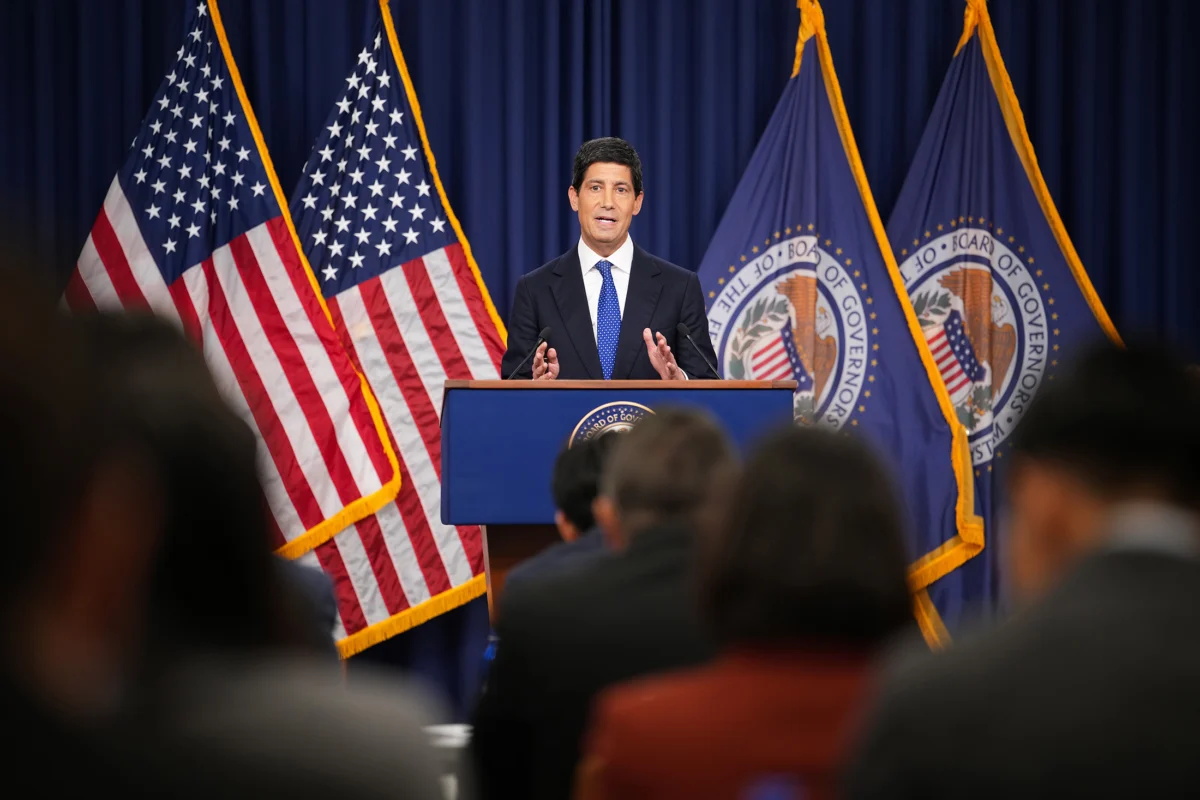
The Federal Reserve initiated its first interest rate hike in over three years on Wednesday, a pivotal move by the Federal Open Market Committee (FOMC) to combat persistent inflation. The unanimous decision by all 12 committee members raises the central bank’s benchmark interest rate by a quarter of a percentage point, establishing a new target range of 3.75 to 4 percent. This action marks a significant turning point in monetary policy, signaling a shift from an era of historically low rates towards a more restrictive stance designed to cool down an overheating economy. Fed Chair Kevin Warsh articulated the necessity of this measure, stating, "The plain fact is that inflation is too high and has been for too long." This sentiment, reported by The New York Times, underscores the committee’s resolve to address the sustained price pressures that have been a growing concern for consumers and businesses alike.
Background and Context: The Fed’s Mandate and Inflationary Pressures
The Federal Reserve operates under a dual mandate from Congress: to promote maximum employment and to maintain stable prices. For an extended period following the 2008 financial crisis and throughout the COVID-19 pandemic, the Fed employed an accommodative monetary policy, characterized by near-zero interest rates and quantitative easing, to stimulate economic growth and prevent deflationary spirals. However, a confluence of factors, including robust consumer demand fueled by fiscal stimulus, supply chain disruptions exacerbated by global events, and a tightening labor market, has led to a significant surge in inflation. This sustained increase in the general price level erodes purchasing power and can destabilize economic planning. The decision to raise rates is a direct response to this inflationary environment, aiming to curb demand and bring price increases back within the Fed’s target of 2 percent over the long term.
Chronology of Recent Monetary Policy
The Federal Reserve’s decision on Wednesday follows a period of unprecedented monetary accommodation. Following the global financial crisis of 2008, the federal funds rate was progressively lowered, reaching a target range of 0 to 0.25 percent in December 2008. This low-rate environment persisted for nearly a decade, with minor adjustments. A series of rate hikes occurred between December 2015 and December 2018, raising the target range to 2.25 to 2.50 percent. However, amid growing economic uncertainties, the Fed began to lower rates again in July 2019.
The onset of the COVID-19 pandemic in March 2020 saw the Fed slash rates back to the zero lower bound and implement massive asset purchases to stabilize financial markets and support the economy. This period of ultra-loose monetary policy, while instrumental in averting a deeper recession, contributed to the inflationary pressures that have emerged in recent years. The last rate hike prior to Wednesday’s announcement occurred in July 2023, indicating a prolonged period of stable, low interest rates. The current hike signifies a clear reversal of this trend, initiating a tightening cycle intended to rebalance the economy.
Direct Impacts on Consumers: Mortgages, Car Loans, and Credit Cards
The implications of the Fed’s rate hike are multifaceted, affecting various aspects of consumer finance. For individuals with fixed-rate mortgages, the immediate impact is negligible. These loan agreements have their interest rates locked in for the duration of the loan, shielding borrowers from fluctuations in market rates. However, those with adjustable-rate mortgages (ARMs) or other variable-rate loans will likely see their monthly payments increase as the benchmark rates rise.
Mortgage rates, while influenced by the Fed’s benchmark rate, are more closely correlated with the yields on U.S. Treasury bonds. Recent reports indicate that Treasury bond yields have surpassed 5 percent for the first time since 2023. This upward pressure on bond yields has already contributed to an increase in average mortgage rates, with the Washington Post reporting the average 30-year fixed mortgage rate climbing to 6.76 percent. This sustained rise in mortgage costs can significantly impact housing affordability, potentially cooling the real estate market.
The automotive sector is also poised for adjustments. Cox Automotive estimates that the Fed’s quarter-percentage-point increase could add approximately $6 to the average monthly car payment. This added cost, while seemingly modest, can compound over the life of a car loan and may influence consumer decisions regarding vehicle purchases or the types of financing they seek.
Credit card rates, which tend to track the Fed’s benchmark rate more directly, are also expected to rise. This development is particularly concerning given that credit card debt is reportedly near an all-time high. As interest accrues more rapidly on outstanding balances, individuals carrying significant credit card debt may face higher monthly payments and find it more challenging to pay down their principal. This could exacerbate financial strain for many households.
A Silver Lining for Savers
On the other hand, the rate hike offers a potential benefit for savers. As interest rates rise, financial institutions are likely to increase the yields offered on savings accounts, money market accounts, and Certificates of Deposit (CDs). While the initial increases may be modest, savers could begin to see slightly better returns on their deposits. This could incentivize individuals to save more and could provide some relief from the erosive effects of inflation on the purchasing power of cash holdings. For instance, a high-yield savings account that previously offered a negligible interest rate might now provide a more competitive return, allowing savings to grow at a faster pace.
Expert Analysis and Broader Economic Implications
The decision to raise interest rates is a deliberate strategy to manage economic demand and curb inflation. By making borrowing more expensive, the Fed aims to slow down spending and investment, which in turn should reduce pressure on prices. Ted Rossman, principal consumer finance analyst at Money Management International, commented on the necessity of this action, stating to The Post, "I know a rate hike may feel like bitter medicine, but we need it because we can’t just keep having this runaway price growth." This analogy highlights the often-unpleasant but necessary steps taken to achieve long-term economic stability.
The broader implications of this policy shift extend to the business sector. Higher borrowing costs can impact corporate investment decisions, potentially leading to slower expansion or reduced capital expenditures. For startups and businesses reliant on debt financing, the increased cost of capital could present challenges. Conversely, for businesses with strong cash reserves, the environment may offer opportunities to acquire assets or invest in ventures at more favorable valuations if market sentiment shifts.
Furthermore, the Fed’s actions can influence global financial markets. As U.S. interest rates rise, the dollar may strengthen, making U.S. exports more expensive and imports cheaper. This can have ripple effects on international trade and investment flows. The pace and magnitude of future rate hikes will be closely watched by global policymakers and market participants.
The Path Forward: Future Rate Decisions
The Federal Reserve’s decision to raise rates by a quarter of a percentage point is just one step in what is expected to be a series of adjustments to monetary policy. The FOMC’s future actions will depend on a continuous assessment of economic data, including inflation readings, employment figures, and indicators of economic growth. Fed officials have signaled their commitment to bringing inflation under control, suggesting that further rate increases may be forthcoming if inflationary pressures persist.
The balance between controlling inflation and maintaining economic growth is a delicate one. Policymakers aim to achieve a "soft landing," where inflation is brought down without triggering a significant economic downturn or recession. The effectiveness of the Fed’s strategy will unfold over the coming months and years, with significant implications for consumers, businesses, and the broader economy. The move represents a decisive step towards recalibrating monetary policy in response to a changing economic landscape, signaling a new era of higher borrowing costs and a renewed focus on price stability.