Lina Wu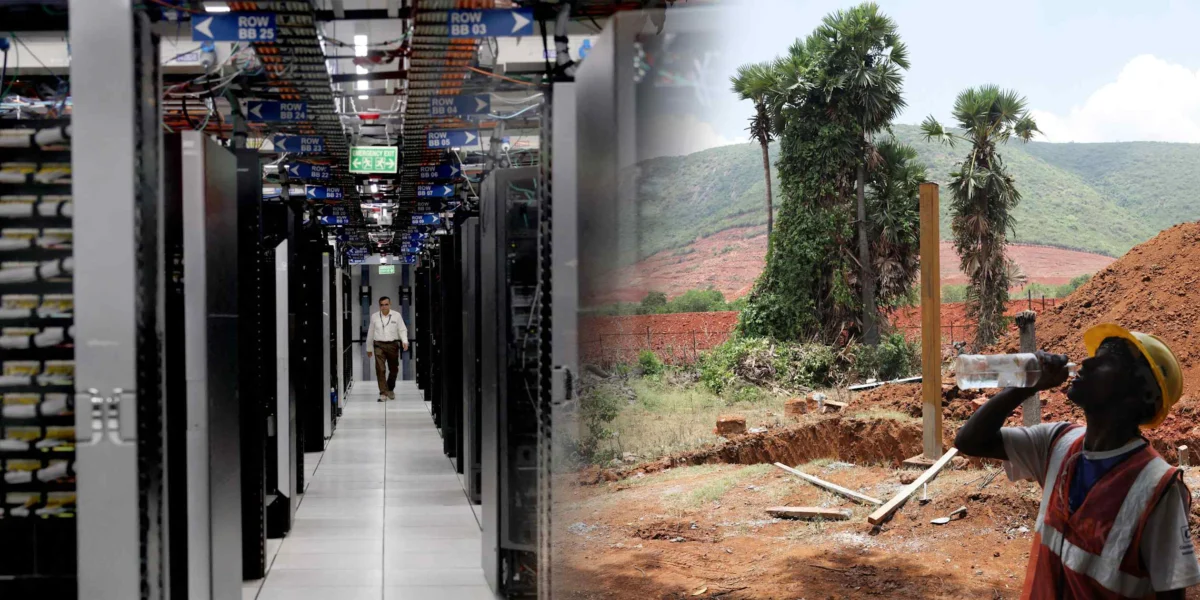
BENGALURU — India’s ambitious push to become a global data hub, fueled by significant government incentives, is set to dramatically expand its digital infrastructure but is unlikely to generate substantial direct employment, raising concerns about the nature of economic growth in the world’s most populous nation. While the drive is expected to unlock immense economic potential and attract billions in foreign investment, the inherent automation within data center operations means the anticipated job creation is falling short of the expectations often associated with large-scale industrial development.
The current landscape starkly illustrates this disparity. Industry reports indicate that India generates approximately 20% of the world’s data, a testament to its burgeoning digital economy, burgeoning internet penetration, and a rapidly growing population of tech-savvy consumers. However, this vast data generation is currently housed in a comparatively modest 4% of global data center capacity. This significant gap presents both a challenge and a monumental opportunity for India to build out its digital backbone. The government, recognizing this critical need, has rolled out incentives worth billions of rupees to encourage the establishment of hyperscale data centers by tech giants such as Google, Amazon (AWS), and Microsoft, as well as domestic players. These incentives typically include tax breaks, land at subsidized rates, and streamlined regulatory approvals, all aimed at making India an attractive destination for data center investment.
The Impetus for a Data-Driven Future
The impetus behind this aggressive data center buildout is multifaceted. India’s digital economy is experiencing exponential growth, driven by increasing smartphone adoption, affordable mobile data, and the widespread use of digital services, from e-commerce and fintech to online education and entertainment. The "Digital India" initiative, launched in 2015, has further accelerated this transformation, aiming to make the country digitally empowered and connected. As more data is generated and consumed within India, the need for localized data storage and processing becomes paramount. Storing data domestically reduces latency, enhances data security and privacy compliance, and fosters the development of a robust domestic technology ecosystem.
Furthermore, the global shift towards cloud computing and artificial intelligence (AI) necessitates massive data processing capabilities. Countries that can provide the necessary infrastructure are poised to become leaders in these transformative technologies. India, with its large pool of skilled IT professionals and a rapidly growing domestic market, sees data centers as a foundational element for its future technological prowess. The development of advanced AI models, for instance, requires immense computational power and vast datasets, which can be efficiently managed and processed in state-of-the-art data centers.
A Timeline of Accelerated Development
The current surge in data center construction is not an overnight phenomenon but rather an acceleration of a trend that has been gaining momentum over the past decade. Early investments in data centers were primarily made by telecommunications companies and large enterprises for their internal IT needs. However, the last five years have witnessed a significant shift with the entry of global cloud hyperscalers and dedicated data center infrastructure providers.
Key Milestones and Trends:
- Early 2010s: Focus on smaller, enterprise-specific data centers and colocation facilities.
- Mid-2010s: Increasing interest from global tech companies in establishing a presence, driven by India’s growing internet user base.
- Late 2010s: Government initiatives like "Digital India" gain traction, highlighting the strategic importance of digital infrastructure. Initial discussions around incentives for data centers begin.
- 2020-2021: The COVID-19 pandemic accelerates digital adoption, underscoring the critical need for robust data infrastructure. Governments worldwide, including India, begin to offer more concrete incentives.
- 2022-2023: A significant uptick in announced investments and construction projects. Major global players like Google, Amazon Web Services (AWS), and Microsoft commit substantial capital. Various states begin to unveil their data center policies and incentive packages.
- 2024-2026 (Projected): A period of intense construction and commissioning of new facilities, leading to a substantial increase in India’s data center capacity. This period is expected to see the operationalization of many large-scale hyperscale projects.
For example, Google, in collaboration with the Adani Group, has been actively involved in developing data center facilities, with construction sites visible in locations like Vizag, Andhra Pradesh. Similarly, Hewlett Packard Enterprise (HPE) has been a key player in the infrastructure space, with their data centers forming part of the operational backbone for many businesses, as seen in their facilities within their Bengaluru offices. These are not isolated instances but part of a broader, coordinated effort by both global technology leaders and Indian conglomerates to build out India’s digital infrastructure.
The Data Deluge and Infrastructure Gap
The sheer volume of data being generated in India is staggering. As per various analyses, India’s data consumption per smartphone user is among the highest globally. This is driven by the proliferation of video streaming, social media, online gaming, and increasingly, the adoption of IoT devices. Projections suggest that the volume of data generated in India could reach several zettabytes annually in the coming years.
To put this into perspective:
- One zettabyte (ZB) is equal to one trillion gigabytes (GB).
- India’s current data center capacity is a fraction of what is needed to effectively store, process, and analyze this immense volume of data domestically.
This gap means that a significant portion of India’s data is still processed and stored outside the country, leading to higher operational costs, potential data sovereignty concerns, and missed opportunities for local innovation and job creation in data analytics and management. The current buildout aims to bridge this gap, with a projected increase in data center capacity from a few hundred megawatts to several gigawatts over the next five to seven years. Investments are pouring into key locations like Mumbai, Chennai, Hyderabad, Noida, and Bengaluru, which are emerging as major data center hubs due to their connectivity, power availability, and talent pools.
The Employment Conundrum: Automation vs. Human Capital
While the economic benefits of a robust data center ecosystem are undeniable – including increased foreign direct investment, enhanced digital services, and a foundation for AI and other advanced technologies – the direct employment generation aspect is a significant point of contention. Data centers are highly automated facilities. The core operations, such as server management, cooling systems, power distribution, and network monitoring, are increasingly managed through sophisticated software and AI-driven systems.
This automation means that while a large data center might require hundreds of millions of dollars in investment and significant land area, the number of direct jobs it creates is relatively small. These roles typically include:
- Data Center Technicians: For physical maintenance, hardware installation, and repairs.
- Network Engineers: To manage connectivity and ensure data flow.
- Security Personnel: For physical and cyber security of the facility.
- Operations Managers: To oversee the day-to-day functioning.
- Power and Cooling Specialists: To ensure the efficient and stable operation of critical infrastructure.
The ratio of investment to direct employment in data centers is considerably lower compared to traditional manufacturing industries. For instance, a large hyperscale data center might employ a few hundred individuals, while a manufacturing plant of comparable investment value could employ thousands.
This has led to a growing concern about "jobless growth," a phenomenon where economic expansion does not translate into proportionate job creation. As India continues to grow rapidly, ensuring inclusive employment opportunities for its vast workforce remains a critical policy challenge.
Official Responses and Industry Perspectives
Government officials have acknowledged the employment concerns, often emphasizing the indirect job creation that a thriving digital economy can foster. The argument is that while data centers themselves may not be massive employers, they are crucial enablers for a wide array of digital industries that do create jobs. These include:
- Software Development: Companies building applications and services that rely on cloud infrastructure.
- Data Analytics and AI: Professionals who analyze the data stored and processed in these centers.
- E-commerce and Digital Services: The growth of online businesses that depend on reliable data infrastructure.
- Content Creation and Media: The burgeoning digital content industry.
- Skilled Trades: Jobs in construction, electrical engineering, and mechanical engineering during the build-out phase, though these are temporary.
NITI Aayog, India’s policy think tank, has highlighted the need for a balanced approach, focusing on skills development to equip the workforce for the digital age. They have emphasized the importance of fostering innovation and entrepreneurship that can leverage the capabilities provided by advanced data centers.
Industry players, while acknowledging the automated nature of data centers, point to the significant economic multipliers. A spokesperson for a major cloud provider, speaking on condition of anonymity, stated, "Our investment in India goes beyond just bricks and mortar. We are investing in local talent development programs, supporting startups, and enabling businesses of all sizes to innovate and grow. The indirect job creation across the ecosystem is substantial and often underestimated."
However, critics argue that these indirect benefits are not always evenly distributed and may not absorb the millions of young people entering the job market each year, particularly those from less privileged backgrounds. The concern is that a focus on capital-intensive, automation-driven infrastructure might widen the gap between the highly skilled digital workforce and the rest of the population.
Broader Implications and the Path Forward
The data center buildout in India is a double-edged sword. On one hand, it is an essential step towards digital sovereignty, technological advancement, and a more competitive economy. It positions India to be a significant player in the global digital landscape, attracting substantial foreign investment and fostering innovation in areas like AI, machine learning, and big data analytics. The availability of localized, high-capacity data centers will be critical for India to harness the full potential of emerging technologies and ensure its data remains secure and accessible within its borders.
On the other hand, the limited direct job creation poses a societal challenge. Policymakers face the difficult task of balancing the imperative for digital infrastructure development with the need for widespread employment opportunities. This will likely require:
- Investing in Education and Skill Development: Focusing on training programs that align with the demands of the digital economy, from data science and AI to cybersecurity and cloud architecture.
- Promoting Labor-Intensive Digital Sectors: Encouraging the growth of sectors that are inherently more job-creating, such as IT services, digital content creation, and application development.
- Supporting Small and Medium Enterprises (SMEs): Ensuring that the benefits of digital infrastructure reach SMEs, enabling them to compete and grow, thereby creating more jobs.
- Exploring ‘Smart’ Automation: Investigating how automation can be implemented in ways that complement human skills rather than entirely replace them, perhaps by creating roles for monitoring and managing automated systems.
The current drive to build India’s data center capacity is a crucial and necessary evolution. However, its success will ultimately be measured not just by the terabytes of data it can house, but by its contribution to sustainable and inclusive economic growth that benefits all segments of Indian society. The coming years will be critical in observing how India navigates this complex interplay between technological progress and its enduring commitment to job creation.