Ena Muazin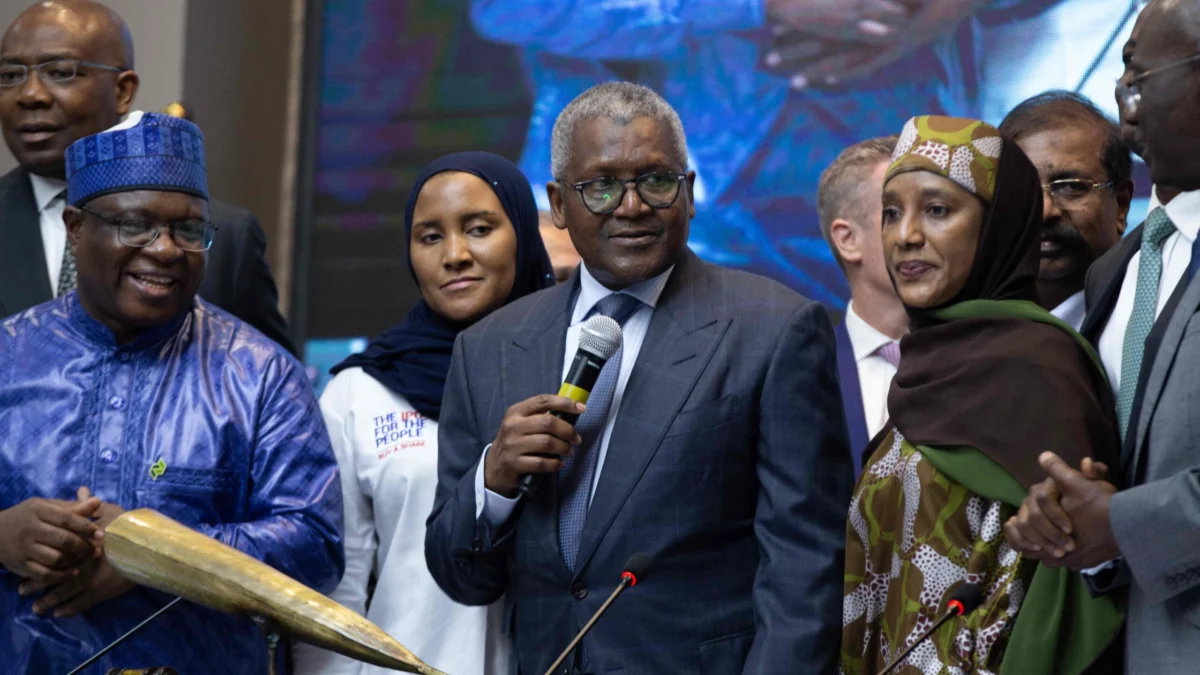
New York – In a groundbreaking move set to reshape investment landscapes across the continent, Africa’s largest oil refinery is opening its doors to individual investors through a colossal initial public offering (IPO) valued at approximately $1.6 billion. This ambitious venture, spearheaded by Nigerian industrial magnate Aliko Dangote, marks the first time ordinary citizens in Africa will have the opportunity to acquire stakes in such a monumental industrial asset. The offering aims to distribute shares worth around $1.6 billion (approximately €1.36 billion) directly to retail investors throughout Africa, signaling a significant shift towards broader economic participation.
This offering is poised to become the largest IPO in the continent’s history, a testament to the scale and ambition of the Dangote Refinery project. Aliko Dangote, widely recognized as Africa’s wealthiest individual, has characterized the IPO as a "people’s IPO," emphasizing his commitment to ensuring that every African has the chance to benefit from this significant economic undertaking. This philosophy underscores a broader trend of seeking inclusive growth models within major African industrial developments.
The shares of the state-of-the-art refinery, strategically located in Lagos, Nigeria, are being offered at 5,250 Naira per share, which translates to approximately $3.40 Euros. A minimum purchase of ten shares is required, making participation accessible to a wide range of investors. Despite this broad offering, Dangote will retain a significant majority of 87 percent of the refinery’s shares, maintaining substantial control over this critical national asset.
A Landmark Offering for African Investors
The response from potential investors has been overwhelmingly positive, driven by the sheer magnitude of the refinery and the anticipated returns. Several factors contribute to this keen interest. Firstly, the Dangote Refinery represents a colossal investment in Nigeria’s industrial infrastructure, with an estimated total cost of around €16.1 billion. Its recent commissioning in 2024 marks a pivotal moment for Nigeria, transforming it from a long-standing importer of refined petroleum products to a significant exporter. This shift has profound implications for the nation’s balance of payments and economic self-sufficiency.
Secondly, the global geopolitical climate, particularly ongoing tensions and conflicts, has led to a surge in oil prices. This volatility directly benefits refinery operations, as the margin between crude oil prices and refined product prices widens, potentially leading to higher profitability. Investors are keen to capitalize on these favorable market conditions.
The demand has been so intense that some African investment platforms have reported experiencing technical difficulties due to the unexpected surge in traffic. For instance, Bamboo, a prominent Nigerian investment platform, noted significant challenges in managing the overwhelming influx of users attempting to access their services to participate in the offering. This unprecedented level of interest highlights a latent appetite for direct investment in large-scale African enterprises among the continent’s burgeoning middle class and individual savers.
The Dangote Refinery: A Game Changer for Nigeria and Africa
The Dangote Refinery, situated on the outskirts of Lagos, is not merely a new industrial facility; it is a transformative project with far-reaching economic and strategic implications. Commissioned in early 2024, it stands as the largest single-train oil refinery in the world, boasting a processing capacity of 650,000 barrels per day. This capacity is now being fully utilized, a remarkable achievement for a facility of such complexity.
Historically, Nigeria, despite being one of Africa’s largest crude oil producers, has been heavily reliant on imported refined petroleum products. This paradox meant that the nation exported crude oil and then imported costly refined fuels like gasoline, diesel, and kerosene, draining foreign exchange reserves and hindering domestic industrial development. The Dangote Refinery directly addresses this critical vulnerability.
Timeline and Development of the Dangote Refinery
The genesis of the Dangote Refinery project can be traced back to the early 2010s. Recognizing Nigeria’s persistent fuel deficit and the economic drain of importing refined products, Aliko Dangote envisioned a world-class refinery that would not only meet domestic demand but also position Nigeria as a regional and global supplier.
- 2013: The project officially breaks ground, with initial estimates for completion in the mid-2010s. The scale of the undertaking, however, presented significant engineering and logistical challenges.
- Mid-2010s: Construction progresses, involving the importation of massive components and the assembly of a complex industrial plant. Funding, primarily from Dangote’s own conglomerate and substantial loans from international financial institutions, plays a crucial role.
- Late 2010s/Early 2020s: Delays are encountered, common for projects of this magnitude, due to various factors including infrastructure development, regulatory approvals, and the sheer complexity of the engineering. The project’s cost also escalates significantly from initial projections.
- 2023: The refinery successfully receives its first crude oil cargo from the Nigerian National Petroleum Corporation (NNPC), a critical milestone indicating the imminent operational readiness of the facility.
- Early 2024: The refinery officially commences operations, initially processing a portion of its capacity.
- Mid-2024: The refinery reaches its full operational capacity of 650,000 barrels per day, marking its full integration into Nigeria’s energy sector and its transition to an exporter of refined products.
- Late 2024: The historic IPO is launched, offering shares to the public and marking a new chapter in the refinery’s ownership structure.
Economic Implications and Broader Impact
The implications of the Dangote Refinery’s operation and its subsequent IPO extend far beyond Nigeria’s borders.
- Energy Security and Self-Sufficiency: For Nigeria, the refinery’s output significantly enhances energy security. It reduces the country’s dependence on volatile international markets for essential fuels, leading to greater price stability and predictability for consumers and businesses.
- Foreign Exchange Savings: By drastically reducing the need for fuel imports, the refinery saves Nigeria billions of dollars in foreign exchange annually. This saved capital can be redirected towards other critical development sectors such as education, healthcare, and infrastructure.
- Job Creation: The construction and ongoing operation of the refinery have created thousands of direct and indirect jobs, providing employment opportunities for skilled and unskilled labor. The IPO itself is expected to foster a new generation of African investors and financial literacy.
- Industrial Diversification: The refinery is a catalyst for further industrial development. It creates a local market for refined petroleum products, which are essential feedstocks for various downstream industries, including petrochemicals, plastics, and manufacturing. This can spur further investment and diversification of Nigeria’s economy away from its over-reliance on crude oil exports.
- Regional Export Hub: With its massive capacity, the Dangote Refinery is positioned to become a major exporter of refined fuels to other African nations. This can help stabilize fuel supplies and prices across the West African region, fostering greater economic integration and reducing reliance on distant suppliers.
- Investment Paradigm Shift: The IPO itself represents a significant shift in how major African industrial projects are financed and owned. By offering shares to individual investors, Dangote is democratizing access to wealth generation from a critical national asset. This could inspire similar initiatives across the continent, encouraging local capital formation and reducing the reliance on foreign direct investment for all large-scale projects.
Investor Sentiment and Market Dynamics
The strong investor interest can also be attributed to the perceived undervaluation of African assets compared to their global counterparts. Many analysts believe that African markets offer significant growth potential, and the Dangote Refinery, as a foundational industrial asset, is seen as a prime opportunity to tap into this growth.
The rise in oil prices, exacerbated by geopolitical tensions in regions like the Middle East, has amplified the attractiveness of the energy sector. Investors are seeking assets that can provide a hedge against inflation and benefit from sustained high commodity prices. The refinery’s ability to process crude oil into higher-value refined products positions it favorably in this environment.
The inclusion of a minimum purchase requirement of ten shares at 5,250 Naira per share (approximately $34) is a strategic move designed to balance accessibility with a meaningful stake. This price point, while modest for institutional investors, is within reach for many individuals, particularly when considering potential dividends and capital appreciation.
Challenges and Future Outlook
While the outlook is undeniably positive, challenges remain. The refinery operates within a complex regulatory environment, and sustained profitability will depend on efficient operations, effective management, and continued favorable market conditions. Fluctuations in crude oil prices, shifts in global refining capacity, and evolving environmental regulations could all impact future performance.
Furthermore, the success of the IPO in attracting and retaining a broad base of individual investors will be crucial. Ongoing investor education and transparent communication from the company will be vital to fostering long-term confidence and participation.
The Dangote Refinery’s IPO is more than just a financial transaction; it is a bold statement about the potential of African enterprise and a deliberate effort to broaden the benefits of industrialization. By empowering individual investors, Aliko Dangote is not only seeking to finance future growth but also to build a legacy of inclusive economic participation that could serve as a blueprint for future development across the continent. The coming months and years will reveal the full impact of this historic offering on Africa’s investment landscape and its journey towards greater economic self-reliance.