Gilang Muhammad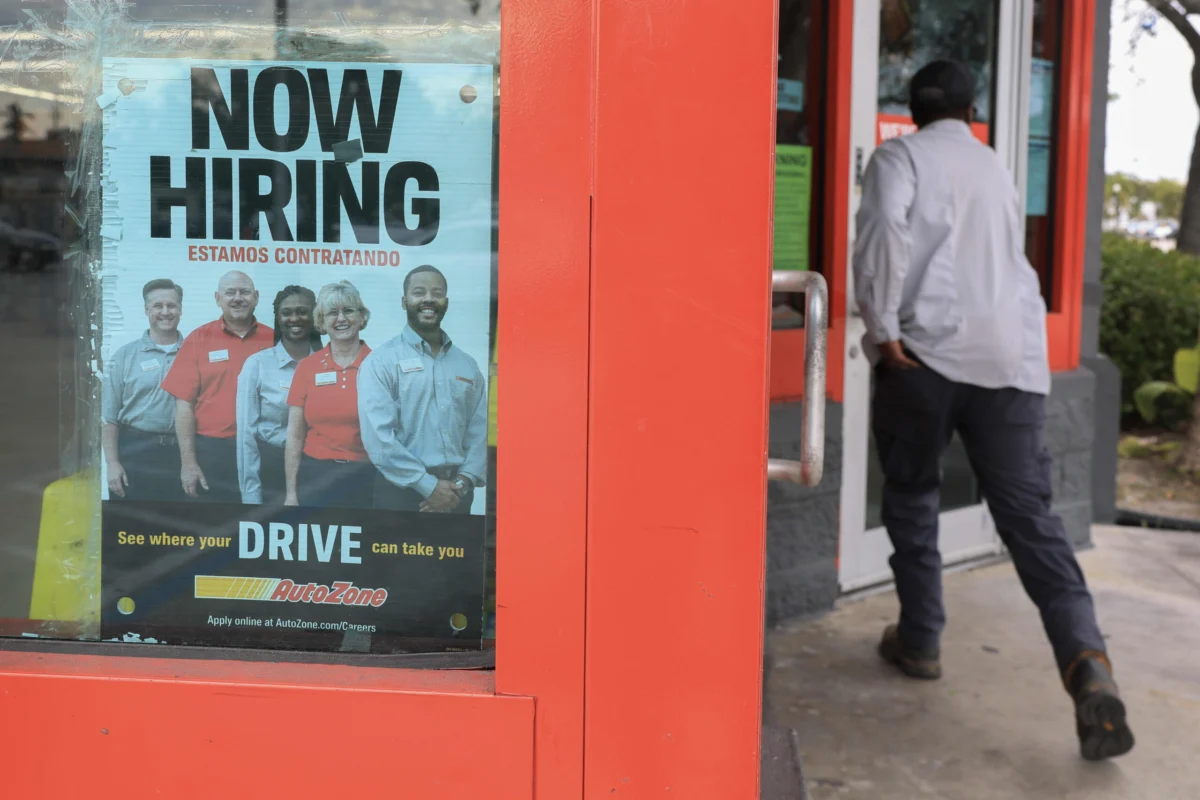
The U.S. economy experienced a significant acceleration in job creation during August, effectively reversing a period of decelerated hiring witnessed over the summer months. This robust performance, detailed in the latest report from the Bureau of Labor Statistics (BLS) on Friday, revealed that nonfarm payrolls surged by a seasonally adjusted 162,000 for the month. This figure dramatically outpaced economists’ expectations, who, in a Dow Jones survey, had projected a more modest increase of 53,000. Simultaneously, the nation’s unemployment rate remained stable at 4.1%, aligning with market forecasts and signaling a resilient labor market. This marked August’s job gain as the strongest monthly performance since March, injecting a renewed sense of vigor into the economic outlook.
A Deeper Dive into August’s Stellar Job Report
The substantial increase in nonfarm payrolls underscores a foundational strength within the American labor market, defying earlier concerns of a potential cooling trend. Chris Rupkey, chief economist at Fwdbonds, encapsulated the sentiment, stating, "Net, net, the labor market is alive and well and generating thousands of new jobs to help keep economic growth squarely in the plus column." This assessment reflects a broad consensus among analysts that the U.S. economy continues to demonstrate impressive job-generating capabilities, a critical factor for sustained economic expansion.
Beyond the headline numbers, the report offered several encouraging indicators. The unemployment rate, a key metric for labor market health, holding steady at 4.1% is particularly noteworthy given a concurrent 0.2 percentage point increase in the labor force participation rate. This latter figure, which measures the proportion of the population either employed or actively seeking employment, suggests that more individuals are being drawn back into the workforce, finding opportunities even as the overall jobless rate remains low. The household survey, a separate component used to calculate the unemployment rate, revealed an impressive surge of 569,000 individuals into employment and a larger influx of 683,000 into the labor force, highlighting robust engagement.
An alternative, more comprehensive measure of unemployment, known as U-6, which includes discouraged workers and those holding part-time jobs for economic reasons, also showed positive movement. This rate fell to 7.7%, a 0.2 percentage point decrease from the previous month and its lowest level recorded since June 2025. This historical low point for U-6 underscores a significant improvement in the underemployment landscape, indicating that fewer workers are marginally attached to the labor force or unable to secure full-time positions due to economic conditions.
Revisions and Wage Growth Bolster Confidence
Further reinforcing the positive narrative, the BLS report included significant upward revisions to job gains from prior months. July’s initial report of a loss of 23,000 jobs was dramatically revised to a gain of 21,000, swinging the month from negative to positive territory. Similarly, June’s figures were revised upwards by 11,000, contributing to a total increase of 31,000 jobs for that month. These upward revisions not only add to the cumulative job growth but also provide a clearer, more optimistic picture of the labor market’s trajectory over the recent past, suggesting that the underlying momentum was stronger than initially perceived.
Wage growth, a crucial component in assessing both worker prosperity and potential inflationary pressures, also presented a mixed but generally positive outlook. Average hourly earnings increased by 0.3% for the month, precisely in line with consensus expectations. On an annual basis, however, the increase of 3.1% surpassed expectations by 0.1 percentage point. While this growth supports consumer purchasing power, it also contributes to the ongoing debate within the Federal Reserve regarding the potential for wage-push inflation.
Sectoral Contributions and Emerging Trends
Unlike some previous months where job gains were concentrated in a few key sectors, August’s growth was notably broad-based, indicating a healthy and diversified economic recovery. Restaurants and bars led the charge, adding 59,000 new jobs, reflecting a continued resurgence in leisure and hospitality as consumer activity normalizes. Government education also saw a significant boost, contributing 42,000 new positions, likely driven by seasonal factors and ongoing efforts to address educational needs. Manufacturing, a sector often seen as a bellwether for industrial health, added a solid 16,000 jobs.
However, healthcare, traditionally a primary engine of job growth, saw a more modest gain of 13,000 jobs, falling short of its 12-month average of 32,000. This slight deceleration in healthcare hiring could be a point of observation for future reports.
Intriguingly, the report also offered a glimpse into emerging trends, particularly concerning the impact of artificial intelligence (AI) on employment. Information-related industries reported a loss of 23,000 jobs for the month, pushing their 12-month average to a loss of 8,000. While a direct causal link to AI cannot be definitively established from this data alone, this trend aligns with broader discussions about technological disruption and automation potentially influencing employment patterns in certain knowledge-based sectors. This development will likely be closely monitored by policymakers and industry analysts for its long-term implications.
The Federal Reserve’s Intensifying Dilemma
The robust August jobs report immediately turned the spotlight on the Federal Reserve, presenting policymakers with a complex challenge as they weigh their next move on interest rates. The data is largely consistent with what Fed officials have described as a "stable labor market," a condition that could, paradoxically, either support a pause in rate hikes or strengthen the case for further tightening if inflationary pressures persist.

Market expectations for the Fed’s benchmark rate have been particularly volatile in recent days. Following remarks last week by Fed Chairman Kevin Warsh, traders had priced in a strong expectation for the Federal Open Market Committee (FOMC) to hike its benchmark rate by a quarter percentage point at its upcoming meeting on September 15-16. Warsh’s comments, often interpreted as hawkish, had shifted sentiment towards a more aggressive stance from the central bank.
However, subsequent remarks this week from other Fed officials, including Governor Christopher Waller, injected a degree of uncertainty into the outlook. Waller, along with New York Fed President John Williams and Governor Michael Barr, indicated a willingness to support holding rates steady if incoming inflation data showed signs of moderating on a monthly basis. Williams specifically told CNBC that he was in a "wait-and-see" mode regarding the data, while Barr also expressed contentment with a pause as long as inflation was "moderating." Yet, both Barr and Waller maintained that they would be prepared to raise rates if the data did not cooperate, underscoring the data-dependent nature of their decision-making.
Despite these nuanced positions, the consensus-beating payrolls report pushed markets to lean more heavily towards a rate hike. According to the CME Group’s FedWatch tool, traders were still pricing in approximately 60% odds of a quarter percentage point increase at the central bank’s policy meeting. This reflects the immediate impact of strong economic data on market sentiment, as investors interpret robust job growth as potentially fueling inflation, thereby necessitating a tighter monetary policy.
The Fed’s primary focus now definitively shifts to the forthcoming inflation reports. The Bureau of Labor Statistics is scheduled to release readings on producer prices on Thursday and consumer prices on Friday of next week. These reports will serve as the "final determinant" for the FOMC’s interest rate decision. Policymakers have expressed a far greater concern with inflation, which has consistently run above the Fed’s 2% target for the past five and a half years, indicating a prolonged period of elevated price pressures that they are keen to bring under control. The FOMC has not adjusted the federal funds rate since implementing three cuts in the latter part of 2025, meaning any move now would be highly scrutinized as a significant policy shift.
Market Reaction and Broader Economic Implications
The financial markets reacted swiftly to the jobs report. Stock market futures moved mostly lower after the release, reflecting investor apprehension that a stronger economy might compel the Fed to raise interest rates, potentially increasing borrowing costs for businesses and dampening corporate profits. Conversely, Treasury yields, particularly at the short end of the curve where Fed policy has its most immediate impact, rose sharply. This surge in short-term yields indicates that bond investors are anticipating higher interest rates in the near future, as they demand greater compensation for holding debt in a rising rate environment.
Ellen Zentner, chief economic strategist at Morgan Stanley Wealth Management, articulated this dynamic, noting, "An upside surprise in payrolls will likely ramp up concerns about a rate hike, but that outcome is in the hands of next week’s inflation numbers." She further elaborated that if inflation data comes in cooler than expected, "the Fed will likely feel comfortable discounting potentially inflationary signals coming out of the labor market." This highlights the critical balancing act the Fed faces: strong employment is desirable, but if it comes with persistent inflation, it complicates their dual mandate of achieving maximum employment and stable prices.
Political Pressure and the Fed’s Independence
Adding another layer of complexity to the Fed’s decision-making process was a direct intervention from President Donald Trump. Following the release of the August jobs report, President Trump took to a social media platform to laud it as a "great jobs number" but then immediately turned his attention to the Federal Reserve, demanding that it lower rates rather than hike them. In a strongly worded post, he urged the Fed Board, "with its great new leader, must get smart – BE PATRIOTS for a change." He argued that "High interest rates put the U.S.A. at a very unfair disadvantage, and I won’t allow that to happen!"
President Trump went further, threatening to impose severe trade restrictions if the Fed did not comply with his call for lower rates. He stated, "LOWER THE RATE OR I’LL STOP TRADING WITH COUNTRIES WITH WHICH WE HAVE A DEFICIT, which the U.S. Supreme Court, in its ridiculous and very costly Tariff decision, strongly acknowledged ‘the President’ has an absolute right to do." This unprecedented threat to leverage trade policy to influence monetary policy underscores the ongoing tension between political administrations and the traditionally independent central bank. The President’s reference to a Supreme Court decision likely pertains to past rulings that broadly affirmed presidential authority over tariffs and trade, although the specific "ridiculous and very costly" decision he cited was not detailed. The U.S. currently maintains trade deficits with over 90 nations, making such a broad threat highly disruptive to global commerce.
The Federal Reserve’s independence from political interference is a cornerstone of its operational effectiveness, designed to allow it to make monetary policy decisions based solely on economic data and its dual mandate, free from short-term political pressures. President Trump’s statements represent a significant challenge to this independence, forcing the central bank to navigate not only economic realities but also explicit political demands.
Looking Ahead: The Inflation Litmus Test
The August jobs report has undeniably painted a picture of a robust and resilient U.S. labor market, exceeding expectations and demonstrating significant strength. However, this very strength has intensified the Federal Reserve’s conundrum, pushing it closer to a potential interest rate hike as it grapples with persistent inflation. The market’s immediate reaction, with falling stock futures and rising Treasury yields, reflects this heightened expectation.
All eyes are now firmly fixed on the upcoming inflation data. The producer and consumer price index reports scheduled for the coming week will be the ultimate litmus test, determining whether the Fed’s policymakers, despite political pressure, will deem it necessary to tighten monetary policy further to rein in prices that have been above target for an extended period. The delicate balance between fostering maximum employment and ensuring price stability has never been more challenging, or more critical, for the nation’s economic future.