Clara Shinta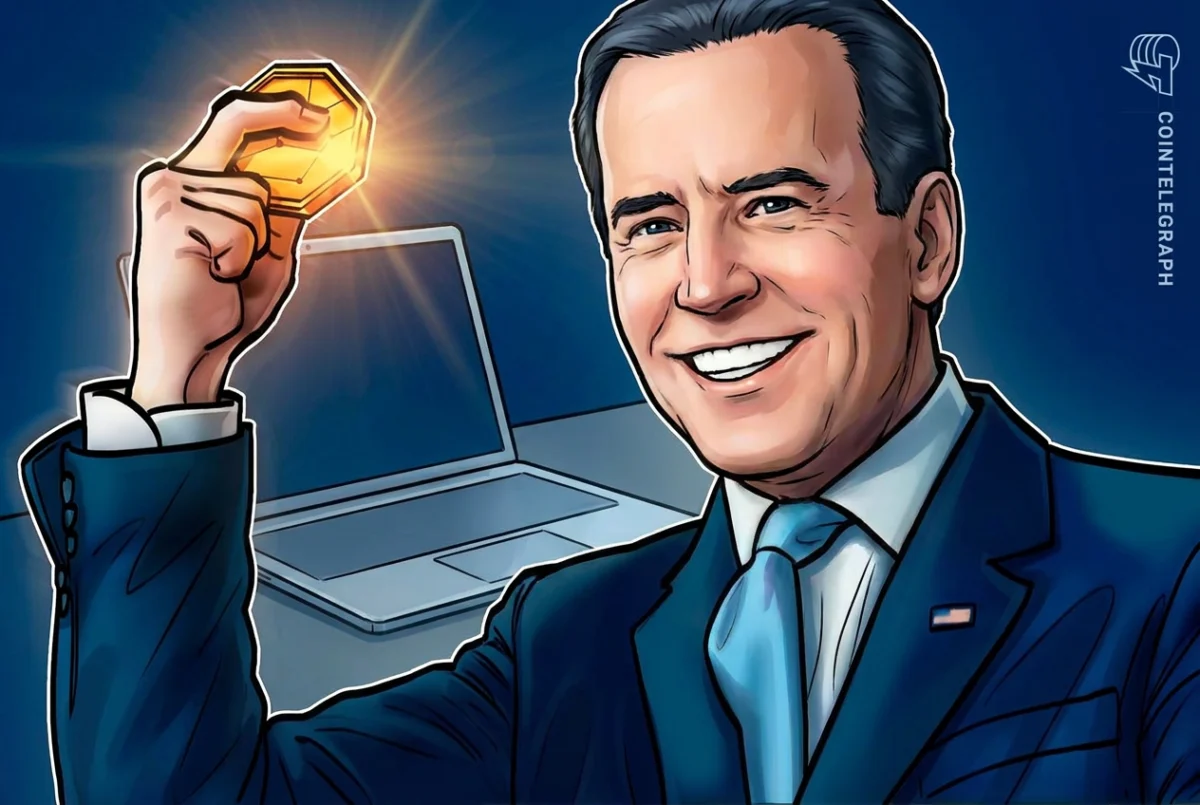
Hunter Biden’s LAPTOP memecoin experienced a dramatic decline of 86.5% within its first 30 minutes of trading on Wednesday, marking the son of former U.S. President Joe Biden’s official, albeit turbulent, entry into the burgeoning market for politically themed cryptocurrencies. The token, launched on Ethereum layer-2 network Base, opened at $199.50 UTC but quickly plummeted to $26.88 by 12:30 pm UTC, according to data from CoinGecko, albeit recording a substantial $2.5 million in trading volume during this volatile period. This precipitous drop immediately cast a shadow over the project, drawing swift reactions from both proponents and critics, and underscoring the inherent volatility and speculative nature of memecoins, particularly those tied to high-profile political figures.
The Genesis of LAPTOP: Reclaiming a Narrative
The conceptualization of the LAPTOP token is deeply rooted in a highly contentious political narrative that has shadowed Hunter Biden for years. The memecoin is explicitly promoted as an attempt to "reclaim the laptop narrative," a phrase referring to a MacBook Pro laptop that Biden reportedly left at a Delaware repair shop in 2019. The contents of this device, allegedly including emails, financial records, and other sensitive files, were later obtained and published by the New York Post just weeks before the 2020 presidential election. This material was subsequently amplified and weaponized by allies of then-President Donald Trump, who used it to launch accusations of corruption and influence peddling against Hunter Biden and, by extension, his father, then-presidential candidate Joe Biden.
For years, the veracity and provenance of the laptop’s contents were subjects of intense debate, with some media outlets and political figures initially dismissing it as Russian disinformation. However, subsequent investigations by major news organizations, including The New York Times and The Washington Post, have largely authenticated key aspects of the laptop’s data, confirming its existence and many of its files. By launching a memecoin named LAPTOP, Hunter Biden appears to be making a direct, provocative statement, attempting to reframe a symbol of political attack into one of "resilience, redemption and recovery," as he articulated in an X post on Wednesday. This move, however, has been met with significant skepticism, especially given the highly speculative and often controversial nature of memecoins.
Hunter Biden’s Stance and Public Reactions
In his public statements surrounding the launch, Hunter Biden acknowledged the cynicism inherent in the memecoin space. He directly criticized former President Donald Trump’s token (presumably TRUMP or similar tokens associated with the Trump family) as a "grift" and issued a clear warning to potential buyers of LAPTOP: they should not expect him or anyone else to artificially inflate the token’s value. This pre-emptive caution, while seemingly transparent, also serves to distance himself from any direct responsibility for the token’s performance, a common characteristic in the decentralized and unregulated memecoin market.
The announcement of LAPTOP had already generated considerable buzz and criticism prior to its launch. On Monday, Biden had teased the token on X, sharing its ticker alongside a montage of media coverage related to the laptop controversy. This preview immediately drew sharp rebukes from prominent figures in the digital asset space. Stephen Findeisen, better known as the digital investigator Coffeezilla, publicly denounced LAPTOP as a "shitcoin" and explicitly advised his followers against purchasing it, citing concerns about its legitimacy and potential for investor losses. Similarly, the influential X account "scupytrooples" urged Biden to reconsider, stating there was "still time to walk this back." These reactions highlight the deep-seated skepticism within the crypto community towards projects perceived as opportunistic or lacking genuine utility.
Jesse Pollak, the founder of the Base network on which LAPTOP was issued, also weighed in, confirming via an X post that the project had contacted his team. However, Pollak emphasized that Base made a "conscious decision" not to assist with the token’s design or promotion, thereby signaling a clear separation between the network and the controversial political memecoin. This statement underscores the decentralized ethos of many blockchain networks, where anyone can launch a token, but also the responsibility of platforms to maintain neutrality regarding speculative and potentially risky projects.
Understanding Political Memecoins and Their Risks
The emergence of politically themed memecoins, such as TRUMP, MAGA, and now LAPTOP, represents a fascinating and often alarming intersection of political discourse, internet culture, and speculative finance. Memecoins are cryptocurrencies that typically derive their value from internet memes, social media trends, and community hype rather than underlying technology or fundamental utility. They are notoriously volatile, prone to rapid price swings driven by sentiment, social media mentions, and often, coordinated trading activity.
The appeal of political memecoins lies in several factors. For some, they offer a novel way to express political affiliation or dissent, turning financial speculation into a form of digital activism. For others, they represent a high-risk, high-reward investment opportunity, fueled by the viral potential of politically charged narratives. However, the risks are substantial. The market for memecoins is often characterized by pump-and-dump schemes, where early investors or project insiders heavily promote a token, driving up its price, only to sell off their holdings, leaving later investors with significant losses. The lack of regulation, transparency, and often, clear leadership in many memecoin projects exacerbates these risks, making them fertile ground for scams and financial exploitation. Hunter Biden’s explicit warning to buyers not to expect LAPTOP to be made more valuable by him or others directly addresses this inherent risk, albeit after the token’s launch.
Tokenomics and Controversial Allocations
The LAPTOP project’s disclosures, publicly available, outline the token’s fundamental structure and allocation. Described as a "digital collectible with no utility, ownership rights, voting rights, yield or profit-sharing rights," the token has a fixed supply of 1 billion, with 350 million tokens circulating at launch. This explicit declaration of no utility is a standard disclaimer for many memecoins, managing investor expectations regarding any inherent value beyond speculative demand.
However, the tokenomics also reveal several controversial aspects. Founders, including Hunter Biden, are allocated a substantial 300 million tokens, representing 30% of the total supply. These founder tokens are subject to a six-month lock-up period, followed by monthly vesting over the subsequent 24 months. While vesting schedules are common in crypto projects to prevent immediate sell-offs by insiders, a 30% founder allocation is significant and often raises concerns about centralized control and potential for future market manipulation.
Another 30% of the supply is tied to "political, cultural and crypto predictions," with tokens burned if specified outcomes occur and released to charity if they do not. The specifics of these predictions and the mechanisms for verification are crucial but often opaque in such projects, adding another layer of complexity and potential for controversy.
Perhaps most notably, the disclosures detail specific airdrop figures. An initial round represents 10% of the total supply, with a noteworthy 2% reserved for wallets that had lost money on the TRUMP token. The remaining 8% of this initial airdrop is designated for eligible subscribers to Biden’s "Where’s Hunter" Substack newsletter. A separate 10% future airdrop is slated to be distributed at the "foundation’s discretion," bringing the total airdrop allocation to 20%. This specific targeting of TRUMP token losers immediately drew accusations of hypocrisy, as Hunter Biden had previously criticized the Trump family’s crypto ventures. In an August 21 post, Biden accused World Liberty Financial (associated with some Trump-themed tokens) of leveraging political influence and centralized controls for founder benefit, arguing the crypto industry deserved better. His subsequent launch of LAPTOP, with its own founder allocations and targeted airdrops, led many to point out the perceived contradiction.
Broader Implications and Regulatory Scrutiny
The entry of Hunter Biden into the memecoin market, following similar ventures by figures associated with Donald Trump, highlights a growing trend of political personalities engaging with the crypto space. This trend raises significant questions about ethics, transparency, and potential regulatory oversight. The sheer volatility and speculative nature of memecoins mean that individual investors, often driven by hype, face substantial risks of financial loss.
Regulators globally are already grappling with how to classify and regulate cryptocurrencies, particularly memecoins that lack traditional utility. The involvement of politically connected individuals could accelerate this scrutiny. For instance, a California Senate bill was recently passed that aims to ban memecoin issuance by public officials. While this specific bill may not directly apply to Hunter Biden, who is not a public official, it signals a growing legislative concern about the intertwining of politics and highly speculative digital assets. Such legislation reflects a broader effort to mitigate potential conflicts of interest, protect consumers from financial scams, and maintain the integrity of political processes.
Furthermore, the "hypocrisy argument" leveled against Hunter Biden points to a larger challenge in the political crypto space: maintaining credibility and consistency. If figures criticize certain aspects of crypto ventures while engaging in similar activities themselves, it can erode public trust and invite accusations of opportunism. The opaque nature of memecoin development, coupled with the absence of robust consumer protection frameworks, means that participants operate in a high-risk environment.
The LAPTOP memecoin’s tumultuous debut serves as a stark reminder of the unpredictable and often unforgiving nature of the cryptocurrency market, especially in the memecoin sector. While Hunter Biden frames his venture as an act of reclaiming a narrative, its immediate financial performance and the surrounding controversy underscore the complex ethical, political, and financial considerations that arise when political figures delve into the world of decentralized, speculative digital assets. The long-term implications for investor protection, political ethics, and regulatory frameworks remain to be fully seen as this novel intersection continues to evolve.