Gilang Muhammad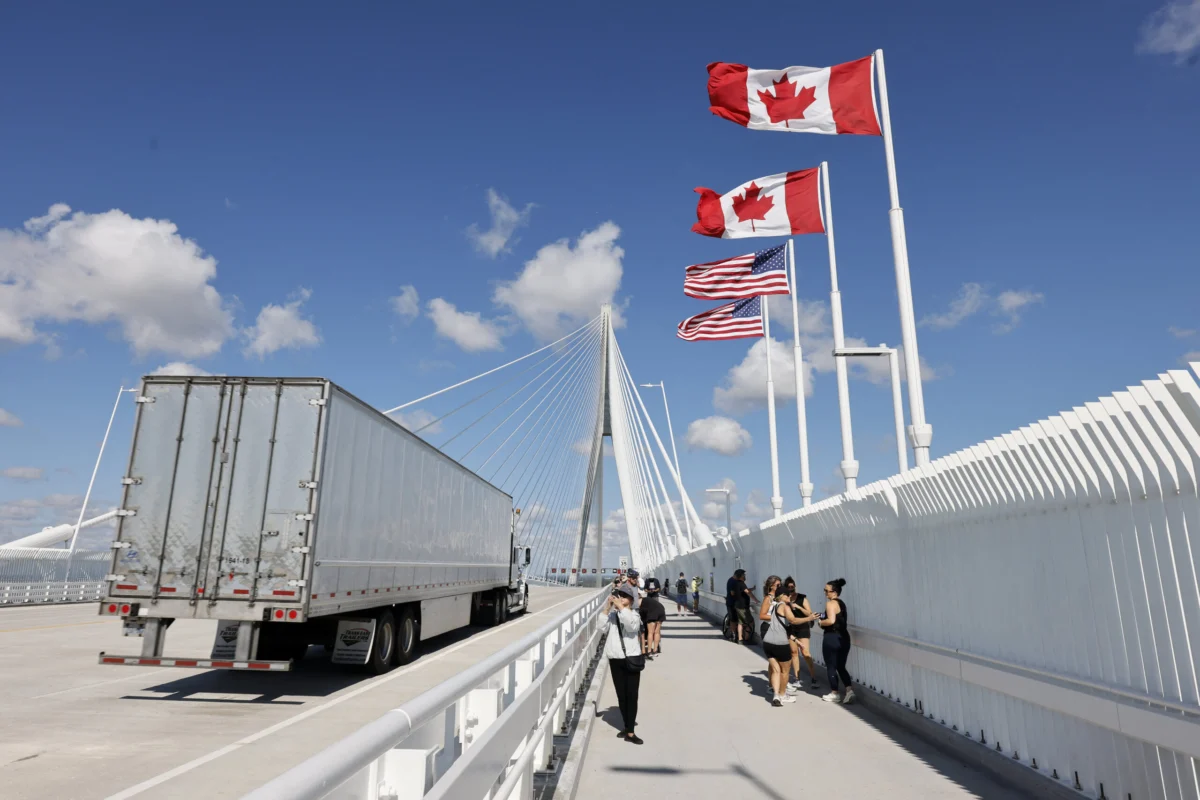
Canada’s comprehensive retaliatory tariffs on a broad spectrum of U.S. goods officially took effect on Tuesday, marking a significant escalation in the ongoing trade dispute between two of the world’s closest economic partners. The move follows the dramatic collapse of bilateral trade talks last month, further souring relations between Washington and Ottawa and sending ripples of uncertainty across North American supply chains.
The Scope of Canada’s Retaliatory Measures
The newly imposed duties range from 15% to 50% and target hundreds of specific U.S. products, collectively valued at an estimated $27.6 billion. This wide-ranging list encompasses critical sectors, including dairy products, agricultural equipment, various paper goods, household appliances, and electronics. Notably, Canadian tariffs on U.S. steel, aluminum, and iron products have doubled to a substantial 50%, a direct response to similar U.S. levies. Additionally, consumer goods such as furniture, motorbikes, certain clothing items, and beauty products were hit with the highest tariff rate, aiming to create a significant economic impact on U.S. exporters.
Ottawa has explicitly characterized these measures as a "dollar-for-dollar" response, directly mirroring the economic burden imposed by U.S. tariffs on Canadian goods, which were implemented under Section 338 of U.S. trade law. The Canadian Department of Finance articulated that the primary objective of these tariffs is to safeguard Canadian workers, producers, and manufacturers. By making U.S. products more expensive in the domestic market, the government aims to level the playing field, allowing Canadian businesses to compete more effectively and protect national industries from what it perceives as unfair trade practices.
Crucially, these new tariffs are not isolated measures. Existing Canadian counter-tariffs against the U.S. remain firmly in place, including a significant 25% duty on the politically sensitive autos sector. This continued application underscores the comprehensive nature of Canada’s response and its commitment to defending its industrial base against U.S. protectionist policies. The automotive industry, with its deeply integrated cross-border supply chains, represents a vital component of both economies, making tariffs in this area particularly impactful and symbolic of the broader trade friction.
Background to the Bilateral Trade Tensions
The current trade hostilities between Canada and the United States did not emerge in a vacuum. They are the culmination of a protracted period of rising protectionist sentiments, primarily initiated by the U.S. administration. The initial spark came in April 2025, when the U.S. launched what it termed a "global tariff offensive." This policy saw the imposition of tariffs on a range of imported goods from various countries, with the stated aim of protecting American industries and jobs. While initially framed broadly, these measures soon targeted traditional allies, including Canada, under the guise of national security justifications.
The U.S. administration’s reliance on Section 338 of the Trade Act of 1974 to impose tariffs on steel and aluminum imports from Canada, Mexico, and the European Union was particularly contentious. Section 338 allows the President to impose tariffs on imports if the Commerce Department finds that such imports threaten to impair national security. Canada, a steadfast ally and a primary supplier of steel and aluminum to the U.S. for decades, vehemently rejected this justification, viewing it as an affront to its long-standing partnership and an illegitimate use of a national security clause for economic protectionism.
This marked a significant departure from the historical norms of U.S.-Canada trade relations, which have traditionally been characterized by open markets, deep integration, and mutual respect, largely underpinned by comprehensive trade agreements like NAFTA and its successor, the United States-Mexico-Canada Agreement (USMCA). The USMCA, ratified relatively recently, was intended to modernize and stabilize North American trade, yet the ongoing tariff disputes threaten to undermine its spirit and operational efficacy.
The Collapse of Negotiations and Mutual Accusations
The imposition of these new Canadian tariffs directly stems from the failure of high-level trade talks between the two long-standing allies, which collapsed dramatically at the end of August. Negotiations, aimed at de-escalating the tariff dispute and finding common ground, ultimately proved fruitless. Officials from both sides swiftly issued statements, each blaming the other for the inability to reach a resolution.

Canadian officials pointed to a perceived lack of flexibility and an unwillingness from the U.S. to genuinely address Canada’s concerns regarding the legality and fairness of the Section 338 tariffs. They highlighted specific areas where compromise proved elusive, suggesting that fundamental disagreements over trade principles and national sovereignty were at play. Conversely, U.S. representatives accused Canada of being unyielding on certain demands and failing to offer concessions that would satisfy American economic interests. These public disagreements over the specific sticking points underscored the depth of the divide and the difficulty in bridging the gap between their respective positions.
This breakdown in dialogue, following months of intense negotiations, signals a dangerous precedent for future interactions and suggests that the trade dispute may entrench itself further before any resolution is found. The mutual accusations only serve to harden positions and reduce the likelihood of a swift return to the negotiating table.
The Broader Economic Landscape: Interdependence and Vulnerability
The economic relationship between Canada and the United States is one of the largest and most integrated in the world. In the past year, the U.S. exported an estimated $333.6 billion worth of goods to Canada, while importing an even larger sum of $381.9 billion from its northern neighbor. This colossal bilateral trade volume, totaling over $715 billion annually, underscores the profound economic interdependence that defines their partnership.
Both nations share robust trade in numerous critical sectors. Energy, particularly oil and natural gas, forms a cornerstone of this exchange, with vast pipelines and transmission lines connecting the two countries. The automotive sector, as previously mentioned, relies on highly integrated cross-border supply chains for parts and finished vehicles. Heavy machinery, aircraft components, pharmaceuticals, precious gems and jewelry, furniture, clothing, and a wide array of food and beverage products also represent significant components of this intricate trade network. This deep integration means that disruptions in one sector or region can rapidly cascade across the entire continental economy.
Infrastructure like the Gordie Howe International Bridge, depicted facilitating truck traffic between Windsor, Ontario, and Detroit, Michigan, on September 6, 2025, symbolizes the physical arteries of this immense trade flow. Similarly, the Ambassador Bridge, another vital link, carries a substantial portion of the daily cross-border commerce. These tariffs, by increasing costs and creating uncertainty, directly threaten the efficiency and viability of these established trade routes and the myriad businesses that rely on them.
Impact on Industry, Businesses, and Consumers
While economists acknowledge that the total value of goods impacted by these new Canadian tariffs — $27.6 billion — represents a relatively small fraction of the overall bilateral trade volume, they warn of severe consequences for specific segments of the economy. Small-to-medium-sized businesses (SMBs) are particularly vulnerable. Lacking the financial reserves and diversified supply chains of larger corporations, SMBs in the most-impacted sectors face a significant blow to their profitability and competitiveness. For instance, a small Canadian dairy producer relying on specialized U.S. agricultural equipment might see their input costs skyrocket, making their final product more expensive or less profitable. Conversely, a U.S. furniture exporter, suddenly facing a 50% tariff, could find its Canadian market share evaporating overnight.
Industry representatives across various sectors have begun to voice concerns. Canadian manufacturers who rely on U.S. components now face increased costs, potentially leading to higher consumer prices or reduced margins. Canadian consumers, in turn, may experience higher prices for a wide range of imported U.S. goods, from household appliances to popular beauty products, reducing their purchasing power and potentially limiting choice. The doubling of tariffs on steel and aluminum products, for example, will directly impact Canadian construction projects, manufacturing, and infrastructure development, leading to higher material costs across the board.
The ongoing tariff dispute also introduces significant uncertainty, which can stifle investment and innovation. Businesses are less likely to commit to long-term plans or expand operations when the rules of trade are in flux and the threat of escalating tariffs looms. This climate of unpredictability can lead to job losses, reduced economic growth, and a general cooling of commercial activity.
Government Response and Support Measures
Recognizing the potential for widespread economic disruption and the strain on businesses and workers, the Canadian government has moved to implement support measures. Last month, Ottawa announced a substantial $7.5 billion support package specifically designed to assist businesses and workers affected by the escalating trade dispute. This new allocation comes in addition to an existing $25 billion that Canada had already provided in response to the initial U.S. global tariff offensive, which began in April 2025.

These support packages aim to cushion the blow for industries and individuals most severely impacted. They could include subsidies, loan programs, or retraining initiatives for workers. While such measures are crucial for immediate relief, they represent a significant drain on national resources and are not a sustainable long-term solution to fundamental trade imbalances or disputes. The need for these extensive support programs underscores the serious economic fallout anticipated from the prolonged trade friction.
Political Rhetoric and Escalation
The trade dispute has also been characterized by increasingly sharp political rhetoric, further exacerbating tensions. U.S. President Donald Trump, for instance, took to Truth Social on Monday, the day before the Canadian tariffs took effect, to call for a boycott of Canadian airplane manufacturer Bombardier. His post, stating unequivocally: "NO MORE SELLING BOMBARDIER IN THE UNITED STATES!", signals a willingness to use executive influence and social media platforms to target specific Canadian industries.
Such statements, while not legally binding tariffs, create a hostile environment for Canadian businesses operating in the U.S. market and can have a chilling effect on consumer sentiment and corporate investment decisions. Bombardier, a significant employer and a pillar of Canada’s aerospace industry, is particularly vulnerable to such political pressure given the competitive global aviation market. This kind of direct intervention by a head of state adds another layer of complexity and antagonism to an already fraught relationship.
Canadian Prime Minister Mark Carney, speaking at a press conference in Ottawa on April 14, 2026, has consistently articulated Canada’s commitment to protecting its national interests and upholding a rules-based international trade system. While his administration has sought diplomatic solutions, the latest retaliatory tariffs demonstrate Canada’s resolve to respond forcefully when negotiations fail and its industries are targeted.
Looking Ahead: Implications for the Future
The implementation of these sweeping retaliatory tariffs marks a grim milestone in U.S.-Canada relations. The immediate implications are clear: increased costs for businesses and consumers, potential supply chain disruptions, and a period of economic uncertainty. For small-to-medium-sized businesses, particularly, the challenges will be profound, requiring adaptation, innovation, or potentially, difficult decisions regarding their operations.
Beyond the immediate economic impact, the long-term implications are equally concerning. The prolonged trade dispute risks undermining the foundational trust and cooperation that have historically defined the U.S.-Canada alliance. It could also set a dangerous precedent for future trade negotiations and the enforcement of existing agreements like the USMCA. The inability of these two deeply intertwined economies to resolve their differences peacefully through dialogue raises questions about the future stability of North American trade.
There is a palpable risk of further escalation. Should the U.S. administration decide to respond to Canada’s latest tariffs with additional duties, a full-blown trade war could ensue, with devastating consequences for both economies. The strain on the political relationship could also spill over into other areas of bilateral cooperation, from security to environmental policy, weakening the collective strength of two key Western allies.
The path forward remains uncertain. A return to the negotiating table, underpinned by a genuine willingness to compromise on both sides, is essential. However, given the current hardened stances and the recent collapse of talks, such a resolution appears distant. Until then, businesses and consumers in both Canada and the United States will bear the brunt of this deepening trade rift, navigating a landscape of higher costs, reduced choices, and profound economic unpredictability. The Gordie Howe International Bridge, once a symbol of seamless cross-border commerce, now stands as a stark reminder of the escalating barriers between two nations historically bound by shared prosperity and mutual respect.