Gilang Muhammad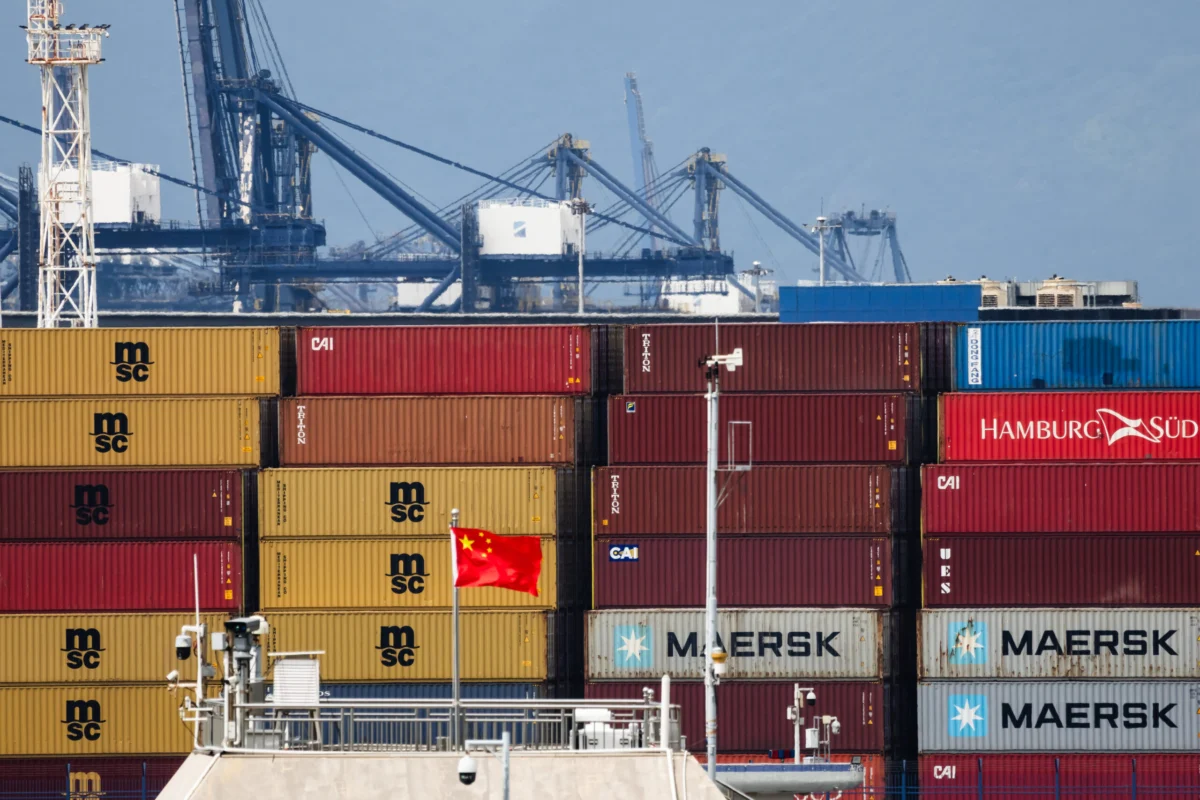
SHENZHEN, CHINA – China’s trade growth accelerated in August, driven by a powerful export performance that underscored the economy’s continued reliance on external demand, even as internal consumption struggled to gain momentum. Official customs data released Tuesday revealed that exports surged by 25% in U.S. dollar terms compared to a year earlier, a slight acceleration from July’s 23.9% increase and aligning precisely with analysts’ forecasts polled by Reuters. This strong showing was particularly pronounced in shipments to the United States, which jumped 34.4%, extending a trend of double-digit gains observed for most of the year. Concurrently, exports to the European Union expanded by 6.6%, while those to South Korea saw a near 50% increase, signaling robust demand across key markets.
However, the import side painted a more nuanced picture. Imports rose 28.2% last month, quickening from 27.5% in July but ultimately missing economists’ estimates of 30% in a Reuters poll. This shortfall in import growth, despite the overall increase, served as a fresh indicator of lingering tepid domestic demand within the world’s second-largest economy. The widening gap between export and import growth caused China’s trade surplus to swell significantly to $119.09 billion in August, up from $112.5 billion in July, reigniting long-standing debates over trade imbalances and currency valuation. Imports from the U.S. grew 17.8%, while those from the EU ticked higher by a modest 0.7%, and from South Korea, imports more than doubled, likely reflecting strong demand for intermediate goods and components.
The sustained strength of China’s exports has become the primary engine for its economic growth, effectively cushioning the impact of several domestic and geopolitical headwinds. A global surge in demand for high-tech components, fueled by the accelerating build-out of artificial intelligence (AI) infrastructure worldwide, has provided a significant tailwind for Chinese manufacturers. This external resilience has helped offset pressures stemming from geopolitical shocks, a protracted slump in the domestic property sector, cautious consumer spending, and subdued private sector investment.
Zhiwei Zhang, president and chief economist at Pinpoint Asset Management, articulated the current economic dilemma, stating, "China continues to rely on exporters to support the economy as domestic demand remains subdued." Zhang further noted the mounting pushback from governments globally regarding China’s burgeoning trade surpluses, suggesting that the current growth model is becoming increasingly unsustainable in the face of international scrutiny.
The offshore yuan, a key barometer of investor sentiment and trade competitiveness, remained largely stable following the data release on Tuesday, trading around 6.7099 per U.S. dollar. Despite the trade surplus controversy, the Chinese currency has demonstrated remarkable resilience this year, outperforming many of its Asian peers with a 3.8% strengthening against the greenback year-to-date. This performance adds another layer of complexity to the ongoing discussions about its true valuation.
Mounting Pressure for Yuan Appreciation and Trade Rebalancing
China’s substantial and growing trade surplus has intensified calls from economists and foreign officials for Beijing to allow for a significant strengthening of its currency. Many argue that the yuan remains deeply undervalued, a factor they believe has substantially contributed to China’s export boom by making its goods cheaper on international markets. Brad Setser, a senior fellow at the Council on Foreign Relations, estimated last month that the Chinese currency is undervalued by as much as 20%, a figure that underscores the perceived competitive advantage Beijing enjoys. This estimated undervaluation is based on analyses of China’s persistent current account surplus, its relatively low exchange rate against major trading partners, and the scale of its foreign exchange reserves.
The breakout performance of China’s exports has not gone unnoticed by its Western trading partners, who are increasingly vocal in their demands for Beijing to rebalance its trade structure and stimulate domestic demand. The Group of 20 (G20) finance ministers, during their gathering in the U.S. earlier this month, issued a joint statement that implicitly, yet strongly, criticized economies heavily reliant on exports. Notably, China was the sole dissenting member on this particular point, highlighting the divergence in economic philosophy and policy priorities. Beijing swiftly pushed back against these trade complaints, with official statements labeling them as "an excuse to pressure and restrict China" and asserting its right to pursue its own economic development model.

During a speech at the G20 summit, People’s Bank of China (PBOC) Governor Pan Gongsheng directly addressed the issue, asserting that China has "never actively pursued a trade surplus" nor has it "depreciated the currency to gain trade competitiveness." He reiterated China’s commitment to maintaining an open market for foreign businesses and investment, seeking to reassure international partners amidst rising tensions. The PBOC maintains a managed floating exchange rate system, where the yuan’s value is allowed to fluctuate within a band against a basket of currencies, but with significant central bank influence to maintain stability and prevent excessive volatility. Critics, however, argue that this "management" often leans towards keeping the yuan weaker than market forces would dictate.
Despite the escalating rhetoric surrounding trade imbalances, Washington’s frustration is not expected to derail the critical bilateral relationship entirely, at least in the immediate term. A high-stakes visit by Chinese leader Xi Jinping to Washington D.C., scheduled for later this month, remains on the diplomatic calendar. Analysts like Neo Wang, China strategist at Evercore ISI, suggest that the U.S.’s narrowing trade deficit with China, coupled with its mounting trade disputes with other global partners, might temper some of the immediate pressure on Beijing ahead of such a crucial meeting. The agenda for the Xi-Biden summit is expected to encompass a wide range of issues, from trade and technology to regional security concerns and climate change, underscoring the complex and multifaceted nature of the relationship.
Domestic Economic Challenges and Policy Responses
Beyond the headline trade figures, China’s domestic economy continues to face significant structural challenges. The country’s gross domestic product (GDP) growth slowed to a more than three-year low of 4.3% in the second quarter of this year, following a robust start. Beijing had set an annual GDP growth target range of 4.5%-5%, a target that now appears increasingly ambitious given the current economic trajectory. Data released last month further highlighted the fragility of domestic demand and investment, which weakened considerably in July. Manufacturing activity, a key indicator of industrial health, contracted for a second consecutive month, signaling a broader slowdown in the industrial sector. The official Manufacturing Purchasing Managers’ Index (PMI) remained below the 50-point mark separating expansion from contraction, reinforcing concerns about industrial output and new orders.
The property sector remains a significant drag on the economy, with several major developers facing severe liquidity crises and a crisis of confidence among homebuyers and investors. This has had a ripple effect across related industries, from construction to household consumption, and has significantly impacted local government finances, which traditionally rely heavily on land sales. Youth unemployment has also emerged as a pressing social and economic issue, with rates climbing to record highs, further dampening consumer sentiment and long-term economic prospects. Consumers, wary of economic uncertainties, have shown a tendency to save rather than spend, contributing to the subdued domestic demand.
Recognizing the urgency, Beijing has accelerated its fiscal spending in recent weeks, aiming to arrest the decline in investment and restore stability. This includes strategic injections into key sectors and infrastructure projects. A notable initiative involves plans to fund a $54 billion capital injection into several state-owned banks and insurers. This move is designed to bolster the solvency and lending capacity of these crucial financial institutions, enabling them to provide more robust support to the real economy and mitigate financial risks. Such targeted stimulus measures are part of Beijing’s broader strategy to stabilize growth without resorting to the large-scale, indiscriminate stimulus packages seen in previous downturns, which often led to increased debt and misallocation of resources.
Looking ahead, economists anticipate further monetary easing to complement fiscal measures. Shan Guo, a partner at China-focused Hutong Research, forecasts one or two interest-rate cuts by the People’s Bank of China before the year-end. The timing and magnitude of these cuts, Guo suggests, will be influenced by several factors: the Federal Reserve’s policy trajectory (particularly its decisions on interest rate hikes), the Ministry of Finance’s bond issuance schedule, and the yuan’s pace of appreciation. Guo highlighted a crucial dynamic: "The more the yuan appreciates, the more room the PBOC has to cut interest rates, even if the Fed keeps hiking." A stronger yuan would provide the PBOC with greater flexibility to ease domestic monetary conditions without exacerbating capital outflows or putting undue depreciatory pressure on the currency.
The confluence of robust export growth, subdued domestic demand, and external pressure for trade rebalancing presents a complex policy challenge for China. While exports continue to provide a crucial lifeline, the long-term goal of shifting towards a more consumption-driven growth model remains paramount. Beijing’s recent policy communications suggest a "sense of urgency and determination," according to Evercore ISI’s Wang, indicating a proactive approach to stabilize the economy and address underlying structural issues. The coming months, particularly with key diplomatic engagements and further economic data releases, will be critical in determining whether China can successfully navigate these challenges and achieve its ambitious growth targets while assuaging international concerns.
Evelyn Cheng contributed to this report.