Ena Muazin
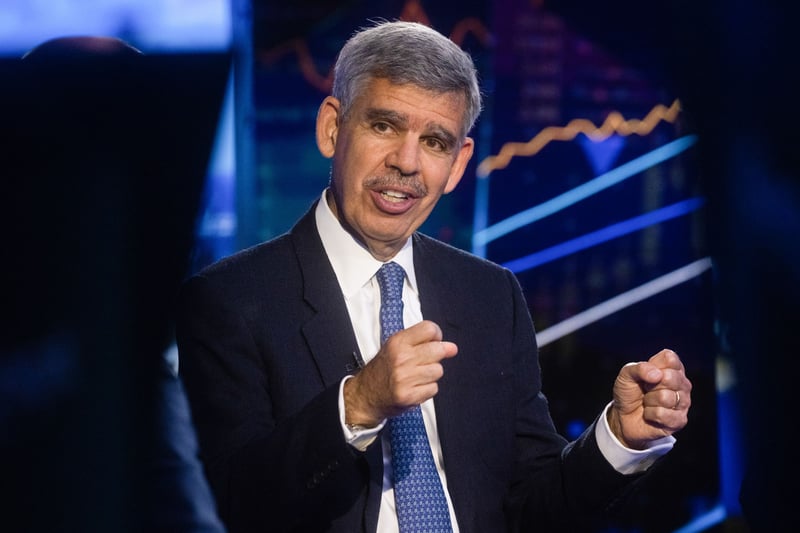
New York, NY – Mohamed El-Erian, Chief Economic Advisor for Allianz SE and a prominent voice in global finance, has warned of an impending "further phase of financial repression," a scenario where governments and central banks exert increasing control over financial markets to achieve policy objectives. His remarks, made in a recent interview, shed light on the potential consequences of rising yields for economies like Europe and Japan, and underscore his skepticism regarding the long-term efficacy of market interventions.
The concept of financial repression, as defined by economists Carmen Reinhart and Kenneth Rogoff, involves a suite of policies designed to channel funds to governments at low cost. This can include interest rate ceilings, direct credit allocation, and the encouragement of holding government debt through regulatory measures. El-Erian’s projection suggests a potential escalation of these tactics, moving beyond the more subtle interventions seen in recent times.
The Specter of Market Intervention: A Growing Trend

El-Erian’s concerns are rooted in recent observations of increased intervention in financial markets, particularly by the U.S. Treasury. He notes a discernible pattern where governments are becoming more willing to step into markets, not just for monetary policy, but also to achieve broader geopolitical and economic aims. This marks a significant shift, as the traditional separation between economic tools and political objectives appears to be blurring.
The Trump administration, for instance, has demonstrated a willingness to intervene across various fronts, including trade policy and direct equity stakes in corporations. El-Erian frames this as a manifestation of "geo-economics" gaining prominence, where economic levers are increasingly employed to advance strategic goals. This approach, he suggests, is driven by a desire to manage domestic economic conditions, especially in the lead-up to critical political events such as elections.
Addressing Domestic Economic Pressures: The Role of Mortgage Rates
The immediate impetus behind some of these interventions, according to El-Erian, appears to be the management of domestic economic pressures, particularly those related to the cost of living and housing affordability. With congressional elections on the horizon, the focus on high living costs has intensified. Mortgage rates, a critical component of housing affordability, have become a key area of concern.
El-Erian points to interventions in the Yen market and, more significantly, larger bond purchases by the U.S. Treasury as actions aimed at reducing mortgage rates. The rationale is that lower borrowing costs for homeowners can stimulate consumer spending and bolster the housing market, thereby alleviating some of the economic anxieties among the populace. This strategy, however, has faced questions regarding its sustainability and long-term effectiveness.
The Fleeting Impact of Interventions: A Pattern of Diminishing Returns
Despite the intentions behind these interventions, El-Erian observes that their effects have often been short-lived. Both the intervention in the Yen market and the larger-scale purchases of U.S. Treasuries have seen their impact on market yields dissipate relatively quickly. This suggests that the market’s underlying forces are powerful enough to absorb or counteract these interventions, at least in the short to medium term.
This pattern of diminishing returns raises crucial questions about the options available to policymakers. If direct interventions are proving to be temporary fixes, what further steps can governments and central banks take to achieve their desired outcomes?
Potential Avenues for Policy Action: A Spectrum of Control
El-Erian outlines four potential avenues that the U.S. government might explore, each representing a varying degree of market control:
-
Increased Intervention: The most direct approach would be to escalate the scale and scope of market interventions. This could involve larger-scale asset purchases, more direct influence on currency valuations, or other direct interventions in specific market segments. However, the diminishing returns observed suggest that this path might require increasingly aggressive actions to achieve the same effect.
-
Pact with the Federal Reserve: A more coordinated approach could involve a closer alignment between the U.S. Treasury and the Federal Reserve. This could manifest as a formal or informal agreement where the central bank’s monetary policy is more explicitly geared towards supporting fiscal objectives. Such a pact could amplify the impact of interventions but also raises significant concerns about central bank independence and the potential for inflationary pressures.

-
Adopting the Japanese Model: Yield Curve Control: El-Erian suggests the possibility of the U.S. adopting a policy similar to Japan’s yield curve control (YCC). Under YCC, a central bank targets a specific yield for a particular maturity of government bond and intervenes in the market to keep the yield at that target level. This offers a more structured way to manage interest rates but comes with its own set of challenges, including the potential for large-scale central bank balance sheet expansion and the distortion of market price discovery.
-
"Financial Repression" as a Broader Strategy: The ultimate manifestation of these trends, as El-Erian warns, is a broader embrace of "financial repression." This would involve a more systematic and widespread application of policies designed to direct capital towards government financing at below-market rates. This could include a range of measures, from subtle regulatory nudges to more overt controls on capital flows or investment choices.
The Global Context: Europe and Japan Facing Unique Challenges
El-Erian’s analysis extends beyond the U.S. to consider the specific challenges faced by Europe and Japan. Both regions have grappled with low growth and persistent deflationary pressures for years, leading their central banks to employ unconventional monetary policies, including negative interest rates and massive asset purchase programs.

In Europe, the European Central Bank (ECB) has been actively managing interest rates and liquidity to support economic recovery. However, the recent global rise in yields presents a complex environment. If yields continue to climb, it could put pressure on government debt servicing costs across the Eurozone, potentially exacerbating existing fiscal vulnerabilities in some member states. The ECB’s mandate to maintain price stability while also supporting economic growth becomes increasingly delicate in such a scenario.
Japan, meanwhile, has long been a pioneer in unconventional monetary policy. Its experience with near-zero or negative interest rates and its commitment to managing the yield curve offer a precedent for other economies. However, the long-term consequences of such policies, including potential market distortions and the eventual need for policy normalization, remain subjects of intense debate. El-Erian’s caution suggests that the lessons from Japan’s prolonged period of low yields and interventions may not be entirely positive when considering broader market functioning.
Background: The Era of Ultra-Low Interest Rates and Quantitative Easing
To understand El-Erian’s concerns, it’s crucial to recall the preceding era of ultra-low interest rates and extensive quantitative easing (QE) by major central banks. Following the 2008 global financial crisis and again during the COVID-19 pandemic, central banks like the U.S. Federal Reserve, the ECB, and the Bank of Japan (BoJ) engaged in unprecedented asset purchase programs to inject liquidity into the financial system and lower borrowing costs.

This period of sustained monetary stimulus led to historically low, and in some cases negative, interest rates. While these policies were intended to avert economic collapse and stimulate growth, they also contributed to asset price inflation and raised concerns about market distortions and the eventual unwinding of these massive central bank balance sheets. The recent uptick in inflation has forced these central banks to pivot towards monetary tightening, leading to rising yields and a reassessment of the efficacy and sustainability of previous policies.
Analysis: The Trade-offs of Financial Repression
The prospect of a "further phase of financial repression" carries significant implications. On one hand, it could provide governments with a stable and predictable source of financing, potentially allowing them to manage their debt burdens more effectively and fund essential public services. It could also be used to steer investment towards critical sectors or long-term projects deemed beneficial for national interests.
However, the downsides are substantial. Financial repression, by its nature, suppresses market signals and can lead to inefficient allocation of capital. When interest rates are artificially suppressed, savers are penalized, and investors may be incentivized to take on excessive risk in search of yield. This can lead to misallocation of resources, hinder innovation, and ultimately stifle long-term economic growth. Moreover, it erodes the principle of free markets and can create a sense of unease and uncertainty among investors about the future direction of policy.

Broader Impact and Implications
El-Erian’s warning serves as a call for careful consideration of the path forward. The increasing willingness of governments to intervene in financial markets, coupled with the potential for more direct control through measures like yield curve control or broader financial repression, signals a shift in the global economic landscape.
Investors, businesses, and policymakers alike will need to navigate this evolving environment. Understanding the motivations behind market interventions, assessing their likely effectiveness, and anticipating the potential long-term consequences will be crucial for making informed decisions. The debate over the appropriate role of government in financial markets is likely to intensify, with significant implications for economic stability, growth, and the fundamental functioning of global finance. The transition from an era of ultra-loose monetary policy to one potentially characterized by greater state control over finance marks a critical juncture, the full impact of which will unfold in the years to come.