Putri Inara
The Economic Reality of Digital Publishing
The professionalization of blogging has moved beyond the "make money online" (MMO) niche, a sector often criticized for its self-referential nature. Data from ProBlogger, a leading authority in the field founded by Darren Rowse, indicates that successful monetization is now prevalent across a diverse array of sectors, including interior design, photography, woodworking, and health and wellness. Despite the proliferation of video-centric platforms like TikTok and YouTube, long-form written content continues to serve as a foundational pillar for digital commerce, providing the search engine optimization (SEO) backbone and deep-funnel engagement necessary for high-ticket conversions.
Industry analysts observe that the contemporary blogger functions less as a traditional writer and more as a multi-faceted media entrepreneur. The revenue models have shifted from a heavy reliance on display advertising—which has seen diminishing returns due to ad-blocking technology and privacy regulations—toward a "diversified portfolio" approach. This includes affiliate marketing, digital product sales, tiered memberships, and high-value consulting services.
A Chronology of the Blogging Industry
To understand the current state of blog monetization, one must examine the chronological progression of the medium:
- 2002–2005: The Formative Era. The launch of platforms like Blogger and WordPress democratized publishing. Early adopters capitalized on the introduction of Google AdSense (2003), which allowed for the first automated monetization of text-based content.
- 2006–2012: The Golden Age of SEO. Bloggers began to understand the mechanics of search engines. This period saw the rise of massive "niche sites" and the birth of professional blogging conferences. It was during this time that the 4-year success threshold began to emerge as a statistical norm.
- 2013–2018: The Pivot to Social. The rise of Instagram and Pinterest forced bloggers to become visual brand managers. Monetization expanded into "influencer" territory, where brand sponsorships became a primary revenue driver.
- 2019–Present: The Era of Authority and AI. With Google’s emphasis on "E-E-A-T" (Experience, Expertise, Authoritativeness, and Trustworthiness), the market has moved toward high-quality, human-centric content. The emergence of Generative AI has further bifurcated the market between low-value commodity content and high-value, personality-driven authority sites.
Seven Core Realities of Blog Monetization
1. Feasibility and Scalability
The transition from a hobbyist pursuit to a legitimate business entity is a documented phenomenon. In longitudinal studies of the industry, many creators report a gradual progression: starting with nominal daily earnings, moving to a supplemental part-time income, and eventually scaling to a full-scale enterprise that employs editorial and technical staff. While "right place, right time" factors—such as entering a niche before it reaches saturation—play a role, the scalability of a blog is primarily dictated by the size of the addressable audience and the efficiency of the conversion funnel.
2. The Multi-Stream Revenue Model
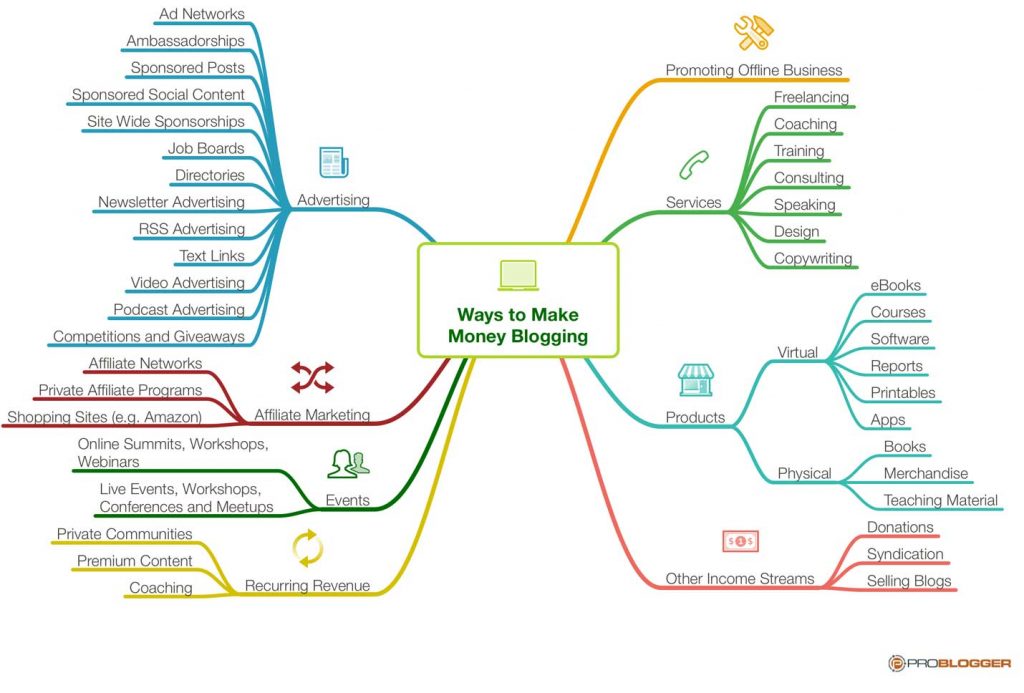
There is no singular "formula" for financial success in blogging. A survey of high-earning Australian bloggers reveals a wide spectrum of monetization strategies. For instance, Lucy Feagins of The Design Files leverages high-end brand partnerships and events, whereas Nikki Parkinson of Styling You transitioned from a blog into a successful e-commerce clothing label. Other successful models include:

- Direct Sales: E-books, courses, and proprietary software.
- Recurring Revenue: Membership communities and "gated" premium content.
- Service-Based Income: Using the blog as a portfolio to secure speaking engagements, book deals, or consulting contracts.
3. The Rejection of Universal Formulas
The digital marketplace is too volatile for "plug-and-play" success formulas to remain effective over the long term. Each successful blog is the result of a unique intersection between the creator’s specific expertise and a specific market gap. Professional analysis suggests that while tactical advice (such as SEO best practices) is universal, the strategic "voice" and community-building aspects of a blog cannot be replicated through a template.
4. Niche Versatility
A persistent myth suggests that the only profitable blogs are those that teach others how to blog. Market data refutes this. Some of the most profitable digital properties operate in "everyday" niches. For example, Sarah Wilson’s I Quit Sugar began as a blog before becoming a global movement and publishing empire. Similarly, Ana White’s woodworking blog demonstrates that highly technical, craft-based niches can command significant affiliate and sponsorship revenue due to the high intent of the audience.
5. The Earnings Pyramid and Statistical Realities
A 1,500-respondent survey conducted by ProBlogger provides a sobering look at the income distribution within the industry. The data reveals a significant "long tail" of low earners:
- 63% of bloggers earn less than $3.50 per day.
- 10% of those attempting to monetize earn no revenue at all.
- 28% earn less than 30 cents per day.
Conversely, the "top tier" of the pyramid is robust. Approximately 4% of respondents reported earnings exceeding $10,000 per month (six-figure annual incomes), and an additional 9% earned over $1,000 per month. These statistics suggest that while the "average" blogger earns very little, the "professional" blogger who treats the site as a business can achieve significant financial outcomes.
6. The Longevity Threshold
Data suggests a direct correlation between the age of a digital property and its earning potential. Of the bloggers in the top income bracket ($10,000+/month), 85% had been active for at least four years. This "gestation period" is necessary to build domain authority with search engines, establish a brand presence in a crowded marketplace, and foster the level of reader trust required for high-conversion transactions. Blogging is fundamentally a marathon, not a sprint; it requires a minimum of two years of consistent output before reaching a "break-even" point in terms of labor versus profit.
7. The Labor-Intensive Nature of Success
The concept of blogging as "passive income" is largely regarded by industry experts as a fallacy. Maintaining a profitable blog requires rigorous attention to four key areas:
- Content Creation: Consistent, high-quality, and original output.
- Audience Acquisition: Sophisticated marketing across SEO, email, and social channels.
- Community Engagement: Actively managing and nurturing a loyal reader base.
- Business Operations: Analyzing metrics, optimizing conversion rates, and managing technical infrastructure.
Industry Reactions and Future Implications
The rise of Artificial Intelligence (AI) has sparked a new wave of reactions from the blogging community. Some analysts predict a "flight to quality," where readers seek out human-verified experiences to escape the deluge of AI-generated "slop." This shift favors the "ProBlogger" model, which emphasizes personality, unique insight, and community engagement over simple information aggregation.
Search engine giants like Google have responded to these shifts by updating their algorithms to prioritize "Helpful Content." This has resulted in a market correction where sites built solely for ad arbitrage are losing visibility, while sites with genuine authority and high reader engagement are seeing an increase in value.
Conclusion: The Professional Outlook
The conclusion for prospective and current digital publishers is clear: while the barrier to entry for starting a blog is low, the barrier to achieving a full-time income is exceptionally high. Success in this field requires a rare combination of creative talent, technical proficiency, and entrepreneurial persistence.
For those who view blogging as a business rather than a hobby, the opportunities for monetization have never been more diverse. However, the data confirms that these rewards are reserved for the minority who are willing to commit to a multi-year development cycle and a high-intensity workload. As the digital landscape continues to evolve, the written word remains a potent economic force, provided it is backed by genuine expertise and a resilient business strategy.