Putri Inara
The rapid ascension of pickleball from a niche backyard pastime to the fastest-growing sport in the United States has caught the attention of professional analysts, social scientists, and digital strategists alike. Beyond the physical courts, the mechanics of the game—characterized by accessibility, strategic patience, and community engagement—are providing a robust metaphorical framework for the digital content industry. As the creator economy continues to mature into a multi-billion-dollar sector, the parallels between the tactical execution of a pickleball match and the long-term sustainability of a professional blog have become increasingly evident.
The sport, which experienced a 223.5% growth rate over the last three years according to the Sports & Fitness Industry Association (SFIA), mirrors the explosive yet often volatile trajectory of digital publishing. For independent creators and corporate content hubs, the "pickleball methodology" offers a blueprint for navigating a landscape increasingly dominated by algorithmic shifts and audience fragmentation.
The Historical Trajectory of Pickleball and the Digital Parallel
The origins of pickleball date back to 1965 on Bainbridge Island, Washington. Founded by Joel Pritchard, William Bell, and Barney McCallum, the game was born out of necessity when the founders found themselves without a complete set of badminton equipment. By improvising with ping-pong paddles and a perforated plastic ball, they created a sport that prioritized low barriers to entry and high social interaction.
This chronology closely parallels the evolution of the blogging industry. In the late 1990s and early 2000s, early adopters utilized rudimentary platforms like Open Diary and LiveJournal to share information, often working with limited digital tools. Much like the transition of pickleball from a localized activity to a professionalized sport with governing bodies like the USA Pickleball Association (USAPA), blogging has transitioned from personal journaling to a sophisticated component of the global media landscape.
By 2023, data from the SFIA indicated that pickleball had reached 8.9 million players in the United States, with a significant shift toward a younger demographic. Similarly, the "State of Blogging" reports suggest that while the medium is decades old, it remains a primary driver of organic traffic, with over 600 million blogs currently active worldwide. The transition from "starting small" to "thinking big" is a shared heritage between the sport and the medium.

Tactical Simplicity: The Power of the ‘Dink’ in Content Strategy
In the technical lexicon of pickleball, the "dink" is a soft shot hit from the non-volley zone that intended to land in the opponent’s non-volley zone. While novice players often attempt to win points through sheer power, experienced players understand that the dink is a superior tool for controlling the tempo of the match.
From a journalistic and content creation perspective, "dinking" represents the art of simplicity. In an era of information overload, the most effective digital platforms are those that can distill complex datasets or narratives into digestible, high-utility content. Industry analysts suggest that the "hard sell" or high-pressure marketing tactics—analogous to a powerful overhead smash—often fail in the digital space because they lack the necessary setup.
Strategic simplicity in blogging involves:
- Clarity over Complexity: Utilizing plain language to ensure accessibility across diverse audience segments.
- User Experience (UX): Maintaining clean layouts that mirror the uncluttered nature of a well-maintained court.
- Incremental Value: Providing small, consistent "wins" for the reader rather than overwhelming them with exhaustive, unformatted data dumps.
Community Dynamics and the ‘Rally’ Effect
A defining characteristic of pickleball is its inherent social nature. The dimensions of the court—roughly one-third the size of a standard tennis court—force proximity and encourage dialogue. This "rally" effect is the cornerstone of community building in the digital sphere.
Digital marketing data from HubSpot and Forbes consistently indicates that engagement rates are a more accurate predictor of long-term profitability than raw traffic numbers. A "lively rally" in the context of a blog involves a two-way flow of information: comment sections, social media integrations, and interactive Q&A sessions.
The strategy here is longitudinal. In pickleball, the longer a rally lasts, the more the players must focus and adapt. In blogging, the longer an audience remains engaged with a brand’s ecosystem, the higher the conversion rates and brand loyalty. This mirrors the "Third Place" theory in sociology, where individuals seek social environments outside of home and work. For many, a well-moderated blog serves as a digital third place, fostered by the same communal spirit found on local pickleball courts.
Strategic Positioning: The ‘Kitchen’ and the ‘Sweet Spot’
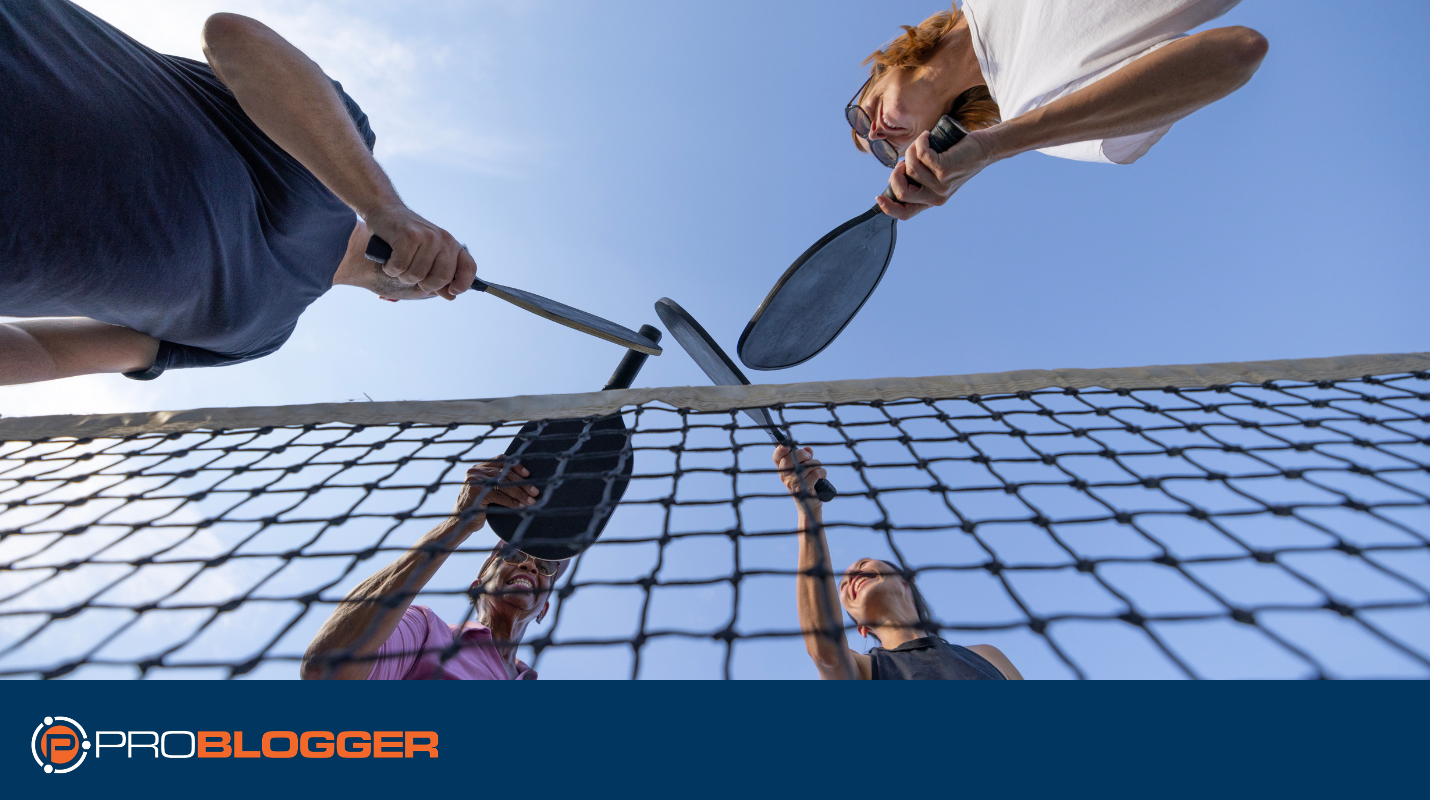
The "Kitchen," or the non-volley zone, is a seven-foot area on both sides of the net where players are prohibited from volleying unless the ball has bounced. Understanding the rules of the Kitchen is essential for any competitive player. In the content world, this translates to "strategic positioning"—knowing where to stand in a crowded marketplace to maximize impact without overstepping ethical or brand boundaries.
The "sweet spot" for a blogger is the intersection of high-authority expertise and audience need. Market saturation remains a significant challenge for new creators. According to 2024 content trends, the most successful blogs are those that occupy a specific niche—effectively "filling the gap" in the market. Just as a pickleball player must position themselves to cover the most likely return path of the ball, a blogger must position their content to answer the most pressing questions of their target demographic.
Analyzing the ‘Whiff’: Resilience and Data-Driven Adaptation
Even at the professional level, players occasionally "whiff"—a term for missing the ball entirely. In the context of digital publishing, a "whiff" is a piece of content that fails to gain traction, an SEO strategy that yields no results, or a platform pivot that alienates the existing audience.
Statistical analysis of successful digital entrepreneurs shows a high correlation between "failure frequency" and eventual success. The journalistic approach to a content "whiff" involves:
- Post-Mortem Analysis: Using tools like Google Analytics and Semrush to determine why a specific "shot" missed.
- Iterative Adjustment: Refining the "swing" by adjusting keywords, headlines, or distribution channels.
- Persistence: Maintaining a consistent publishing schedule despite individual setbacks.
In the sports world, the psychological resilience required to move past a missed point is identical to the professional discipline required to continue producing content after a period of low engagement.
The ‘Serve’ and the Importance of First Impressions
In pickleball, the serve must be underhand and made from behind the baseline. It is the only way to start a point, and its execution dictates the flow of the entire game. In digital media, the "serve" is the headline and the introductory paragraph.

Data from the American Press Institute suggests that a significant percentage of readers decide whether to continue with an article based solely on the headline and the first 100 words. A "strong serve" in blogging requires:
- Hook-Driven Leads: Immediately establishing the "why" for the reader.
- Value Proposition: Clearly stating what the reader will gain by continuing.
- SEO Optimization: Ensuring the "serve" is visible to search engines, much like ensuring a pickleball serve lands within the correct quadrant.
Broader Impact and Industry Implications
The crossover between recreational trends and professional strategy highlights a broader shift in how modern professionals approach work-life integration. As the boundaries between "play" and "productivity" blur, the lessons learned on the court are increasingly being applied to the boardroom and the newsroom.
Industry experts from the Content Marketing Institute note that the "gamification" of professional skills—using the logic of sports to improve business outcomes—is a growing trend. Pickleball, with its emphasis on rapid reflexes, strategic patience, and community, provides a particularly apt model for the fast-paced, high-engagement world of digital content.
Furthermore, the economic impact of pickleball—including equipment sales, court construction, and professional tournaments—mirrors the secondary economies of blogging, which include affiliate marketing, software-as-a-service (SaaS) tools for creators, and digital advertising networks. Both ecosystems rely on a steady influx of new participants and the continued engagement of "power users."
Conclusion: The Sustainable Future of Content
The integration of sports-based logic into digital strategy suggests that the most successful "players" in the creator economy will be those who can balance the competitive drive of a professional athlete with the community-focused mindset of a recreational player.
Pickleball teaches that while the name may be quirky, the strategy is rigorous. For bloggers, the takeaway is clear: success is not merely a product of "hitting the ball" (publishing content), but of mastering the "dink" (simplicity), respecting the "kitchen" (positioning), and embracing the "rally" (community). By adopting these principles, digital creators can move beyond the "whiffs" of the past and build content hubs that are as resilient and popular as the sport that inspired them. In the final analysis, whether on the court or behind the keyboard, the winners are those who stay focused, adapt to the changing environment, and never lose sight of the inherent joy of the game.