Ena Muazin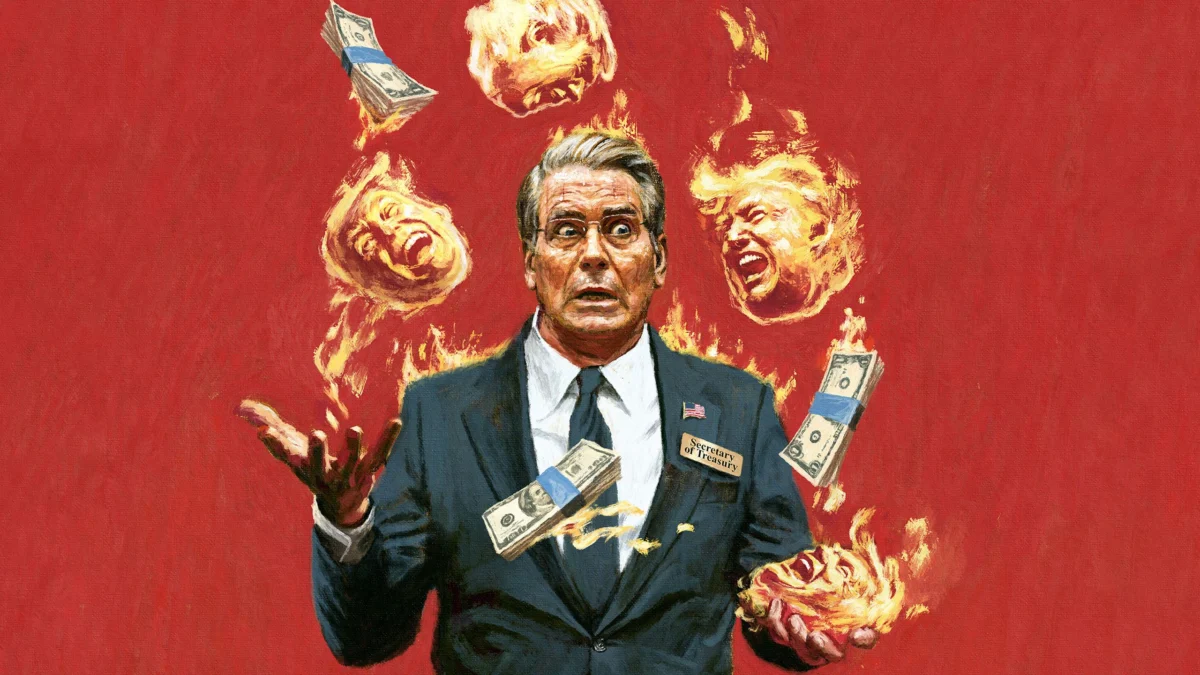
Frankfurt, New York – The intricate dance of international finance and geopolitics took center stage this week as U.S. Treasury Secretary Scott Bessent addressed journalists in Washington. While attempting a strategic deflection, Bessent’s remarks on the protracted conflict in Iran and economic ties with the Tehran regime inadvertently highlighted a broader, more pressing concern for global markets: the U.S. strategy to isolate Iran economically. Bessent drew a stark parallel between the Iranian Revolutionary Guard Corps and former East German soldiers, stating, "Remember that when the Berlin Wall fell, ordinary soldiers decided not to shoot their own countrymen." This analogy, while emotionally charged, sidestepped the core market anxiety surrounding the U.S. administration’s approach to Iran’s financial lifelines.
The Unforeseen Market Shift and Bessent’s Ascendancy
Bessent’s tenure has been marked by an era of rising interest rates for long-term U.S. bonds, reaching levels not seen since the global financial crisis of 2007-08. His appointment by President Donald Trump was intended to project an image of financial acumen and reliability to his former associates on Wall Street. However, Bessent’s actions have proven to be remarkably unpredictable, creating a climate of uncertainty even for those previously aligned with his strategies. This unpredictability has become a defining characteristic of his approach to economic policy, particularly concerning Iran.
The initial rise in bond yields, beginning in mid-August, signaled a significant recalibration of market expectations regarding inflation and future monetary policy. This period coincided with increasing geopolitical tensions in the Middle East, prompting analysts to scrutinize any policy pronouncements from the U.S. Treasury. Bessent’s deliberate ambiguity on certain economic fronts, while engaging on others, has fostered an environment where market participants are constantly attempting to decipher his underlying intentions.
The Strategic Imperative: Cutting Off Iran’s Financial Arteries
The U.S. administration’s overarching objective regarding Iran has been to sever its access to revenue streams that finance its regional activities and nuclear program. This strategy involves a multi-pronged approach, encompassing direct sanctions on individuals and entities, secondary sanctions targeting foreign companies doing business with Iran, and diplomatic pressure on international financial institutions. The effectiveness of these measures hinges on their perceived irrevocability and the U.S.’s willingness to enforce them rigorously.
The context for Bessent’s remarks on Iran’s financial isolation can be traced back to years of escalating tensions following the U.S. withdrawal from the Joint Comprehensive Plan of Action (JCPOA) in 2018. This decision by the Trump administration reinstated and intensified sanctions on Iran, significantly impacting its oil exports and access to the global financial system. The subsequent years have seen a cat-and-mouse game between Iran’s efforts to circumvent sanctions and the U.S.’s continuous tightening of enforcement mechanisms.

A Timeline of Escalation and Sanction Regimes
- 2015: The JCPOA is agreed upon, lifting many international sanctions in exchange for Iran curbing its nuclear program.
- 2018: The U.S. withdraws from the JCPOA and reimposes stringent sanctions on Iran, targeting its oil sector and financial transactions.
- 2019-2021: Tensions escalate with incidents in the Persian Gulf and increased U.S. pressure on international banks to comply with sanctions. Iran begins to reduce its compliance with certain JCPOA provisions.
- 2022-2023: Renewed diplomatic efforts to revive the JCPOA falter. Iran’s regional activities and its perceived support for certain militant groups continue to be a major point of contention. Global energy markets remain volatile, with Iran’s oil production and export levels closely monitored.
- Mid-August [Current Year]: Long-term U.S. bond yields surge to post-2008 crisis highs, signaling a significant shift in market sentiment and increasing the cost of borrowing for the U.S. government.
- Early [Current Week]: Treasury Secretary Scott Bessent makes public remarks, addressing the Iran situation and drawing historical parallels, while seemingly avoiding direct commentary on the prevailing market concerns regarding interest rates.
The Economic Fallout: Data and Implications
The U.S. Treasury’s ability to wield financial sanctions as a foreign policy tool is underpinned by the dollar’s dominant role in global trade and finance. Iran’s economy, heavily reliant on oil exports, is particularly vulnerable to measures that restrict its access to international markets and banking systems.
- Oil Exports: Prior to the reimposition of stringent U.S. sanctions in 2018, Iran was a significant oil producer, exporting over 2.5 million barrels per day. Sanctions have drastically reduced this figure, with estimates fluctuating but generally remaining well below 1 million barrels per day, often through unofficial channels or to countries with less stringent adherence to U.S. policy.
- Currency Devaluation: The Iranian Rial has experienced significant devaluation against the U.S. dollar, exacerbating inflation and eroding the purchasing power of its citizens. The gap between the official exchange rate and the black market rate has often been substantial, reflecting the economic pressures.
- Access to Global Finance: Restrictions on Iranian banks’ access to the SWIFT international payments system and their inability to engage in dollar-denominated transactions severely limit their ability to conduct international trade and manage foreign reserves.
The implications of cutting off Iran’s revenue sources are multifaceted. On one hand, it aims to curb the regime’s capacity to fund destabilizing activities in the region, including support for groups designated as terrorist organizations by the U.S. and its allies. On the other hand, it can lead to humanitarian consequences for the Iranian population due to shortages of essential goods and increased living costs. Furthermore, persistent efforts by Iran to circumvent sanctions can lead to the development of parallel financial networks, potentially impacting the transparency and stability of the global financial system.
Analysis of Bessent’s Strategic Ambiguity
Scott Bessent’s public persona and communication style have been characterized by a deliberate avoidance of direct engagement on certain market-moving topics, particularly the recent surge in interest rates. This approach can be interpreted in several ways:
- Strategic Leverage: By maintaining an air of unpredictability, Bessent may be seeking to maximize the impact of U.S. policy. Market participants, uncertain about the Treasury’s next move, might preemptively adjust their behavior, aligning with U.S. objectives to avoid potential repercussions.
- Focus on Core Objectives: The administration’s primary focus on sanctions against Iran suggests that this remains a paramount foreign policy and national security objective. Bessent’s rhetoric on Iran, even if indirect, serves to reinforce this commitment.
- Managing Market Expectations: The administration might be attempting to separate the discourse on geopolitical issues from the purely financial market dynamics. By focusing on the geopolitical rationale behind sanctions, they might be trying to avoid directly influencing short-term market fluctuations driven by interest rate expectations.
However, this strategy also carries risks. The lack of clear communication on interest rate policy, for instance, can lead to increased market volatility and misinterpretations of the Federal Reserve’s stance, even though the Treasury and the Fed operate independently. For market participants, the absence of clarity from such a high-level official can create a vacuum filled by speculation, potentially leading to irrational market movements.
Broader Implications for Global Markets and Diplomacy
The U.S. Treasury’s approach to Iran, characterized by robust sanctions and a deliberate communication strategy, has significant ripple effects beyond the bilateral relationship.
- International Cooperation on Sanctions: The success of U.S. sanctions often depends on the cooperation of allies and international bodies. Bessent’s pronouncements, while aimed at signaling U.S. resolve, can also prompt discussions among other nations about the efficacy and potential unintended consequences of such measures. European allies, for instance, have historically maintained a more nuanced approach to engagement with Iran, often prioritizing diplomatic solutions and the preservation of the JCPOA.
- Energy Market Volatility: Iran’s role as a significant oil producer means that any disruptions to its export capacity or changes in its production levels can impact global energy prices. The U.S. strategy to limit Iran’s oil revenue, while intended to exert pressure, can also contribute to market tightness and price fluctuations, affecting economies worldwide.
- The Future of Financial Regulation: The ongoing efforts to enforce sanctions and counter illicit financial flows are shaping the landscape of international financial regulation. The U.S. Treasury’s actions are closely watched by global financial institutions and regulators, influencing their compliance strategies and risk management frameworks.
In conclusion, U.S. Treasury Secretary Scott Bessent’s recent remarks, while employing a historical analogy to frame policy towards Iran, underscore a broader strategic objective of economic isolation. His tenure has been defined by a complex interplay of rising interest rates and geopolitical maneuvering, with his communication style often characterized by calculated ambiguity. This approach, while potentially designed to maximize leverage, creates an environment of uncertainty for global markets. The U.S. strategy of cutting off Iran’s financial lifelines, while aimed at curbing regional destabilization, carries significant economic and diplomatic implications that continue to shape international relations and financial markets. The market’s keen interest in Bessent’s actions, even when unaddressed directly, highlights the profound impact of U.S. economic policy on the global stage.