Lina Wu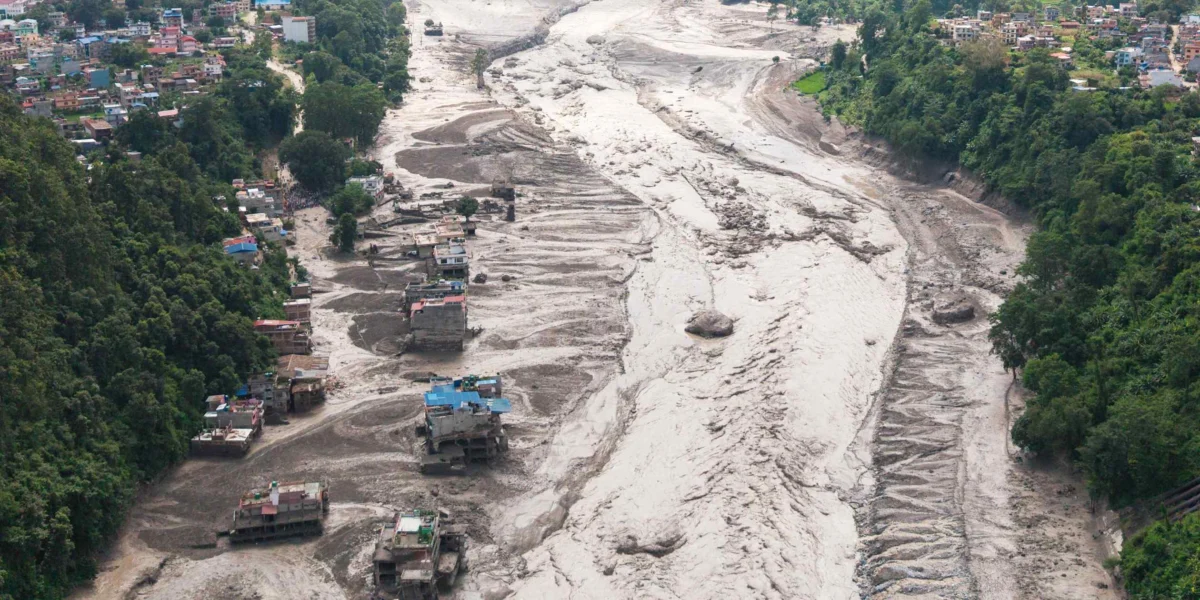
Governments across Asia were scrambling to assess the full scale of the devastation and mobilize emergency resources on Thursday, as hundreds of foreign tourists were reported missing following a series of catastrophic flash floods and landslides that have ravaged parts of Nepal and the Tibet Autonomous Region of China. The relentless downpours, which began over the weekend and intensified dramatically on Wednesday and Thursday, have triggered widespread destruction, engulfing villages, severing vital transportation arteries, and leaving a trail of impassable debris.
The initial reports paint a grim picture. In Nepal, the Trishuli River in the Nuwakot district, a popular trekking and tourism hub, overflowed its banks, inundating homes and businesses with thick mud and debris. Aerial footage released by Reuters showed a landscape transformed by the deluge, with homes buried under layers of mud and once-familiar streets rendered unrecognizable. The exact number of casualties and those affected is still emerging, but authorities have confirmed a significant death toll, with fears that the number will rise as rescue operations gain momentum.
The plight of foreign visitors has become a particular concern. Nepal, a global magnet for trekkers, climbers, and cultural tourists, hosts thousands of international visitors annually, many of whom venture into remote mountainous regions where communication can be sporadic at the best of times. The sudden and violent nature of the floods has cut off access to many of these areas, leaving authorities struggling to ascertain the whereabouts and well-being of an unknown number of individuals. The Ministry of Foreign Affairs in Kathmandu has established an emergency hotline and is working in conjunction with embassies and consulates to identify and locate their citizens.
In Tibet, the impact has been equally severe, though reporting from the region is often more tightly controlled. Chinese state media has acknowledged significant disruptions, with flash floods and landslides impacting several prefectures in the southern part of the autonomous region, an area that borders Nepal and is also a popular destination for adventure tourism, particularly for mountaineering expeditions on Himalayan peaks. The treacherous terrain, already prone to seismic activity and extreme weather, has been pushed to its limits by the sustained rainfall.
Chronology of the Catastrophe
The crisis appears to have escalated rapidly. While intermittent heavy rainfall has been a feature of the monsoon season in the Himalayas, the intensity and duration of the recent downpours have been exceptional.
- Late August 2026 (Ongoing): Sustained and unusually heavy monsoon rainfall begins across Nepal and the Tibet Autonomous Region.
- August 25-26, 2026: Rivers, particularly the Trishuli in Nepal, begin to swell significantly. Localized flooding and minor landslides are reported in several districts.
- August 26, 2026 (Afternoon/Evening): The situation deteriorates dramatically. Major flash floods and widespread landslides are reported across affected regions. The Trishuli River breaches its banks, causing extensive damage in Nuwakot and surrounding areas. Reports of submerged villages and impassable roads emerge.
- August 27, 2026 (Morning): The full scale of the disaster becomes apparent. Aerial surveys reveal widespread destruction. Hundreds of foreign tourists are reported missing, with communication severely hampered. Emergency services begin initial assessments and rescue efforts in accessible areas. Governments begin to mobilize international aid and coordinate response efforts.
Supporting Data and Environmental Context
The Himalayan region is inherently susceptible to natural disasters, but the current event is being characterized by meteorologists and environmental scientists as exceptionally severe. The monsoon season, typically running from June to September, brings essential rainfall to the region but can also unleash destructive forces.
- Monsoon Intensity: Preliminary data from meteorological stations in Nepal and China suggest rainfall totals have significantly exceeded average levels for this period, with some areas recording more than double the typical monthly precipitation in just a few days. The precise meteorological triggers for this extreme event are still under analysis but are likely linked to complex atmospheric patterns and potentially warmer ocean temperatures in the Bay of Bengal, which can fuel monsoon systems.
- Geological Vulnerability: The Himalayas are a geologically young and active mountain range, characterized by steep slopes and loose soil. Heavy rainfall saturates the ground, reducing its stability and increasing the likelihood of landslides. Deforestation, though an issue with complex contributing factors, can exacerbate soil erosion and increase the vulnerability of slopes to landslides.
- River Systems: Nepal is crisscrossed by a network of powerful rivers fed by glacial melt and monsoon rainfall. The Trishuli River, originating from the Tibetan plateau, is a major artery. The sudden influx of water from upstream, combined with intense local rainfall, can lead to rapid and devastating riverine flooding. Similar hydrological dynamics are at play in the affected areas of Tibet.
Official Responses and International Concern
The immediate focus for governments in the region is on search and rescue operations.
Nepal:
The Nepalese government has declared a state of emergency in the worst-affected districts. The Nepal Army, Armed Police Force, and Nepal Police, along with local volunteers, are engaged in arduous rescue efforts. Helicopters are being deployed to reach remote areas, but visibility and weather conditions are posing significant challenges. The government has appealed for international assistance, requesting specialized search and rescue teams, medical supplies, and financial aid. The Nepali Tourism Board has issued advisories for tourists, urging caution and adherence to local guidance.
China:
In Tibet, rescue efforts are being coordinated by the regional government. State media has reported that emergency response teams, including the People’s Liberation Army and local disaster relief units, have been dispatched. Efforts are underway to clear roads and restore essential services. China has indicated it will be monitoring the situation closely and will provide support where necessary.
International Reactions:
Several countries with significant expatriate populations in Nepal and Tibet have expressed grave concern. The United States, India, the United Kingdom, and other nations are reportedly working to ascertain the status of their citizens and are in communication with Nepalese and Chinese authorities. The United Nations Office for the Coordination of Humanitarian Affairs (OCHA) has offered its support and is coordinating with international aid agencies.
Broader Impact and Implications
The catastrophic floods and landslides are expected to have far-reaching consequences beyond the immediate human tragedy.
- Tourism Sector: Nepal’s economy is heavily reliant on tourism. The destruction of infrastructure, the loss of life, and the lingering fear of further disasters could have a devastating and long-lasting impact on the industry. Rebuilding efforts will be extensive and costly, and restoring tourist confidence will be a significant challenge.
- Infrastructure and Economy: The damage to roads, bridges, and communication networks will disrupt trade and impede the delivery of essential goods and services. The economic cost of rebuilding will be substantial, placing a heavy burden on Nepal’s developing economy. Similar impacts are expected in affected regions of Tibet.
- Humanitarian Crisis: Beyond the immediate casualties, the displacement of thousands of people, the destruction of homes and livelihoods, and the potential for disease outbreaks due to contaminated water sources will create a significant humanitarian crisis that will require sustained international support.
- Climate Change Considerations: While natural disasters are a recurring feature of the region, the increasing frequency and intensity of extreme weather events are consistent with scientific projections regarding the impact of climate change. This event will likely fuel further discussions and calls for enhanced climate adaptation and mitigation strategies in vulnerable mountain ecosystems.
The immediate priority remains the urgent search for survivors and the provision of humanitarian aid. However, as the waters recede and the mud begins to be cleared, the immense task of recovery and rebuilding will confront these resilient communities, underscoring the fragility of life in one of the world’s most majestic yet perilous landscapes. The full extent of the human and material loss is still being tallied, a somber testament to the raw power of nature unleashed.