Clara Shinta
The collaboration, initially announced in March and subsequently refined through an early-access program, allows eligible US residents to leverage their Bitcoin (BTC) holdings as collateral for a down payment on a home without necessitating the sale of their digital assets. This innovative financial instrument is designed to address a persistent challenge for cryptocurrency investors who hold significant wealth in volatile digital assets but wish to participate in the traditional housing market without triggering taxable events or losing exposure to their crypto investments.
A New Era for Homeownership: Bridging Crypto and Mortgages
At its core, the Better Mortgage and Coinbase offering seamlessly combines a traditional Fannie Mae-backed home loan with a distinct down payment loan that is exclusively secured by Bitcoin. According to detailed information provided by Coinbase’s Help Center, this dual-loan structure streamlines the borrowing process, allowing for a single, consolidated monthly payment that covers both components. This integration is a crucial step towards making crypto-backed lending more accessible and less cumbersome for the average consumer.
For a borrower to qualify, they must pledge Bitcoin equivalent to at least 250% of the value of the down payment loan. This substantial over-collateralization ratio is a critical risk mitigation strategy, designed to buffer against Bitcoin’s inherent price volatility and protect the lender’s interests. The pledged Bitcoin is securely transferred to Better’s designated custodial account, which is managed on Coinbase Prime, Coinbase’s institutional trading and custody platform known for its robust security protocols. This custodial arrangement ensures the safety and integrity of the digital assets throughout the loan term.
A key differentiator of this product, and a significant point of relief for potential borrowers, is the explicit clause that Bitcoin price declines alone do not trigger margin calls or alter the terms of the mortgage. This provision is a direct response to the market’s understanding of cryptocurrency volatility, offering a degree of stability that traditional margin lending on securities often lacks. However, the system is not without safeguards for the lender; if a borrower becomes 60 days delinquent on their monthly payments, Better retains the right to liquidate the pledged Bitcoin to cover outstanding debts, as outlined in the loan terms. Upon full repayment or refinancing of the mortgage, the pledged Bitcoin is returned to the borrower, subject to the agreed-upon loan conditions.
Eligibility for this groundbreaking product extends to US residents who possess a verified Coinbase account. Beyond these crypto-specific requirements, applicants remain subject to Better’s standard, rigorous underwriting criteria, which include assessments of creditworthiness, income stability, and other financial health indicators. To further sweeten the deal for its loyal user base, Coinbase One members are eligible for a 1% rebate from Better, capped at $10,000, which can be strategically utilized to offset closing costs and associated fees, thereby reducing the upfront financial burden of homeownership.
A Timeline of Innovation: From Concept to General Availability
The journey of the Bitcoin-backed mortgage from a conceptual innovation to a widely available product underscores a broader, accelerating trend of digital asset integration into the traditional financial ecosystem. Better and Coinbase first unveiled their ambitious plans for a token-backed mortgage in March, generating considerable buzz within both the cryptocurrency and real estate sectors. This initial announcement was followed by an early-access program, allowing a select group of users to test the product, provide feedback, and help refine its mechanics before its general release. This phased rollout strategy is common for innovative financial products, ensuring robustness and user-friendliness.
The move by Better and Coinbase does not occur in a vacuum; it is part of a growing wave of initiatives aimed at incorporating digital assets into US mortgage underwriting processes. In January, for instance, Newrez, a prominent mortgage lender and servicer, announced its own plans to recognize certain cryptocurrency holdings when evaluating mortgage applications, effective February. This included both home purchases and refinancing options, signaling a clear shift in how traditional lenders view digital assets. Newrez’s approach, while distinct from Better and Coinbase’s, demonstrated an increasing industry comfort with the idea of crypto as a verifiable asset class.
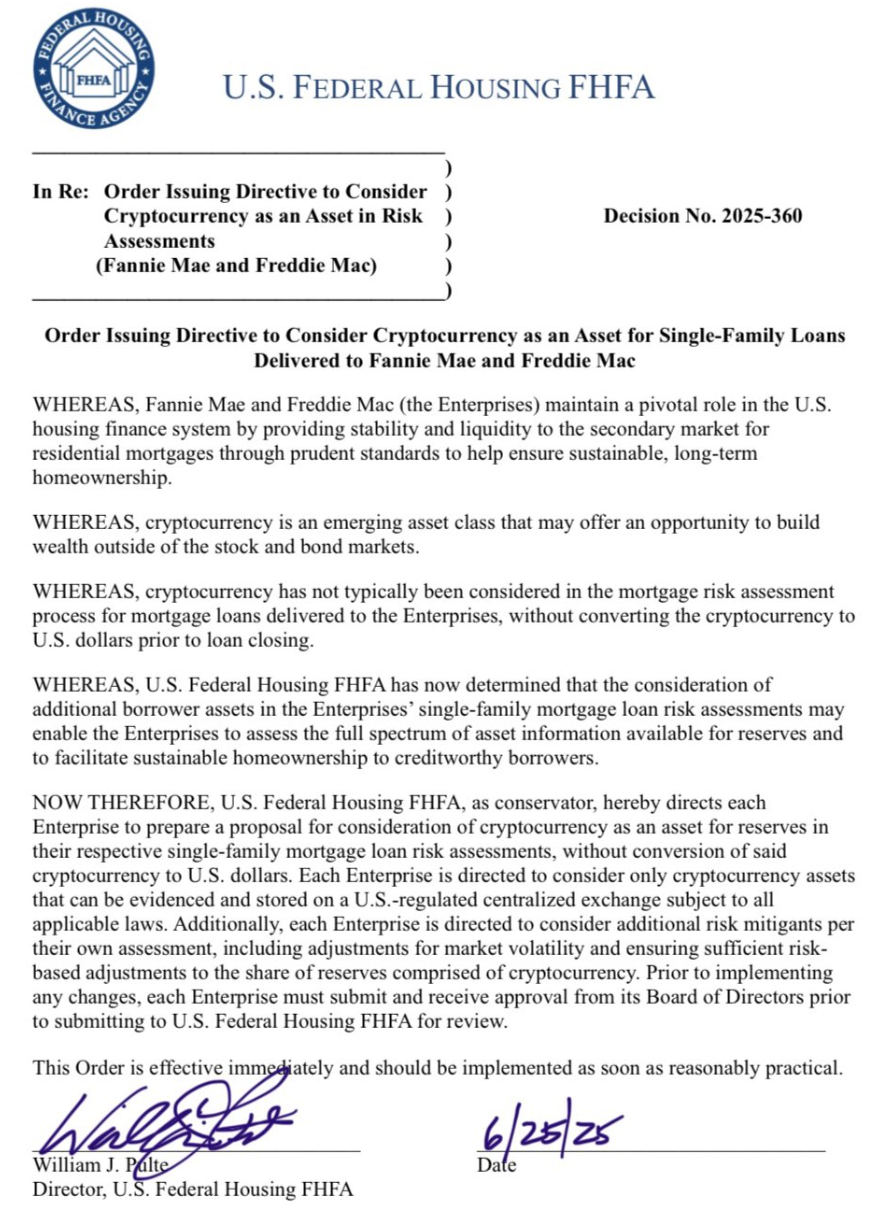
Perhaps even more significant, and indicative of a shifting regulatory landscape, was the Federal Housing Finance Agency’s (FHFA) directive in June 2025. The FHFA, which oversees Fannie Mae and Freddie Mac, instructed these government-sponsored enterprises (GSEs) to develop proposals for considering cryptocurrency held on US-regulated centralized exchanges as a legitimate asset in single-family mortgage risk assessments. Crucially, this directive specified that such consideration should not require the prior conversion of cryptocurrency to US dollars, a move that could unlock vast amounts of crypto wealth for mortgage qualification without triggering immediate tax implications or forcing investors to exit their positions. The FHFA also mandated that Fannie Mae and Freddie Mac propose robust risk-mitigation measures to address crypto’s inherent volatility, with any proposed changes requiring board approval before FHFA review. This regulatory engagement is vital for providing a framework for future innovations and ensuring market stability.
These developments collectively illustrate a rapid evolution in financial services, moving from a cautious skepticism of digital assets to a more pragmatic and strategic integration. The general availability of Better and Coinbase’s product can be seen as a direct outcome of this evolving perspective, pushing the boundaries of what is possible in home financing.
The Economic Imperative: Addressing Housing Affordability with Digital Assets
The introduction of Bitcoin-backed mortgages comes at a particularly salient time for the US housing market, which continues to grapple with near-historic high prices and persistent affordability challenges. According to data compiled by the Federal Reserve Bank of St. Louis, drawing from the US Census Bureau and Department of Housing and Urban Development, the median sales price of a new US home stood at approximately $400,000 in 2026. While this figure represents a slight decline from peak prices observed in 2022, it remains significantly elevated compared to historical averages, creating substantial barriers to entry for many prospective homebuyers.
For context, the median home price in the US was roughly $200,000 just a decade prior. This exponential growth, coupled with stagnant wage growth for many, has widened the gap between aspiring homeowners and the financial realities of purchasing property. A typical down payment, often ranging from 3.5% for FHA loans to 20% or more for conventional mortgages to avoid private mortgage insurance (PMI), can represent a formidable sum. On a $400,000 home, a 20% down payment alone amounts to $80,000, a significant hurdle for many households, even those with substantial savings.
This is where the Bitcoin-backed mortgage product aims to make a tangible difference. It targets a demographic that has accumulated considerable wealth in cryptocurrencies, particularly Bitcoin, but has been unable to readily deploy this capital for traditional assets like real estate without incurring substantial capital gains taxes or losing their long-term investment positions. A 2023 survey by the Federal Reserve found that approximately 7% of US adults owned cryptocurrency, translating to tens of millions of individuals with potentially significant digital asset holdings. For these individuals, the Better and Coinbase product offers a pathway to homeownership by unlocking the liquidity of their crypto assets in a non-taxable event, at least initially.
The problem this product solves is not just about having assets, but about the form of those assets. Many crypto holders are "crypto-rich" but "fiat-poor" in terms of readily accessible cash for a down payment. By allowing Bitcoin to serve as collateral, they can maintain their investment exposure and potential future gains while simultaneously fulfilling the immediate need for a down payment. This represents a sophisticated financial engineering solution to a modern economic challenge, leveraging an emerging asset class to address a deeply traditional financial need.
Navigating the Risks: Collateralization and Volatility Management
One of the most critical aspects of the Bitcoin-backed mortgage product is its approach to risk management, particularly concerning the notoriously volatile nature of cryptocurrencies. The requirement for borrowers to pledge Bitcoin worth at least 250% of the down payment loan is a direct and robust measure to mitigate this volatility. For example, if a borrower needs a $50,000 down payment loan, they would need to pledge $125,000 worth of Bitcoin. This substantial buffer ensures that even if Bitcoin’s value experiences a significant downturn, there is ample collateral remaining to cover the down payment loan.
To put this into perspective, traditional securities-backed lending often requires collateral ratios ranging from 120% to 200%, depending on the type of security and market conditions. The 250% ratio for Bitcoin reflects the higher perceived risk and price swings associated with digital assets. This conservative approach is designed to instill confidence in the lending model, protecting Better Mortgage from market fluctuations that could otherwise jeopardize the loan.
Crucially, the product explicitly states that Bitcoin price declines alone do not trigger margin calls. This feature is a game-changer for crypto holders, as it differentiates this product from typical crypto-collateralized loans that often require borrowers to add more collateral or face liquidation if the asset’s price drops below a certain threshold. The absence of margin calls for price volatility provides borrowers with greater peace of mind and predictability, allowing them to maintain their long-term conviction in Bitcoin without the constant threat of having to top up their collateral during market dips. This design choice acknowledges the HODL (Hold On for Dear Life) mentality prevalent in the crypto community, allowing users to remain invested while accessing liquidity.
However, it is vital to understand that while Bitcoin price drops do not trigger margin calls, payment delinquencies absolutely do. If a borrower fails to make payments for 60 days, Better Mortgage reserves the right to liquidate the pledged Bitcoin. This mechanism ensures that the lender is protected against credit risk, irrespective of the underlying asset’s performance. The pledged Bitcoin’s custody on Coinbase Prime adds another layer of security, leveraging an institutional-grade platform with advanced security features and regulatory compliance to safeguard the collateral. This blend of high collateralization, no margin calls for price volatility, and stringent delinquency clauses represents a carefully balanced approach to risk in a novel financial product.
Industry Reactions and Expert Perspectives
The launch of Better and Coinbase’s Bitcoin-backed mortgage product has elicited a range of reactions across the financial industry, from enthusiastic endorsement to cautious scrutiny.
From the Lender’s Vision: Both Better Mortgage and Coinbase articulate this product as a significant step towards financial innovation and accessibility. They position it as a solution that empowers crypto holders, enabling them to unlock the value of their digital assets for real-world purposes without forced liquidation. Proponents within these companies highlight the democratizing potential, arguing that it opens up homeownership to a segment of the population whose wealth has traditionally been difficult to integrate into conventional financial systems. They envision a future where digital assets play a more central role in personal finance, and this product is a testament to that vision.
Financial Analysts’ View: Many financial analysts view this as a landmark event, signaling the increasing maturation and institutional acceptance of cryptocurrencies. They point to the potential for market disruption, as traditional lenders may face pressure to innovate and offer similar products. The product could also introduce a new source of capital into the mortgage market, potentially diversifying funding mechanisms. However, some analysts express caution regarding the scalability of such products in a highly volatile market. Concerns about potential systemic risk, should crypto-backed lending become widespread without robust regulatory oversight, are also frequently raised. They emphasize the need for transparent risk disclosures and continuous monitoring of market conditions.
Consumer Advocacy: Consumer protection groups are likely to view this product with a mixture of interest and concern. While acknowledging the potential benefits of increased access to homeownership for crypto holders, they will undoubtedly stress the importance of comprehensive borrower education. The complexity of the dual-loan structure, the implications of Bitcoin volatility on overall financial health, and the specifics of liquidation clauses must be clearly understood by borrowers. Advocates will likely call for stringent regulatory oversight to ensure fair lending practices, prevent predatory lending, and protect consumers from the unique risks associated with digital assets. The potential for unseasoned investors to over-leverage themselves against a volatile asset will be a key area of focus.
Regulatory Scrutiny: The FHFA’s directive in 2025 already indicates a proactive stance from regulators. The general availability of this product will likely intensify scrutiny from various federal agencies, including the Securities and Exchange Commission (SEC), the Treasury Department, and state financial regulators. They will be keen to understand the product’s implications for financial stability, consumer protection, and anti-money laundering (AML) efforts. The absence of margin calls for price drops, while beneficial for borrowers, might be examined to ensure it doesn’t mask underlying risks for the lender or the broader financial system. This product could serve as a case study, accelerating the development of more definitive regulatory frameworks for crypto-backed financial products across the board.
Broader Implications: The Future of Crypto in Traditional Finance
The launch of the Bitcoin-backed mortgage product by Better Mortgage and Coinbase represents far more than just a new lending option; it signifies a profound shift in the relationship between digital assets and traditional finance.
Mainstreaming Digital Assets: This product is a powerful statement about the increasing legitimacy and utility of cryptocurrencies beyond speculative trading. By enabling Bitcoin to serve as collateral for a Fannie Mae-backed mortgage, it elevates Bitcoin from a niche investment to a recognized asset class within the highly regulated and conservative housing finance sector. This pushes crypto further into the mainstream, encouraging broader adoption and acceptance among individuals and institutions who may have previously been hesitant.
Financial Innovation and Inclusivity: The product exemplifies financial innovation aimed at solving real-world problems. It addresses the liquidity paradox faced by many crypto holders—wealth held in a valuable asset that is difficult to convert into traditional purchasing power without incurring significant costs. By offering a non-taxable, non-liquidating pathway to access this wealth, it potentially makes homeownership more accessible to a new demographic, fostering greater financial inclusivity for those who have built their assets in the digital economy. This could pave the way for other similar crypto-backed lending products across various asset classes, from auto loans to business financing.
Evolution of the Regulatory Landscape: The existence and structure of this product will undoubtedly place increased pressure on regulators to develop clear, comprehensive, and consistent guidelines for digital asset-backed financial instruments. The FHFA’s early directive is a precursor, but more granular regulations from agencies like the SEC, the Federal Reserve, and state banking departments are likely to follow. This product will serve as a crucial test case, informing future policy decisions regarding risk management, consumer protection, and the integration of blockchain technology into legacy financial systems. The regulatory clarity that emerges will be vital for the long-term growth and stability of this burgeoning sector.
Challenges and Opportunities: While the potential upsides are significant, challenges remain. Widespread market education is paramount to ensure borrowers fully understand the product’s nuances, particularly the interplay of crypto volatility, collateralization ratios, and delinquency clauses. Scalability will also be a key factor; as more people adopt such products, the infrastructure and risk management systems will need to evolve to handle increased volume and complexity. However, the opportunities are vast: for crypto holders, it means greater utility for their assets; for lenders, it opens new markets and revenue streams; and for the financial system as a whole, it represents a bold step towards a more integrated and digitally native future.
In conclusion, the general availability of the Better Mortgage and Coinbase Bitcoin-backed mortgage product is a landmark event, bridging the innovative world of digital assets with the established landscape of traditional home financing. It offers a tangible solution for a specific demographic, catalyzes financial innovation, and sets a precedent for how cryptocurrencies might be integrated into mainstream financial services in the years to come, fundamentally reshaping how individuals leverage their digital wealth for real-world aspirations.