Gilang Muhammad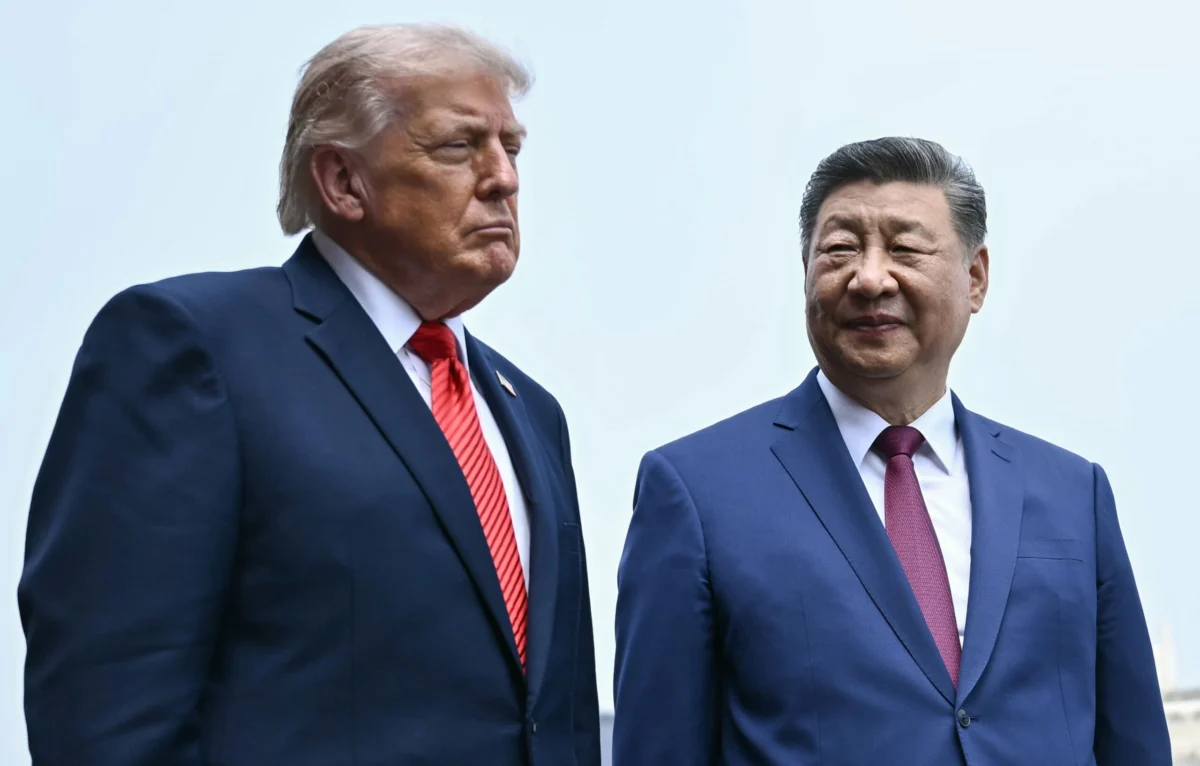
BEIJING – The United States has significantly intensified its economic campaign against Iran, threatening to sever any financial institutions, particularly Chinese banks, that facilitate sanctions evasion from the American financial system. This aggressive stance places Beijing’s major lenders in an uncomfortable and potentially costly dilemma: defying Washington’s demands risks isolation from the global dollar-denominated financial architecture, while compliance could undermine its long-standing strategic ties and energy security interests with Tehran. The escalating pressure comes at a diplomatically sensitive moment, just weeks before a critical summit between U.S. President Donald Trump and Chinese President Xi Jinping.
On Monday, August 24, 2026, U.S. Treasury Secretary Scott Bessent announced a sweeping new offensive, dubbed "Operation Economic Outcast," as part of an "economic D-Day" against Iran. Speaking from Washington, Bessent declared that any entity found facilitating "money laundering or sanctions evasion on behalf of Iran risks being cut off from the U.S. financial system." The implications for China, Iran’s historically largest trading partner and primary oil purchaser, were immediate and profound. When directly questioned about Chinese banks, Bessent did not mince words: "If they facilitate transactions and are part of the ecosystem that turns Iranian oil into money, into repression, they will be targeted." This declaration underscored Washington’s resolve to enforce its sanctions regime globally, regardless of geopolitical sensitivities.
Beijing’s Defiant Stance and Economic Realities
China swiftly condemned the U.S. actions. On Tuesday, August 25, 2026, a Chinese Foreign Ministry spokesperson stated that Beijing would "take all necessary measures" to protect itself and its entities. The spokesperson reiterated China’s "firm opposition to illicit unilateral sanctions that have no basis in international law or the authorization of the UN Security Council," a consistent position Beijing has maintained against what it views as extraterritorial application of U.S. law.
Prior to the outbreak of the Iran war on February 28, 2026, China was a crucial lifeline for Iran, importing approximately 90% of its exported oil. This accounted for roughly 12% of China’s total crude imports, solidifying its position as Iran’s largest trading partner. This deep energy dependence and robust trade relationship have created a complex web of financial transactions that are now squarely in Washington’s crosshairs. The expanded U.S. sanctions specifically identified several China-based companies and individuals alleged to have assisted the Iranian military, though exact details of these entities and the nature of their assistance were not immediately made public.
The U.S. Treasury Department indicated that it would provide countries with a timeline to cease identified activities, though these dates were not publicly disclosed. When pressed for details regarding communication on this timeline, China’s Foreign Ministry maintained that it was closely monitoring the situation and reiterated its commitment to protecting its national interests. This diplomatic exchange highlights the delicate balance Beijing must strike between safeguarding its economic ties with Iran and maintaining access to the indispensable U.S. dollar-dominated global financial system.
The Dollar’s Enduring Hegemony and China’s Hedging Strategies

At the heart of this geopolitical chess match lies the undeniable dominance of the U.S. dollar in global finance. According to data from Swift, the secure bank messaging system underpinning international banking, the U.S. dollar still commanded over half of all global payments in July 2026. In the critical realm of trade finance, its supremacy was even more pronounced, accounting for nearly 80% of transactions during the same period. China’s yuan, while growing in international prominence, still lags significantly, ranking fifth at a modest 3.1% of global payments and second at 8.4% in trade finance – notably a decline from over 4% in early 2025 for payments.
This stark reality means that any major financial institution, especially one as globally integrated as China’s state-owned banks, faces immense operational and reputational risks if cut off from the U.S. financial system. Such a move would effectively deny them the ability to conduct transactions in dollars, process international payments, or engage in correspondent banking relationships with a vast network of global financial institutions, crippling their international operations.
Recognizing this vulnerability, China has been proactively developing alternative mechanisms to reduce its reliance on the dollar. Peter Alexander, Shanghai-based managing director of advisory firm Z-Ben, emphasized that China’s Cross-Border Interbank Payment System (CIPS) serves as a critical "geopolitical hedging instrument" rather than a complete abandonment of dollar-centered finance. The People’s Bank of China initiated the development of CIPS in 2012, notably the same year the U.S. Treasury sanctioned China’s relatively small Bank of Kunlun over its illicit dealings with Iran. This historical context underscores the strategic impetus behind CIPS.
CIPS has witnessed a notable increase in transactions since the Russia-Ukraine war began in 2022, and official figures indicate continued growth throughout 2026. The system currently lists 210 direct participating institutions globally, predominantly affiliates of state-owned Chinese banks. While still dwarfed by Swift in terms of volume and reach, CIPS offers a yuan-denominated alternative for cross-border transactions, providing a measure of insulation against dollar-based sanctions.
Further illustrating China’s diversification efforts, Alexander pointed to recent bilateral currency swap agreements. In August 2026, both Argentina and Australia renewed such agreements with China, enabling the direct exchange of tens of billions of dollars’ worth of yuan between their central banks. These swaps facilitate trade and investment without requiring conversion into U.S. dollars, offering a pragmatic workaround for countries seeking to mitigate dollar exposure or bypass potential sanctions.
The Intricate Dynamics of US-China Economic Rivalry
The "economic D-Day" against Iran, therefore, represents a significant escalation in the broader economic rivalry between the U.S. and China. While analysts like Tianchen Xu, senior economist at The Economist Intelligence Unit, believe China will strive to remain within the dollar system to benefit its trade-driven economy, he also anticipates Beijing will not passively comply with expanding U.S. sanctions. Xu suggested that China might retaliate with measures such as rare earth controls – a potent threat given China’s near-monopoly on these critical minerals essential for high-tech industries, including defense and electronics, where the U.S. has significant dependencies.
However, the U.S. also faces its own constraints. Its strategic need for access to these critical minerals from China provides an incentive to prevent the relationship from spiraling into a full-blown economic conflict. This interdependence creates a complex web of leverage and vulnerability for both superpowers, making any "economic D-Day" a challenging proposition for the Trump administration to execute without unintended consequences.

Looming Summit and Geopolitical Priorities
Adding another layer of complexity to the situation is the impending summit between President Trump and President Xi, expected to take place in the U.S. late next month, following Trump’s earlier visit to Beijing in May 2026. Dan Wang, Eurasia Group’s China director, highlighted that the U.S. has a vested interest in not derailing this high-stakes diplomatic encounter.
Wang emphasized that the core of the China-U.S. relationship revolves more around the sensitive Taiwan situation than the China-Iran tie, which she described as "not nearly as close as outsiders have imagined." She pointed out that Beijing has effectively halted state-backed infrastructure investment in Iran since 2018, suggesting a more pragmatic, less ideologically driven relationship than often perceived. Removing a major Chinese bank from the Swift system, Wang cautioned on CNBC’s "The China Connection," would trigger significant devaluation pressure on the Chinese yuan, a consequence that would be "not acceptable" to Beijing.
The broader geopolitical context further illustrates China’s nuanced position. Earlier in 2026, China played a role in brokering initial peace talks between Iran and the U.S. in Pakistan, demonstrating its interest in regional stability and its desire to project a responsible global power image. However, analysts at the time cautioned that Beijing possessed neither the capability nor the strong inclination to unilaterally pressure either side into making significant concessions. China’s strategic interest often lies in maintaining a balance that safeguards its energy supplies and trade routes without becoming entangled in the intractable conflicts of others.
Market Reactions and Forward Outlook
Since the Iran war commenced on February 28, 2026, the U.S. dollar index has shown resilience, strengthening by approximately 1.5%. Interestingly, the Chinese yuan has also demonstrated strength against major currencies during this period, gaining nearly 2% against the U.S. dollar and more than 3% against the euro. These currency movements reflect the global market’s response to the heightened geopolitical tensions and the perceived safety of certain assets.
As the U.S. presses forward with its "economic D-Day" against Iran, the ultimate impact on China’s financial sector and its broader relationship with the U.S. remains to be seen. Peter Alexander’s observation that "Beijing hasn’t even begun to play hard ball with America" suggests that China has further retaliatory options if pushed too far. He concluded with a pertinent question: "the question isn’t what could be done, the question is whether anything WILL be done." This highlights the immense pressure on both Washington and Beijing to carefully calibrate their actions, navigating the treacherous waters of economic sanctions, geopolitical rivalry, and an impending high-stakes summit, all while the stability of the global financial system hangs in the balance.