Clara Shinta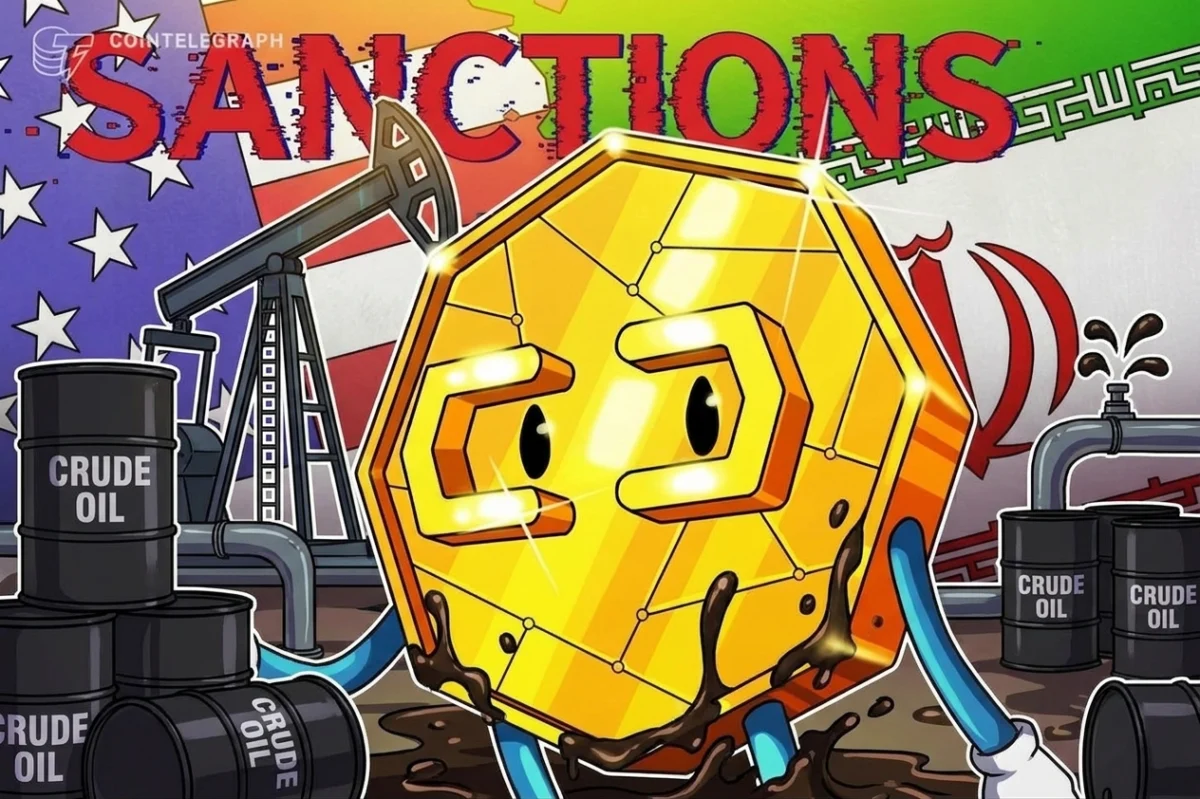
Washington D.C. – The United States Treasury Department has dramatically escalated its financial pressure campaign against Iran, unveiling a sweeping expansion of its sanctions framework to encompass the entirety of the Islamic Republic’s digital asset sector. This strategic move, announced on Monday, comes as the Treasury cites evidence of over $100 million in cryptocurrency payments allegedly used to circumvent existing sanctions and facilitate Iranian oil sales, particularly on behalf of the Islamic Revolutionary Guard Corps (IRGC). The unprecedented sectoral determination marks a significant shift in the U.S. approach to combating illicit finance, directly confronting Iran’s increasing reliance on digital currencies as a tool for economic evasion.
The Office of Foreign Assets Control (OFAC), the Treasury’s principal sanctions enforcement body, issued new sectoral sanctions determinations that extend beyond digital assets to also cover technology, gold, aviation, and shipping. Concurrently, OFAC designated nearly 60 entities, individuals, and vessels intricately linked to Iran’s nuclear, missile, cyber, and oil networks, underscoring a multi-faceted approach to disrupting Tehran’s destabilizing activities. This coordinated action signals a comprehensive effort by Washington to choke off financial lifelines enabling Iran’s military and proliferation programs.
The Expanding Digital Frontier of Sanctions Evasion
The core of this latest action lies in the digital asset determination, which grants OFAC broad authority to sanction foreign individuals and companies operating within or providing services supporting Iran’s digital asset sector. The Treasury explicitly stated that Iran has increasingly adopted cryptocurrencies as a "tool of choice for sanctions evasion," facilitating transactions for entities such as the IRGC and government insiders. This highlights a growing concern among U.S. financial regulators about the potential for digital assets to undermine the efficacy of traditional sanctions regimes.
A pivotal example cited by the Treasury involved Ivan Obukhov, a Ukrainian broker based in the United Arab Emirates (UAE), and his UAE-registered company, Foscom FZE. Obukhov is alleged to have processed over $100 million in crypto payments since 2023, directly aiding the IRGC’s Quds Force in facilitating illicit oil sales. Both Obukhov and Foscom FZE have been specifically designated under the new sanctions framework, demonstrating the U.S. commitment to targeting facilitators and intermediaries in the digital asset space. The selection of the UAE, a significant financial hub, for these specific designations also sends a clear message to jurisdictions perceived as conduits for sanctions evasion.
A Broader Context: US Sanctions and Iran’s Economic Lifelines
The United States has maintained a robust sanctions regime against Iran for decades, primarily aimed at curbing its nuclear ambitions, ballistic missile program, and support for regional proxy groups. Following the U.S. withdrawal from the Joint Comprehensive Plan of Action (JCPOA) in 2018, the Trump administration initiated a "maximum pressure" campaign, reinstating and expanding sanctions that severely impacted Iran’s economy, particularly its vital oil exports and access to the global financial system.
Iran, possessing the world’s fourth-largest proven crude oil reserves and the second-largest natural gas reserves, relies heavily on energy exports for its state revenue. Prior to the re-imposition of sanctions, Iran’s oil exports frequently exceeded 2.5 million barrels per day. However, U.S. sanctions have drastically reduced these figures, forcing Iran to seek alternative, often clandestine, methods to sell its oil and repatriate funds. This economic pressure has led Tehran to explore unconventional financing mechanisms, with digital assets emerging as a seemingly viable, albeit high-risk, avenue.
The anonymity and borderless nature of cryptocurrencies, coupled with the speed of transactions, present a unique challenge to traditional sanctions enforcement. Unlike conventional banking systems, which rely on regulated intermediaries and can be monitored through SWIFT and other interbank messaging systems, many cryptocurrency transactions occur on decentralized ledgers, making direct intervention and tracing more complex. Iran’s embrace of digital assets is therefore a direct response to its isolation from the conventional international financial system.
Chronology of Escalating Crypto Enforcement
The latest sectoral sanctions are not an isolated event but rather the culmination of a series of targeted actions by the U.S. Treasury against Iran-linked crypto activities. This evolving strategy demonstrates a learning curve within U.S. regulatory bodies as they adapt to the complexities of digital finance.
- January 2024: OFAC initiated its first Iran-related designations of digital asset exchanges, sanctioning UK-registered Zedcex and Zedxion. This marked a significant precedent, signaling the Treasury’s intent to directly target crypto platforms facilitating illicit Iranian transactions.
- June 3, 2024: The Treasury further escalated its actions by sanctioning four Iranian crypto exchanges, including Nobitex, which is reportedly the country’s largest platform. This move came shortly after Treasury Secretary Scott Bessent announced that the U.S. had successfully seized nearly $1 billion in cryptocurrency from Iranian exchanges and wallets, underscoring the Treasury’s growing capabilities in crypto-asset recovery and enforcement. The seizure of such a substantial amount of digital assets served as a stark warning to those involved in sanctions evasion.
- August 7, 2024: OFAC sanctioned exchanges Shelbit and Aban Tether, alleging they facilitated a combined $5 million in digital assets connected to Iran. These continuous, specific actions against individual platforms provided the groundwork and intelligence for the broader, more comprehensive sectoral determination.
Unlike these earlier, platform-specific designations, the current sectoral determination establishes a foundational basis for sanctions purely on the grounds of participation in Iran’s wider digital asset sector. This "operate in or provide services supporting" clause significantly expands OFAC’s reach, allowing it to penalize a much broader array of foreign individuals and companies, regardless of their direct involvement in a specific illicit transaction. It shifts the burden of compliance and due diligence onto any entity interacting with Iran’s digital economy.
Implications and Broader Impact
The expanded sanctions carry significant implications for Iran, the global cryptocurrency ecosystem, and the future of international sanctions enforcement.
For Iran:
The immediate impact for Iran will likely be a further constriction of its already limited access to global financial markets. While Iran has developed sophisticated methods for sanctions evasion, including using shell companies, barter trade, and illicit transfers, the formal targeting of its digital asset sector removes another potential avenue. It could force Iran to rely on more opaque and less efficient methods, potentially increasing the costs and risks associated with its illicit financial activities. This could also spur Iran to further develop its own domestic, state-controlled digital currency or closed-loop crypto ecosystems, though such systems would still face challenges in converting to widely accepted currencies. The alleged $100 million in crypto payments for oil sales represents a significant sum for Iran, indicating the scale of its reliance on these new methods. For context, while a fraction of Iran’s overall oil revenues (which can range from billions to tens of billions annually depending on market conditions and export volumes), it demonstrates a critical workaround that the U.S. is now explicitly targeting.
For the Global Cryptocurrency Ecosystem:
This move by the U.S. Treasury sends a powerful signal to the global cryptocurrency industry. It underscores the expectation that digital asset platforms, service providers, and individual actors must adhere to international sanctions regimes and implement robust Anti-Money Laundering (AML) and Know Your Customer (KYC) protocols. The risk of secondary sanctions – where foreign financial institutions facilitating significant transactions for designated parties could face restrictions on their access to U.S. accounts – will compel crypto exchanges, custodians, and blockchain analytics firms worldwide to enhance their compliance efforts. This could lead to a more "de-risked" environment, where legitimate businesses might shy away from jurisdictions or clients perceived to have any nexus with sanctioned entities, even indirectly. Blockchain analytics firms, which specialize in tracing illicit funds on public ledgers, will likely see increased demand for their services from both government agencies and private companies seeking to ensure compliance. The focus on entities like Foscom FZE in the UAE also highlights the increasing scrutiny on intermediary jurisdictions that might unwittingly or deliberately facilitate such transactions.
For International Sanctions Enforcement:
The expanded framework represents a significant evolution in sanctions policy, adapting to the rapidly changing landscape of global finance. It demonstrates that traditional nation-state enforcement mechanisms are catching up with decentralized technologies. By explicitly targeting an entire sector, the U.S. is moving beyond individual bad actors or specific platforms to establish a broad deterrent. This approach could serve as a blueprint for future sanctions against other regimes or illicit networks that seek to exploit digital assets for illicit purposes. It also emphasizes the U.S. Treasury’s commitment to maintaining the integrity and efficacy of its sanctions programs in an increasingly digital world. The move reinforces the idea that no financial sector, however novel or decentralized, is beyond the reach of sovereign enforcement.
Official Statements and Legal Framework
The Treasury’s accompanying OFAC determination explicitly states that "any person determined to operate in Iran’s digital asset sector will be subject to sanctions under Executive Order 13902." This Executive Order, originally signed in 2020, targets sectors of the Iranian economy that finance the IRGC and its proliferation activities. By linking the digital asset sector directly to this executive order, the U.S. Treasury solidifies the legal basis for these expanded sanctions.
Under these provisions, designated parties face severe consequences, including the blocking of their U.S.-linked property and interests in property. Furthermore, foreign financial institutions found to be facilitating significant transactions for these designated entities could face restrictions on their access to U.S. correspondent accounts, effectively cutting them off from the global dollar-denominated financial system. This extraterritorial reach of U.S. sanctions is a powerful tool designed to compel compliance worldwide.
The Road Ahead: Challenges and Adaptations
Despite these aggressive measures, challenges remain. The pseudonymous nature of some cryptocurrencies, the continuous emergence of new tokens and decentralized finance (DeFi) protocols, and the sheer volume of global crypto transactions will continue to test enforcement capabilities. Iran, in turn, will likely adapt its strategies, potentially exploring peer-to-peer transactions, more obscure cryptocurrencies, or further developing its own sovereign digital currency projects. The ongoing cat-and-mouse game between sanctions enforcers and evaders is expected to intensify in the digital realm.
However, the U.S. Treasury’s clear articulation of its intent and its demonstrated capability to track and seize illicit digital assets signal a new era of financial warfare. This expanded framework underscores that the international financial system, including its digital components, must operate within established rules, and those seeking to undermine global security by circumventing these rules will face severe repercussions. The message from Washington is unequivocal: the digital asset sector is not a safe haven for sanctions evasion.