
 Gilang Muhammad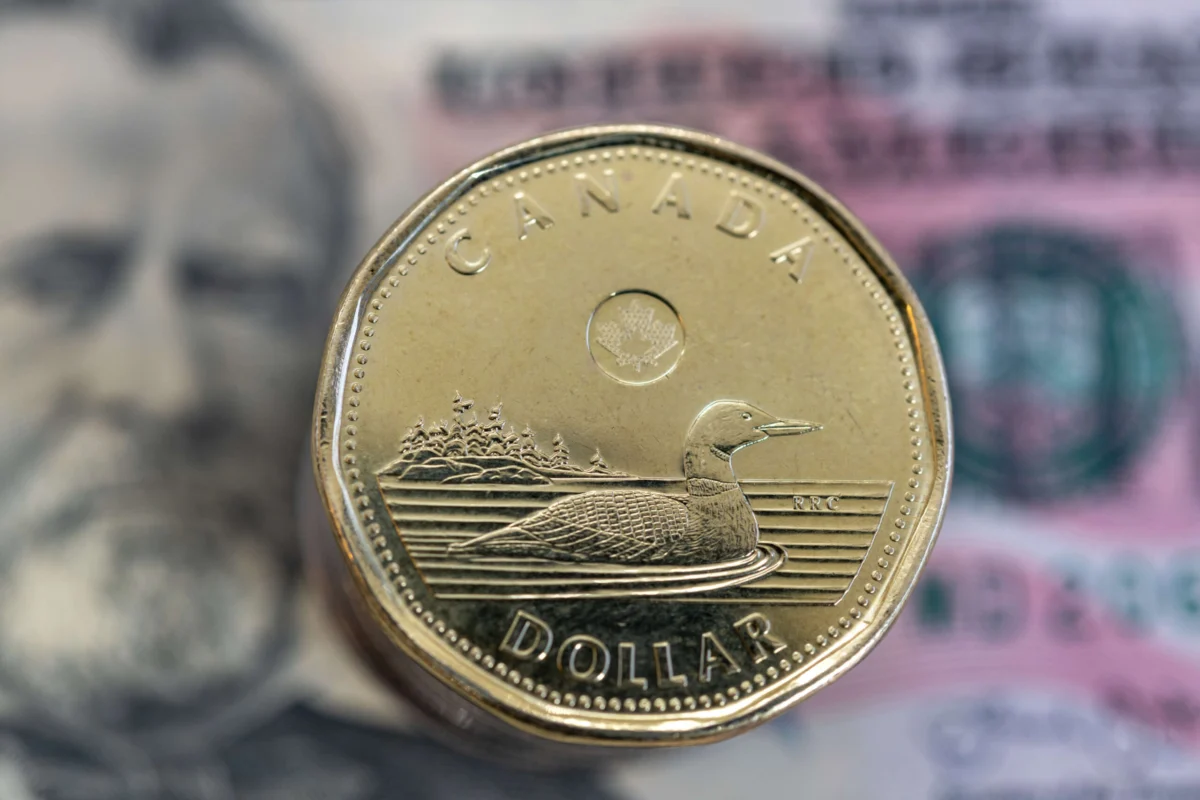
Trade relations between the United States and Canada have plunged into a new crisis following the abrupt collapse of high-stakes negotiations, triggering a fresh wave of punitive tariffs and sending ripples of economic uncertainty across North America. The Canadian dollar experienced a significant dip on Monday morning, reflecting market anxieties over impending higher prices for a broad spectrum of imported goods and a potential threat to Canada’s economic growth.
The latest escalation began on Saturday when the U.S. unilaterally imposed a hefty 50% tariff on approximately $20 billion worth of imports from Canada, its second-largest trading partner after Mexico. The targeted goods are diverse, encompassing crucial sectors such as dairy, wine, wood products, furniture, cement, ceramics, and a myriad of other manufactured and agricultural items. This aggressive move swiftly elicited a strong response from Ottawa, with Canadian Prime Minister Mark Carney declaring an imminent "dollar for dollar" retaliation. Carney announced that Canada’s countermeasures would commence on September 8, focusing on key American exports including steel, dairy, agricultural equipment, paper, and electronics, with specific details to be unveiled in the coming days.
Market Reaction and Economic Vulnerabilities
The immediate financial fallout was palpable. The Canadian dollar, often referred to as the "loonie," registered a 0.55% decline against the U.S. dollar by 7:30 a.m. ET. The currency also depreciated against other major global currencies, including the euro, British pound, and Japanese yen, signaling a broad erosion of investor confidence in the Canadian economy’s short-term outlook.
Analysts were quick to highlight Canada’s greater vulnerability in this escalating trade dispute. FX strategists at bank ING noted in a Monday brief, "As a smaller, more open economy, Canada has more to lose from this." However, they also pointed to Prime Minister Carney’s suggestion of potential fiscal stimulus to cushion the blow for affected Canadian businesses, indicating a proactive governmental stance to mitigate the economic impact.
Bradley Saunders, North America economist at Capital Economics, underscored this disparity in economic impact, telling CNBC that Canada faced a disproportionately larger hit to its economy compared to the U.S. "The high levy rate means the most exposed industries could be crippled," Saunders warned via email. He emphasized a critical shift in the nature of these new tariffs: unlike previous rounds since U.S. President Donald Trump’s "Liberation Day" in April 2025, there is no longer an exemption for goods complying with production rules stipulated under the United States-Mexico-Canada Agreement (USMCA). This trilateral trade pact, currently undergoing renegotiation, typically provides a framework for preferential trade, and the removal of such exemptions signals a more severe and comprehensive tariff regime.
While the directly targeted goods account for a relatively small fraction—around 0.6%—of Canada’s gross domestic product (GDP), the ripple effects could be significant. Saunders cautioned that "a collapse in exports would still be enough to push already-weak GDP growth back towards zero." He further elaborated on the potential for cascading effects, where weaker U.S. demand for finished products like furniture and electrical equipment could negatively impact upstream primary industries, which are already grappling with the strains of existing Section 232 tariffs on steel and aluminum.
The economist painted a grim scenario for further escalation. Should President Trump retaliate against Canada’s announced countermeasures by extending the 50% tariffs to 20% of Canada’s U.S. goods exports—up from the current 5%—it could shave approximately 2% off Canadian GDP, potentially pushing the economy into recessionary territory. This projection highlights the precarious tightrope Canada now walks.

A History of Trade Tensions and the Road to USMCA
The current standoff is not an isolated incident but rather the latest chapter in a protracted and often contentious trade relationship between the two North American neighbors. For decades, the U.S. and Canada have engaged in extensive bilateral trade, with goods and services flowing across their shared border amounting to hundreds of billions of dollars annually. In 2025, total bilateral trade in goods and services between the U.S. and Canada exceeded $700 billion, making it one of the largest trading relationships in the world. Key Canadian exports to the U.S. include crude oil, natural gas, automobiles, and machinery, while the U.S. exports vehicles, machinery, and electronic equipment to Canada.
The foundation of modern North American trade was laid with the North American Free Trade Agreement (NAFTA) in 1994, which eliminated most tariffs between the U.S., Canada, and Mexico. However, President Trump, upon taking office, frequently criticized NAFTA as a "disaster" and demanded its renegotiation, arguing it was unfair to American workers and industries. This led to prolonged and often acrimonious negotiations that eventually resulted in the USMCA, which came into force in July 2020. The USMCA aimed to modernize NAFTA, introducing new provisions related to digital trade, labor, environmental protection, and intellectual property, while also tightening rules of origin for automobiles.
Despite the signing of USMCA, specific trade disputes persisted, particularly concerning Canadian dairy supply management and U.S. tariffs on Canadian steel and aluminum under Section 232 of the Trade Expansion Act of 1962. Section 232 allows the U.S. President to impose tariffs on imports if the Commerce Department determines they threaten national security. These tariffs, first levied in 2018, have been a constant source of friction, despite periodic exemptions and modifications. The "Liberation Day" reference in April 2025 likely refers to a previous instance where the Trump administration either imposed or threatened new widespread tariffs, signaling a broader push for its "America First" trade agenda. The current collapse of talks, with the removal of USMCA-compliant exemptions, indicates a significant hardening of the U.S. negotiating stance.
"We Got Attacked": Rhetoric and Blame Game
The breakdown of negotiations was preceded by a week of intense, last-minute efforts to salvage a deal, with officials on both sides initially suggesting progress was being made. However, by the weekend, the rhetoric had soured considerably, with each nation publicly blaming the other for the impasse and accusing them of unfair trade practices.
President Trump took to Truth Social on Sunday to voice his frustration, stating, "Canada wants the benefits of being a State, without being one!!!" He further accused Canada of charging "our great farmers, for many years, massive amounts of Tariffs. No more!!!" This statement echoes a long-standing U.S. grievance regarding Canada’s supply management system for dairy, poultry, and eggs, which uses tariffs and quotas to protect domestic producers from foreign competition.
Prime Minister Carney, responding to the U.S. actions, asserted on Saturday that the U.S. had "asked too much and offered too little." He emphatically declared, "We were not prepared to compromise Canada’s sovereignty or undermine our key industries." Carney specified that major sticking points in the negotiations included tariff details in critical sectors such as autos, steel, and aluminum, as well as Canadian protections for the French language and the nation’s sovereign right to forge independent trade agreements with other countries.
When pressed by a reporter on whether Canada was entering a trade war, Carney’s response was direct and unequivocal: "Because we got attacked. You’re at war when you get attacked. We got attacked." This combative language underscores the depth of the disagreement and the perception within Ottawa that Canada is defending its economic interests against an aggressive U.S. trade policy.

Domestic Political Fallout and Public Opinion
Despite the looming economic risks, Prime Minister Carney’s firm stance appears to resonate with a significant portion of the Canadian public. Recent polling data from Angus Reid suggests that a majority of Canadians, around 76%, supported Ottawa’s decision to walk away from the trade talks, indicating a strong nationalistic sentiment in defending Canadian interests. However, the same polling also revealed a growing apprehension, with two in five Canadians expressing fear for their job security amidst the escalating trade tensions. Economist Trevor Tombe has estimated that ongoing U.S. tariffs of 50% could lead to approximately 90,000 job losses in Canada, a stark figure that highlights the human cost of these disputes.
Carney’s election in March 2025 was largely predicated on a pledge to adopt a more assertive posture towards the White House, a mandate he is now clearly fulfilling. His hard line reflects a broader shift in Canadian public sentiment, which had been increasingly frustrated by perceived U.S. trade aggression. This sentiment was dramatically illustrated in early 2025, when reports emerged of Canadian retailers voluntarily removing U.S. alcohol products from store shelves in a grassroots boycott, signaling deeply soured relations between the two North American allies even before the current tariff escalation.
The opposition in Canada has also rallied behind the government’s defensive stance. Pierre Poilievre, leader of the Conservative Party, stated on social media that Canada "cannot accept one-sided tariffs that will deindustrialize our country." This bipartisan support for a robust response to U.S. tariffs suggests a united front in Ottawa, despite the potential economic ramifications.
Broader Implications and the Path Forward
The re-ignition of a full-blown trade war between the U.S. and Canada carries significant implications far beyond their shared border. For consumers in both countries, the imposition of 50% tariffs will inevitably translate into higher prices for a wide range of goods, reducing purchasing power and potentially fueling inflation. Industries on both sides reliant on cross-border supply chains, such as the deeply integrated automotive sector, will face increased costs and operational complexities, potentially leading to production cuts or shifts.
The timing of this dispute is also critical, occurring amidst ongoing renegotiations of the USMCA. The collapse of talks and the imposition of tariffs without USMCA exemptions raise serious questions about the future stability and effectiveness of the continental trade agreement. It signals a potential regression to a more protectionist era, challenging the very principles of free trade that have underpinned North American economic integration for decades.
For the global economy, already navigating geopolitical uncertainties and inflationary pressures, an escalating trade war between two major economies adds another layer of instability. It could encourage other nations to adopt similar protectionist measures, potentially fragmenting global trade networks further.
The path forward remains highly uncertain. While Prime Minister Carney has signaled a willingness to use fiscal stimulus, the long-term economic damage from sustained high tariffs could be substantial. The political will to de-escalate will be tested, particularly with President Trump’s "America First" agenda and Prime Minister Carney’s mandate to stand up for Canadian sovereignty. Without a renewed commitment to dialogue and compromise, the economic fallout for both the U.S. and Canada, and indeed for the broader international trading system, could be severe and prolonged. The coming days, with the release of Canada’s detailed retaliatory measures, will provide further clarity on the trajectory of this escalating North American trade conflict.








