Clara Shinta
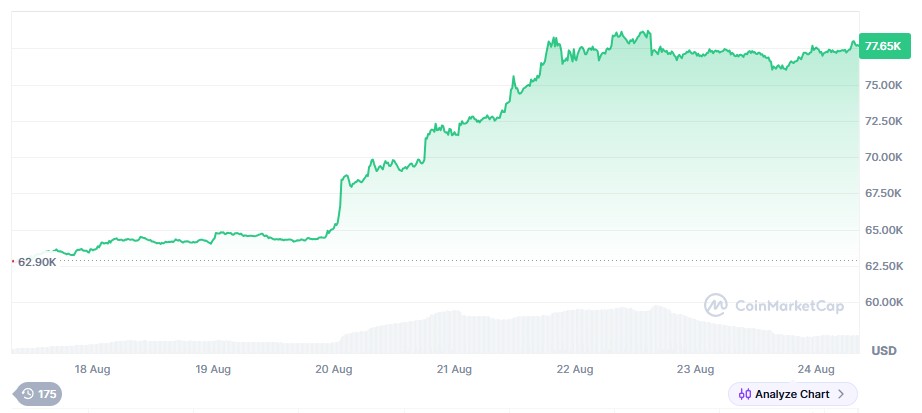
Confidence has demonstrably returned to global cryptocurrency markets, heralded by a significant rally in Bitcoin (BTC) and a suite of altcoins. This week, Bitcoin experienced a sudden and robust surge, gaining over 23% to trade around $77,559 at the time of reporting, briefly touching an impressive $79,000 on Friday. This upward trajectory has ignited widespread speculation across the financial world: is the protracted bear market finally yielding to a new era of bullish momentum?
Bitcoin’s Resurgence: A Technical and Sentimental Shift
The recent price action marks a critical juncture for Bitcoin, signaling a potential reversal in long-term market trends. On Thursday, charting platform Barchart highlighted a significant technical milestone: Bitcoin’s price had crossed above its 200-day moving average for the first time since November 2025. This indicator is a cornerstone for analysts, widely used to gauge the health and direction of longer-term market trends. A sustained move above the 200-day moving average is traditionally viewed as a definitive sign of bullish momentum, often preceding extended periods of growth. The breakthrough has fueled optimism, with many market participants now believing or hoping that the cycle has finally flipped positive.
The enthusiasm wasn’t confined to Bitcoin alone. Major altcoins mirrored BTC’s strength, showcasing a broader resurgence across the digital asset ecosystem. Ethereum (ETH), the second-largest cryptocurrency by market capitalization, recorded an impressive 31% gain. Solana (SOL), a high-performance blockchain platform, saw its value increase by 28%. Perhaps most astonishingly, XRP surged by an exceptional 53%, demonstrating robust investor interest beyond the market leaders. This synchronized upward movement suggests a renewed risk appetite and a collective belief in the broader crypto sector’s potential.
Institutional interest, a key driver in previous bull runs, also appears to be making a strong comeback. Last week, Bitcoin and Ether Exchange Traded Funds (ETFs) collectively attracted more than $2.61 billion in inflows, indicating a growing acceptance and allocation of capital from traditional financial institutions. This influx of institutional funds provides a significant backbone to the current rally, differentiating it from purely retail-driven movements. Further bolstering this narrative, Michael Saylor, the staunch Bitcoin maximalist and CEO of MicroStrategy, saw his substantial Bitcoin investments cross their breakeven point of $75,385. This milestone effectively reinstates Saylor’s status as a far-sighted Bitcoin visionary, a narrative that had faced scrutiny during previous market downturns. The renewed confidence is palpable, with Polymarket odds for Bitcoin reaching $90,000 before 2027 hitting a notable 48%, reflecting a significant shift in market sentiment towards ambitious price targets.

The positive sentiment cascaded into the equities market, with publicly listed companies heavily invested in or exposed to the crypto sector experiencing double-digit gains. Firms like Canaan, a leading producer of Bitcoin mining machines, Metaplanet, a company adopting Bitcoin as a treasury asset, and prominent trading platforms Coinbase and Robinhood, all saw their share prices climb, underscoring the interconnectedness of the crypto and traditional financial markets.
Macroeconomic Pressures Fueling the Flight to Digital Assets
The cryptocurrency rally this week was not solely driven by internal market dynamics; significant macroeconomic factors, particularly concerning the fiscal health of the United States, played a crucial role. The US national debt pile crossed an unprecedented $40 trillion this week, a stark figure that highlights growing concerns about the nation’s financial stability. Compounding this worry is the absence of a concrete plan to balance the budget or pay down this colossal debt, beyond a vague aspiration for economic growth. The annual cost of servicing this debt has become an alarming expenditure, now exceeding the cost of Medicare and ranking second only to Social Security as the government’s largest financial obligation.
Financial commentary and analysis firm The Kobeissi Letter attributed the rapid gains observed in both precious metals and cryptocurrencies to a confluence of inflation, unchecked deficit spending, and specific US Treasury policy decisions. Record government deficit spending, coupled with the Treasury Department’s pledge to at least double the size of certain debt buyback operations to $4 billion, created an environment conducive to a rally in these alternative asset classes, as argued by Kobeissi. The increased liquidity and perceived devaluation of fiat currency due to expansive fiscal policies often drive investors towards assets perceived as hedges against inflation and economic uncertainty.
This perspective is echoed by influential figures in traditional finance. Ray Dalio, the founder of the Bridgewater Associates hedge fund, a titan in the investment world, has consistently advocated for a strategic allocation of portfolios to guard against impending fallout from the US’s debt problems. Dalio suggests investors should allocate approximately 15% of their portfolios to gold and "a bit of Bitcoin." His rationale underscores the growing recognition of digital assets, particularly Bitcoin, as a viable store of value alongside traditional safe havens. Dalio also offered a sobering prediction regarding the timing of a potential US debt crisis, stating, "My guess, which I suppose will be a bad one, is that [a US debt crisis] will come in three years, give or take two, if the course we’re on is not changed." Such statements from prominent financial leaders lend significant weight to the narrative that Bitcoin is maturing into a credible alternative asset class amidst global economic anxieties.
A Pivotal Week for US Crypto Regulation: Political Maneuvering and Legislative Push
Amidst the market excitement, Washington D.C. witnessed a flurry of activity, signaling a critical phase in the ongoing efforts to establish a clear regulatory framework for cryptocurrencies in the United States. US President Donald Trump convened a high-profile meeting with prominent crypto company executives, including Coinbase CEO Brian Armstrong and Gemini co-founders Cameron and Tyler Winklevoss. Following this meeting, President Trump reiterated his call for the urgent passage of the CLARITY Act.
The CLARITY Act, a market structure bill that successfully passed the House of Representatives in July 2025, is now slated for a crucial procedural vote in the Senate on September 15, requiring 60 votes in favor to advance. Trump urged members of Congress to pass "a fair version" of the bill, emphasizing the strategic importance of this legislation for the nation’s competitive standing, stating it would keep the US "ahead of China" in the rapidly evolving digital asset space. The President characterized the bill as "very bipartisan," asserting that "Lot of Democrats support."
However, the path to bipartisan consensus appears fraught with challenges. Democratic Senators, while acknowledging the need for regulatory clarity, appear unlikely to pass the bill without further concessions from the Trump administration on ethics provisions. Senator Ruben Gallego articulated this sentiment, remarking, "I think, unfortunately, what the President means is fair to him. The president doesn’t just get to decide what level of regulation he gets." This divergence highlights the ongoing political tug-of-war between the executive branch and legislative body, underscoring the complexities of legislating in a highly polarized political environment.
In an unusual moment during the meeting, President Trump inadvertently influenced market dynamics. By revealing that "Mike [Selig, CFTC chair] is also working to bring Hyperliquid into the United States in a fully compliant and legal fashion," Trump’s statement directly caused the price of Hyperliquid to jump by 20%. This incident served as a stark illustration of how political pronouncements, even informal ones, can have immediate and significant repercussions in the highly sensitive cryptocurrency markets.
Regulatory Pathways Emerge: SEC and CFTC Chart Their Courses
Beyond the legislative arena, key regulatory bodies in the United States are also actively shaping the future of cryptocurrency. The US Securities and Exchange Commission (SEC) recently unveiled a significant proposal for new rules pertaining to the cryptocurrency industry. This move is poised to either exert pressure on lawmakers to expedite the passage of the CLARITY Act or potentially spark a new boom in Initial Cryptocurrency Offerings (ICOs) by providing clearer guidelines.
Currently open for a 60-day public comment period, these proposed rules offer crucial exemptions for crypto projects. They would permit the issuance of up to $5 million in tokens over a four-year period and up to $75 million within a 12-month period, albeit with stricter reporting and structural requirements. Crucially, the proposal also includes a "safe harbor" provision, designed to exempt certain cryptocurrencies from being automatically treated as "investment contracts" under existing securities laws, a point of significant contention and legal ambiguity for years.

Commissioner Hester M. Peirce, often referred to as "Crypto Mom" for her progressive stance on digital assets, has been a vocal critic of the SEC’s historical approach. She acknowledged that "a whole generation has struggled" with the SEC’s application of "a set of inapt rules to crypto." Peirce added that the SEC’s new crypto guidelines, while not perfect, mark an important step toward "putting clear, sensible, enforceable rules in place for crypto offerings," recognizing the need for bespoke regulations rather than shoehorning crypto into existing frameworks.
Concurrently, Michael Selig, who chairs the US Commodity Futures Trading Commission (CFTC), has asserted that his commission is prepared to move forward with its own set of crypto regulations should the CLARITY Act fail to pass the Senate. Selig revealed that he has already directed staff to explore "developer protections" and to allow both registered and non-registered entities to offer "crypto asset trading on a leveraged or margined basis."
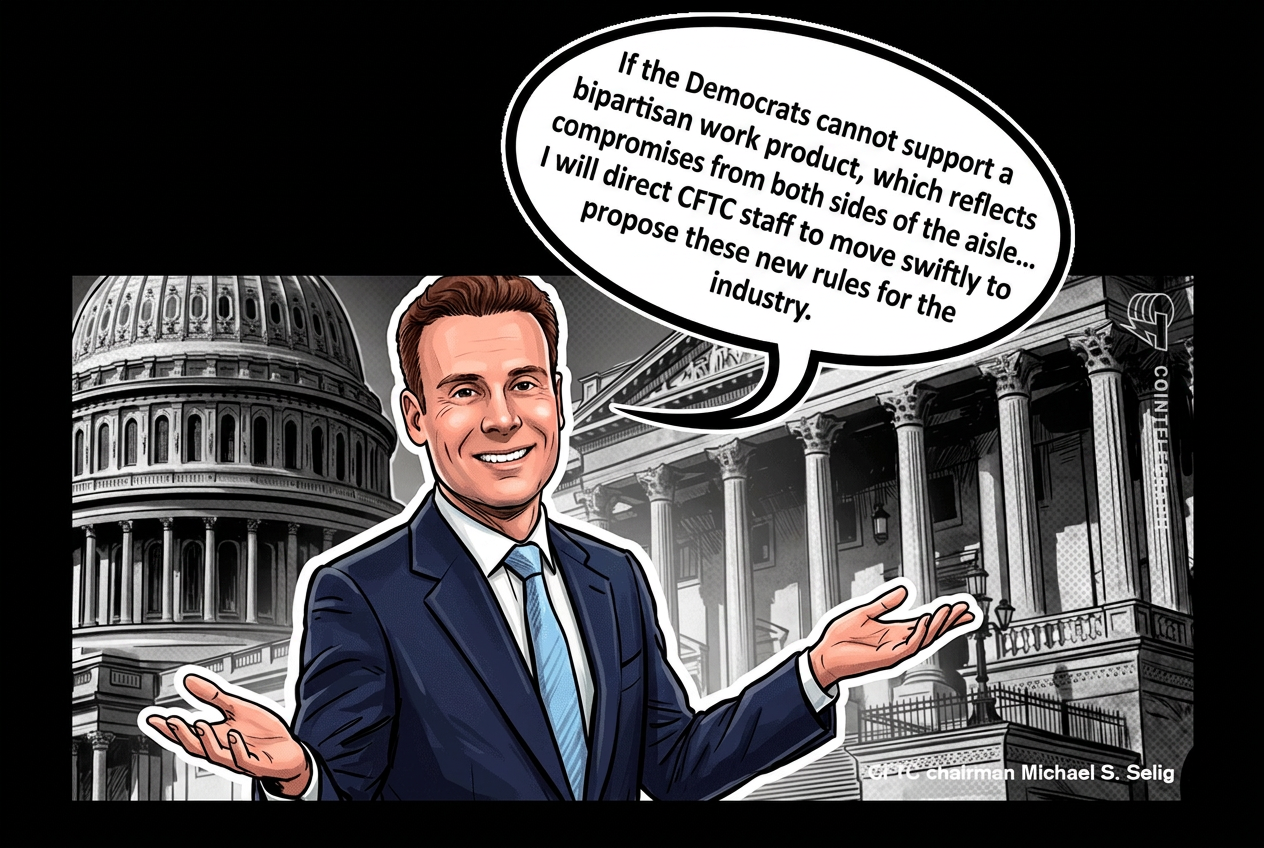
Selig delivered a clear message regarding the CFTC’s intent: "We’re going to give CLARITY its breathing room for a vote, but if the Democrats cannot support a bipartisan work product, which reflects compromises from both sides of the aisle, and ultimately send a fair version of the bill to the President’s desk, then rest assured, I will direct CFTC staff to move swiftly to propose these new rules for the industry." This statement highlights a potential scenario where, in the absence of comprehensive federal legislation, the US could see multiple regulatory bodies establishing their own, potentially overlapping or even conflicting, frameworks for the crypto industry. Such a fragmented approach could introduce new complexities for businesses operating in the space, even as it offers some level of clarity from specific regulators.
Market Performance Snapshot: Winners, Losers, and Shifting Sentiments
As the week drew to a close, the overall cryptocurrency market capitalization surged to $2.63 trillion, according to CoinMarketCap, reflecting the broad-based gains. Bitcoin (BTC) closed the week up 23.5% at $77,559. Ethereum (ETH) saw an even larger percentage gain of 31.1%, reaching $2,456. XRP also exhibited exceptional performance, climbing 53.3% to trade at $1.52.
Among the top 100 cryptocurrencies, several altcoins experienced spectacular rallies, underscoring the speculative appetite within the market. Pump.fun (PUMP) led the pack with an astonishing 98.9% gain, followed closely by Ethena (ENA) with 98.3%, and Stacks (STX) with a robust 94.8% increase. These significant surges indicate renewed investor confidence and interest in smaller, high-growth potential projects.

Conversely, a few altcoins bucked the market trend and recorded losses. JUST (JST) was down 4.3%, MemeCore (M) declined by 2.9%, and Sun (SUN) saw a modest decrease of 1%. These minor dips, however, were outliers in an otherwise overwhelmingly positive week for the digital asset space.
Expert Predictions: A Tale of Two Outlooks
The dramatic market movements prompted updated forecasts from leading financial institutions and industry experts, revealing a spectrum of expectations for Bitcoin’s trajectory.
Standard Chartered’s Geoff Kendrick, global head of digital asset research, offered a particularly bullish revision to his firm’s outlook. In a Friday note, Kendrick suggested that Bitcoin might move towards its all-time high of $126,000 before the end of the year, potentially accelerating after October 6. He attributed the latest rally primarily to short liquidations, but also noted the recovery in inflows into spot Bitcoin exchange-traded funds. Kendrick highlighted that low open interest could leave ample room for more investors to enter the market as prices continue to rise. "For the first time this year there is now a risk my end year forecast (of USD100k) is too low," Kendrick boldly stated, indicating a significant upward adjustment in his expectations.
In contrast, Bitget CEO Gracy Chen presented a more conservative outlook, expecting Bitcoin to remain broadly around current levels through the end of the year despite its recent surge. In an interview with Cointelegraph, Chen cited prevailing interest rates and broader macroeconomic conditions as key factors shaping the cryptocurrency’s near-term outlook. She pointed to the possibility of higher interest rates as one of several factors that could exert downward pressure on prices, cautioning that "If any of that happens, the price should go down, at least theoretically." Chen emphasized Bitcoin’s increasing integration with traditional finance, making it more sensitive to broader macroeconomic shifts. Her prediction suggested BTC could finish the year within a range of $10,000 to $20,000 above or below its current levels, reflecting a cautious stance amidst the prevailing bullish sentiment. These divergent expert opinions highlight the inherent uncertainty and the multiplicity of factors influencing the volatile cryptocurrency market.
Challenges and Controversies: The Week’s FUD
Despite the overwhelmingly positive market sentiment, the week was not without its share of "FUD" (Fear, Uncertainty, and Doubt), bringing to light ongoing challenges and controversies within the crypto space.
A new poll conducted by Reuters/Ipsos revealed public discomfort regarding political figures’ involvement in cryptocurrency. The poll found that a majority of respondents in the US believed it was "not appropriate" for US President Donald Trump and his family to earn billions through cryptocurrency investments while in office. Of the 1,166 people surveyed between August 14-17, 63% expressed this sentiment. The poll also highlighted a significant partisan divide: while an overwhelming majority of Democrats (92%) responded negatively, a substantial 69% of Republicans polled believed such investments were appropriate. This finding underscores the ethical dilemmas and public scrutiny that high-profile political figures face when engaging with novel asset classes like cryptocurrencies, particularly given potential conflicts of interest or perceptions of undue influence.
Adding to the week’s concerns, the MANTRA token experienced a significant setback, sinking 18% to an all-time low of $0.004126 around 11:00 pm UTC on Thursday. This sharp decline occurred shortly before MANTRA Chain, the project’s underlying blockchain, ceased producing blocks. The team subsequently announced a precautionary halt to the network over an "unexplained incident." On Friday, MANTRA officially stated it was "aware of an incident affecting MANTRA Chain" and had halted the network as a precaution while investigations were underway, adding, "We don’t have a root cause or timeline to share yet." This halt effectively froze all endpoints and transactions, preventing assets from moving on the MANTRA Chain and prompting affected exchanges to pause deposits and withdrawals. The incident highlighted the inherent technical risks associated with nascent blockchain projects. Fortunately, by August 22, MANTRA announced a resolution, stating that "the vulnerability in the Cosmos-EVM module has been fixed, the network has resumed, and no user funds were affected." While the resolution prevented loss of user funds, the incident served as a reminder of the critical importance of network stability and security in the decentralized finance ecosystem, and the potential for such events to erode investor trust.
In conclusion, the past week has been a whirlwind of activity for the cryptocurrency market, characterized by a potent combination of robust price rallies, increasing institutional engagement, significant macroeconomic pressures pushing investors towards alternative assets, and an intensifying regulatory and political landscape in the United States. While the question of whether the bear market is definitively over remains open to debate, the confluence of these factors suggests a highly dynamic period ahead for digital assets, with both immense opportunities and persistent challenges.