Clara Shinta
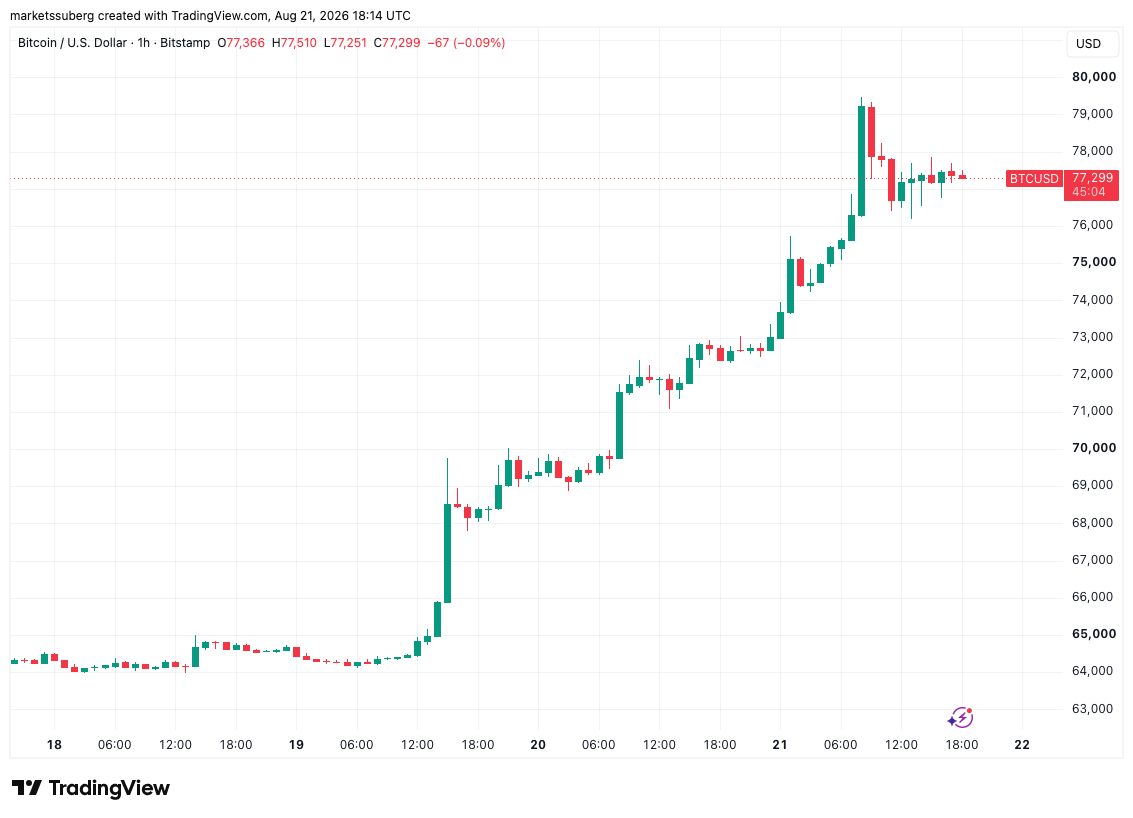
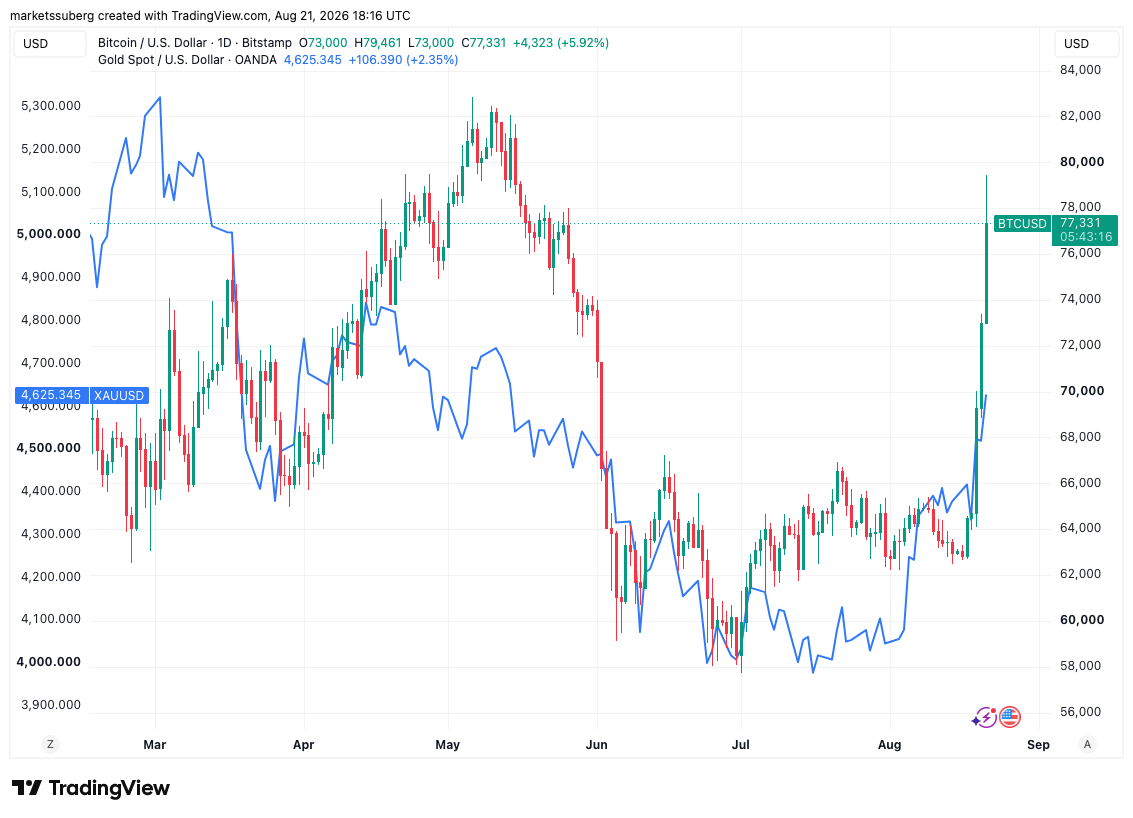
Following Friday’s opening bell on Wall Street, Bitcoin (BTC) demonstrated robust performance, consolidating its position above the significant $77,000 mark. This surge in the premier cryptocurrency was mirrored by a noteworthy rally in gold, which simultaneously achieved its highest valuation in 14 weeks. The synchronous upward movement of these two disparate asset classes has captured the attention of market analysts, prompting deeper scrutiny into the underlying macroeconomic forces at play. Bitcoin’s price action saw it cool slightly after reaching levels not observed since May 15, yet it maintained an impressive gain of nearly 6% on the day. Gold, often perceived as a traditional safe-haven asset, echoed this upward trajectory, reportedly reaching multi-month highs of $4,632 per ounce, reflecting a 2.2% increase within the same trading period. Over a monthly horizon, both BTC/USD and XAU/USD have delivered substantial returns, climbing 13% and 16% respectively, signaling a broad-based shift in investor preference towards alternative assets.
The Dual Rally: Unpacking the Macroeconomic Drivers
The parallel ascent of Bitcoin and gold is not an isolated market phenomenon but rather a symptomatic response to a complex interplay of global economic factors. Market commentators, including The Kobeissi Letter, have suggested that these rapid gains should not be a "surprise," attributing the momentum to a potent combination of persistent inflation, escalating government deficit spending, and strategic shifts in U.S. Treasury policy. These factors collectively contribute to an environment where traditional fiat currencies and fixed-income assets may appear less attractive, compelling investors to seek hedges in assets perceived as more resilient to economic volatility.
Inflation, particularly in major global economies, continues to erode purchasing power, driving a search for assets that can preserve or even enhance value. Both Bitcoin, with its programmatic scarcity and decentralized nature, and gold, with its long-standing history as a store of value, are often touted as effective inflation hedges. The current inflationary pressures, exacerbated by supply chain disruptions and expansionary fiscal policies, have created a fertile ground for these narratives to gain traction among a wider investor base.

Simultaneously, record levels of government deficit spending have raised concerns about national debt sustainability and future fiscal stability. When governments finance large deficits, they often do so by issuing more debt, which can increase the money supply and potentially devalue existing currency. This environment tends to favor assets outside the direct control of central banks and governments, such as cryptocurrencies and precious metals. The sheer scale of recent governmental expenditure, often linked to pandemic recovery efforts and infrastructure projects, has amplified these concerns, driving capital into assets historically uncorrelated or negatively correlated with traditional financial instruments.
Adding another layer to this intricate picture is the U.S. Treasury Department’s recent pledge to significantly increase the size of its debt buyback operations. This move involves the Treasury buying back its own debt from the market, effectively injecting liquidity into the financial system and potentially lowering interest rates on existing bonds. While intended to improve market functioning and manage debt efficiently, such actions can be interpreted by some market participants as a form of quantitative easing, further fueling inflation expectations and prompting a flight to hard assets. The Treasury’s commitment to at least double certain debt buyback operations to $4 billion has been specifically cited by The Kobeissi Letter as a catalyst for the rallies observed in both precious metals and digital assets. This policy, by increasing market liquidity and signaling a potentially softer stance on monetary tightening, inherently makes scarce assets like gold and Bitcoin more appealing.
Global Financial Stress and Cross-Asset Signals
The financial stress signals extending beyond the U.S. borders further underscore the global nature of this market shift. QCP Capital, a prominent trading company, highlighted the surging Japanese government bond (JGB) yields as a notable indicator of broader financial instability. This rise in JGB yields followed a rare joint currency intervention in the yen earlier this month, where the U.S. and Japan reportedly collaborated to stabilize the Japanese currency. Such interventions, while aimed at curbing excessive volatility, often expose underlying economic vulnerabilities and can trigger ripple effects across global markets. For investors, these events serve as stark reminders of the interconnectedness of global finance and the potential for rapid shifts in asset valuations.
QCP Capital’s latest Market Color analysis specifically pointed out a divergence in market reactions following the U.S. Treasury’s announcement. While Treasuries initially rallied, they subsequently retraced a significant portion of their gains. Bitcoin and gold, however, demonstrated greater resilience, failing to retrace to the same extent. This divergence is crucial, as QCP Capital noted, because it "does not establish a new liquidity or monetary regime, but it does highlight the sensitivity of alternative assets to changes in long-end rates and the dollar." This observation suggests that alternative assets are becoming increasingly responsive to shifts in fundamental economic indicators, implying a growing maturity and integration into the broader financial ecosystem. The dollar’s strength or weakness, directly impacted by interest rate differentials and economic policy, plays a critical role in determining the attractiveness of gold and Bitcoin for international investors seeking diversification and hedging opportunities. A weaker dollar typically makes dollar-denominated assets like gold cheaper for foreign buyers, boosting demand, while a strong dollar can make them more expensive. The current environment, characterized by uncertainty regarding future monetary policy and inflation, keeps both the dollar and long-end rates under constant scrutiny.
Historical Context and the Evolving Narrative of Value
The concept of "safe-haven" assets has traditionally been dominated by gold, a metal revered for millennia for its intrinsic value and perceived stability during times of economic and political turmoil. Its limited supply, durability, and broad acceptance have solidified its role as a hedge against inflation and currency debasement. Bitcoin, a relatively nascent asset, has increasingly been adopting a similar narrative, often dubbed "digital gold." Proponents argue that its decentralized nature, fixed supply cap (21 million coins), and resistance to censorship make it a superior store of value in the digital age.
The current dual rally reinforces the idea that in times of macroeconomic uncertainty, investors seek refuge in assets perceived to be outside the direct control of central banks and governmental policies. For gold, this is a continuation of a long-standing trend. For Bitcoin, it represents a significant step towards solidifying its position within the mainstream financial discourse as a legitimate alternative asset. The correlation, or rather the synchronous movement, observed in this rally suggests that a segment of investors views both assets through a similar lens: as stores of value impervious to the inflationary pressures and fiscal policies impacting traditional markets. This evolving perception is critical for Bitcoin’s long-term adoption and integration into institutional portfolios, moving beyond its initial classification as a purely speculative asset. The increasing availability of regulated investment vehicles, such as Bitcoin spot ETFs, has further facilitated institutional access, allowing traditional investors to gain exposure to BTC without direct custody, thereby bolstering its appeal during periods of market stress.
Market Sentiment and Future Price Targets
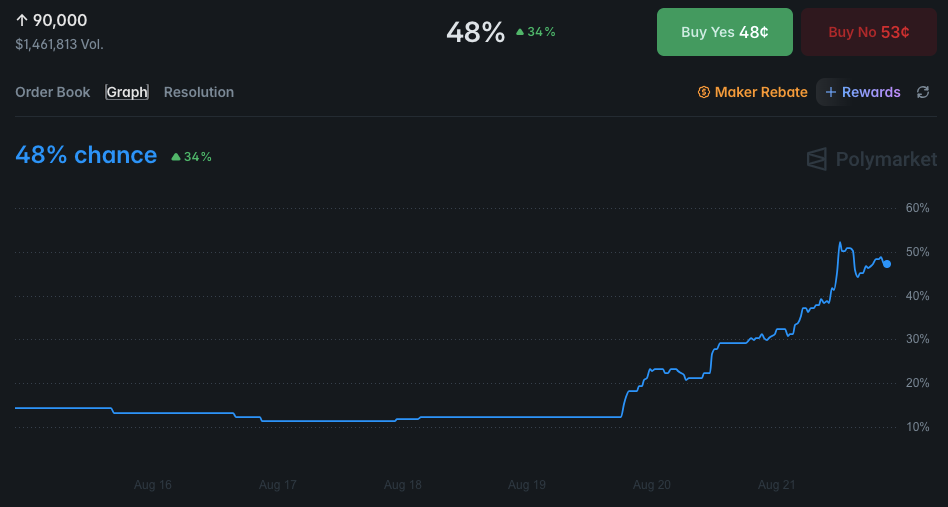
The recent surge in Bitcoin’s price, which saw an upside exceeding 20% over just two days, has naturally led to an improvement in market consensus regarding potential year-end targets. Prediction markets, which offer insights into collective market sentiment, reflect this newfound optimism. Data from Polymarket, a prominent prediction service, indicated that the odds of BTC/USD hitting $90,000 before January 1, 2027, stood at a significant 48% at the time of writing. This figure marks a sharp increase since the beginning of the week, suggesting growing confidence among participants that Bitcoin will continue its upward trajectory, potentially reaching new all-time highs within the next few years. Such prediction markets, while not infallible, provide a real-time gauge of speculative sentiment and can influence broader market psychology.
However, not all market participants share the same level of bullish conviction. Seasoned traders and analysts often emphasize the importance of technical indicators and historical price action to temper enthusiasm. Rekt Capital, a well-known trader and analyst, offered a more cautious perspective, stressing the critical need for Bitcoin to decisively reclaim its 50-week exponential moving average (EMA) at $77,232. This particular trend line has served as a significant resistance level, notably rejecting Bitcoin’s price in January.
According to Rekt Capital, a sustained break above this 50-week EMA would be a crucial confirmation of Bitcoin entering a "new technical Macro Uptrend." Conversely, a rejection from this level would imply that Bitcoin would continue its established pattern of "Lower Highs," indicating a persistence of the existing downtrend. Rekt Capital’s analysis draws heavily on historical patterns, noting that "History suggests there’s still time for price to continue its Downtrend." This perspective highlights the inherent volatility and unpredictable nature of the cryptocurrency market, even amidst strong upward movements. Technical analysis, which involves studying past market data to predict future price movements, remains a cornerstone for many professional traders seeking to navigate these complex markets. The 50-week EMA is a widely watched long-term moving average, and its significance lies in its ability to smooth out price data, providing a clearer picture of the underlying trend. A price trading above this average is generally considered bullish, while a price below it is bearish.
Implications for Investors and the Broader Financial System
The synchronized rally of Bitcoin and gold carries profound implications for individual investors, institutional portfolios, and the global financial system at large. For investors, it underscores the growing importance of diversification beyond traditional asset classes. In an era marked by unprecedented fiscal and monetary policies, the ability of alternative assets to act as uncorrelated hedges becomes increasingly valuable. The narrative of "digital gold" for Bitcoin and the enduring appeal of physical gold suggest that a hybrid approach to portfolio construction, incorporating both traditional and digital assets, may become the new standard for risk management.
Furthermore, this trend reflects a deeper questioning of the stability and long-term value of fiat currencies. As central banks continue to grapple with inflation and governments accumulate debt, the appeal of assets with perceived scarcity and independence from sovereign control grows stronger. This could accelerate the shift towards a multi-polar financial system where digital assets play an increasingly prominent role alongside traditional currencies and commodities. The ongoing institutional adoption of Bitcoin, evidenced by the success of spot ETFs and increasing corporate treasury allocations, further validates its emerging status as a legitimate asset class. For instance, the original article briefly referenced "Strategy Bitcoin treasury hits breakeven point as BTC price passes $77K," which implies that corporate entities holding Bitcoin on their balance sheets are seeing positive returns, further encouraging broader corporate adoption and validation of Bitcoin as a treasury asset.
The observed sensitivity of alternative assets to changes in long-end rates and the dollar, as noted by QCP Capital, highlights their increasing integration into the broader macro-financial landscape. This means that while they offer diversification benefits, they are not entirely decoupled from traditional market forces. Investors must therefore remain vigilant, understanding how shifts in interest rates, currency valuations, and global economic sentiment can impact their alternative asset holdings. The complexities of this new financial environment demand sophisticated analytical tools and a nuanced understanding of interconnected market dynamics.
In conclusion, the recent consolidation of Bitcoin above $77,000 and gold’s rally to multi-month highs represent more than just fleeting market movements. They are potent signals of a shifting macroeconomic landscape, driven by persistent inflation, escalating government debt, and evolving central bank policies. While expert opinions vary on the immediate future, with some analysts forecasting further gains and others urging caution based on technical resistance levels, the underlying trend points towards a growing investor appetite for alternative assets perceived as hedges against traditional financial instability. This dual rally reinforces the evolving narrative of both Bitcoin and gold as critical components in a diversified investment strategy, reshaping how value is perceived and preserved in an increasingly uncertain global economy. The ongoing monitoring of these assets, alongside traditional indicators, will be crucial for navigating the complex financial environment ahead.