Farhan Pambudi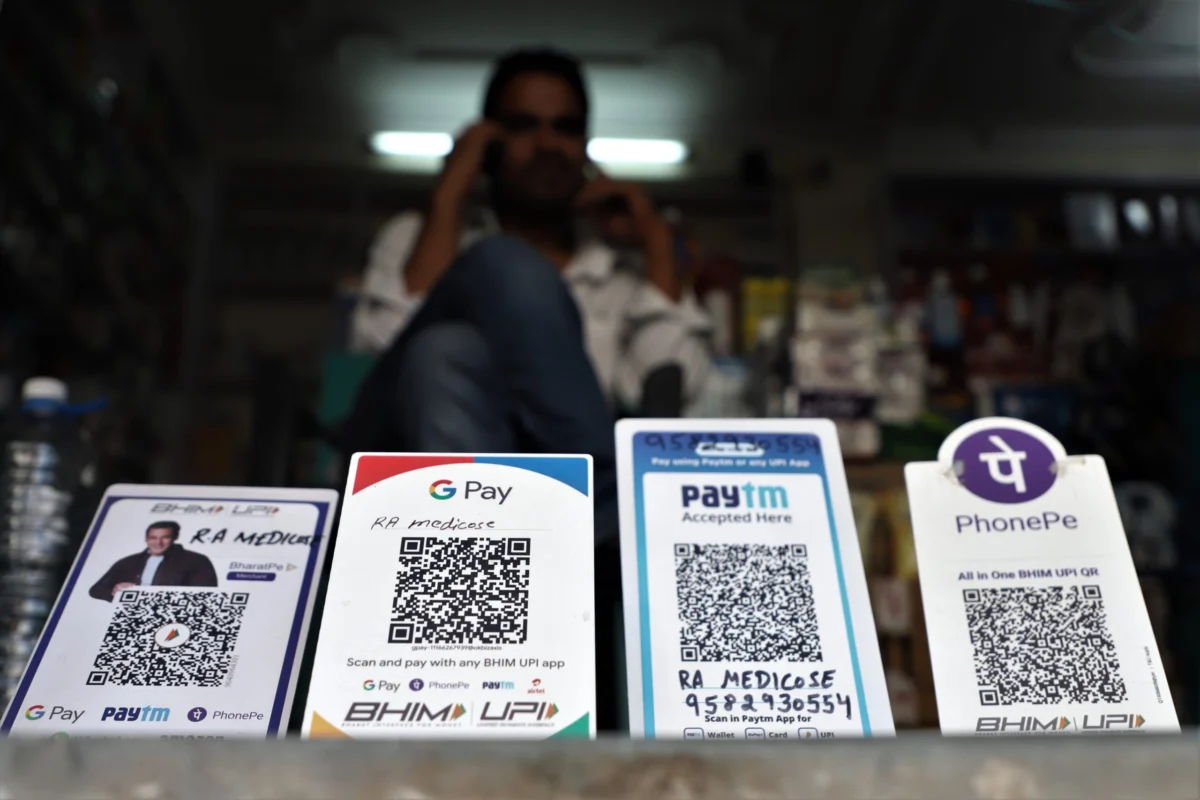
India is moving to fundamentally restructure the economic foundations of its digital payments landscape through new legislation that could end the era of zero-cost transactions for businesses using the Unified Payments Interface (UPI). The proposed legislative framework, introduced in the Indian Parliament, seeks to provide the legal basis for an overhaul of the current Merchant Discount Rate (MDR) regime. Since early 2020, the Indian government has mandated a zero-MDR policy for UPI, ensuring that merchants pay no fees to accept payments via the network. While this policy was instrumental in driving the explosive growth of digital payments across the subcontinent, the new bill suggests a shift toward a more commercially sustainable model that could see larger merchants contributing to the upkeep of the massive financial infrastructure.
The Unified Payments Interface, operated by the National Payments Corporation of India (NPCI), has evolved from a nascent technology into the primary engine of India’s retail economy. The proposed policy shift arrives at a time when UPI has reached unprecedented scale. In July alone, the network processed a record 23.66 billion transactions with a cumulative value of ₹29.88 trillion (approximately $313.4 billion). As transaction volumes continue to climb, the costs associated with maintaining cybersecurity, server uptime, and technological innovation have become a point of contention between the private sector and the government.
The Evolution of UPI and the Zero-MDR Mandate
To understand the significance of the new legislation, it is necessary to examine the trajectory of UPI since its inception. Launched in 2016 by the NPCI under the guidance of the Reserve Bank of India (RBI), UPI was designed to simplify peer-to-peer (P2P) and peer-to-merchant (P2M) transactions by using a Virtual Payment Address (VPA), eliminating the need for complex bank account details.
The turning point for the network’s business model occurred in January 2020. In an effort to formalize the economy and reduce the nation’s reliance on cash, the Indian government scrapped merchant discount rates on all UPI and RuPay debit card transactions. This move was intended to remove the friction of digital adoption for small shopkeepers and large retailers alike. To compensate for the lost revenue, the government introduced state-funded incentive schemes, which recently saw an allocation of approximately ₹2,000 crore (around $240 million) to support banks and fintech providers.
However, the industry has long argued that these subsidies are insufficient. As the network expanded to include hundreds of millions of users and tens of millions of merchants, the "free" model began to strain the balance sheets of payment service providers (PSPs) and banks. The new legislation represents the government’s acknowledgment that the current subsidy-heavy model may not be viable for the long-term goal of reaching 90% financial penetration across India’s diverse geography.
Legislative Framework and Potential Revenue Streams
The recently introduced legislation does not immediately impose specific fees or define the percentage of the merchant discount rate. Instead, it creates the legal "groundwork" or enabling environment that allows the government and the RBI to notify specific charges at a later date. This phased approach allows the government to gauge market sentiment and fine-tune the categories of transactions that will be subject to fees.
Market analysts and financial institutions are already projecting the potential windfall this change could bring to the fintech ecosystem. A report by the global brokerage firm Jefferies suggests that if the government introduces merchant charges on higher-value UPI transactions—specifically those between 15 and 30 basis points (0.15% to 0.30%)—the industry could see an additional annual revenue stream of ₹50 billion to ₹100 billion (roughly $525 million to $1.05 billion) by the 2028 fiscal year.
The debate currently centers on which transactions should remain free. Early indications from government circles and reports by the Economic Times suggest that the "zero-fee" protection will likely remain in place for small-scale merchants and low-value transactions. This would ensure that the "chai-wala" or the local vegetable vendor—the symbolic faces of the UPI revolution—are not burdened by new costs, while large retail chains, e-commerce giants, and high-turnover businesses begin to contribute to the network’s maintenance.
Industry Response and the Sustainability Argument
The move has been largely welcomed by the leaders of India’s fintech sector, who have spent years lobbying for a return to a commercial model. Amrish Rau, CEO of the prominent fintech firm Pine Labs, expressed his support for the legislation, noting that the continued expansion of UPI requires significant capital. Rau argued that for UPI to achieve deeper penetration and successfully compete on a global stage, startups, fintechs, and banks must have the financial capacity to invest in high-end IT infrastructure, innovation, and robust cybersecurity.
"Allowing the industry to recover part of those investments from merchants while keeping consumer and peer-to-peer payments free would put UPI on a more sustainable footing," Rau stated. This sentiment reflects a broader consensus within the industry that while the "public good" aspect of UPI is paramount, the technical backbone cannot be funded by the state indefinitely, especially as the system handles trillions of dollars in annualized value.
From a technical perspective, the costs of processing a UPI transaction are not zero. Every "ping" to a bank’s server, every encryption layer, and every fraud-detection algorithm requires computing power and human oversight. Under the zero-MDR regime, these costs were largely absorbed by the banks (the remitters and beneficiaries) and the PSPs (the apps), leading to a lack of incentive for some players to upgrade their systems, which occasionally resulted in transaction failures during peak hours.
Analyzing the Impact: Transaction Value vs. Volume
A critical data point in the ongoing discussion is the disparity between transaction volume and transaction value. A report by the brokerage firm Bernstein highlighted a significant trend: while transactions above ₹2,000 (approximately $24) account for only about 4% of the total volume of UPI payments, they represent nearly 70% of the total transaction value.
This "long-tail" distribution suggests that the government could generate substantial revenue for the ecosystem by targeting only a tiny fraction of total transactions. By applying MDR only to transactions above the ₹2,000 threshold, the government can preserve the "free" experience for the vast majority of daily users who use UPI for small purchases like groceries, snacks, and local transport. This tiered approach would effectively tax high-value commerce to subsidize the digital public infrastructure used by the masses.
Implications for Market Leaders: PhonePe and Google Pay
The legislation will have profound implications for the dominant players in the Indian digital payments market. Currently, Walmart-owned PhonePe and Alphabet’s Google Pay control nearly 80% of the UPI transaction market share by volume. For years, these companies have operated their UPI arms as "loss leaders," using the massive traffic to cross-sell other financial products like insurance, mutual funds, and loans.
The reintroduction of MDR could transform these platforms from high-traffic utilities into high-revenue businesses. However, the ultimate benefit to these companies depends on the "interchange" structure—the formula that determines how a merchant fee is split between the merchant’s bank (the acquirer), the customer’s bank (the issuer), and the payment app (the PSP). If the legislation favors banks over fintech apps in the fee distribution, the impact on the bottom lines of Google Pay and PhonePe may be more muted than initially expected.
Global Aspirations and International Precedents
India’s push to monetize UPI is also linked to its global ambitions. The government has been actively exporting the UPI technology stack to other nations, with successful launches or partnerships already established in Singapore, the United Arab Emirates, France, Nepal, and Sri Lanka. For UPI to be adopted internationally, it must demonstrate a business model that is compatible with global financial standards. Most international payment networks, such as Visa and Mastercard, operate on an MDR model. By introducing a commercial element at home, India provides a blueprint for how other nations can implement a sovereign digital payments system that is both inclusive and profitable.
Furthermore, the legislation serves as a case study for other developing economies looking to balance financial inclusion with private-sector innovation. The "India Stack," of which UPI is a cornerstone, has been praised by the World Bank and the IMF for achieving in less than a decade what took other countries decades to accomplish in terms of financial digitisation.
Timeline and Next Steps
As the legislation moves through the parliamentary process, the financial community is awaiting the specific "Rules" that will follow the "Act." In the Indian legislative system, the primary law provides the authority, but the Ministry of Finance and the RBI will issue the specific circulars that define the fee percentages and merchant categories.
The timeline for implementation is expected to be gradual. The government is likely to consult with industry stakeholders, including the Merchant Associations, who may voice concerns about the impact on their margins. However, given the strong support from the banking sector and the clear need for infrastructure investment, the return of merchant fees in some form appears inevitable.
In summary, the proposed legislation marks the end of the "incubation phase" of the UPI ecosystem. Having successfully converted a cash-heavy society into a digital-first economy, the Indian government is now looking to ensure that the infrastructure supporting this miracle is self-sustaining. By shifting the financial burden from the taxpayer to large-scale commercial beneficiaries, India aims to secure the future of its digital payments revolution for the next billion users.